“This is the best sushi in the world”.
I looked to my left. Yes, a real human being had uttered those words. You’ll forgive me for double checking; while I was physically at a Las Vegas sushi counter, mentally I was still floating 35,000 feet above. Blame the 4am wakeup, JFK Terminal 8, 6 on-board chardonnays and 100 degree Vegas heat.
Yes, I flew business class under my “blow every last cent to board first” rule. But it was American. Only Philadelphians fly that. They of course ran out of meals, so I was left with a charcuterie plate, aka nature’s leftovers. I didn’t complain, but let’s just say AA is lucky Kelly Clarkson wasn’t flying that day.
(BTW, Kelly if you’re reading this, I’m on your side with birdgate. (A) it was a nice bird and (B) I watched a single interview of that shopkeeper).
Greig Fraser would be proud
“Sushi Hiroyoshi is better than any place in Japan”.
Oldtimer wanted a conversation, so we obliged. He was there for his standing Wednesday reservation. And it turns out he wasn’t alone; all night along, party after party came in for their standing weekly reservations. Hiroyoshi is closed Monday and Tuesday, so these weekly warriors book every Wednesday to get the first licks at recent shipments.
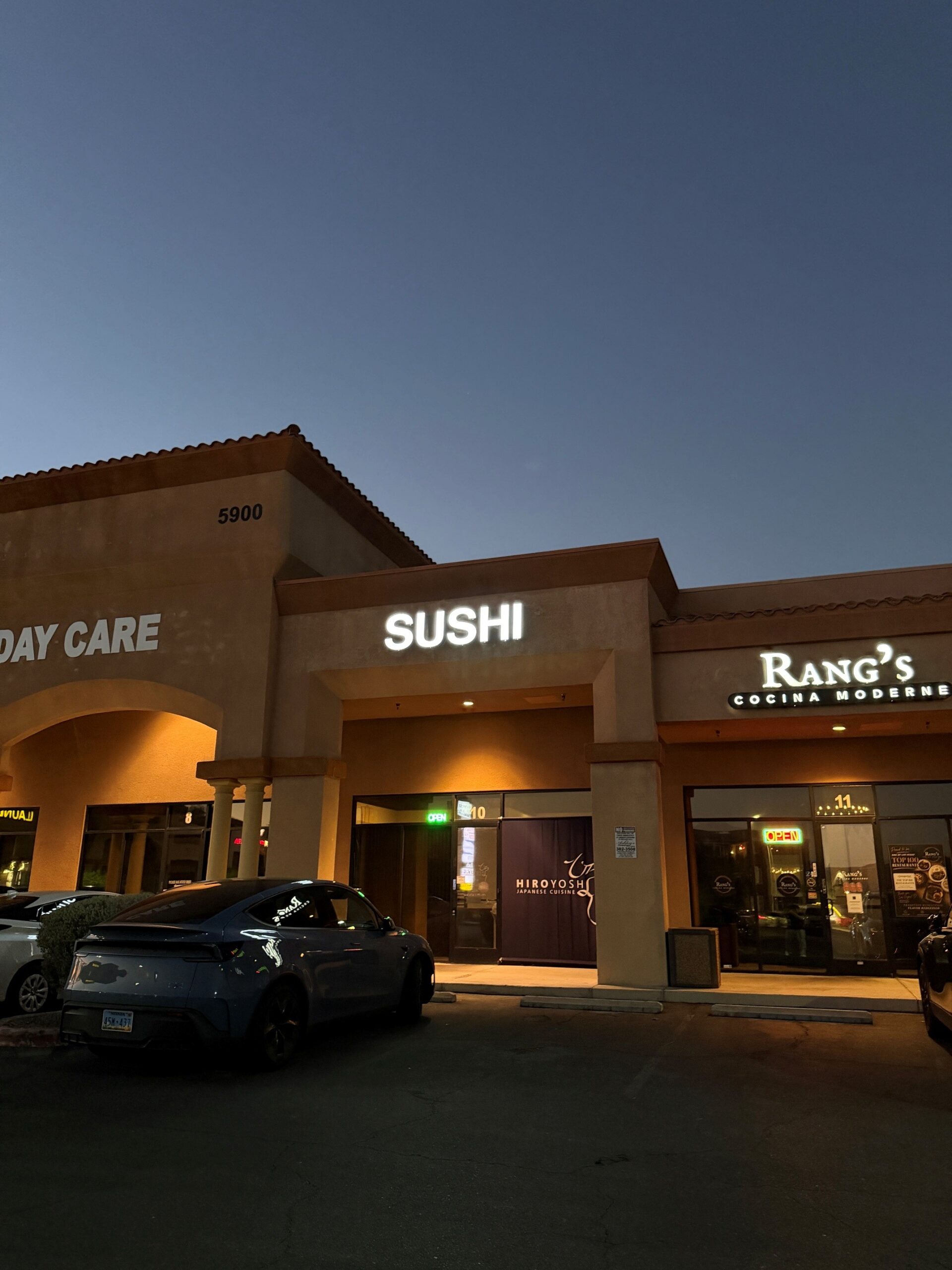
The legend behind the counter is Hiro-san. Before opening his eponymous west Vegas shop 11 years ago, he worked in New York City, at midtown’s Sushi Zen (RIP). Zen was an OG sushiya that I reviewed all the way back in 2014 (review). Fair warning, I was a young blogger back then.
Hiroyoshi is the quintessential neighborhood sushiya, sure, but it also serves a fantastic omakase – two, in fact.
The first is what I call (as of today) a New York omakase. 5 or 6 courses of otsumami followed by a procession of nigiri and dessert.
The second is what New York currently lacks, at least at meaningful scale. A nigiri-only omakase.
THE OMAKASE WAS 22 GLORIOUS COURSES
At least during my visit it was; other nights it’s more, or maybe less. Depends how hiro-san is feeling.
And, really, this is how omakase should be. Preparing sushi is complicated, but the philosophy shouldn’t be. I want to be surprised. I want something new, something in season, something that dances the lambata between complexity and simplicity. I don’t need a fucking bunson burner, I don’t need fog, I don’t need emulsified ground cherries.
And by that measure, Hiro-san delivers Las Vegas’ best sushi experience.
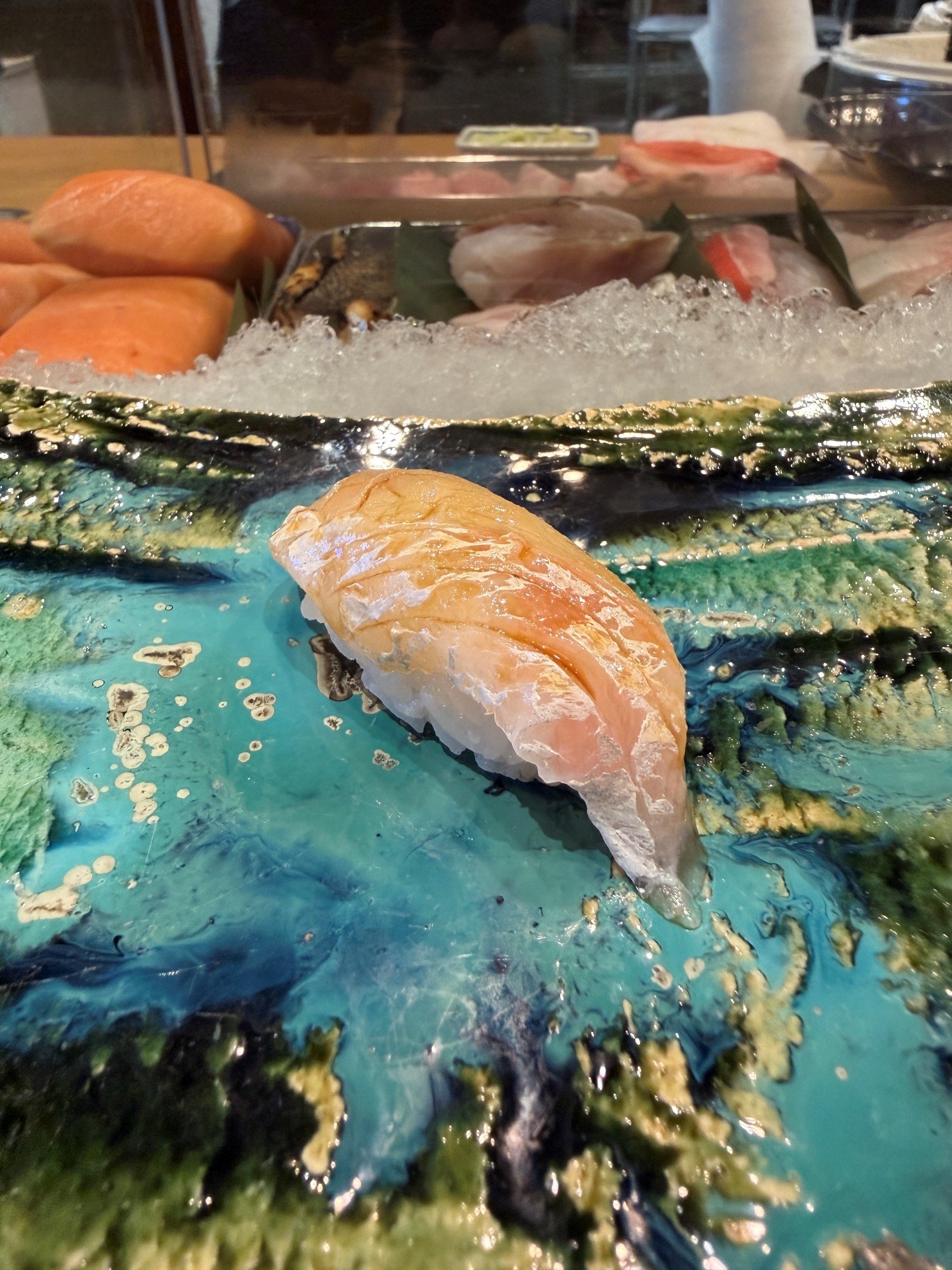
1: Madai (red snapper)
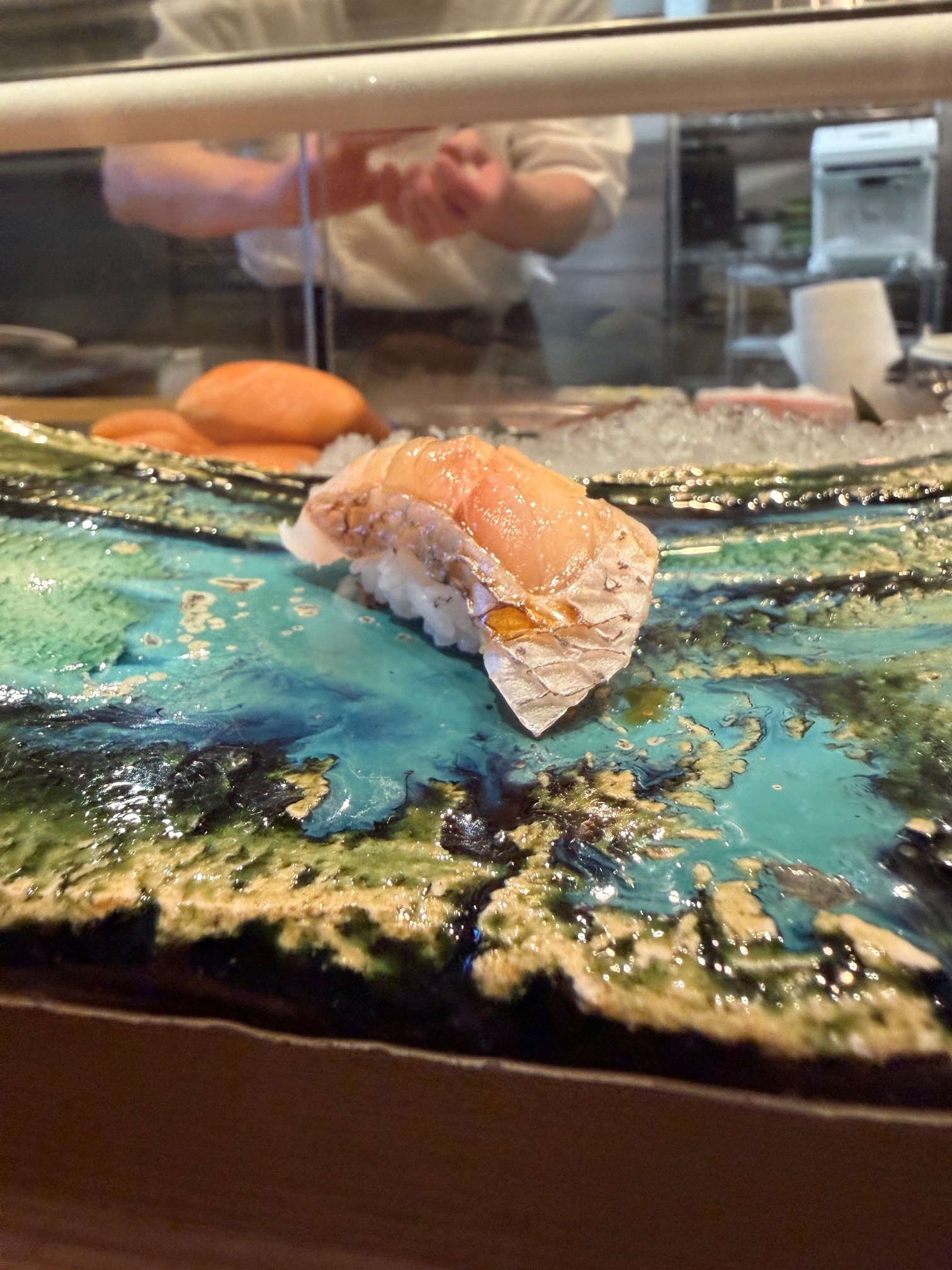
2: Kodai (small sea bream)
The start is a good bellwether. Madai (small sea bream), and Kodai (baby red snapper). Two versions of the same species. If you’re curious, Kasugo (baby red sea bream) is a baby, usually under a year old, while Kodai is slightly older.
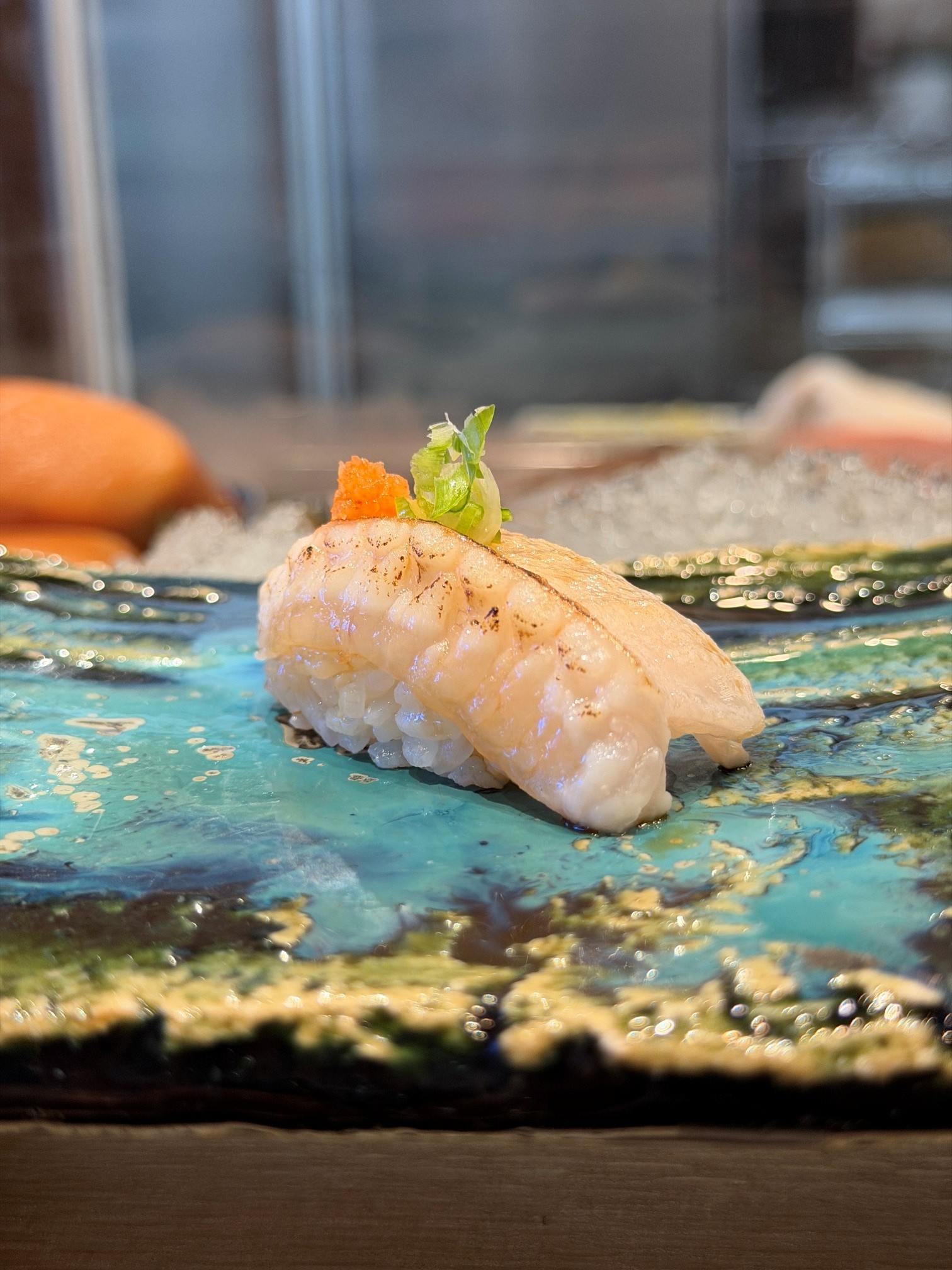
3: Engawa (hirame fin)
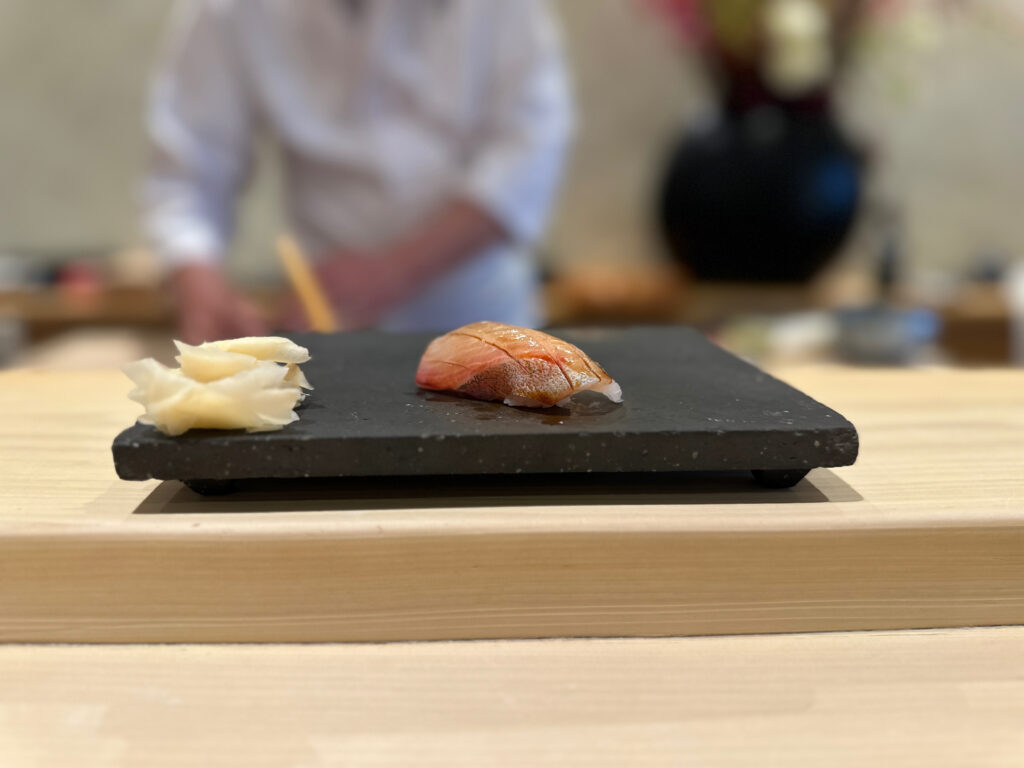
The similarly named Renkodai (yellowback snapper to some, yellow or golden seabream to others) is a shiromi (white-fleshed fish) with under-appreciated flavour.
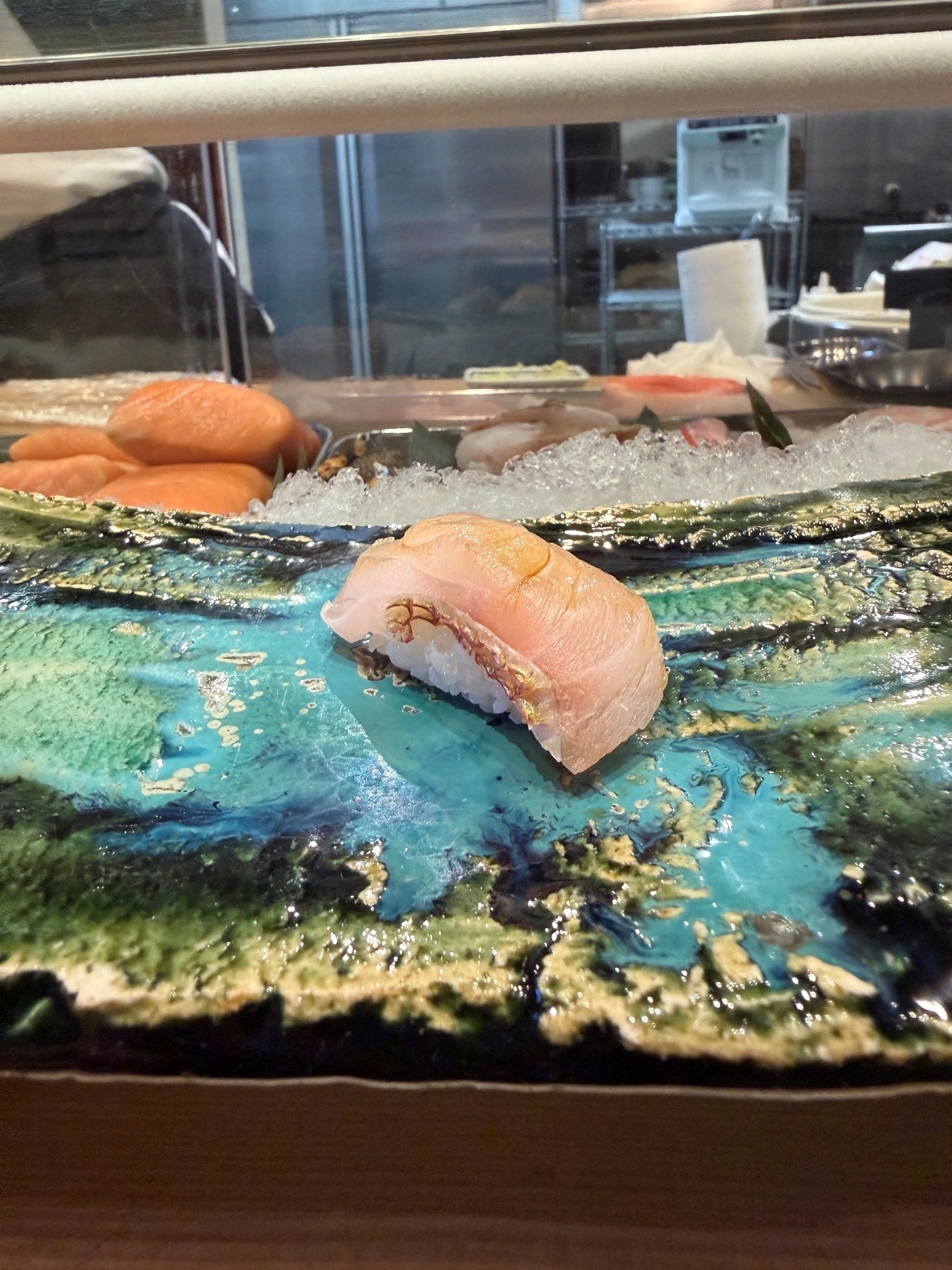
4: Renkodai (golden sea bream)
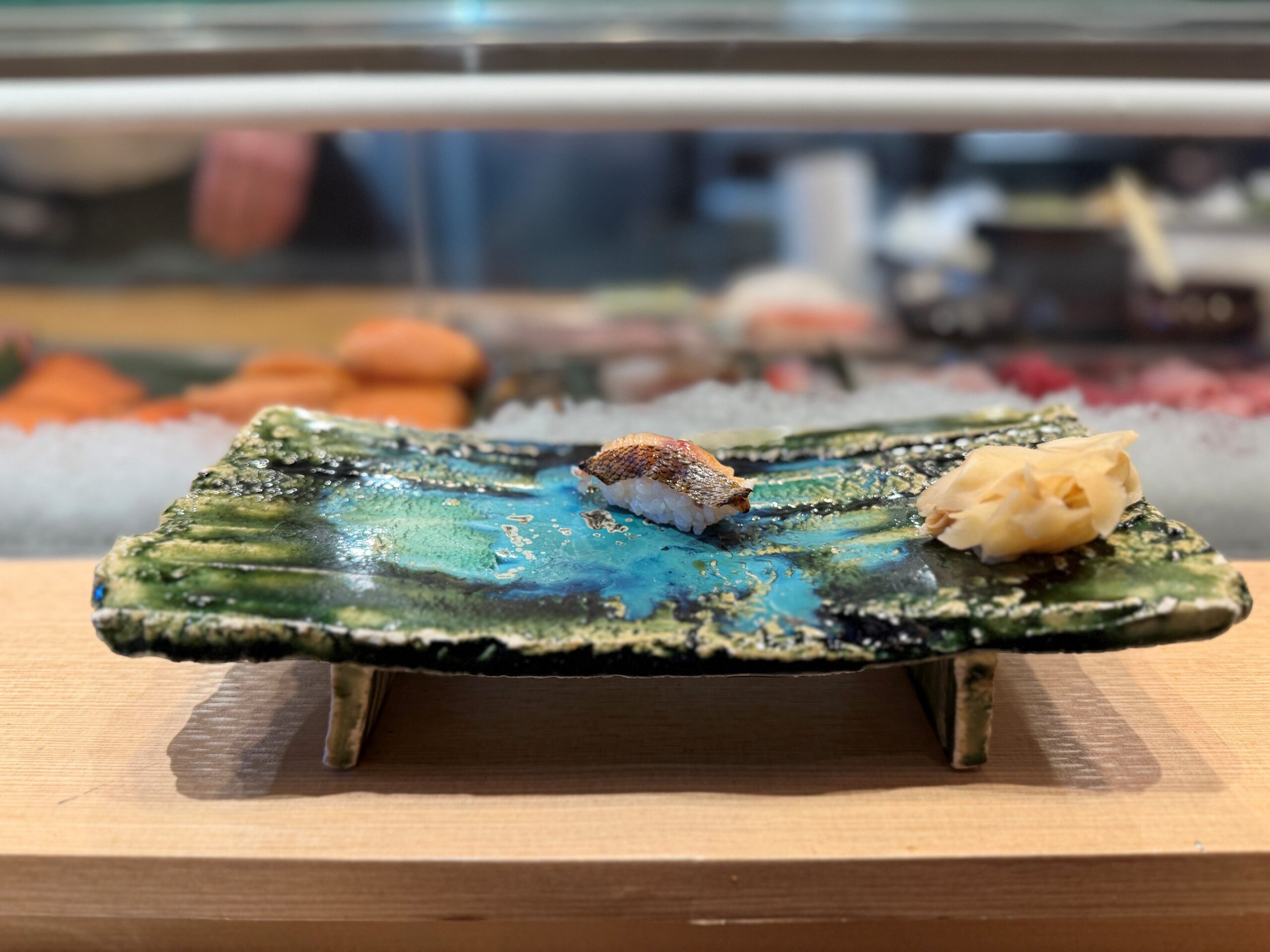
5: Isaki (Chicken Grunt)
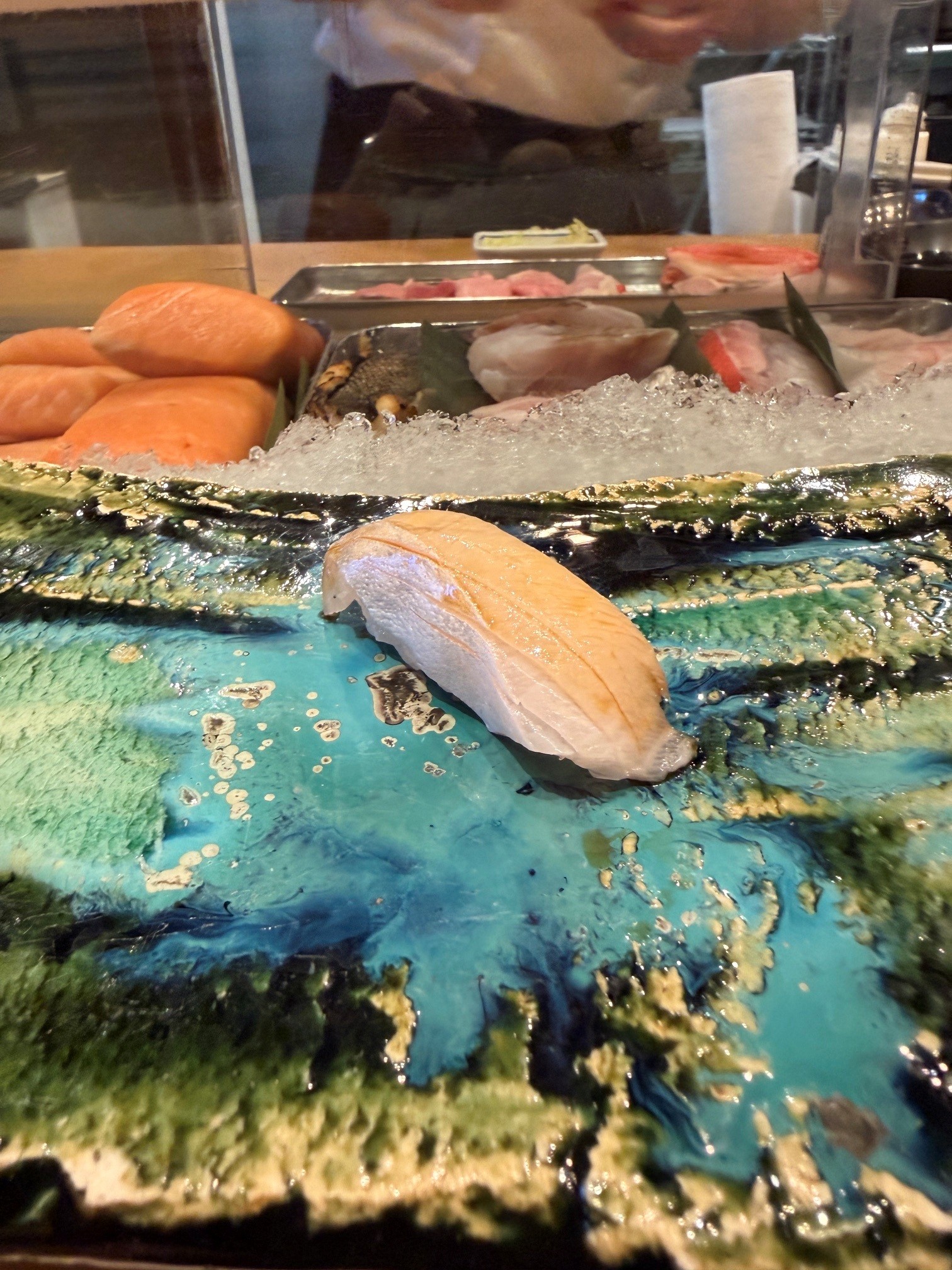
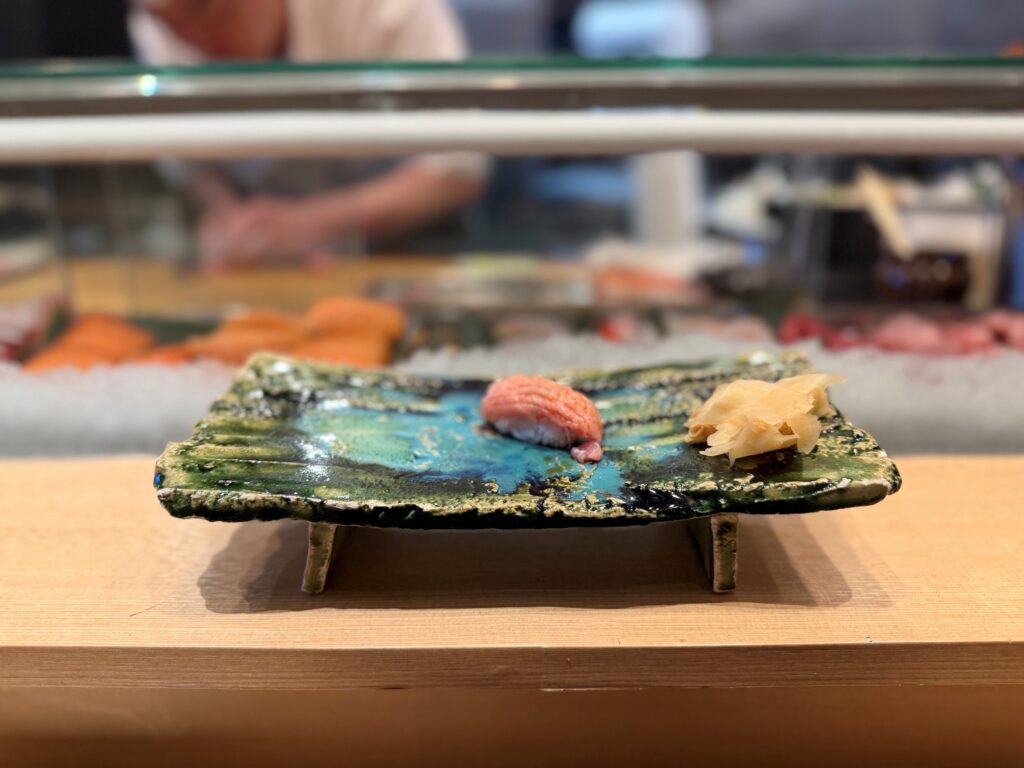
6: Hamachi “toro” (Belly)
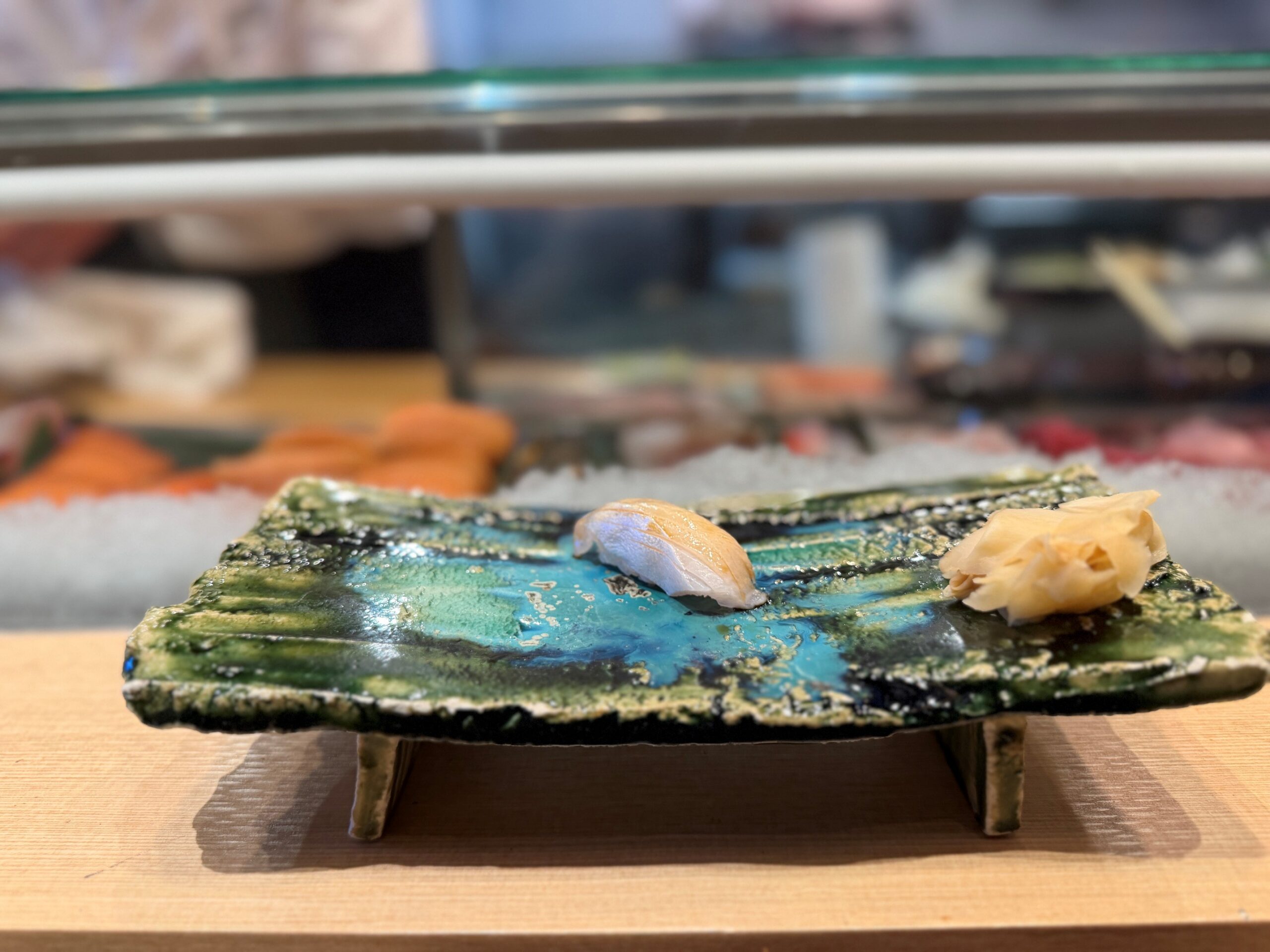
Another angle
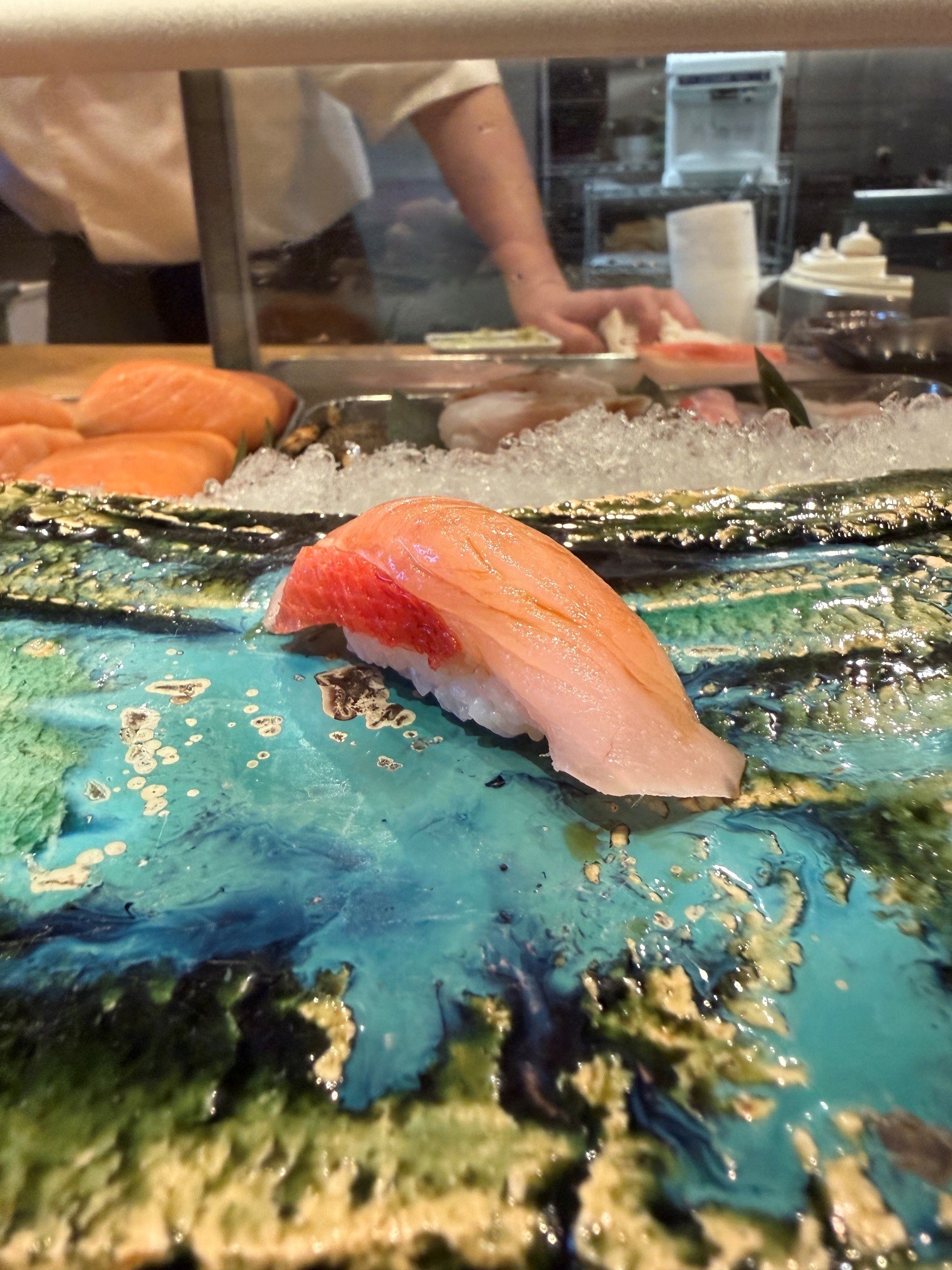
7: Kinmedai (goldeneye snapper)
A TRAIN OF TUNA
Some sushiya still serve three ‘versions’ of honmaguro in their Omakase. The typical approach – the approach du jour – is akami, or perhaps zuke (marinated tuna), followed by Chu Toro and O Toro.
Poppycock says Hiroyoshi.
No Akami – Chu Toro, O Toro, Kama Toro, Hagashi Toro.
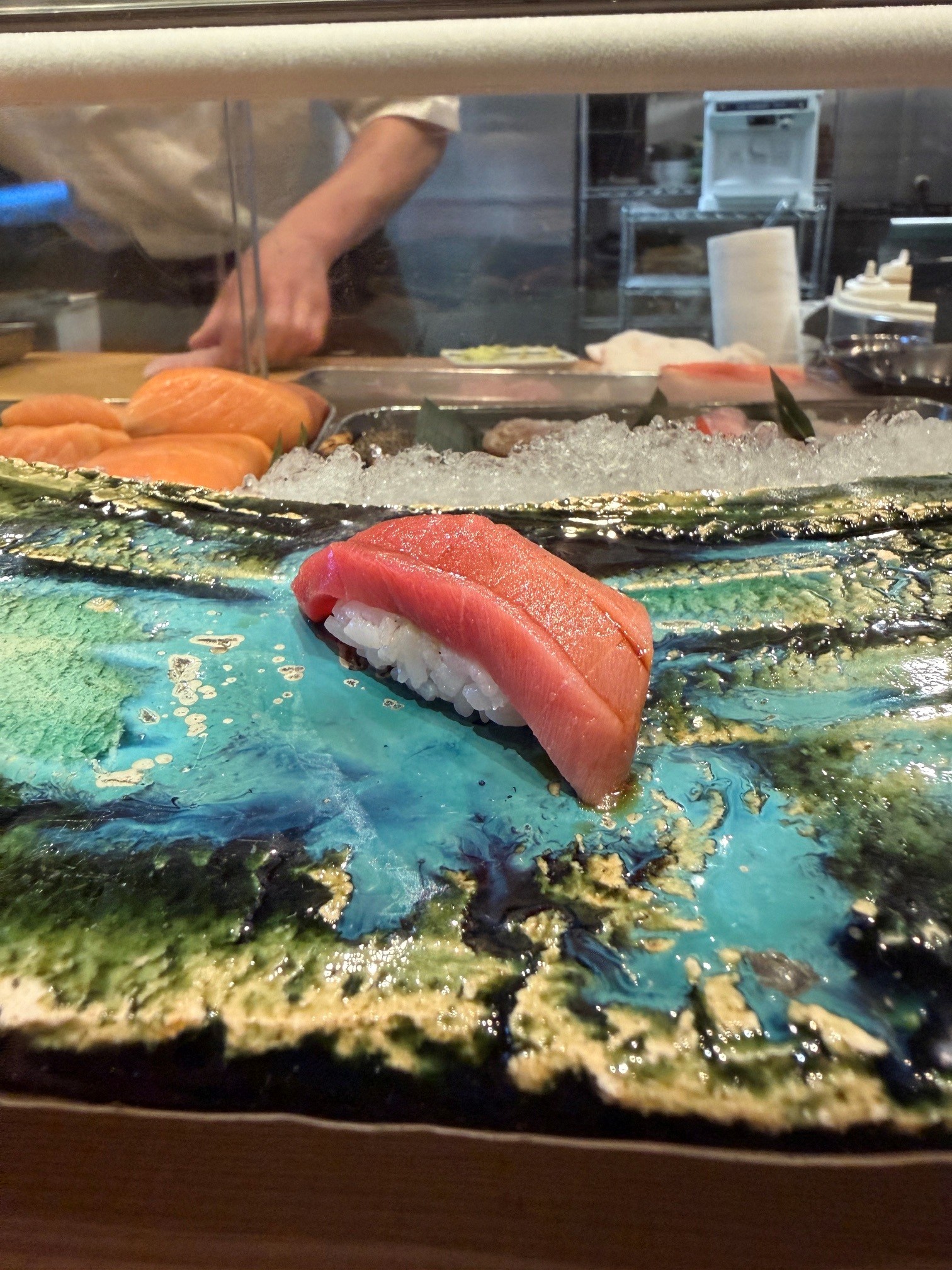
8: Chu Toro
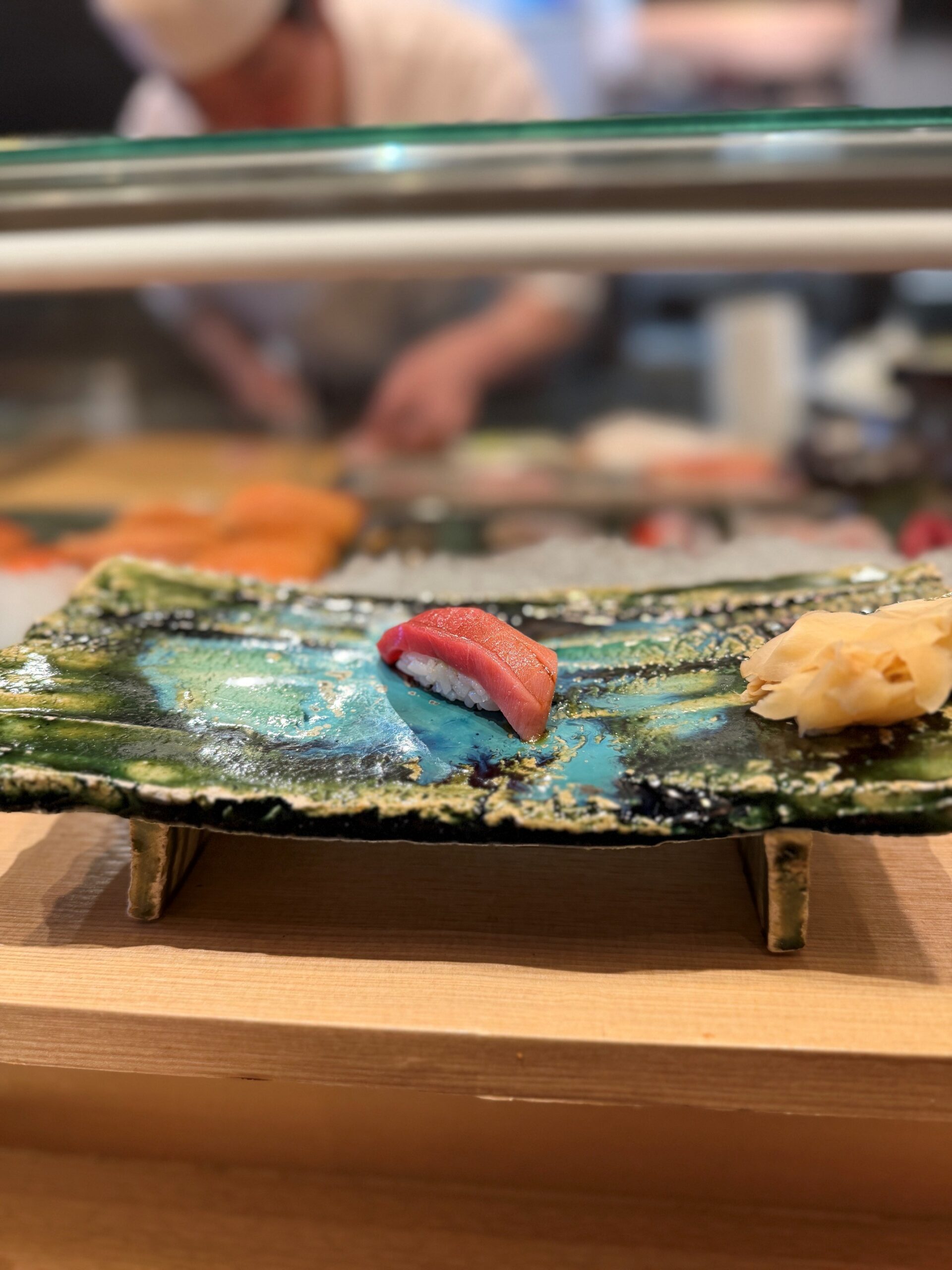
Another angle
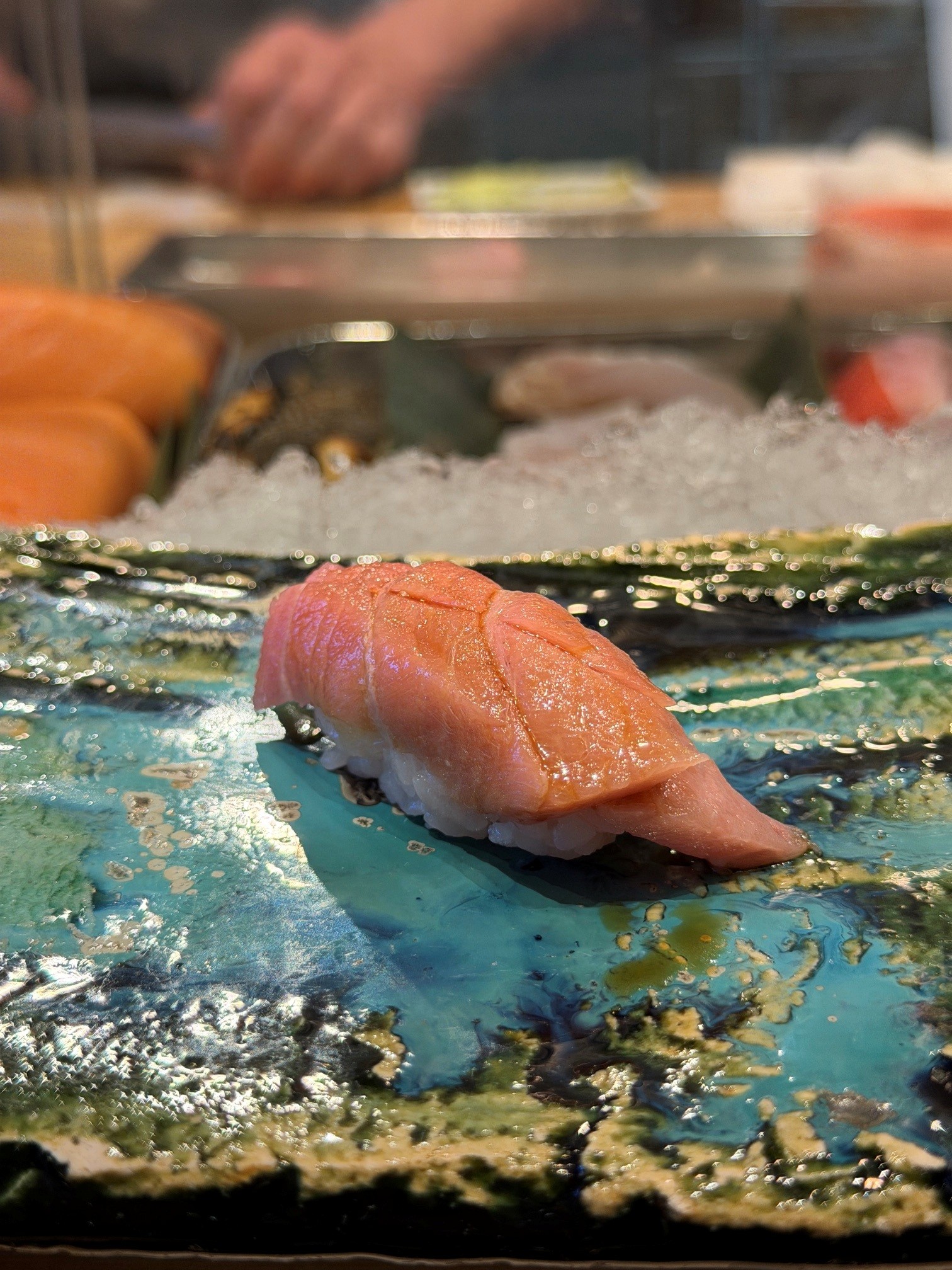
9: Double stacked O-Toro
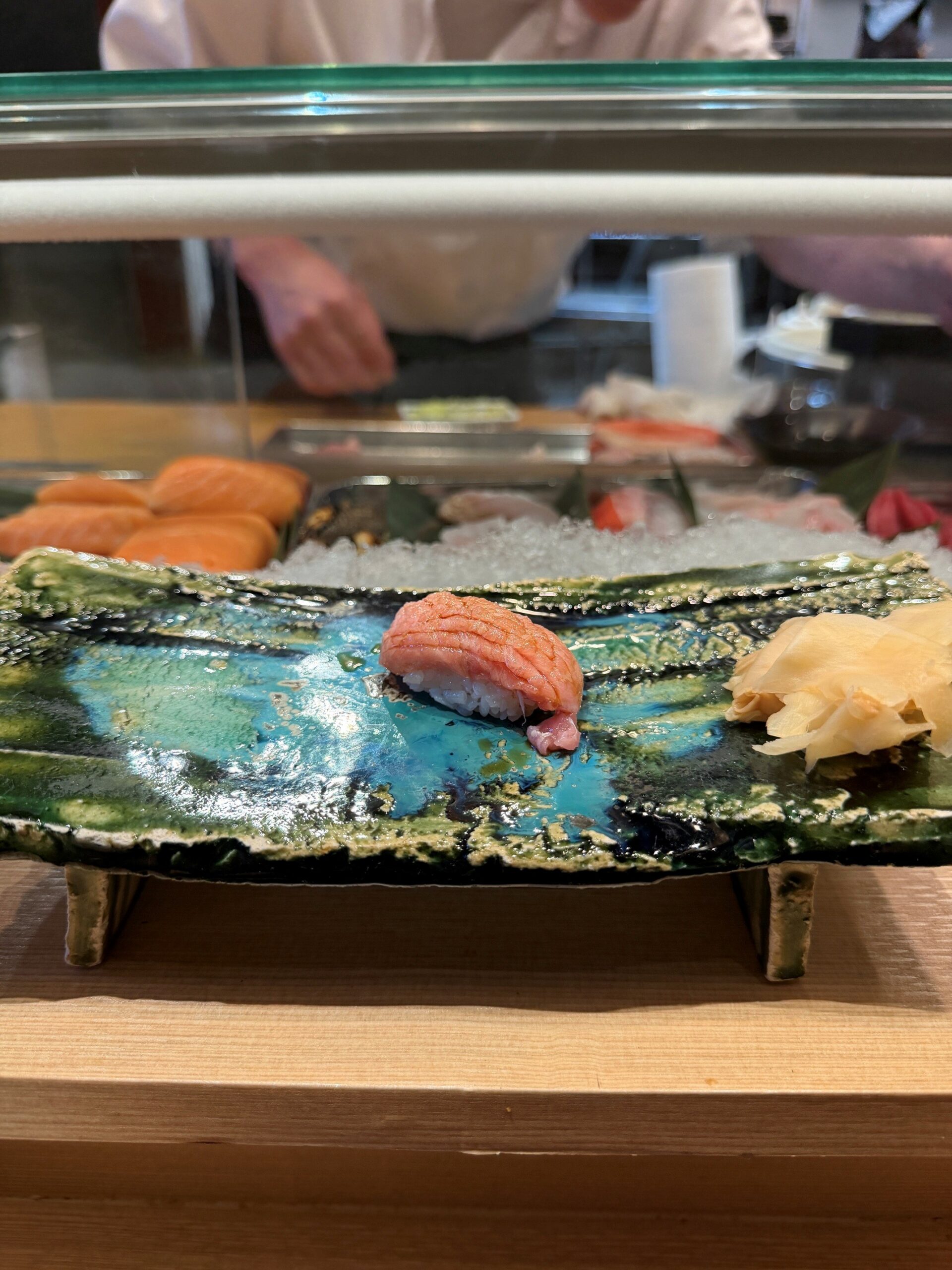
11: Kama Toro
Despite sushi’s wild rise, anecdotally, Kama Toro isn’t as prevalent on menus in New York as it used to be. It’s not price or availability, according to Nobu at Yama Seafood. It’s customer preference. Apparently it’s too fatty. I ordered it from two veteran sushiya on this west coast trip. Both torched their Kama Toro to the point of Wagyu.This was excellent.
So too was the Hagashi Toro. Hagashi comes from the Japanese verb, Hagasu, meaning to peel or strip away. In this case, it’s the tuna meat that’s stripped from the connective sinew. The fatty cuts used have tons of sinew, so the process requires (a) skill and (b) a great knife.
This video from Tokyo’s Sushi Labo shows the wildly complicated process better than I ever could:
Hiro-san’s version is picture perfect:
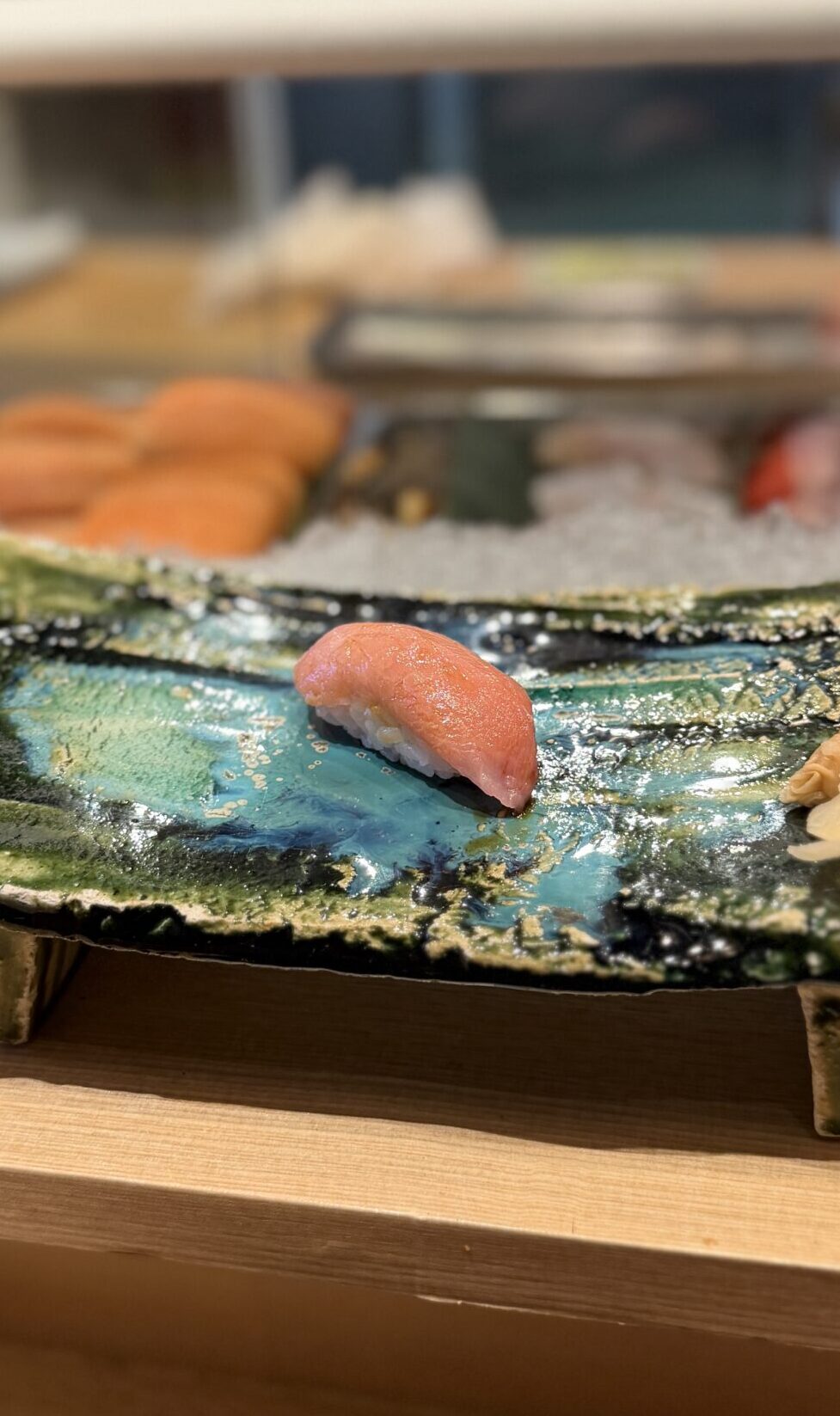
12: Hagashi Toro
When Aji is done properly,
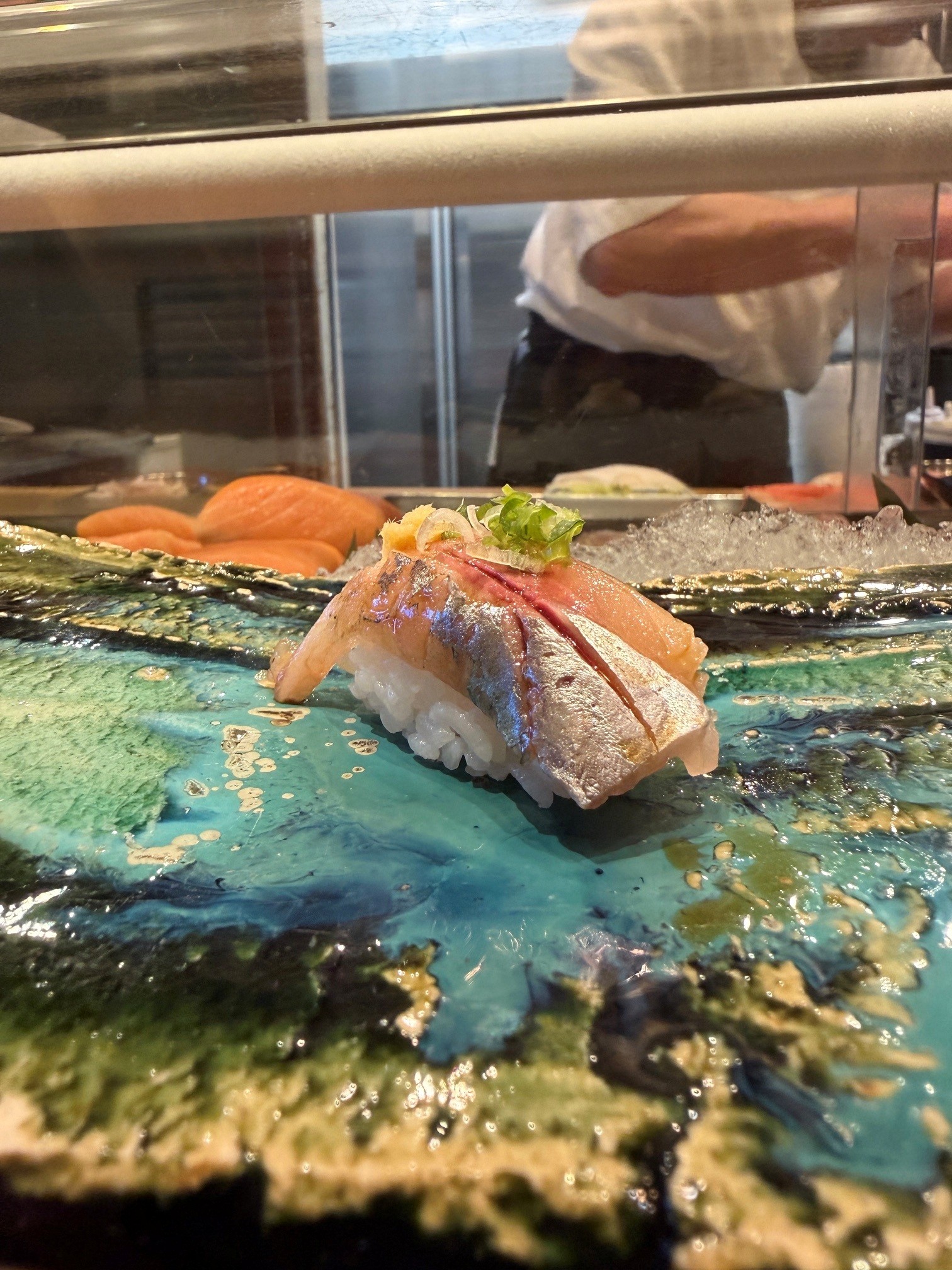
13: Aji
I was less enthused about the modorigatsuo (returning skipjack). I’ve written about Katsuo’s two different seasons a billion times before – you can check out the coles notes here – but the key is that October is the tailend of the second one. Unlike my first year at university, the expected fattyness didn’t materialize. The house made onion sauce didn’t help (or maybe it helped with masking…).
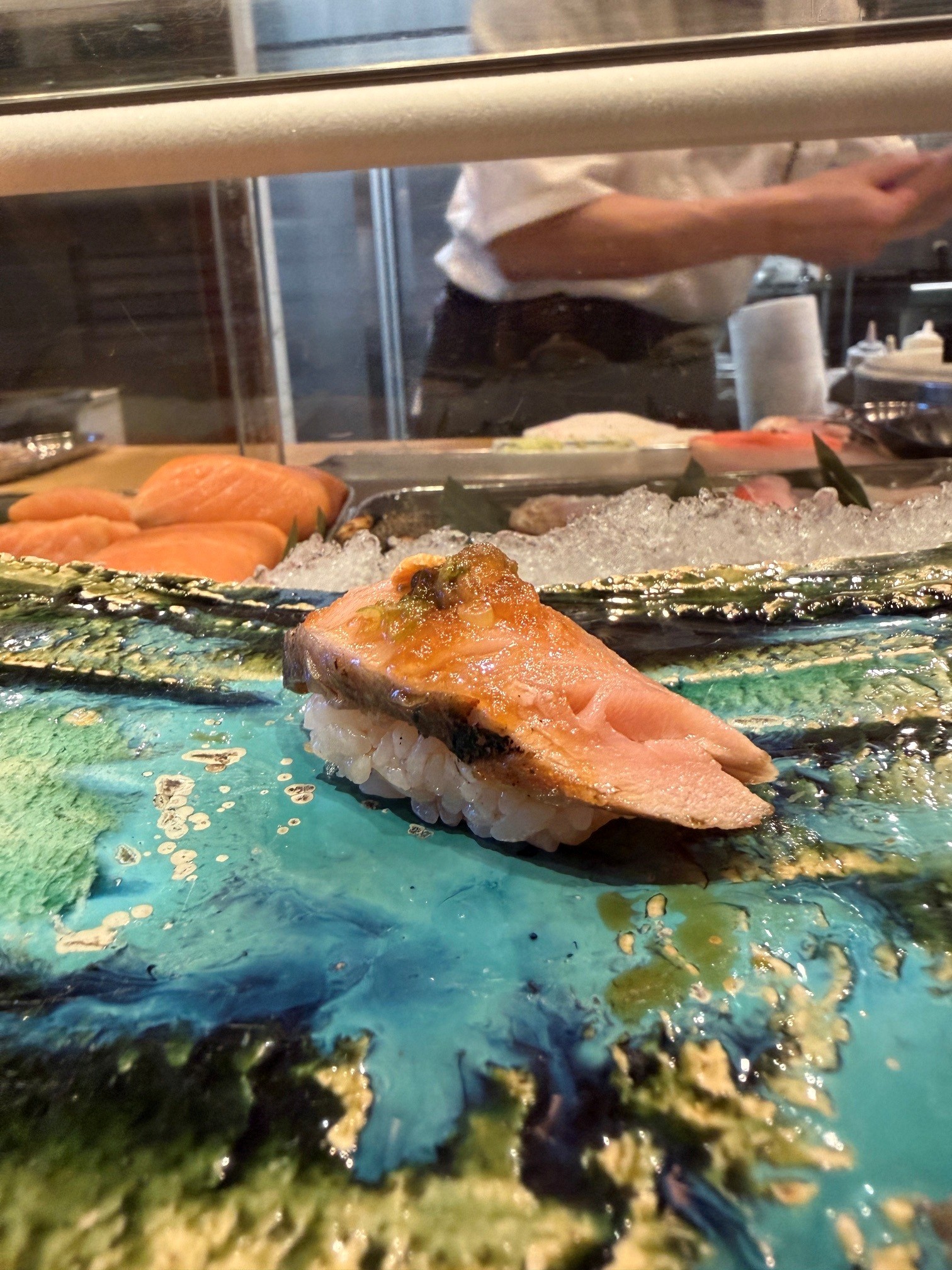
14: Modorigatsuo (returning skipjack)
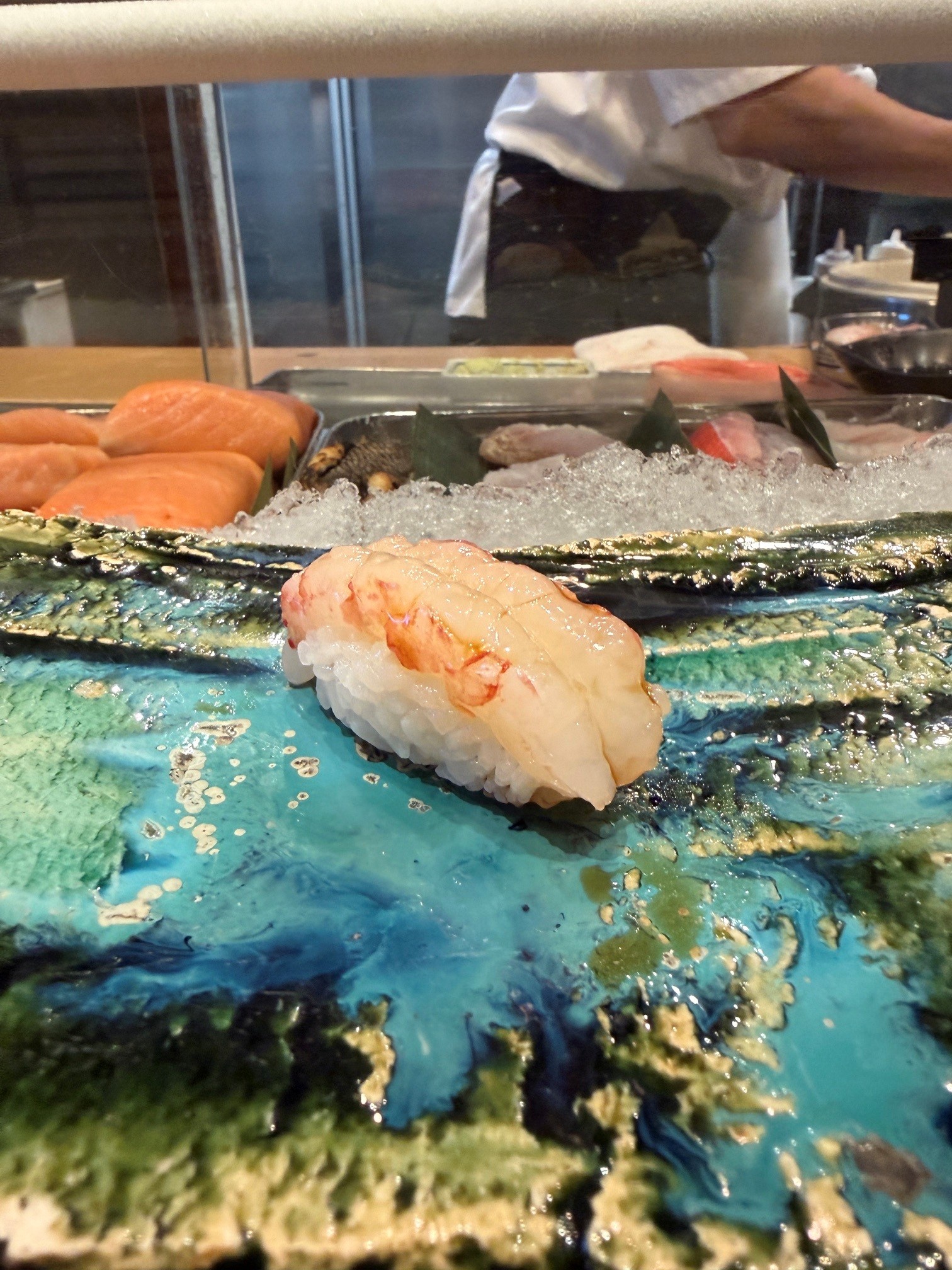
15: Botan Ebi (peony shrimp)
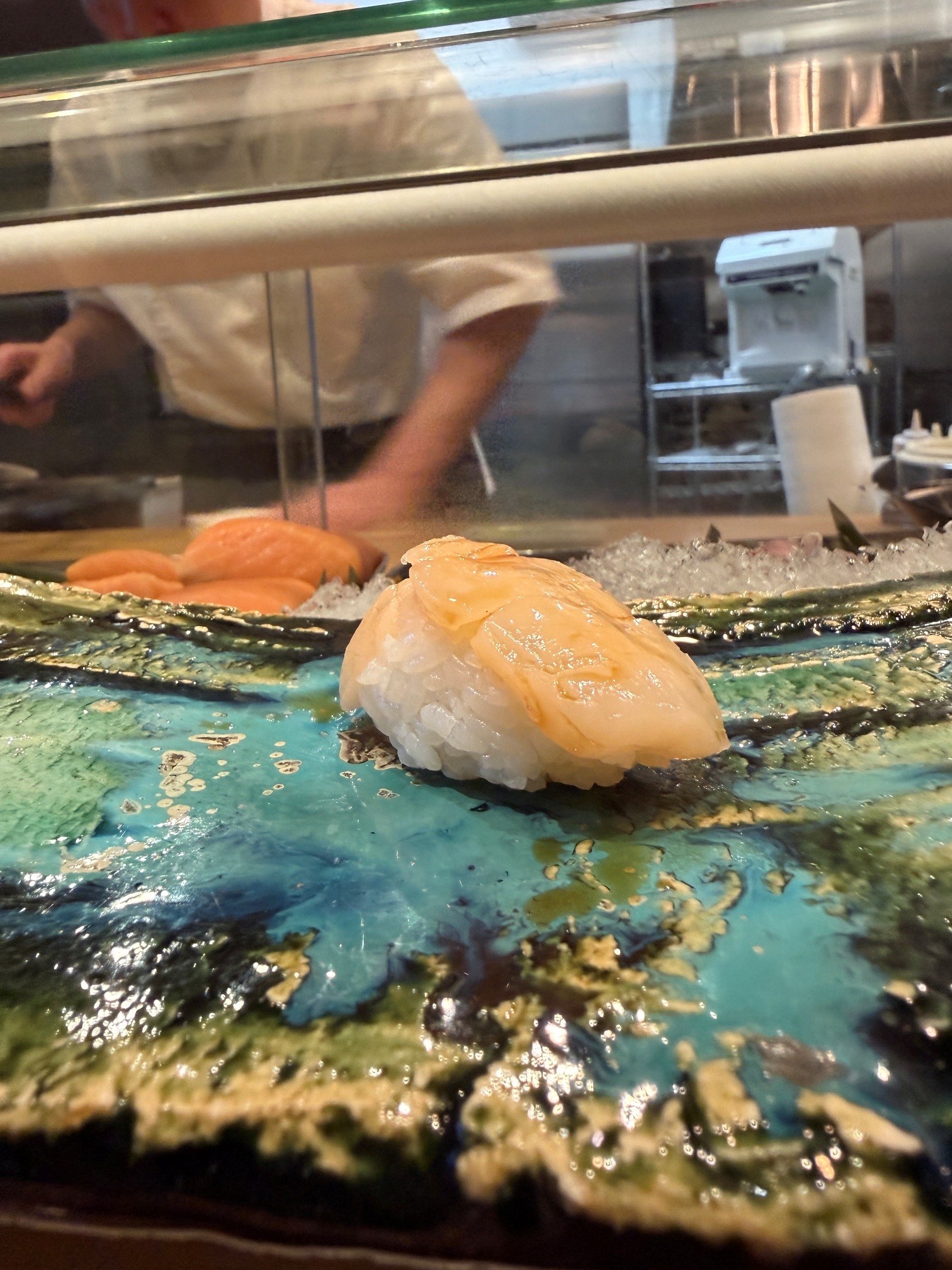
16: Hotategai
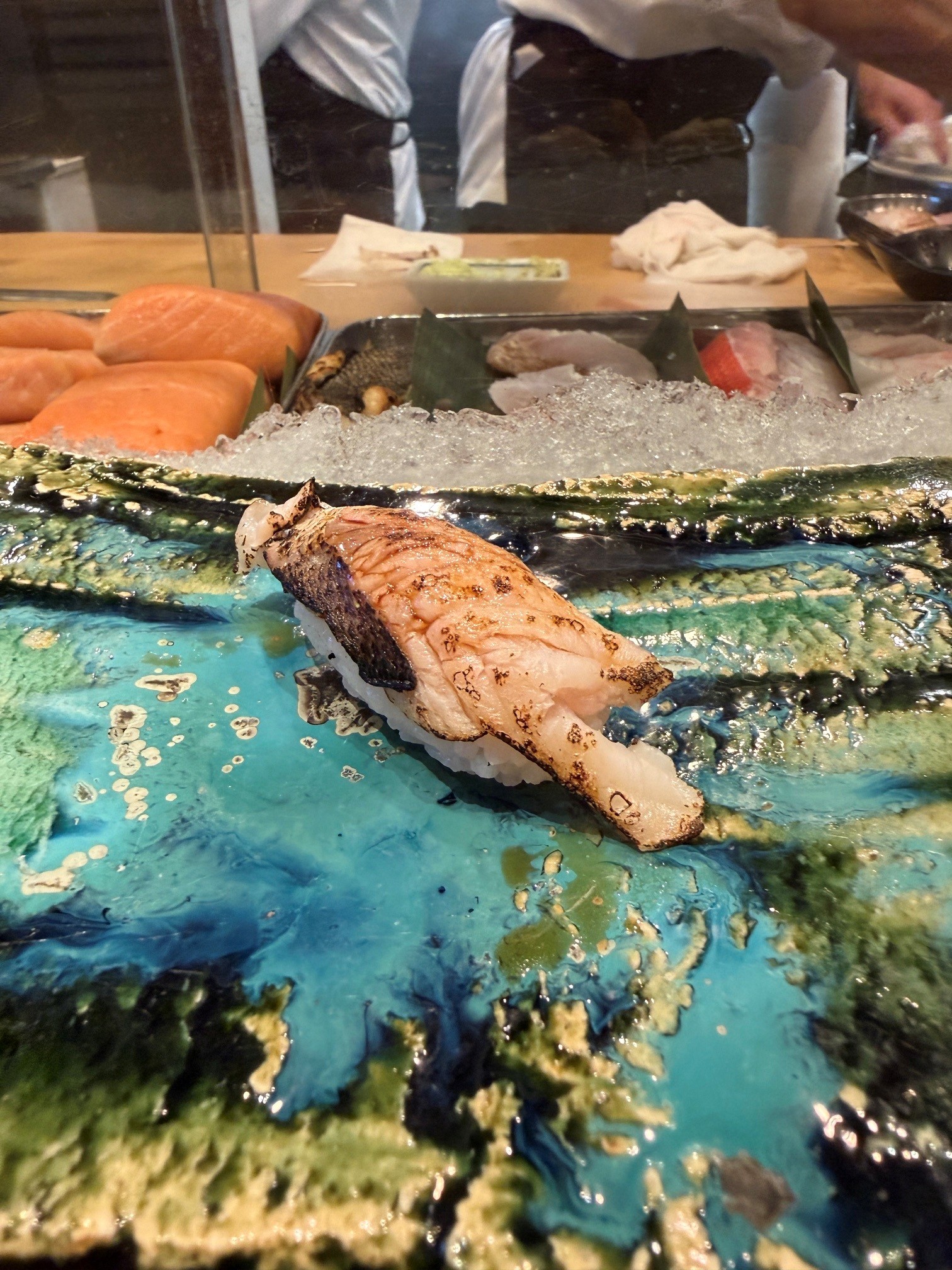
17: Kamasu (barracuda)
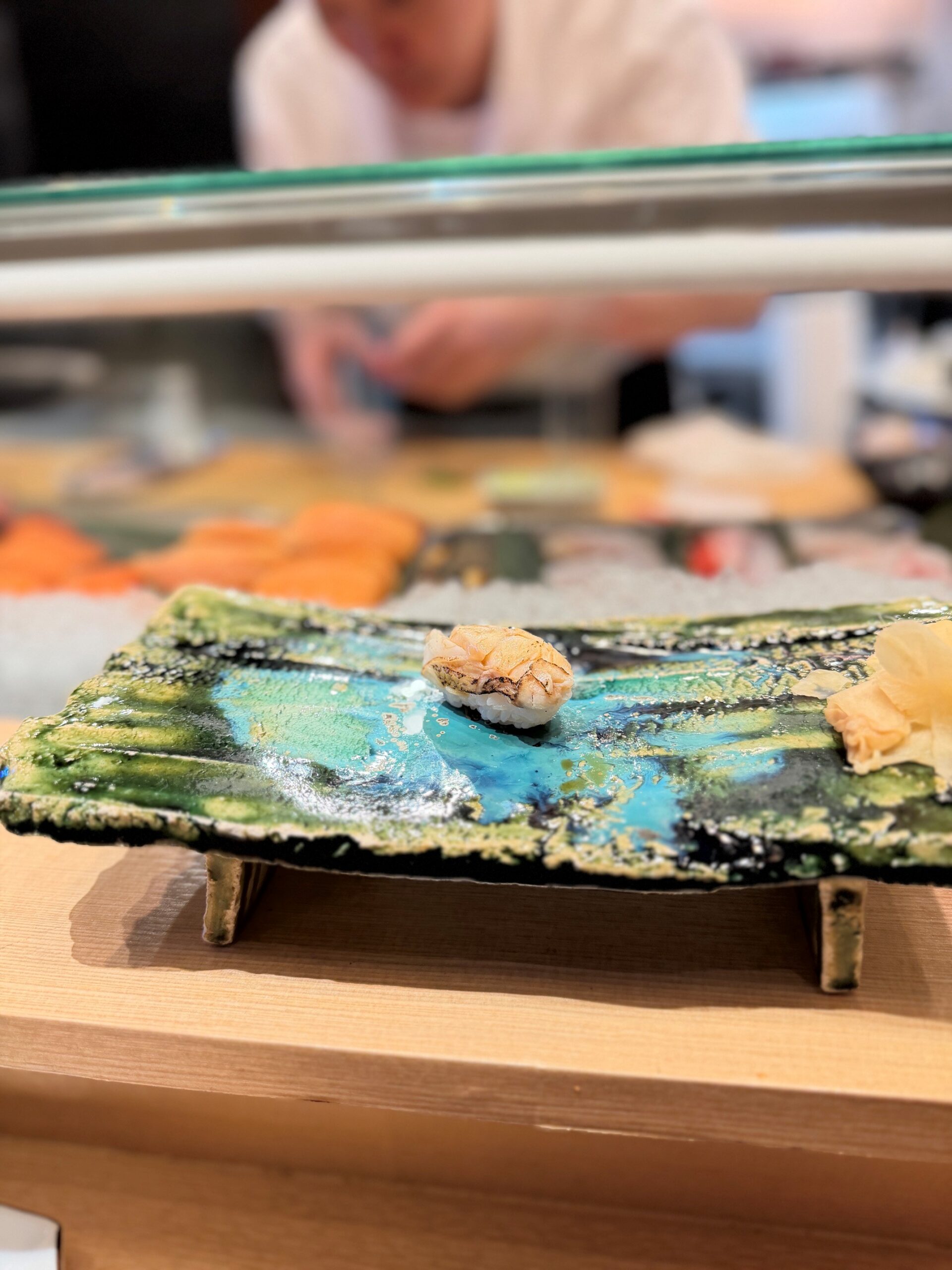
18: Nodoguro
Yari ika (spear squid) with a sheet of shiso was next. It’s typically a winter tane, so we’ll call it the first of the season. This was a rich, perfectly chewy texture, one of the highlights of the meal. The fantastic book The Art and Science of Sushi says that squid reduces fatigue, and yet I was asleep an hour later. Turns out science is no match for 24 oz of chardonnay.
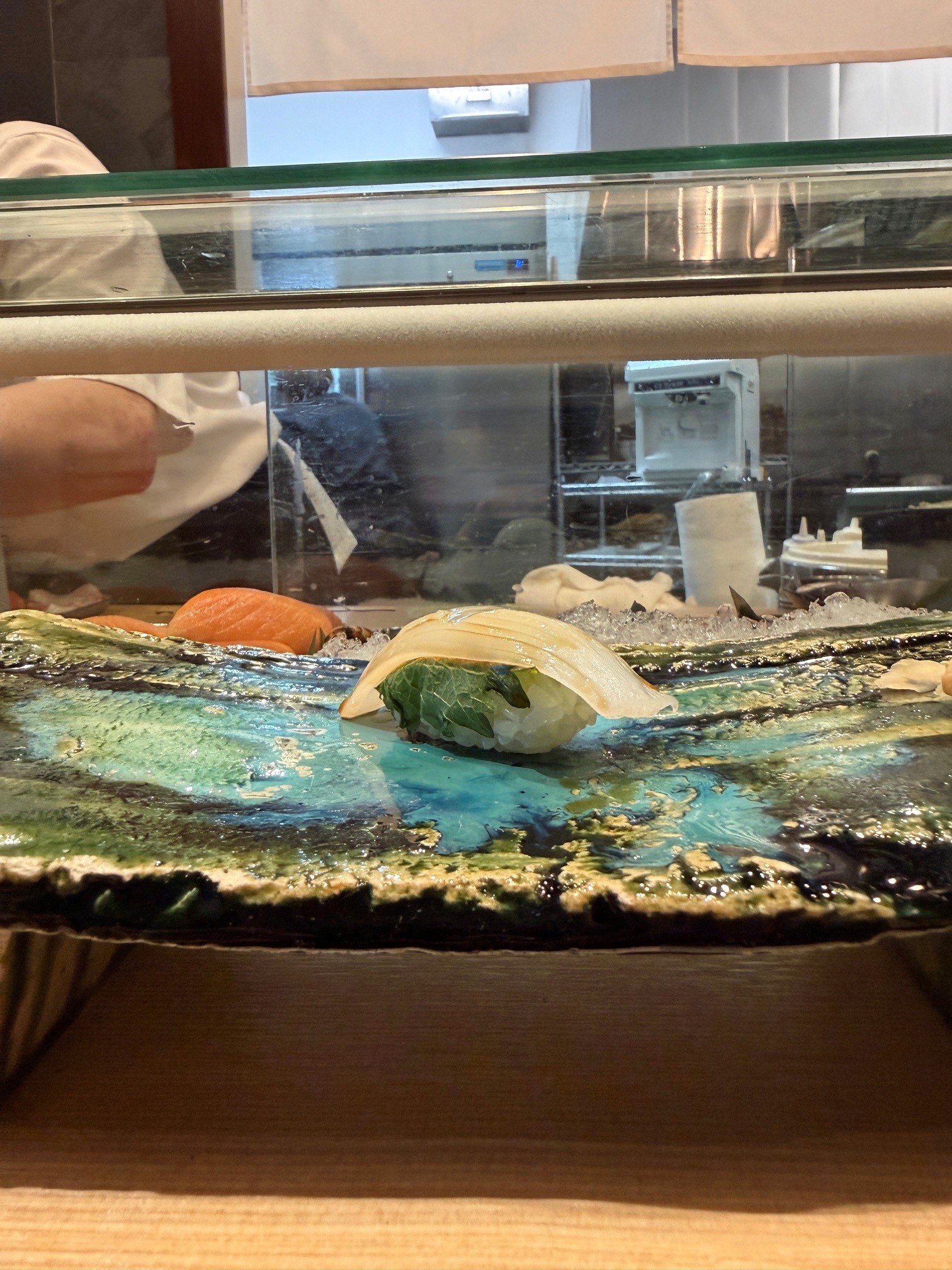
19: Yari ika (spear squid)
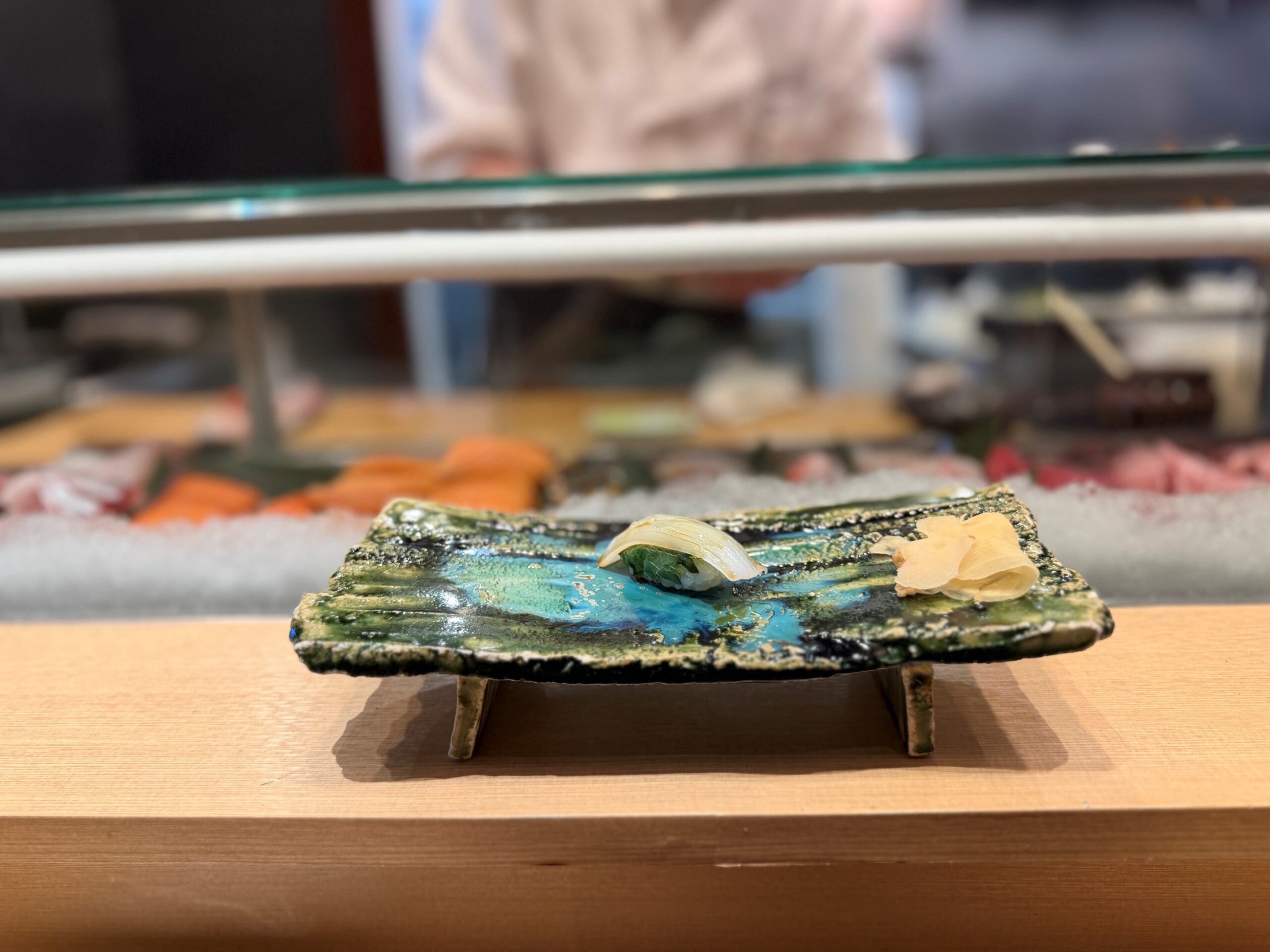
Another angle
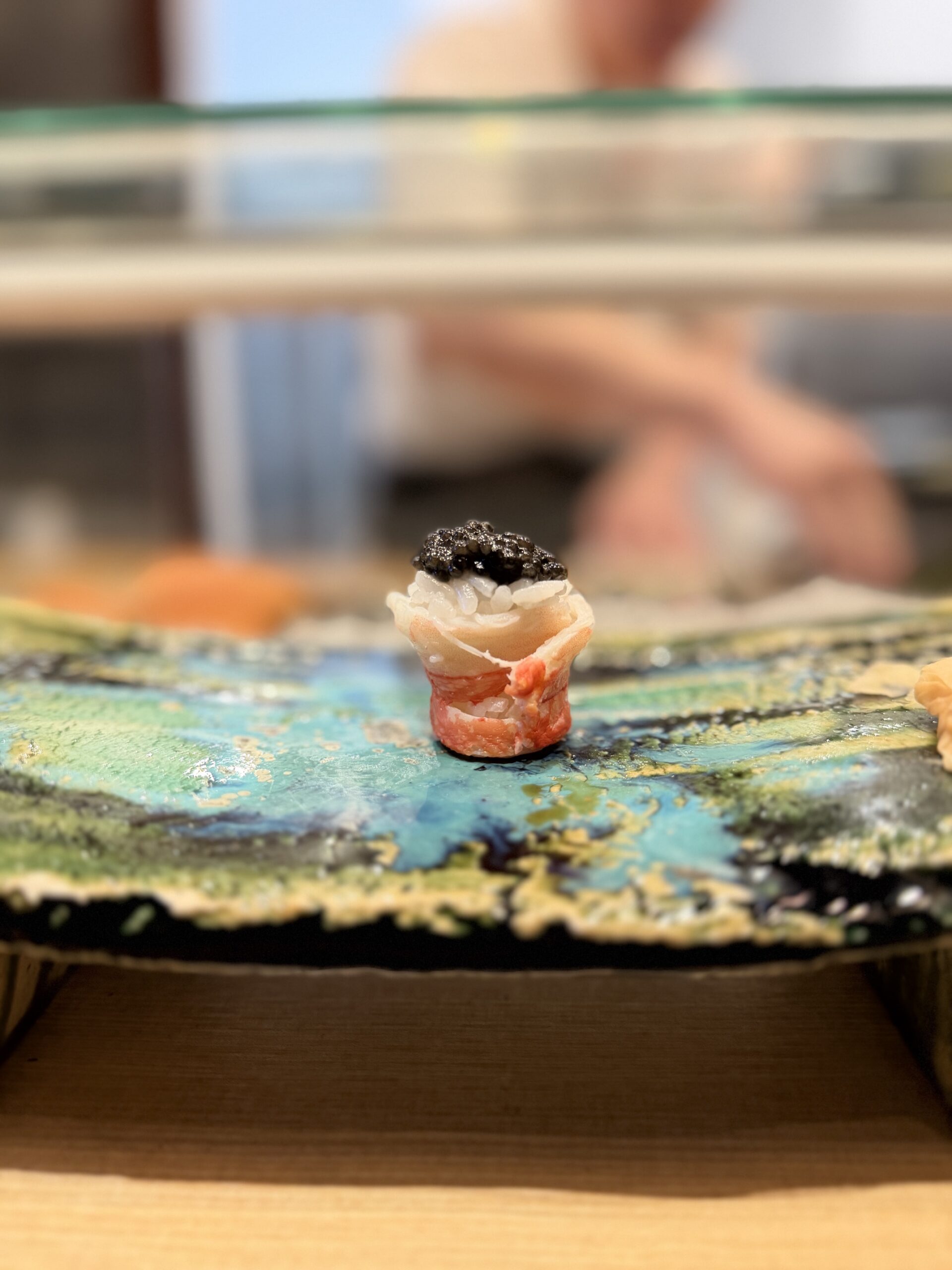
20: Zuwaigani (snow crab) with caviar
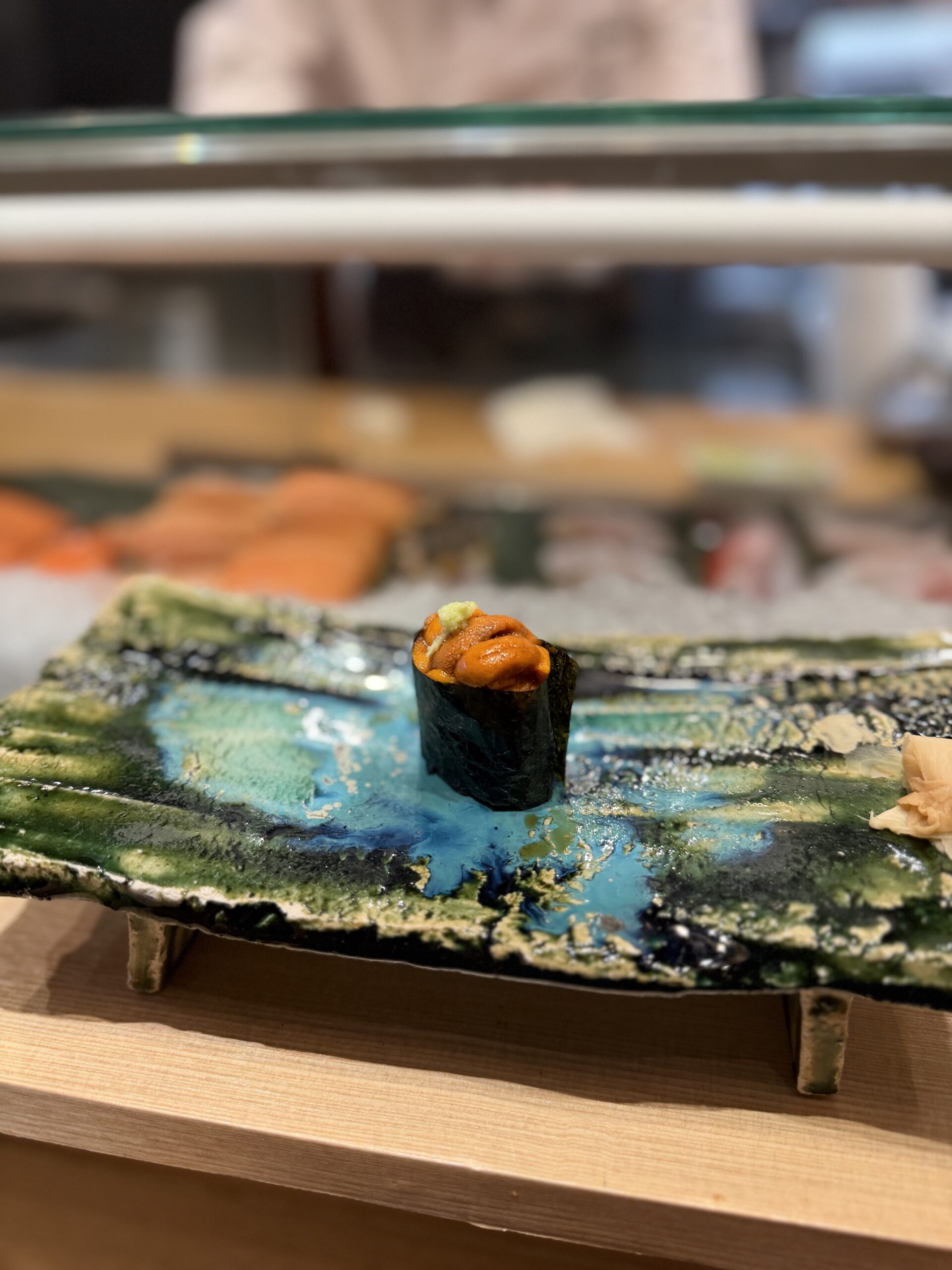
21: Uni
Another first on domestic sushi menus: Chuka Kurage – jellyfish. Despite the first part of its name, jellyfish has very little natural flavour. As a result, it’s salted, dried and typically used in sunomono, traditional vinegared salad. Here, it’s served as gunkanmaki prepared with – I believe – sesame oils. Either way, it always has one distinct aspect: the crunch.
This may not be a course for everyone, but it is a prime example of what the philosophy of the omakase: even addicted, narcissistic sushi bloggers will try something new.
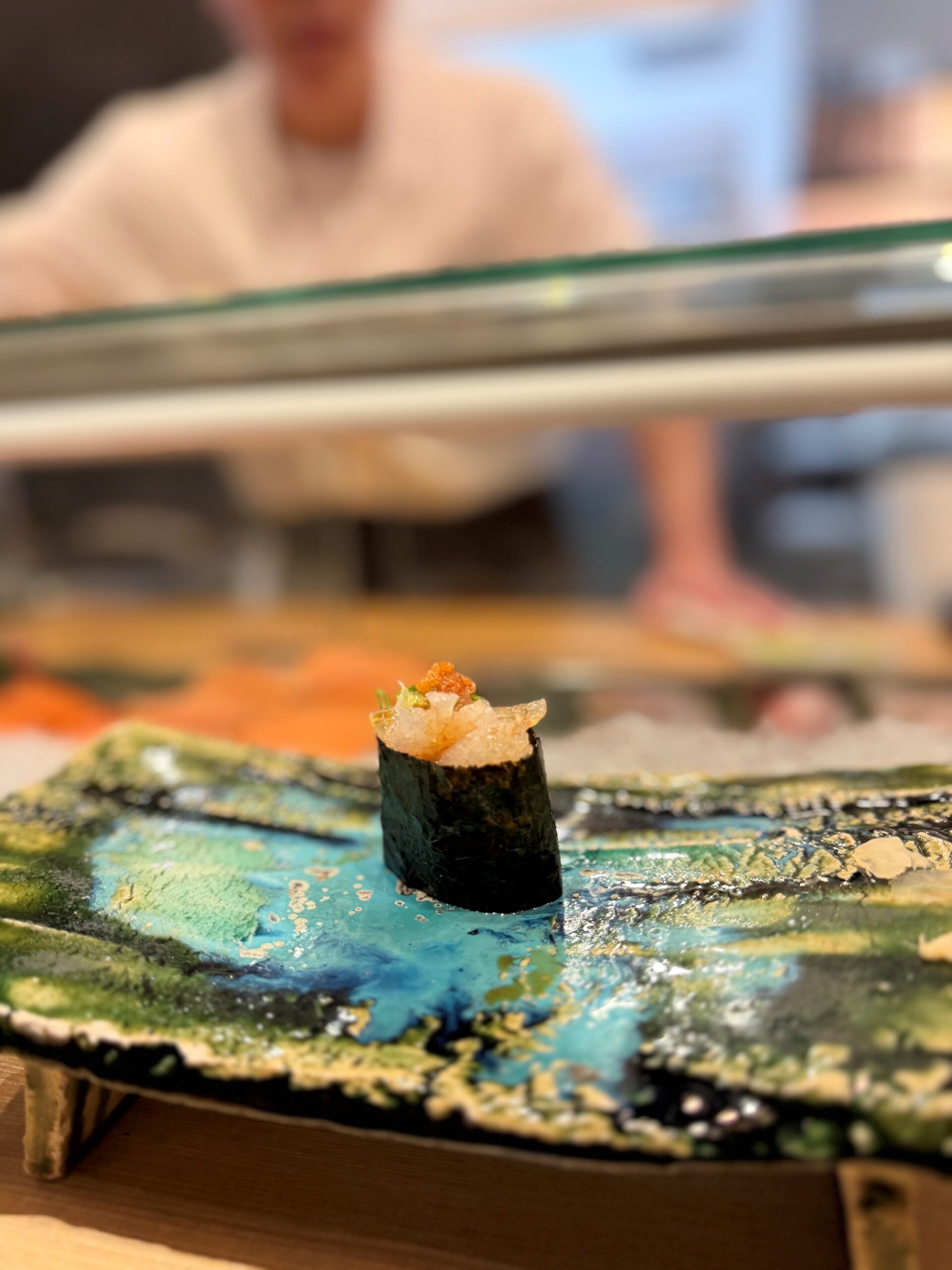
22: Chuka Kurage (jellyfish)
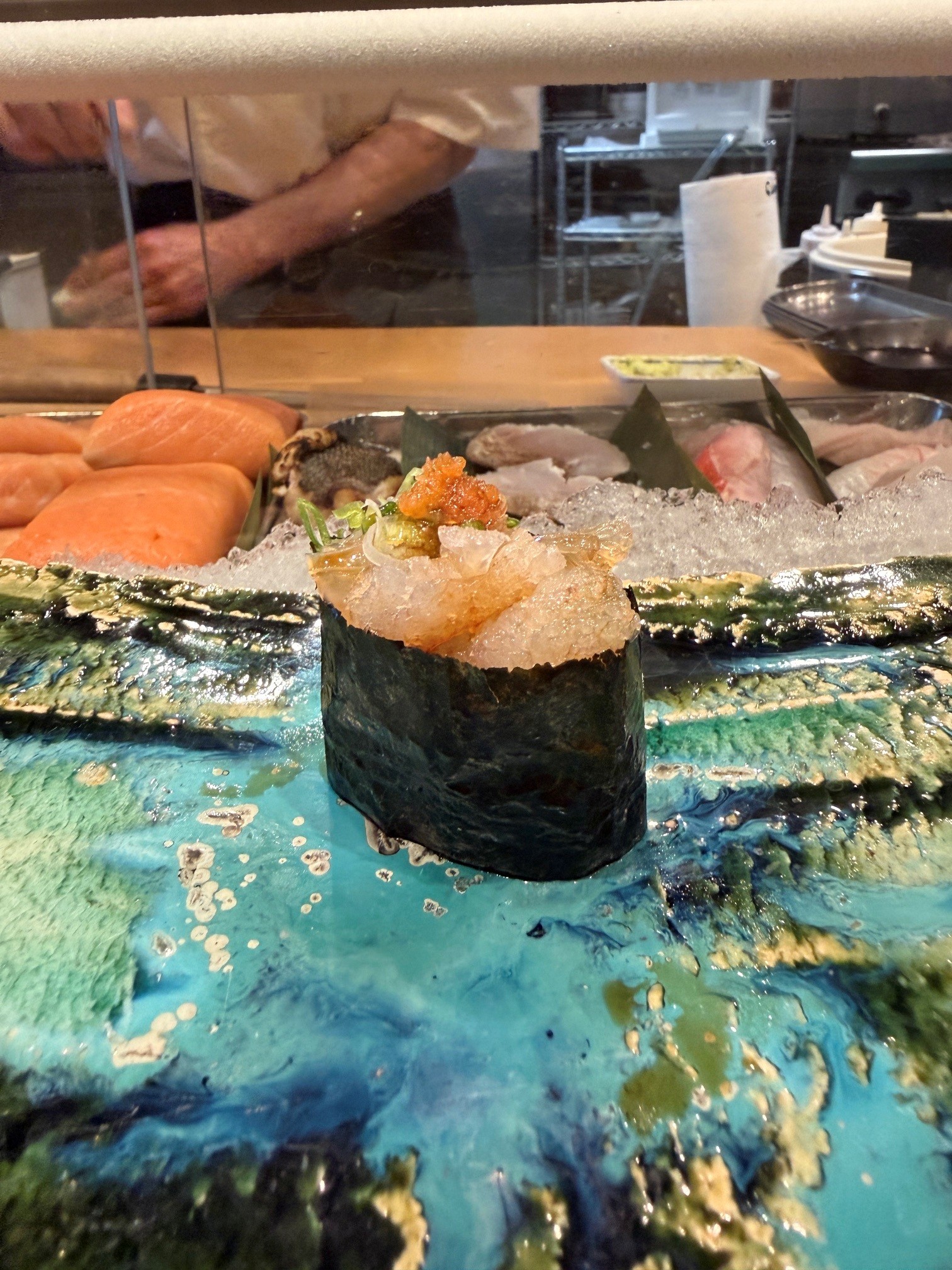
22: Chuka Kurage
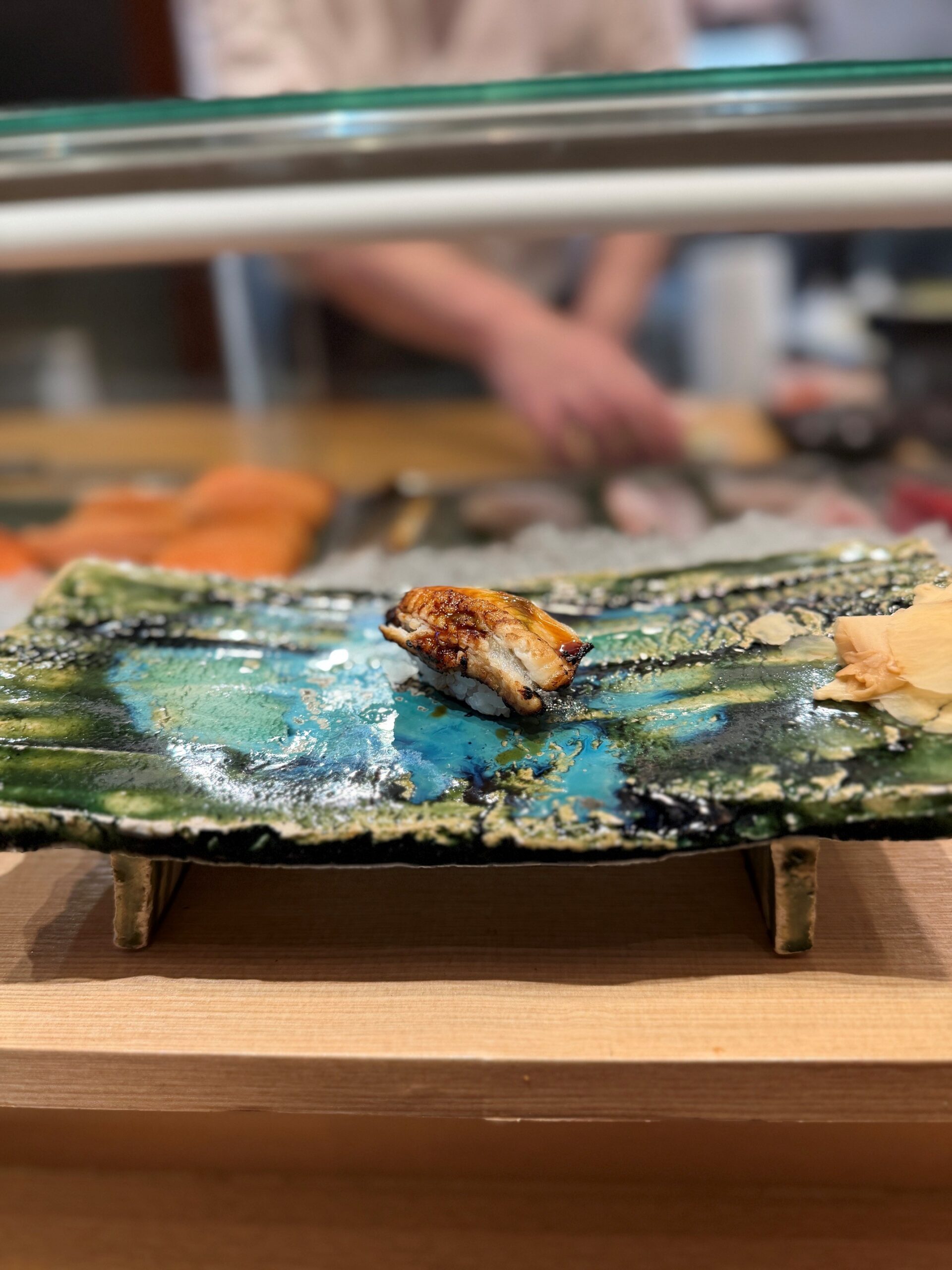
23: Anago
AND FINALLY, THE EGG…ER, EGGS
Tamagoyaki (the umbrella term for the egg omelette typically served at meal-end) is one of the most accessible aspects of sushi. Even heathens non-sushi lovers can stomach the ingredients (egg, sugar, mirin, sometimes cooked shrimp), and yes, it’s something you can attempt make at home. But just in case – and in keeping with “one make, multiple model” theme of the evening – Hiro-san serves two versions.
On the left is atsuyaki tamago, (the writing says tamago). On the right, is Gyoku, sometimes called the sponge-cake egg, because…well just, look at it.
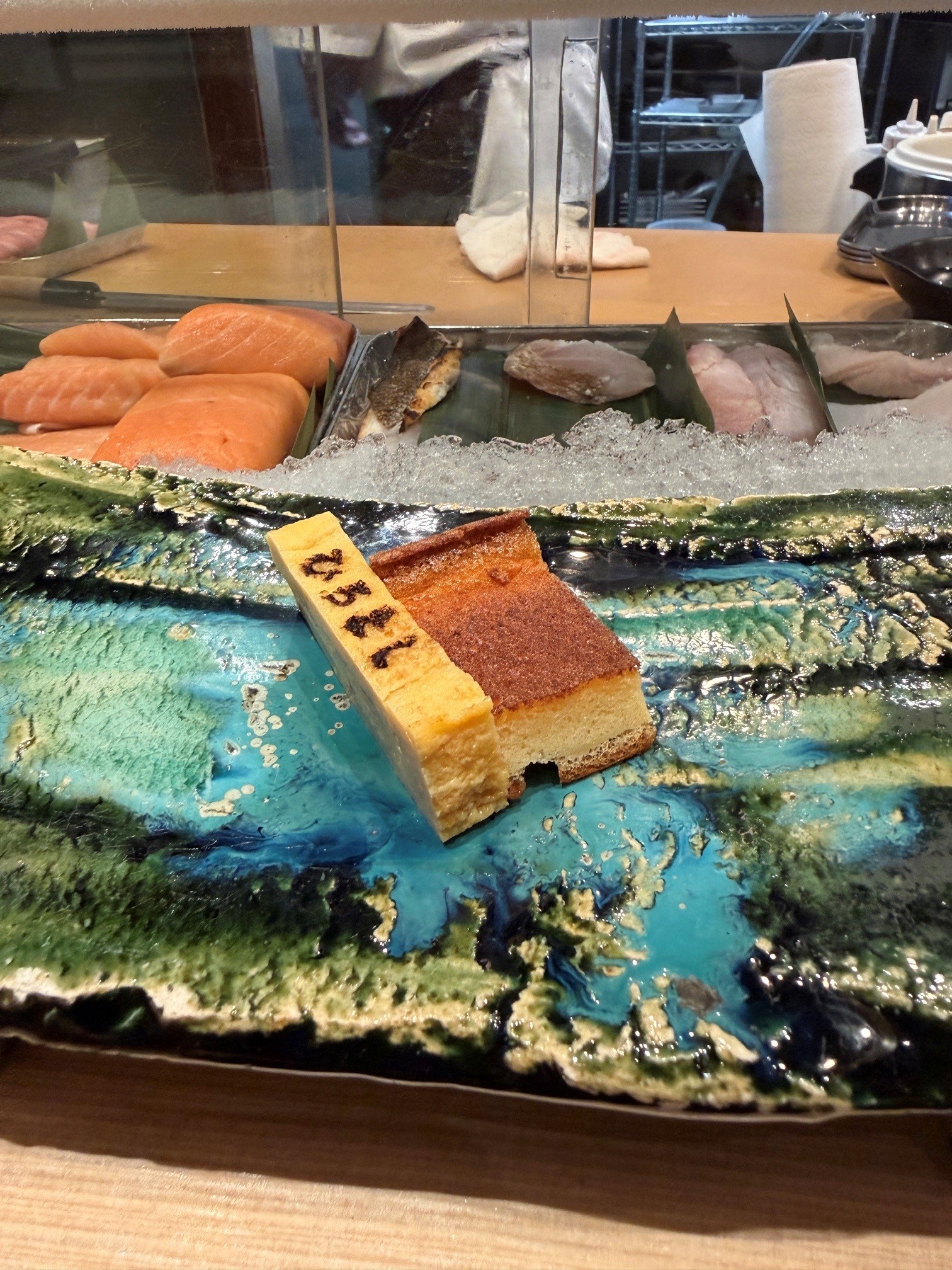
24: Tamago
ONE NOTE ON THE SET-UP
I found the set-up of the sushiya to be slightly awkward. It’s setup in a pretty small “L” shape, yet anyone in the perpendicular can’t see the counter or really anything else. The top of the L is just wide-open space.
So if you’re the type of sushi legend that prefers to know you’re in the sushiya, I’d sit on the runway.
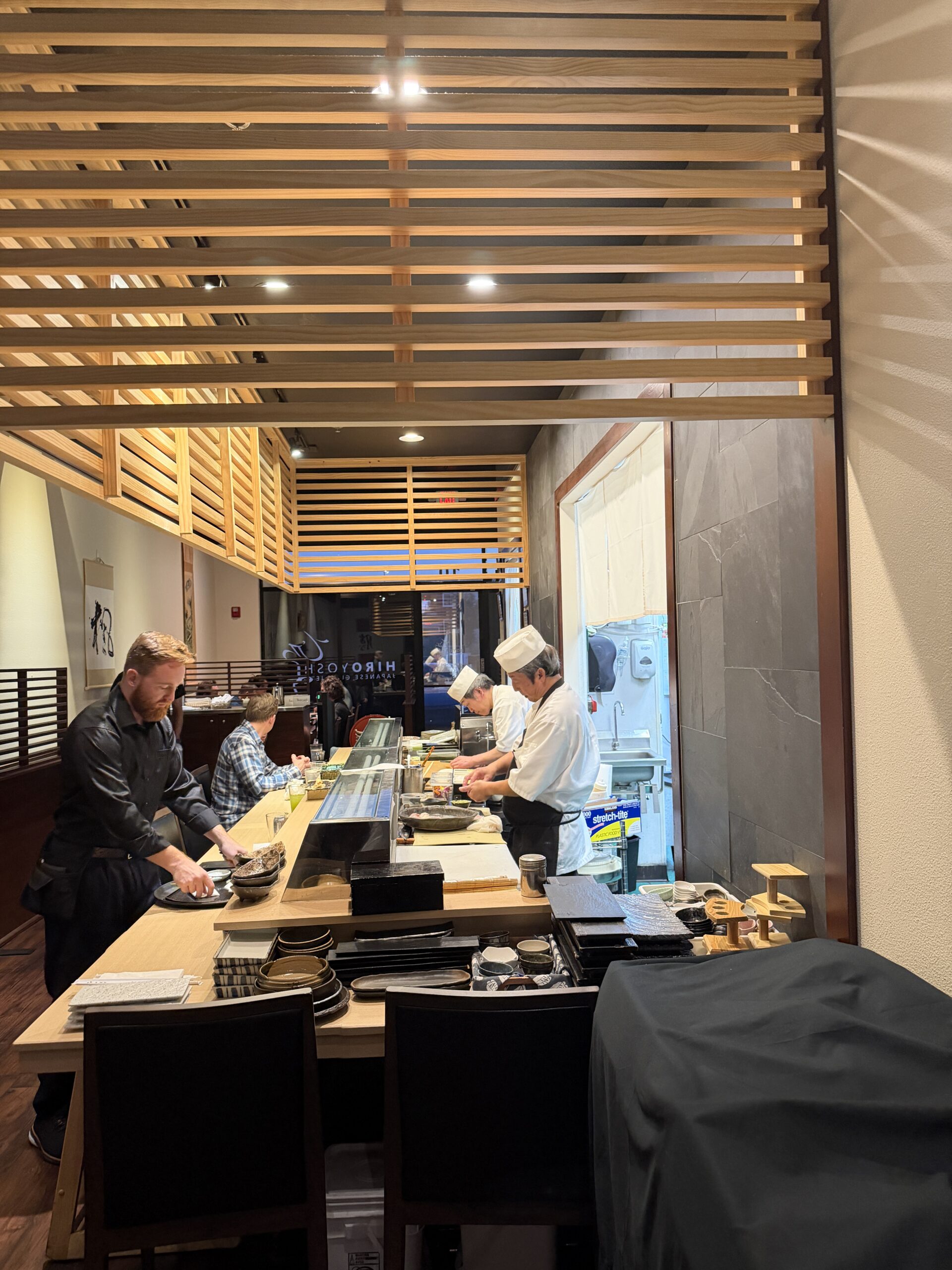
The runway
AND ONE TIP FOR THE TABLE GOERS
The omakase is still an option. As you might expect, rather than a course by course dance, it’s served by platter. My assumption is that the price is the same, but don’t quote me on that.
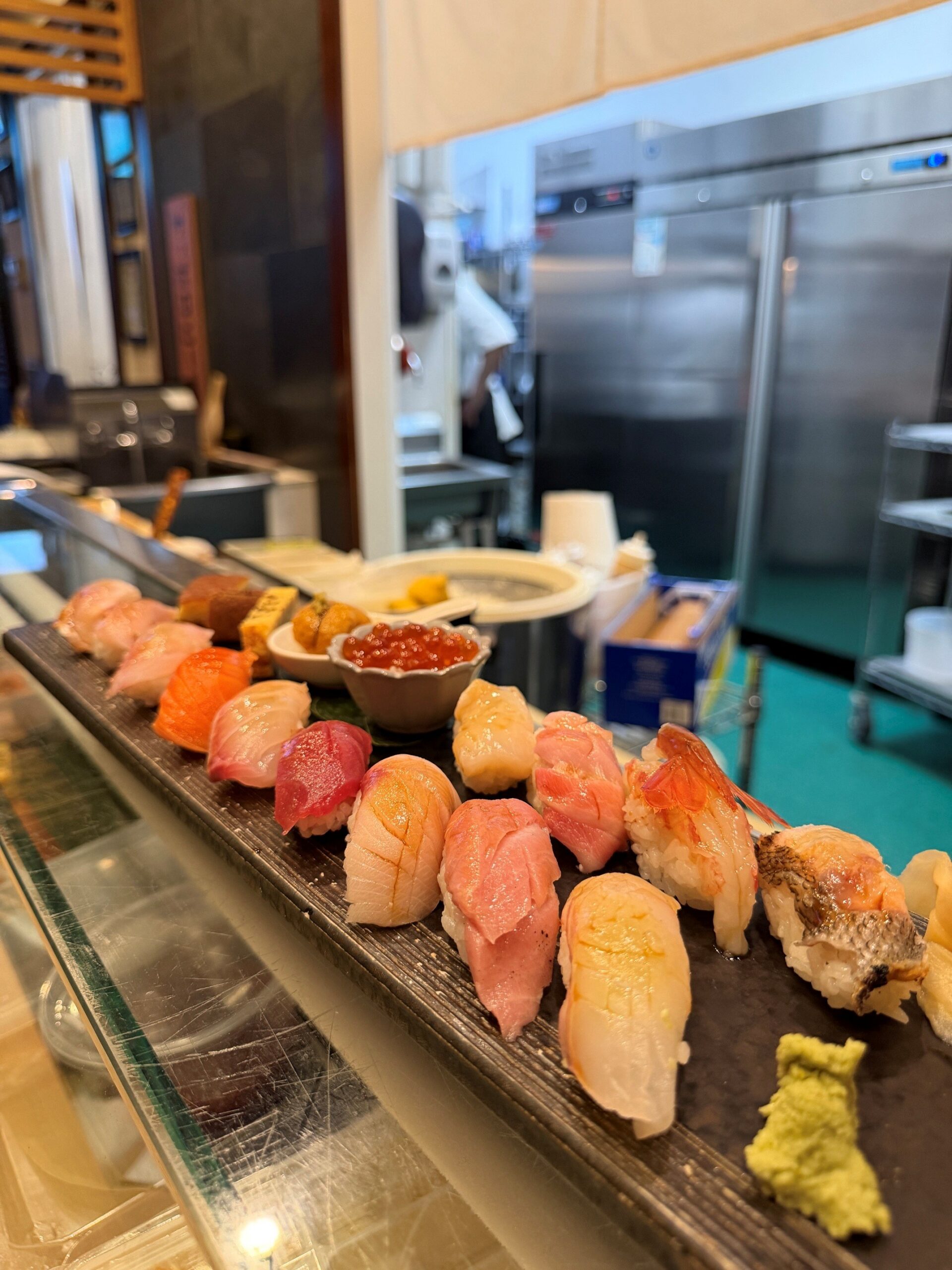
The table version of the omakase (assuming it’s the same price but not 100% sure).
HIROYOSHI REPRESENTS THE BEST OF WEST COAST SUSHI
I wrote about this in my Vegas blog, but strip-excepted, the desert’s sushi scene feels like a satellite of Los Angeles’. It has, on a much smaller scale, everything I love about LA sushi – the plazas, the non-omakase counters, the who-gives-a-fuck deference to trends (yes, I’m as shocked as you that LA defers on any trends but alas).
Sushi Hiroyoshi encapsulates every bit of that.
Recommended.