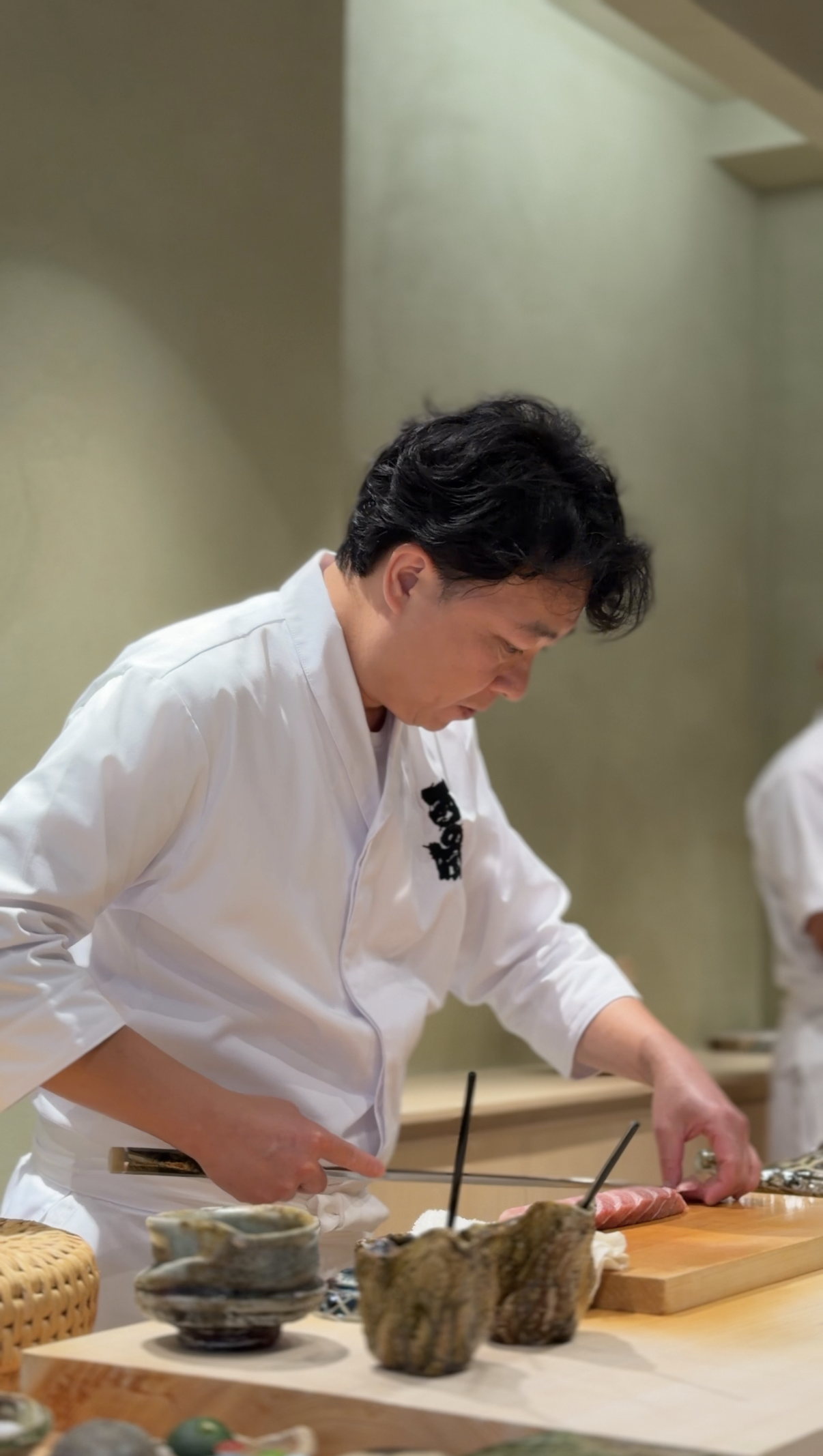
Vincent Gee
I recently stopped in Montreal on a roadtrip through Vermont, eastern Quebec and into Toronto. Some haters, specifically my wife, questioned whether I designed this billion-mile route just to visit Sushi Nishinokaze, the year-old sushiya from Vincent Gee. Preposterous – I actually designed the billion-mile route just to visit La Manoir Hovey (my hotel snobbery dwarfs my sushi snobbery).
But she can’t be blamed for asking. Such is the reputation of Nishnokaze in this household.
It takes guts to do what Vincent Gee did.
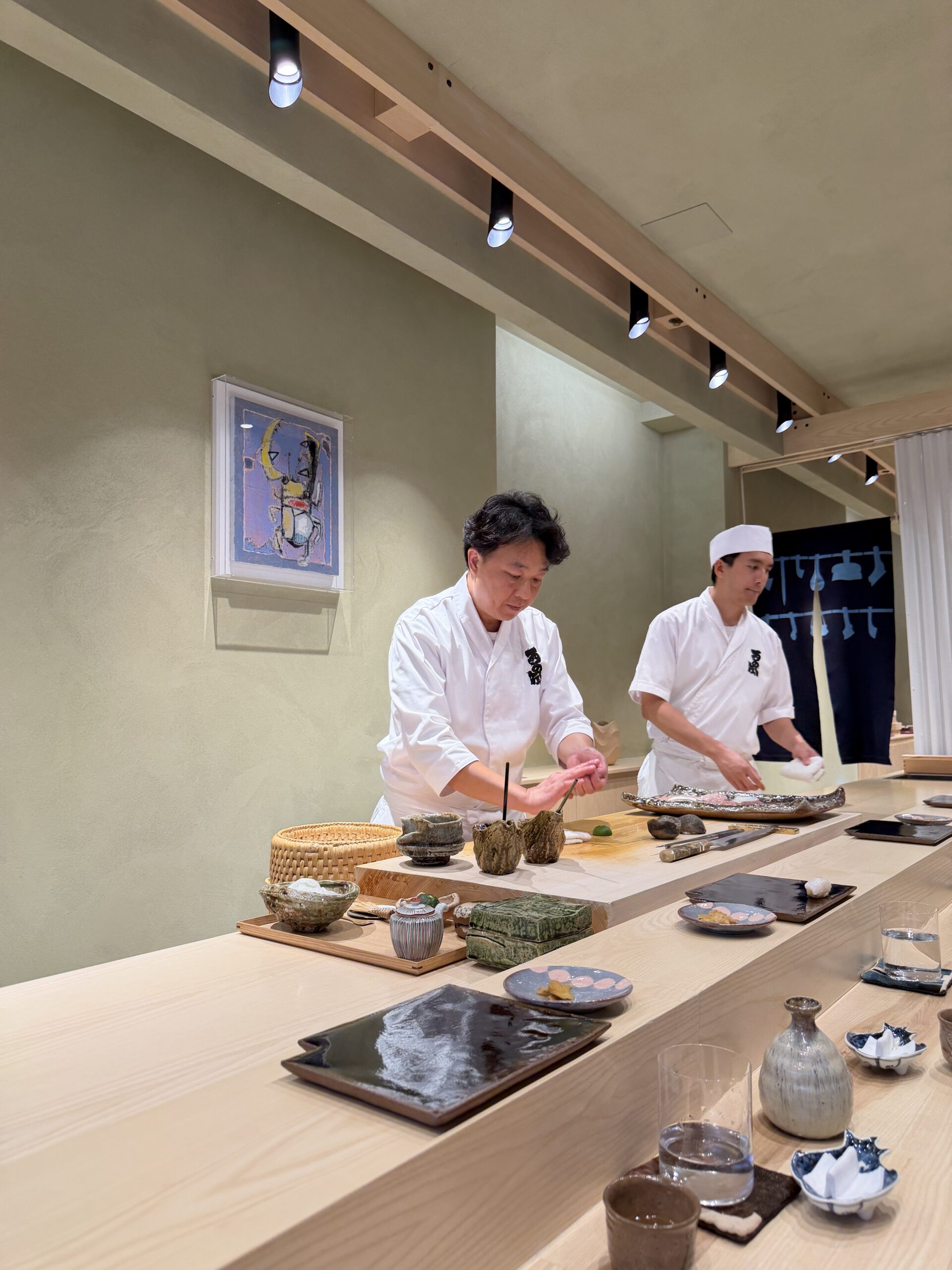
I never proclaim anything ‘the best’ (other than “the best arc in television history”, which goes to The Green Candle). So let’s just say – spoiler – that Gee’s Mile End sushiya is one of Canada’s best sushiya. And, yes, despite his co-owner’s media presence and top billing on the Wikipedia page, this is Gee’s sushiya.
It was also Gee’s risk.
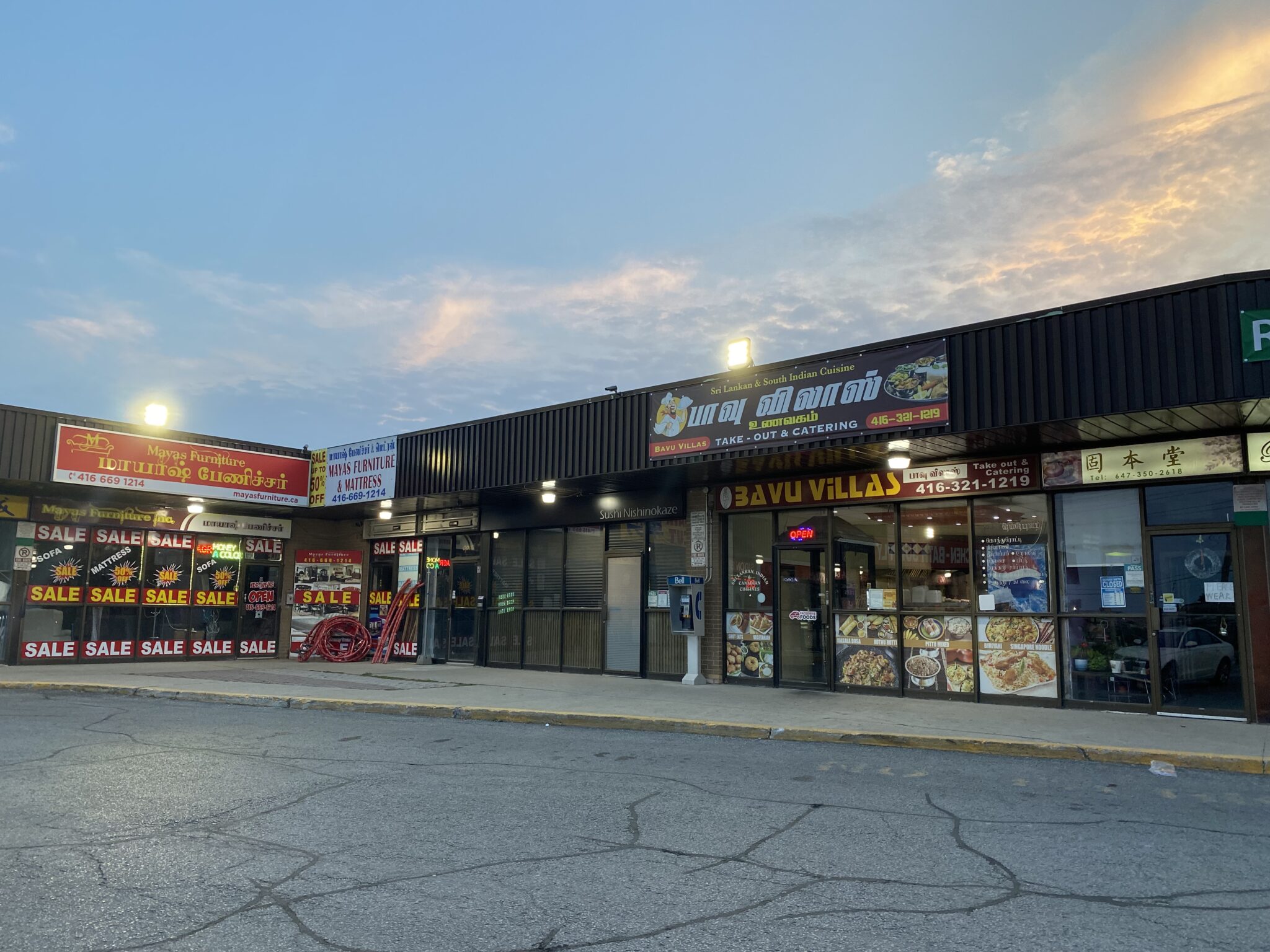
Outside the original Nishinokaze in TO
This the original Sushi Nishinokaze, located in a Scarborough plaza. A lesser scribe might say “don’t let the picture above fool you”; real legends know that incredible sushiya come in various vassals.
I went during COVID and loved it (review). I wasn’t alone. And yet, just as the sushiya was taking off, Gee shut it down. He moved to Japan, and apprenticed at the renowned Nishiazabu Sushi Shin. He wanted to improve. As someone who suffers from growth issues both figuratively and literally, I admire this perspective immensely.
Gee’s philosophy is similar to Shoushin’s, a place he trained, and will align with many of yours: he focuses on sushi, a novel concept in 2026. There is no miso-glazed cod, no flash fried amadai, no 90 minute preamble.
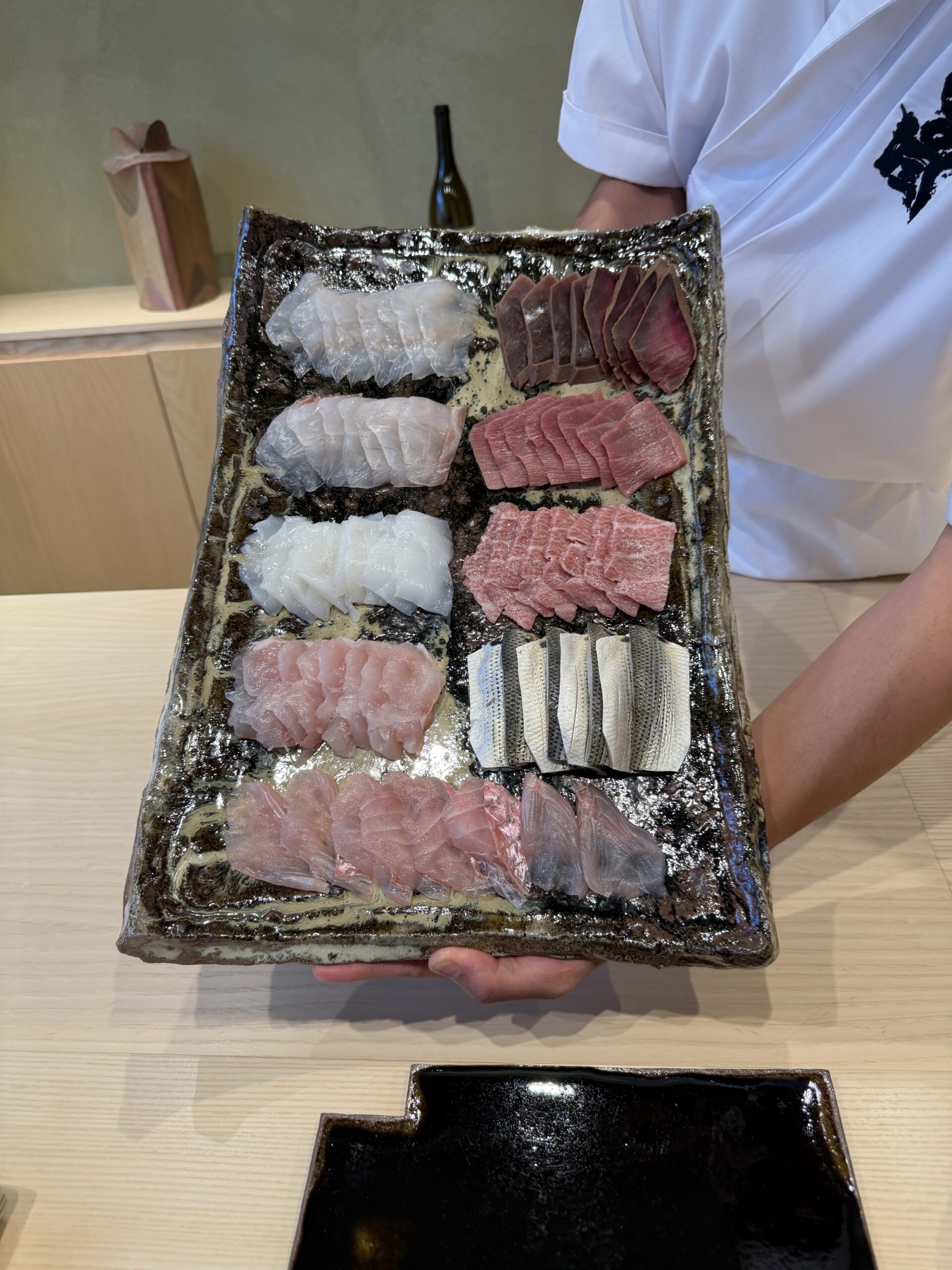
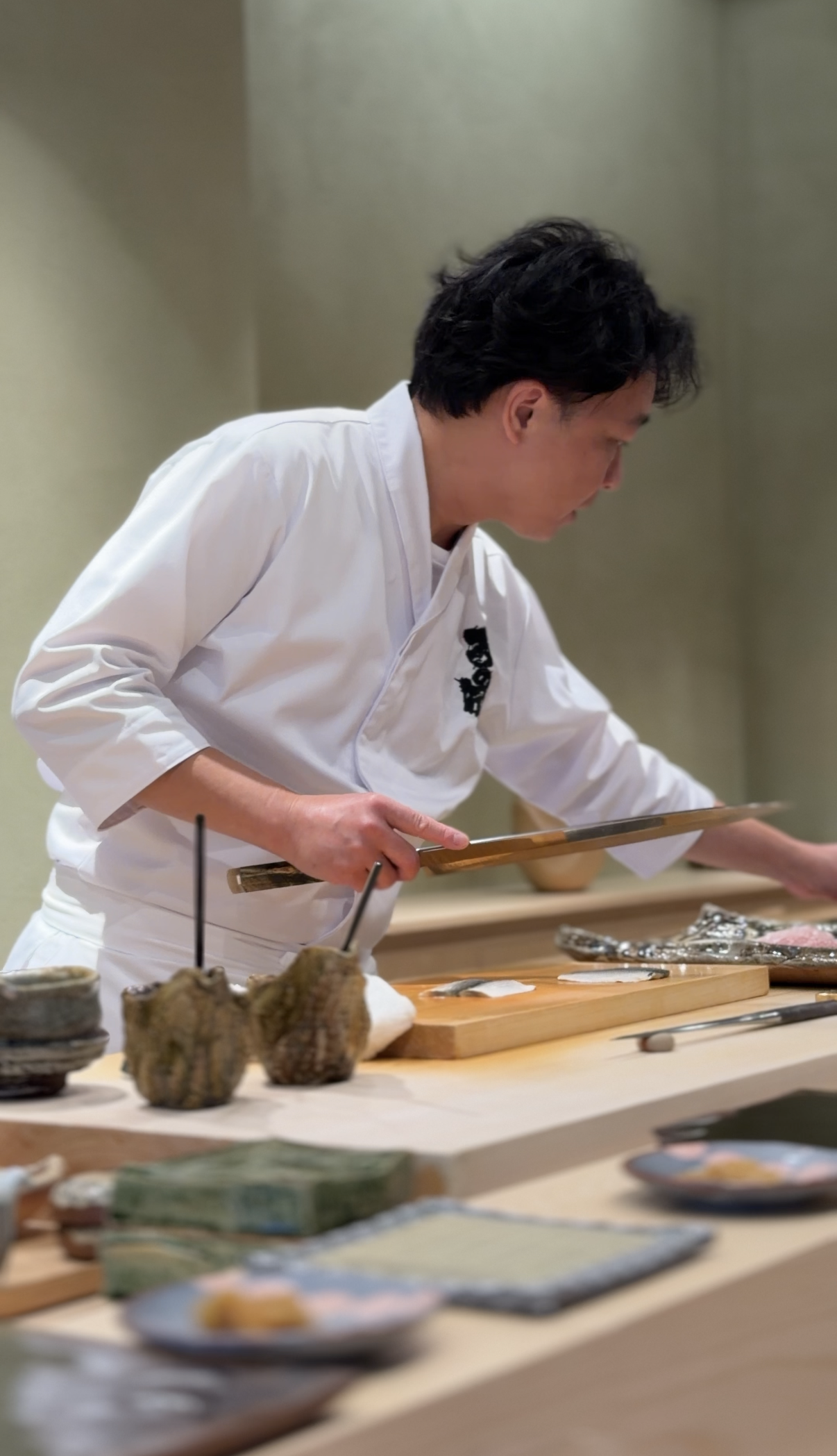
Some of the fish are pre-cut. This is not necessarily good or bad (there are differing philosophies).
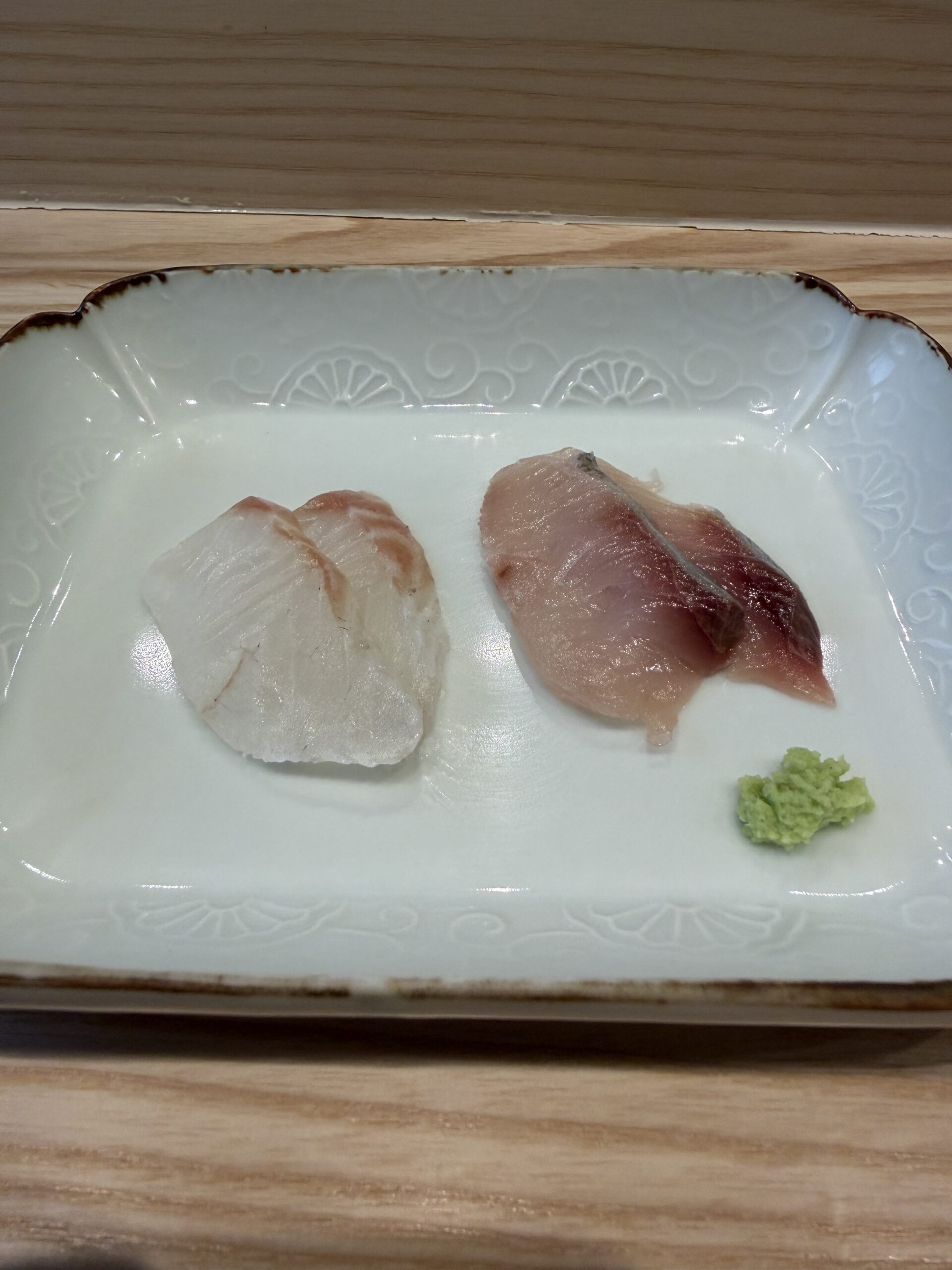
1: Suzuki (left) and Kanpachi (right) from Nagasaki
The Omakase is $413.91 CAD (about $300 USD) for approximately 20 courses, and it is prepaid; such is life with buzz and acclaim. Canada’s 100 Best ranked it fifth among new restaurants coast-to-coast-to-coast and Michelin awarded it 1 star. There are two seatings a night, 6:00pm and 8:15pm, and the sushiya is closed Tuesdays and Wednesdays. Reservations are difficult on weekends, but not impossible.
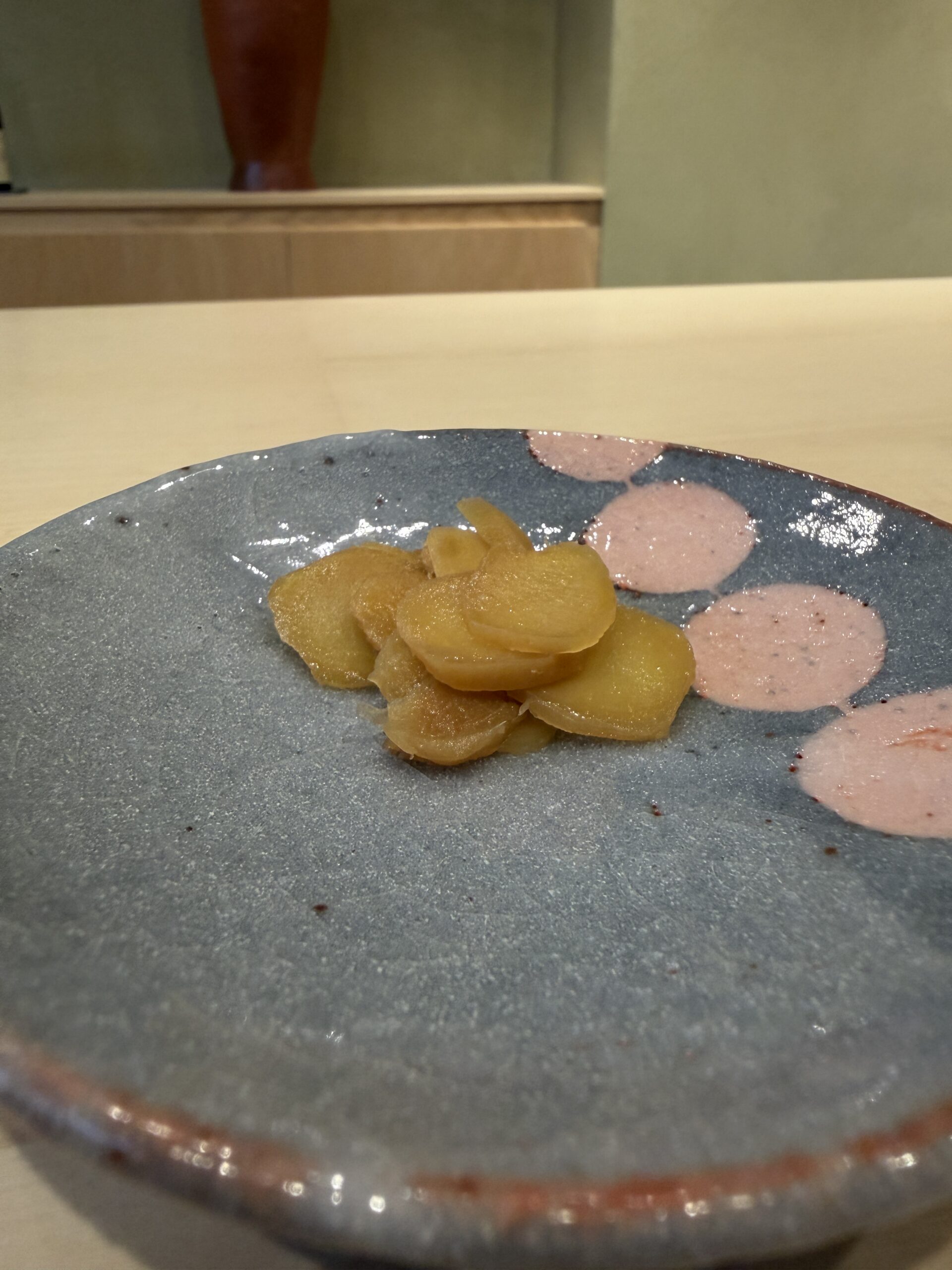
The term Edomae Sushi is en vogue (that’s all the french I got). In his seminal book on the subject – currently trading at $350 online – Kikuo Shimizu argued that Edomae could be defined as traditional techniques applied to locally caught fish, rather than fish from Tokyo Bay (or even Japan).
This omakase met that definition.
To wit, this shrimp was presented as a Quebec product from Ile-aux-marins. Now, Ile-aux-marins is a protectorate of Saint Pierre and Miquelon, island collectivities of France (how many of you braniacs knew that France controlled two islands off the coast of Canada?). Some crack internet research showed that Nishinokaze usually gets its shrimp from Matane, in Quebec.
Perhaps something lost in translation; in any event, the shrimp was very local.
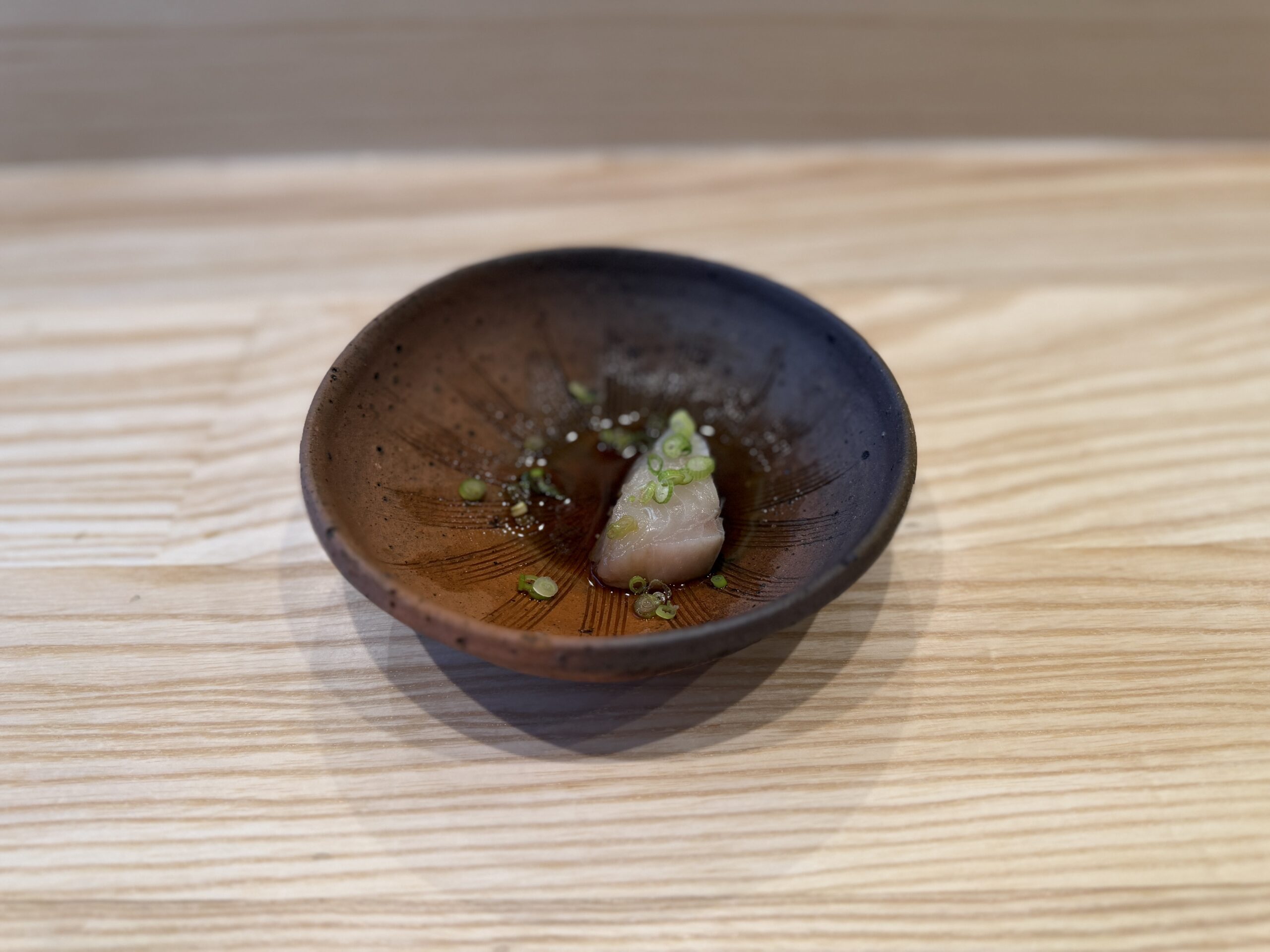
3: Sawara
Sawara toro was served in two pieces, though some stupid blogger ate the first before the picture. Sawara’s best season is winter, but since this one came from Mie prefecture – site of my honeymoon, review here – I had no complaints.
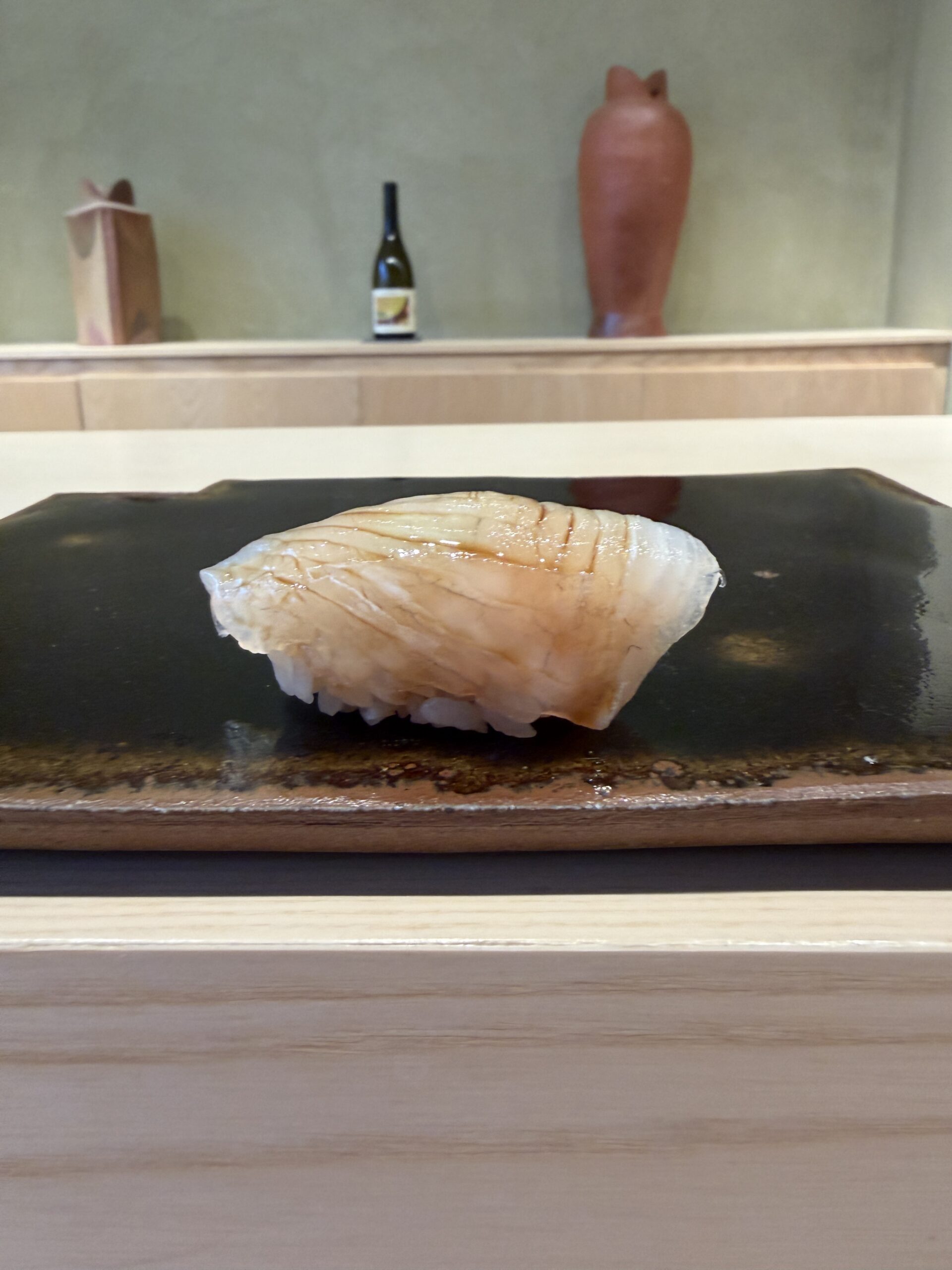
4: Hirame
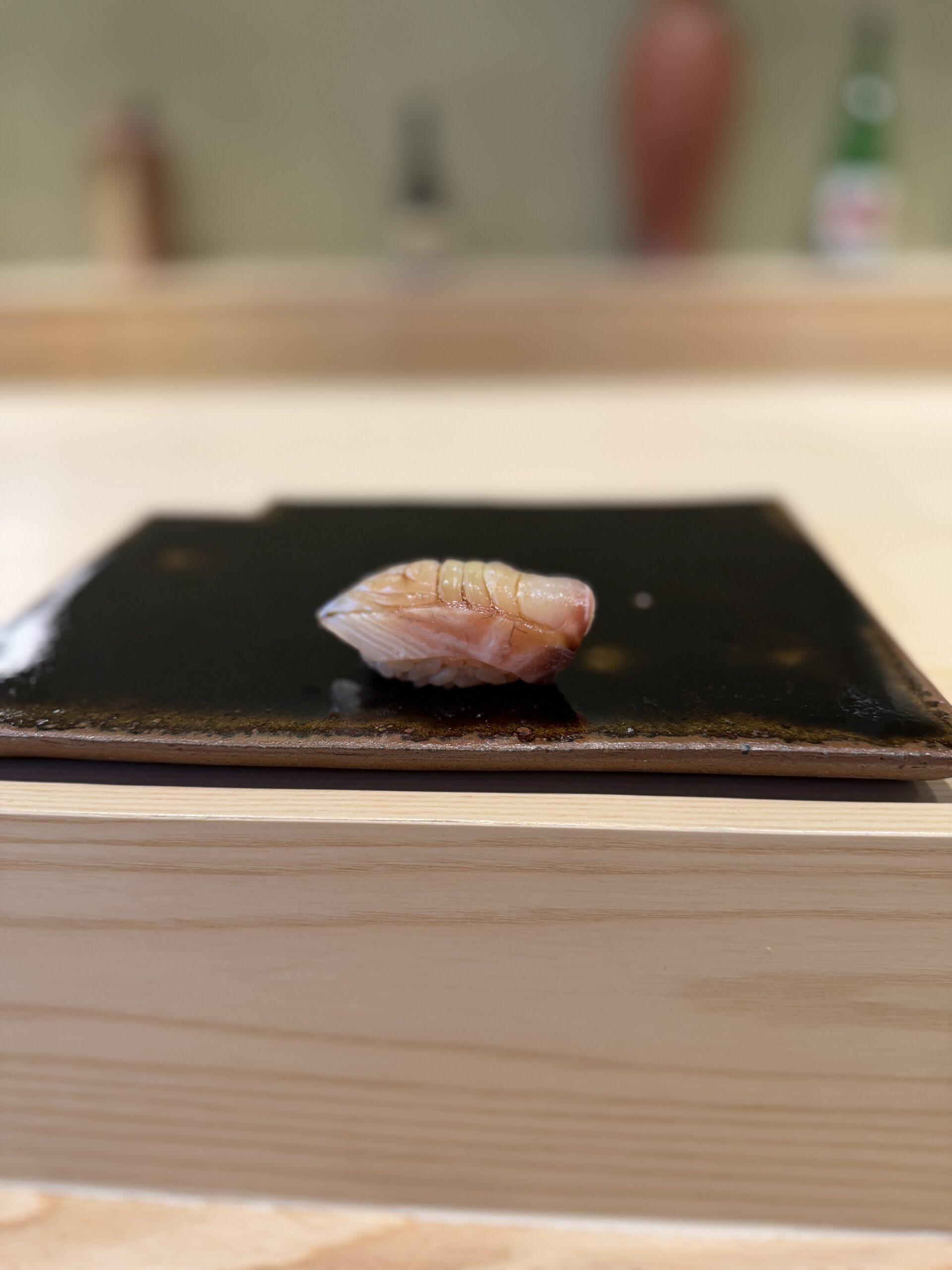
5: Madai
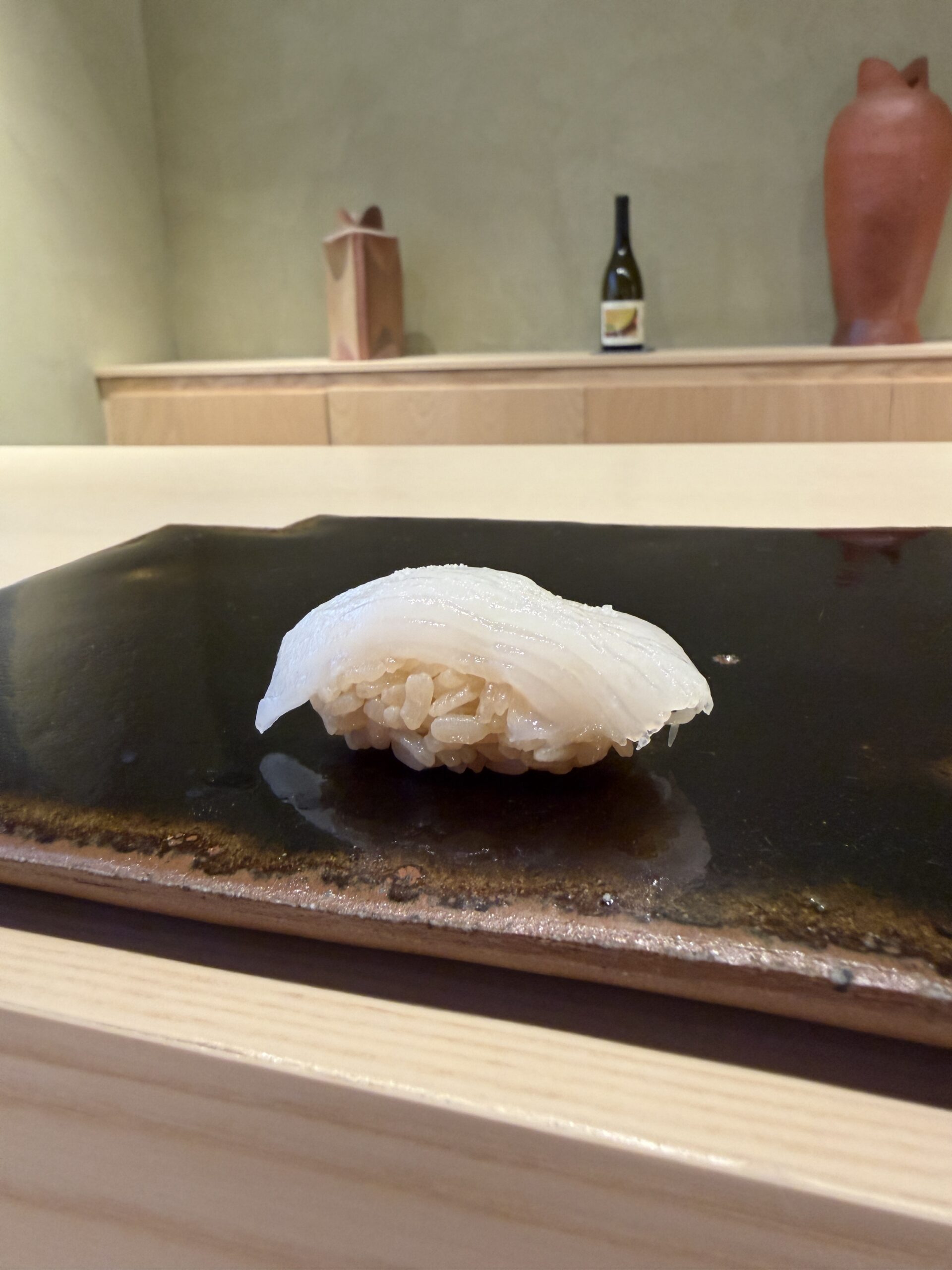
6: Aori Ika (bigfin reef squid)
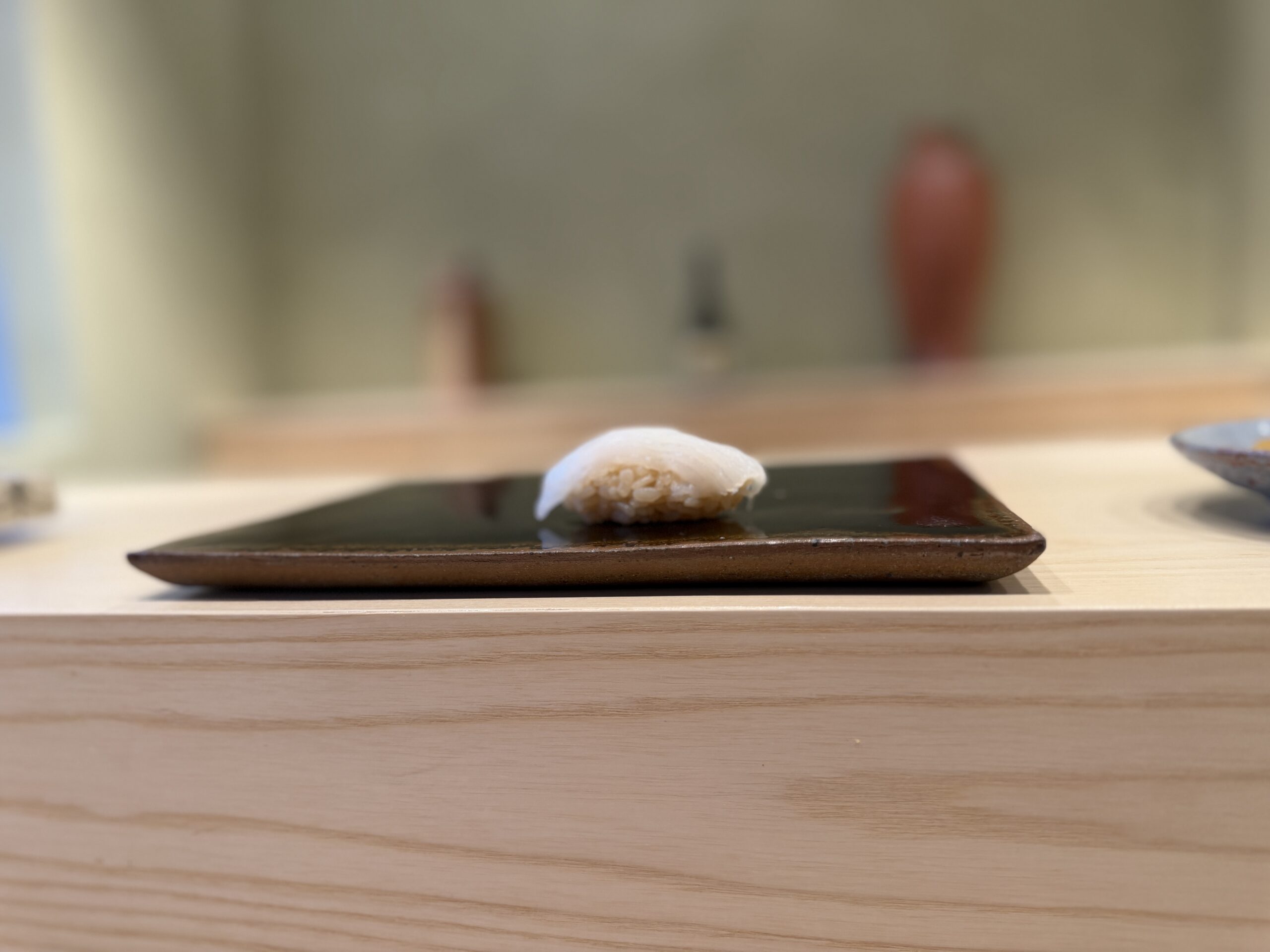
Like he did in Toronto, Gee’s omakase traverses the lean-to-fatty spectrum. Amadai (tilefish) was next. We’re very early in its season, and yet it was surprisingly fatty.
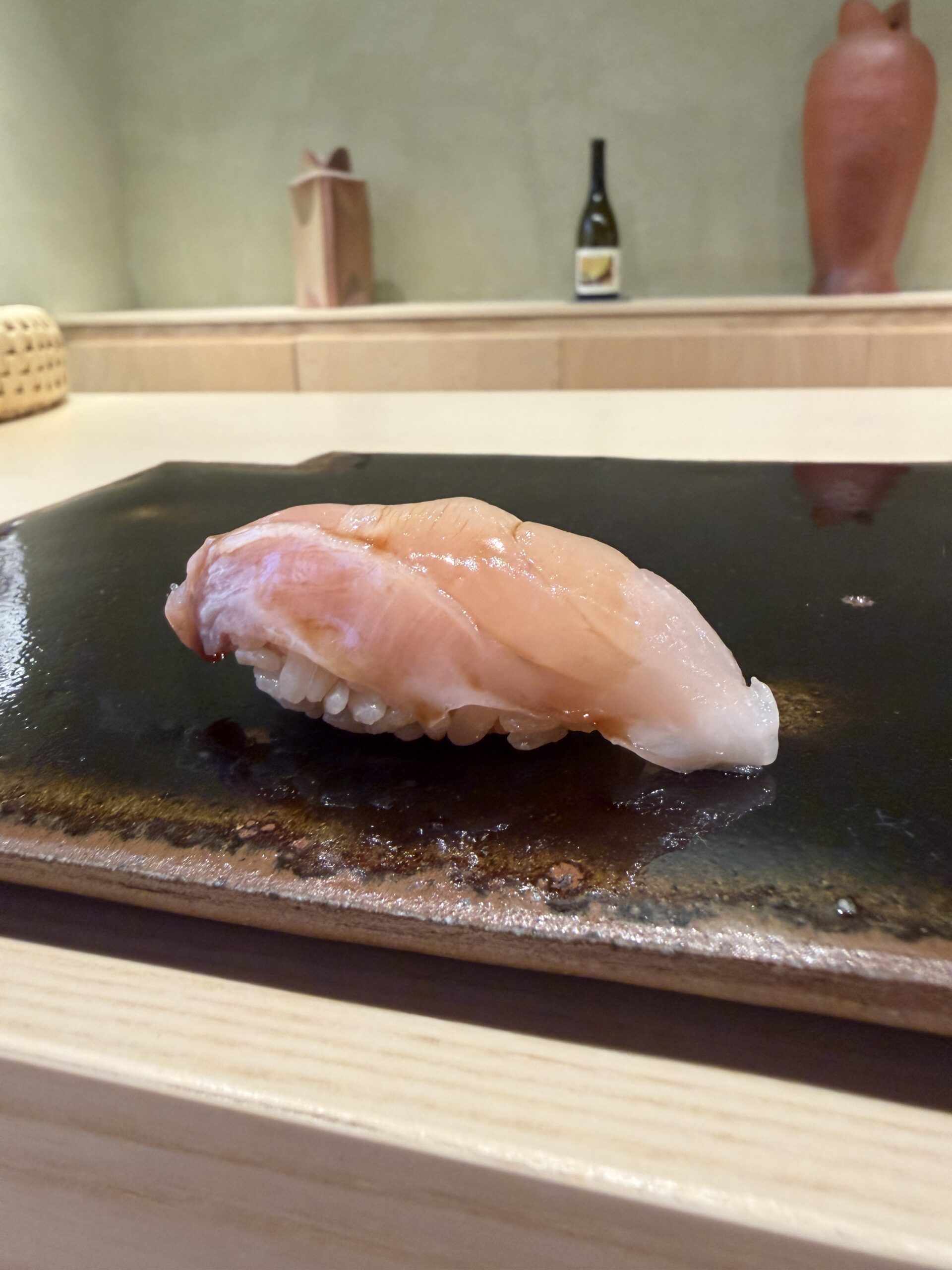
7: Amadai
Like Toronto, Gee turns to a honmaguro progression midway through. Like Toronto, this tuna is from Canadian waters, and like Toronto, Gee’s zuke is marinated over two weeks.
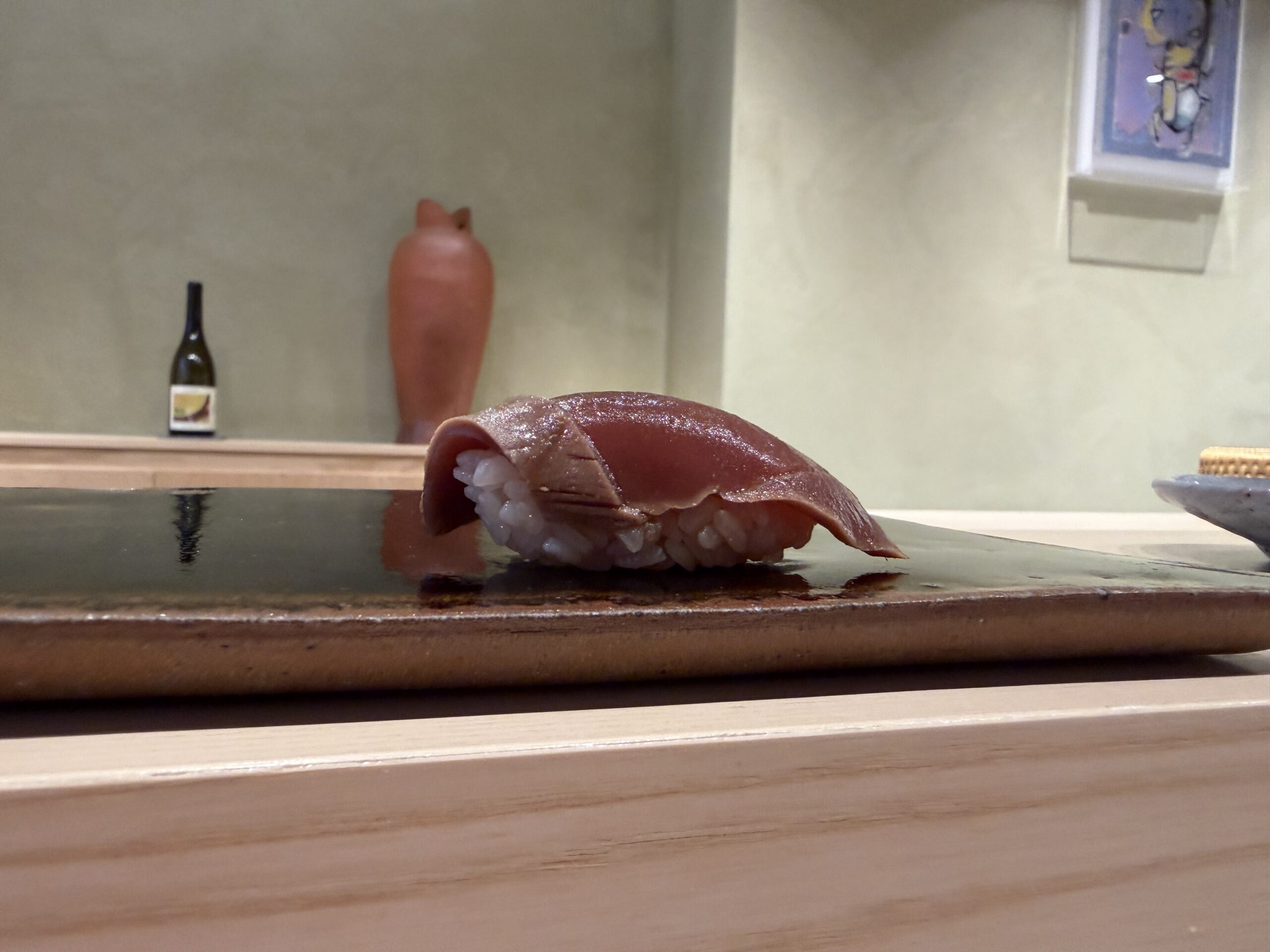
8: Zuke
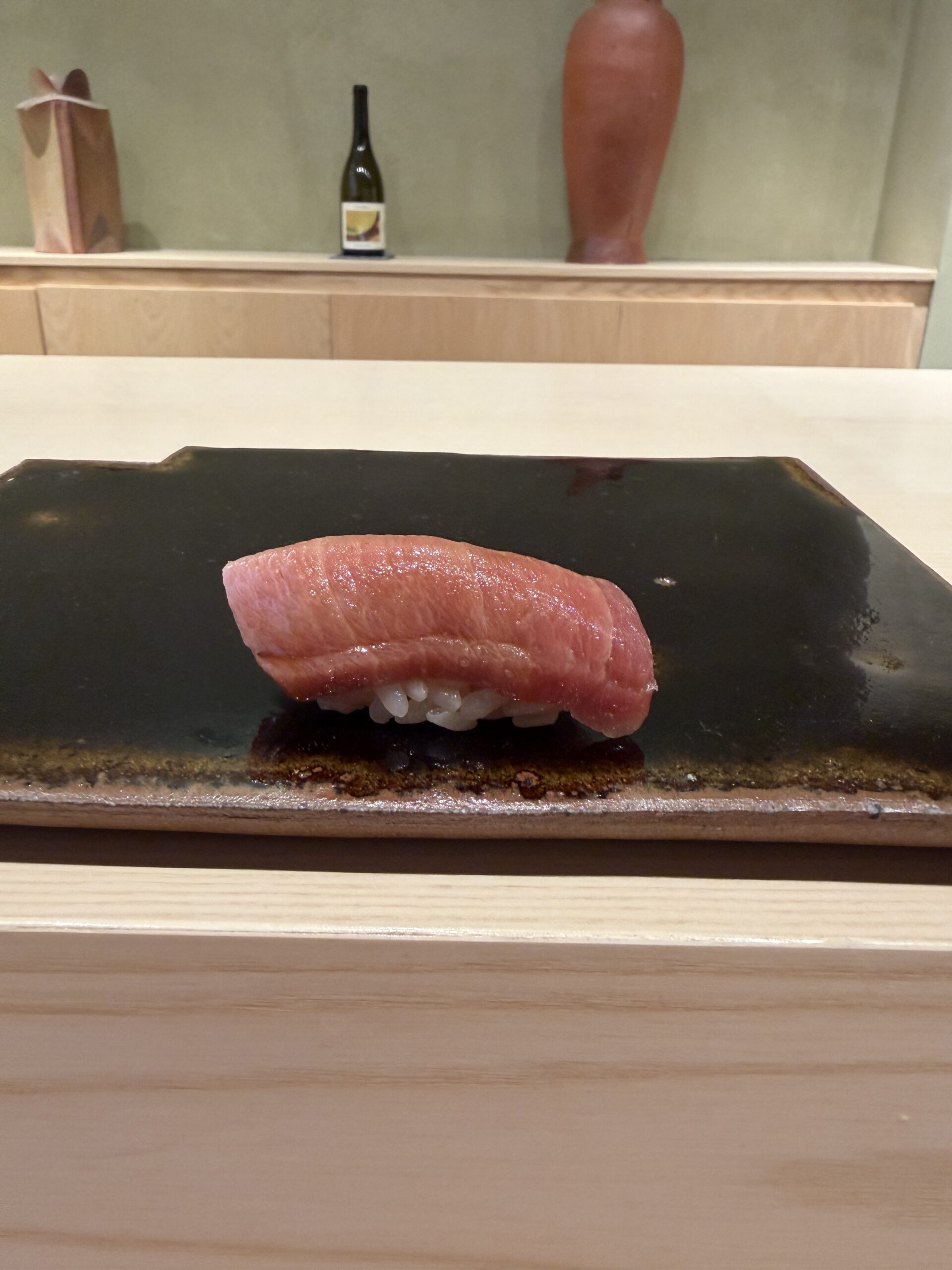
9: Chu Toro
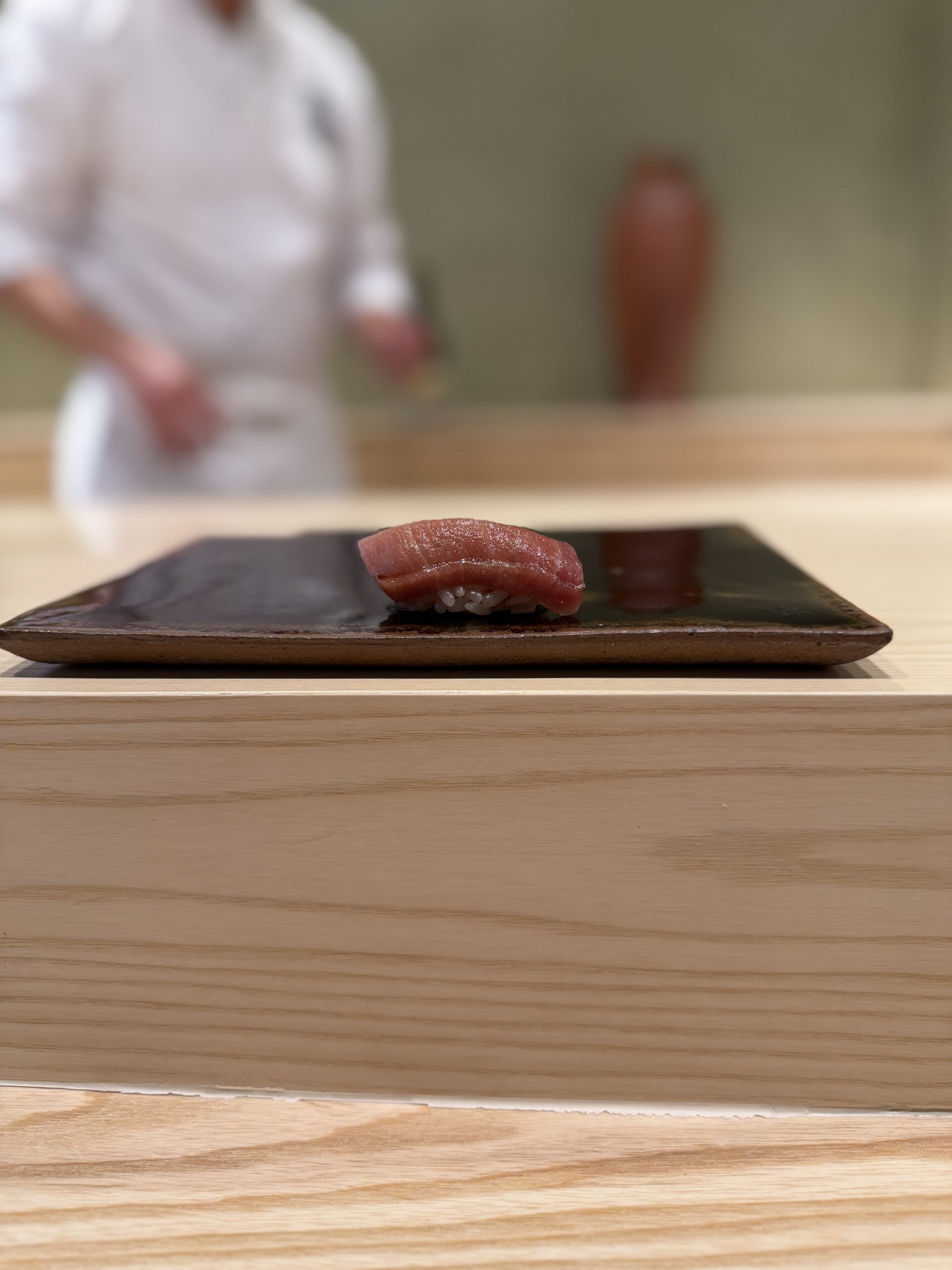
Chu Toro again
The O Toro was also delicious, if not a touch sinew-y. One of Gee’s skills is forming the nigiri (Jackie Lin at Shoushin was also noticeably good at this). Such was the case at the OG as well.
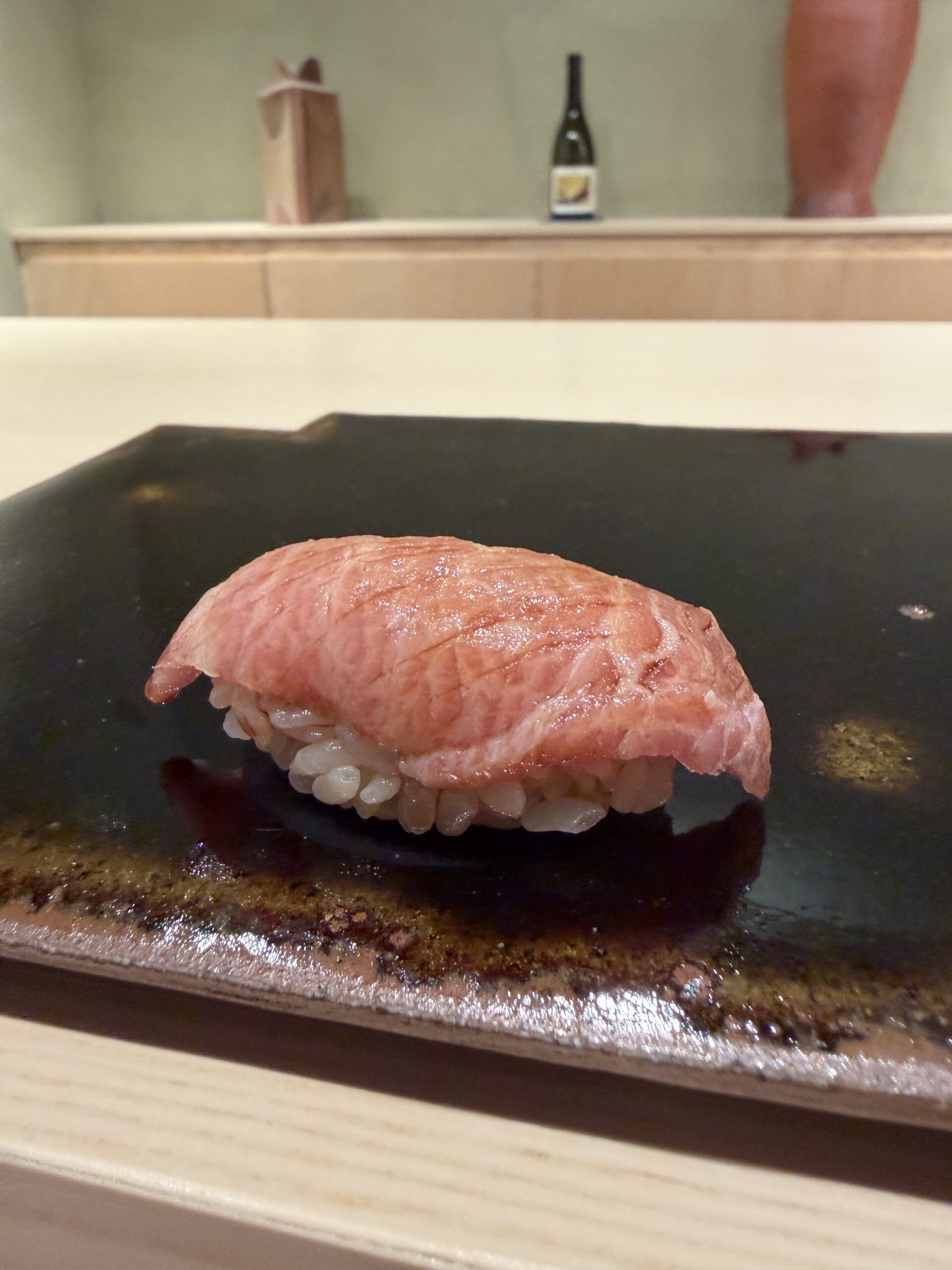
10: O Toro
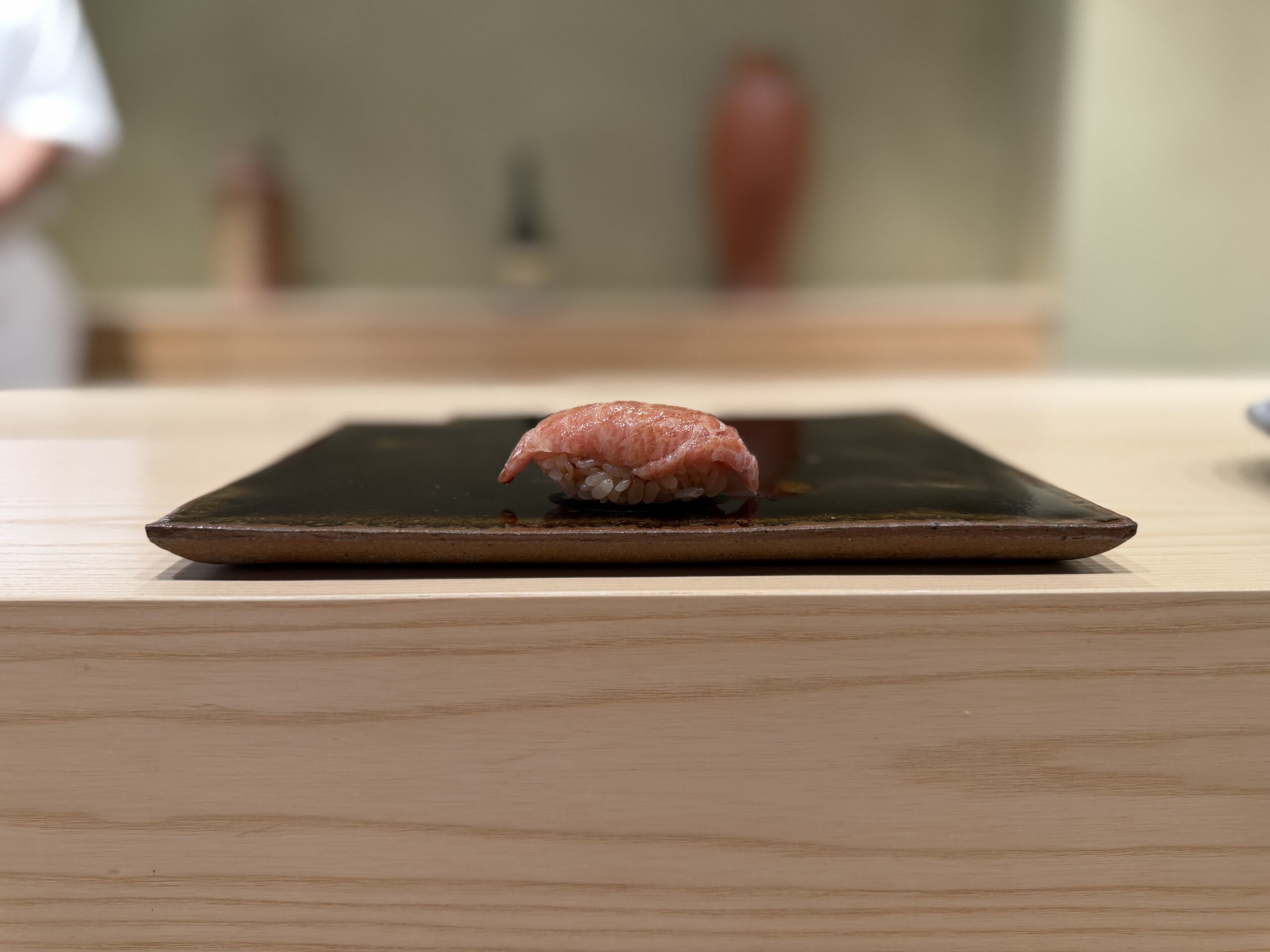
Another O Toro
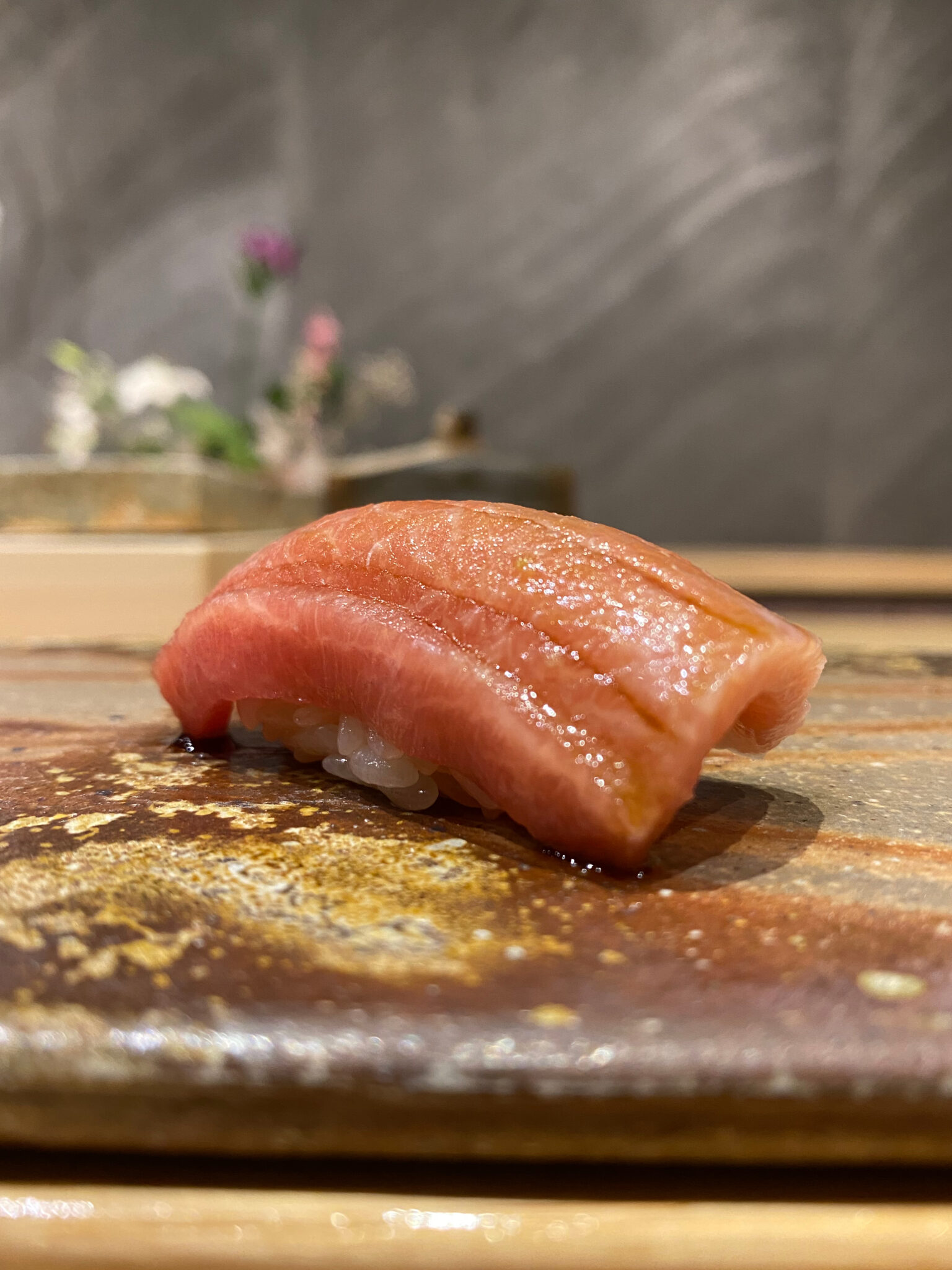
Kama Toro at Sushi Nishinokaze Toronto (2021)
Which brings us to the 3-year question: Is this version of Nishinokaze any better than Toronto’s?
I’m not sure – and that’s a compliment, by the way. As I’ve mentioned 100 times, the OG was fantastic. This omakase had hikarimono, specifically this outstanding – outstanding – Kohada from Tokyo Bay (literally Edomae). A notoriously tricky neta, this was perfectly marinated in vinegar. Sharp taste you dream about.
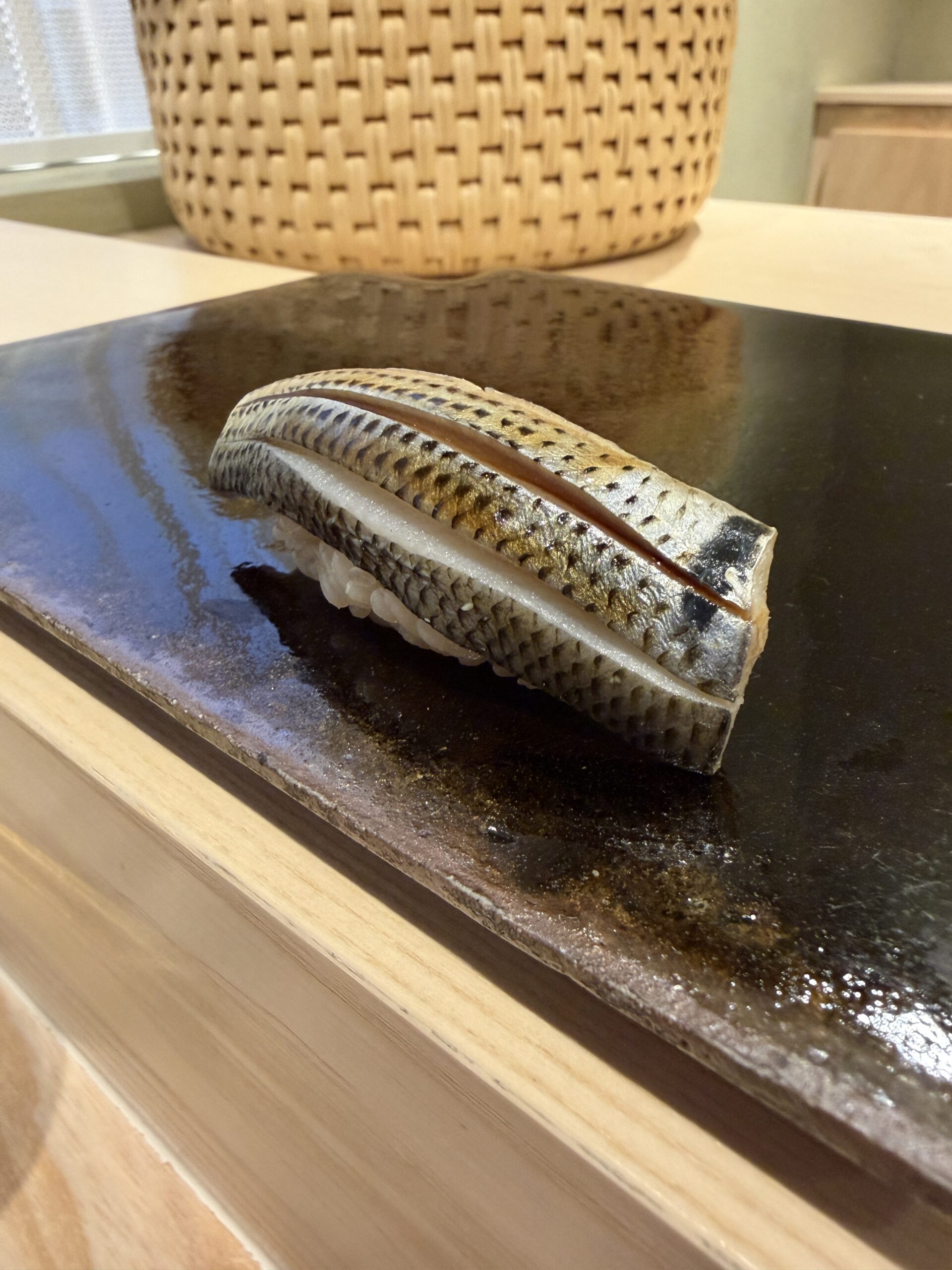
11: Kohada
But Hikarimono was available at Nishinokaze TO. So to were other delicacies, both on menu and off. Montreal’s Nishinokaze does not offer an okonomi option.
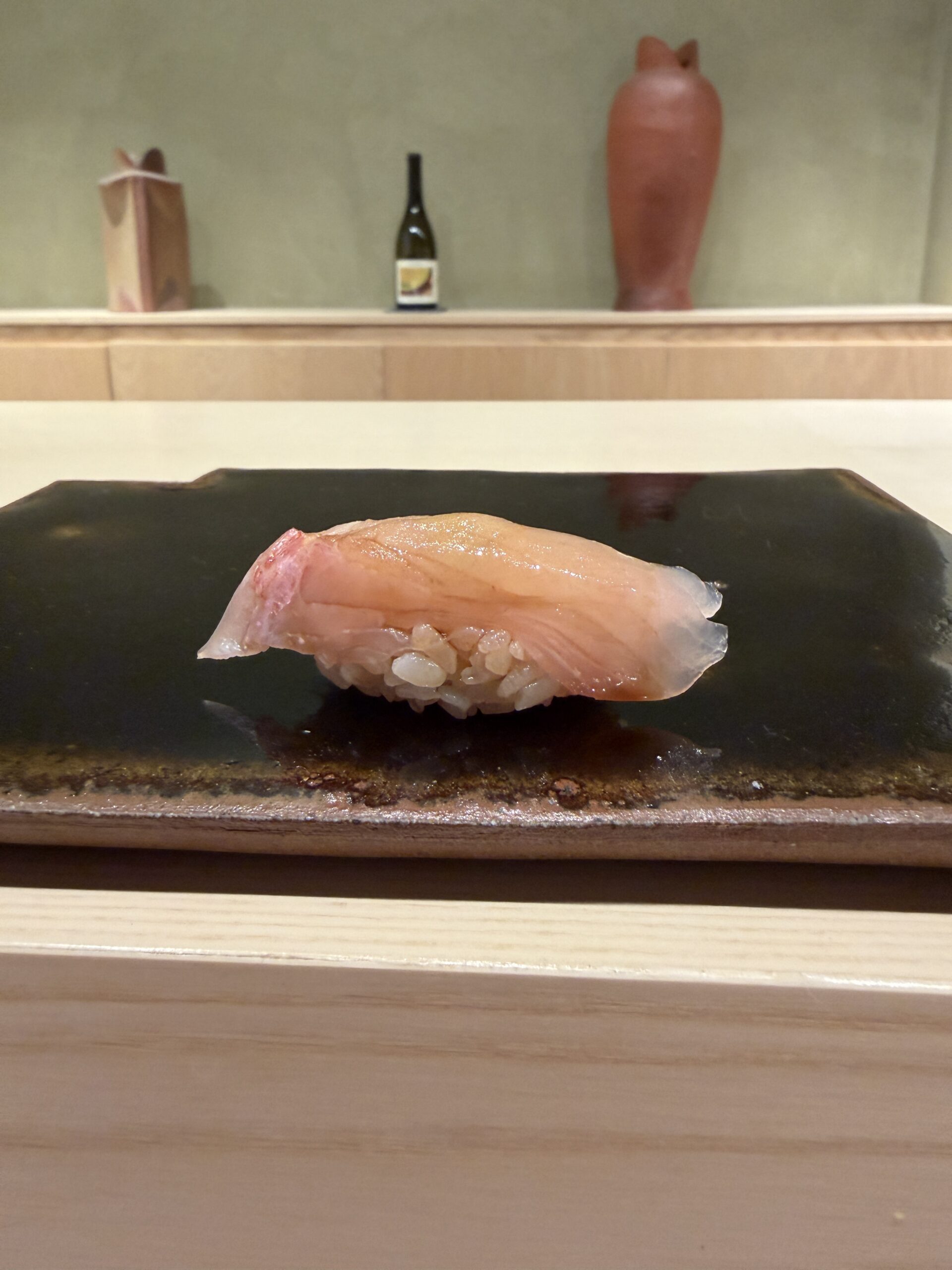
12: Kinmedai
Katsuo (bonito) is a neta I talk about often in these parts. Two seasons, the best of which is fall, when it returns from spawning, fat and delicious. That’s called modori katsuo.
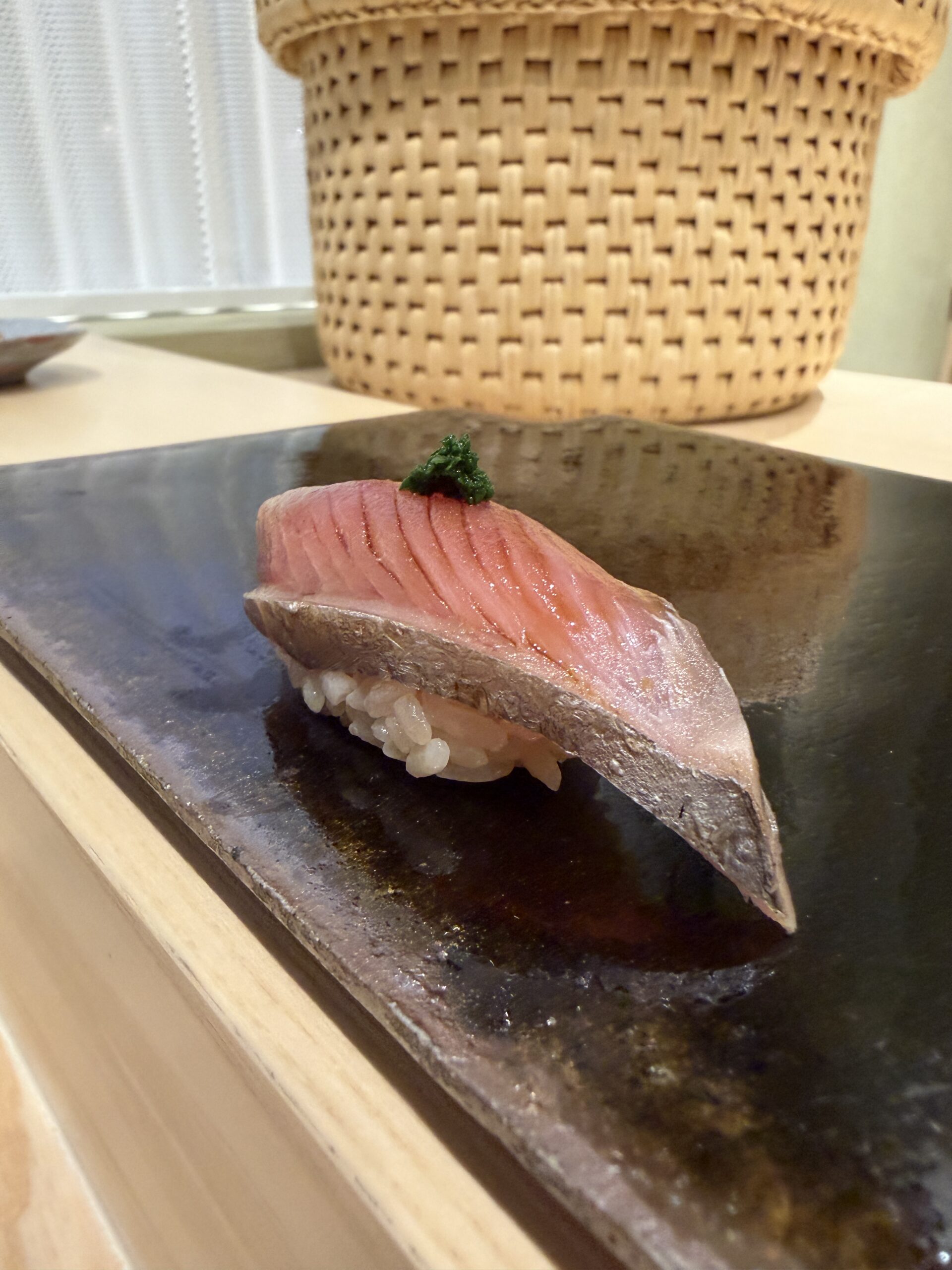
13: Madori (returning) katsuo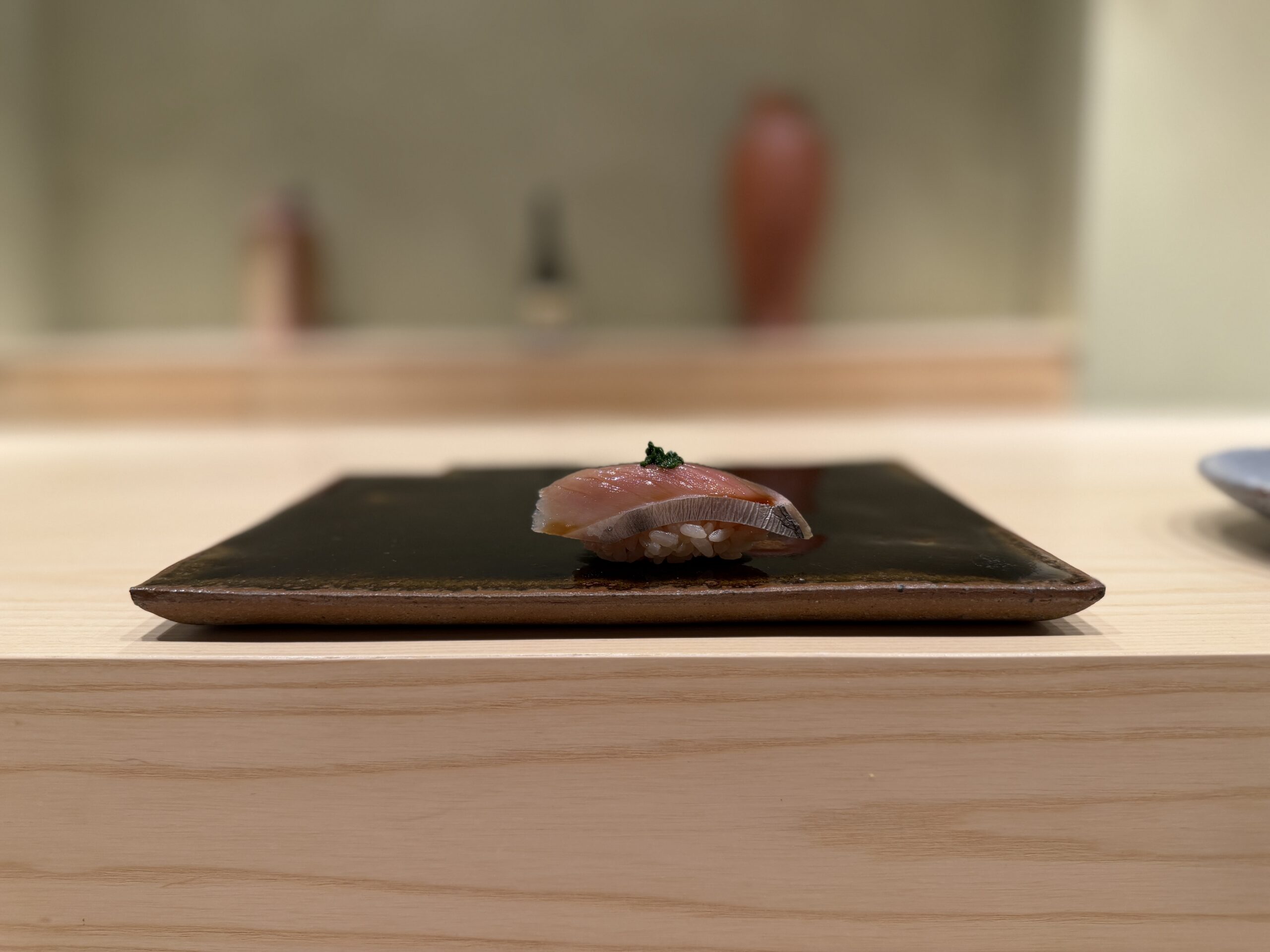
The 14th course, gave me an opportunity to educate my father on the finer differences between Bafun Uni (pictured below) and Murasaki Uni. And it gave him an opportunity to ignore perhaps the most boring topic in human history.
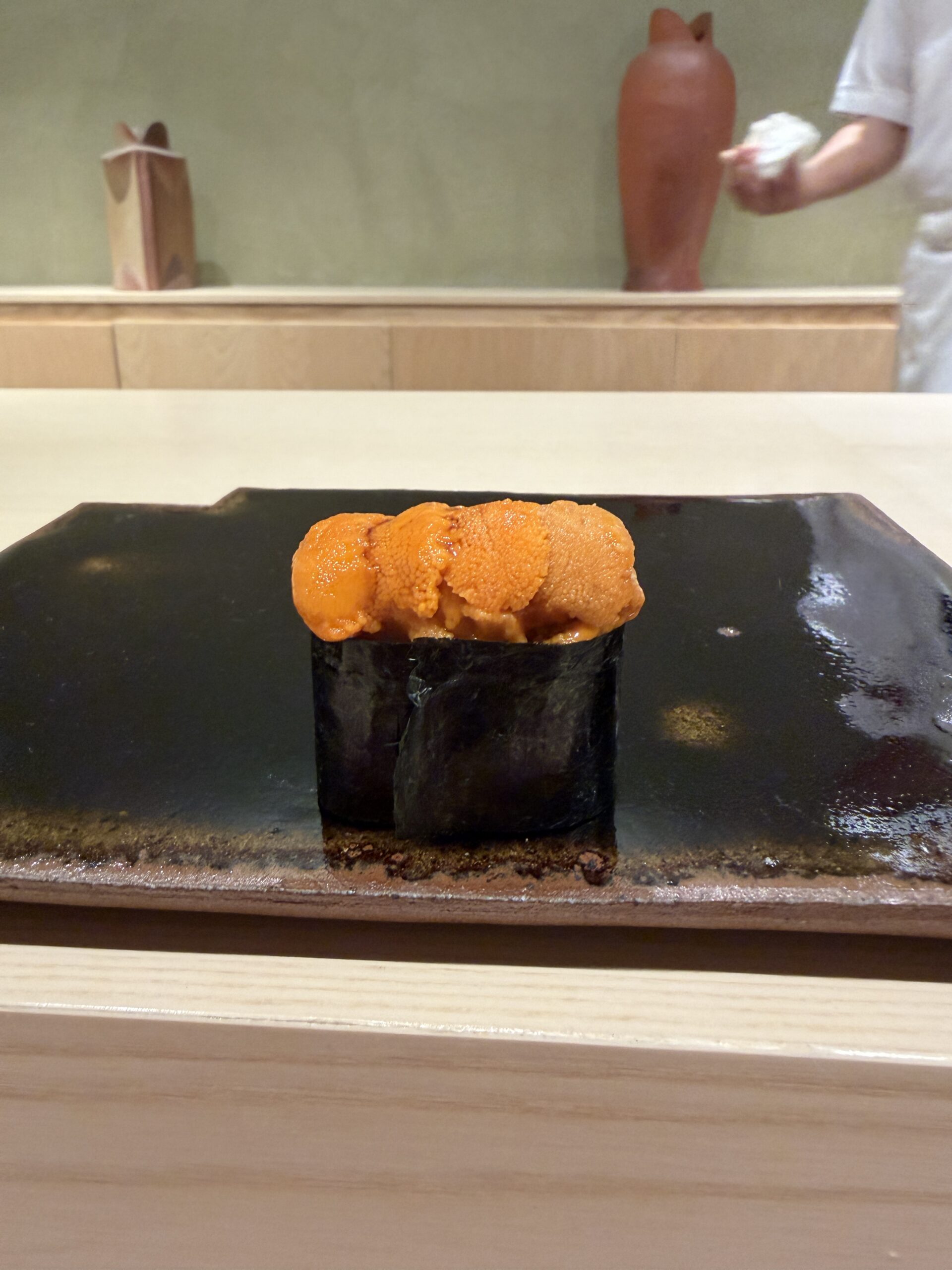
14: Bafun Uni
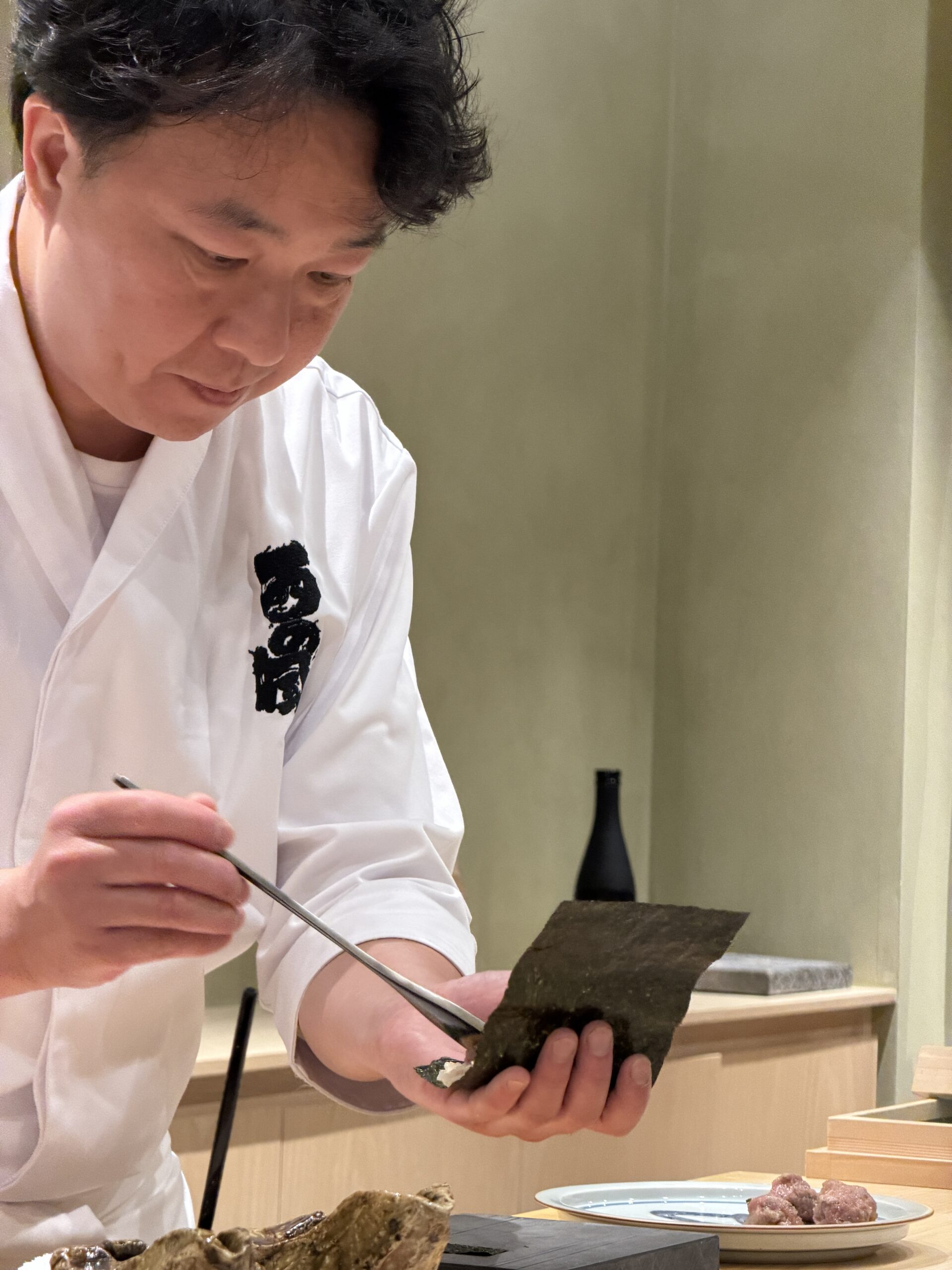
15: Negitoro
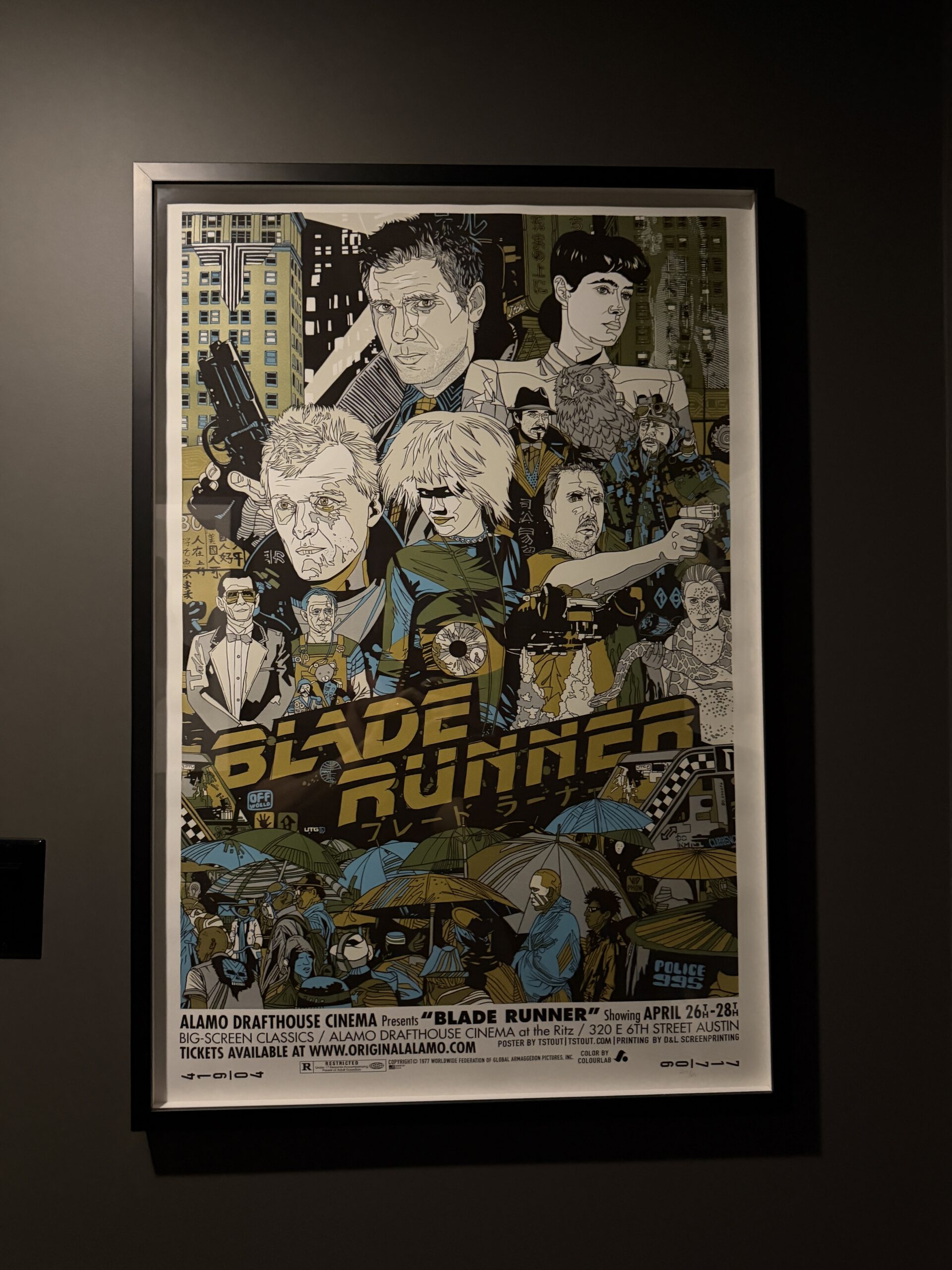
This poster in the bathroom is awesome
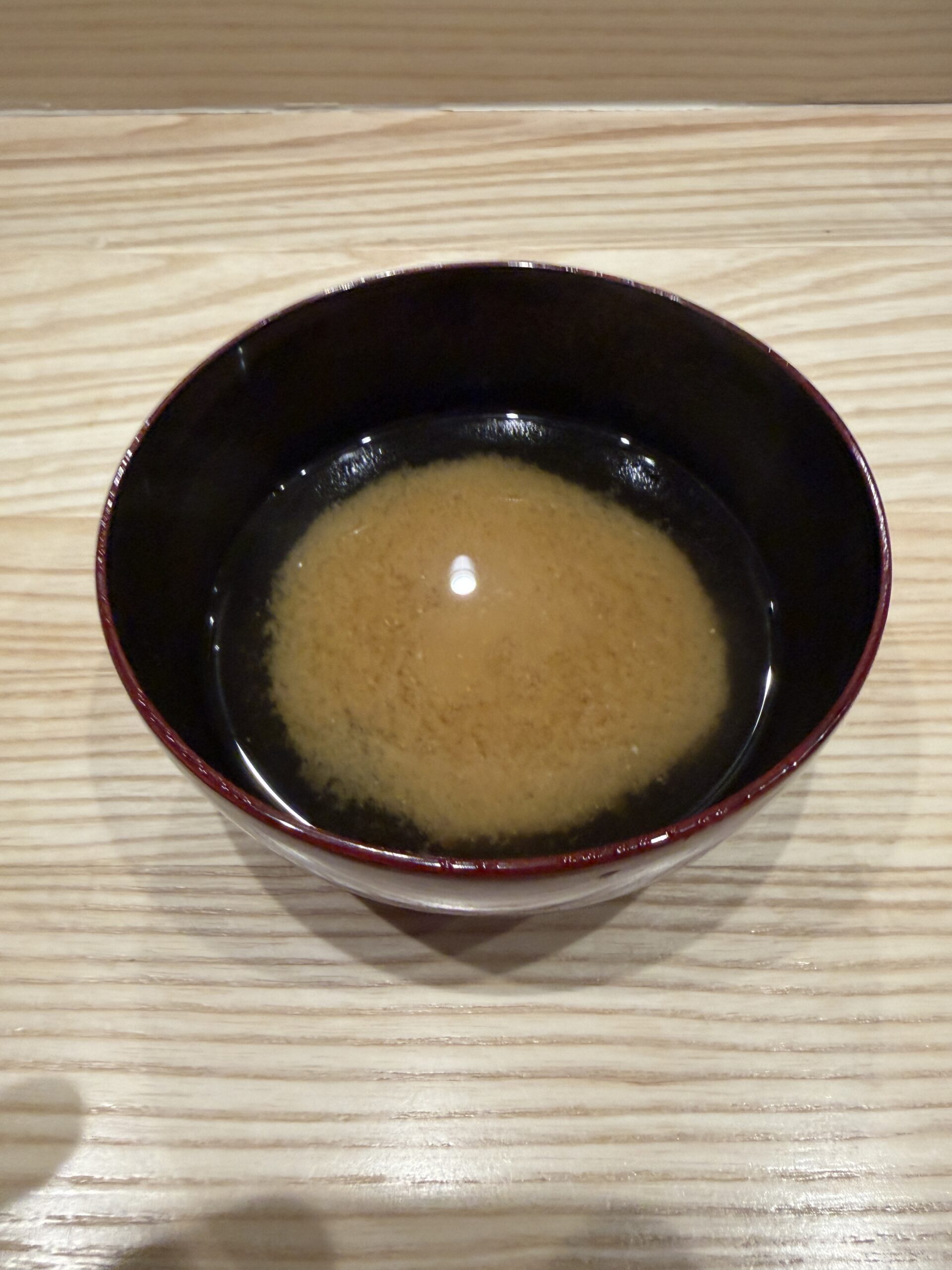
16: Miso Soup
One area of noticeable improvement was the Anago. Summer season is its best, and this version – with just a little bit of tsume – was particularly delicious.
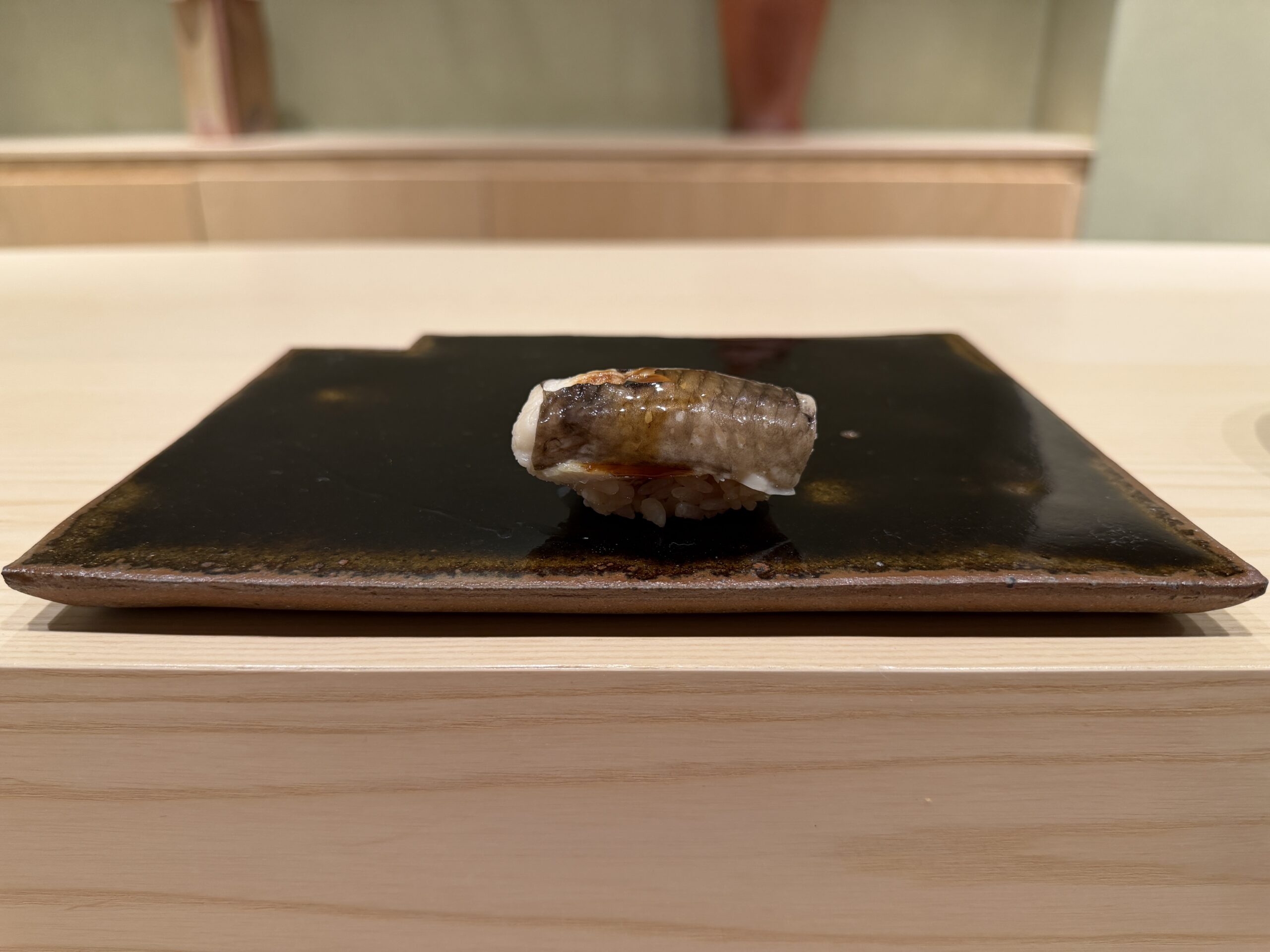
17: Anago
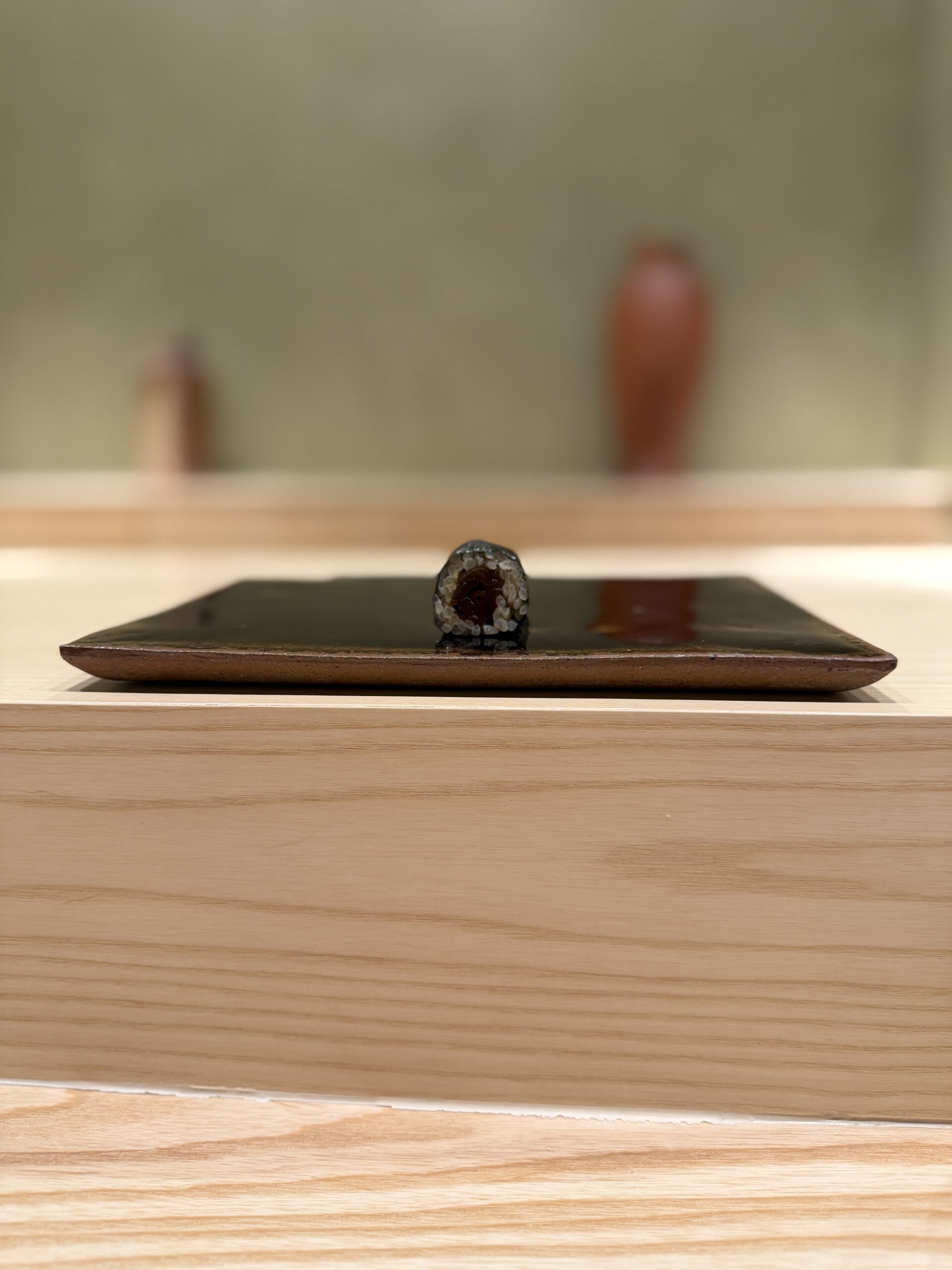
18: Kanpyo
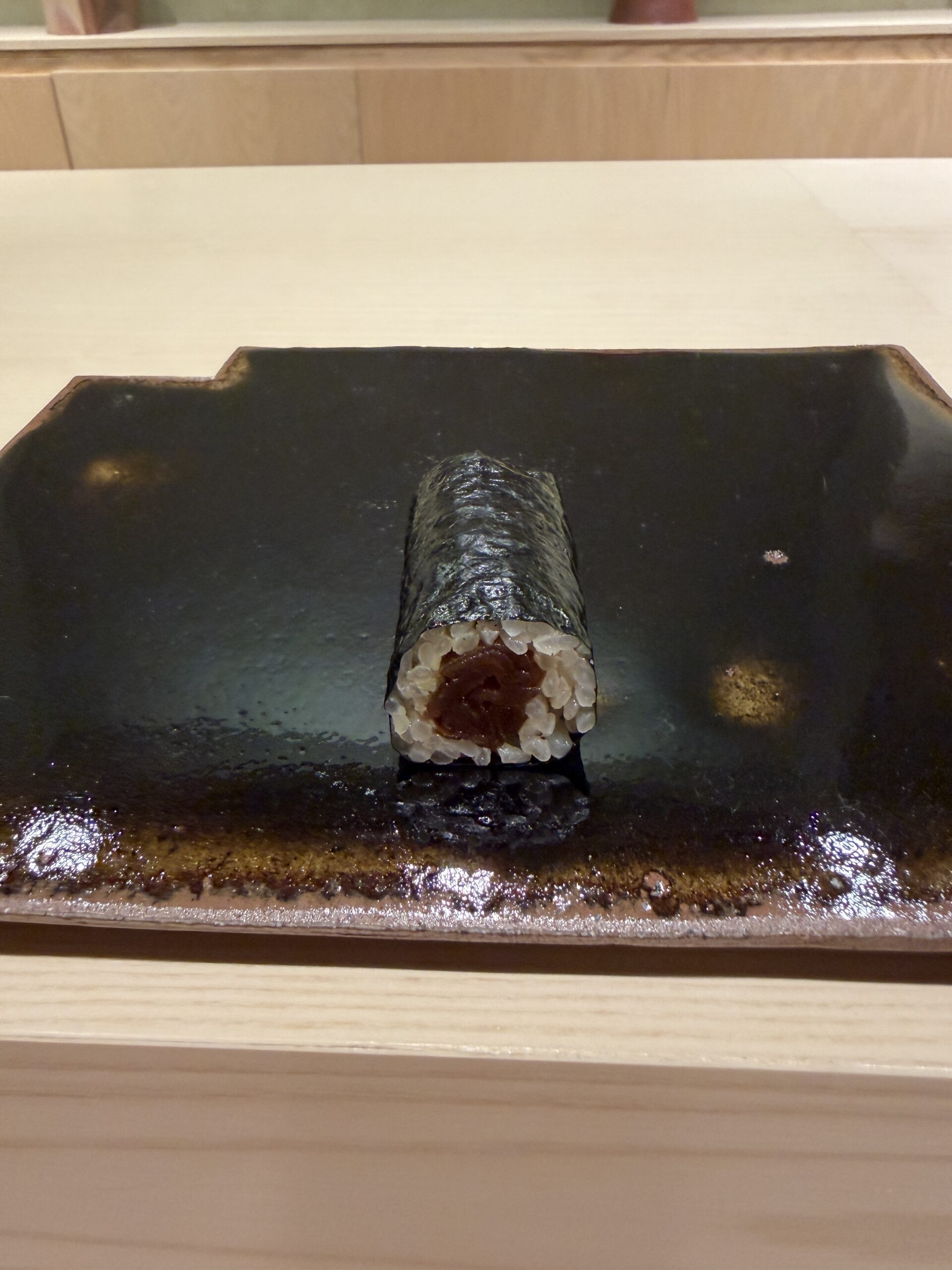
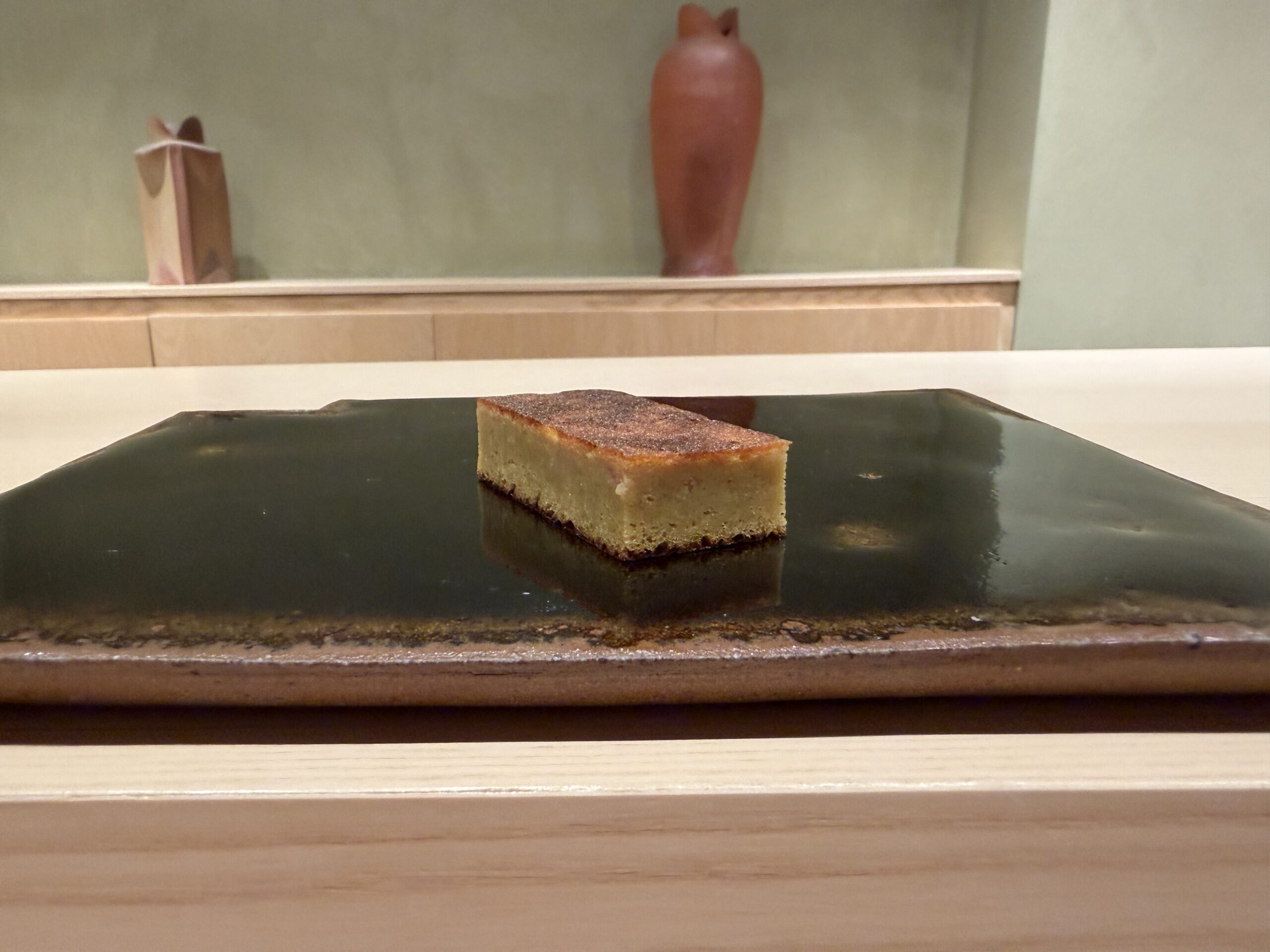
19: Tamago
Before we turned to dessert, out came a box of Murasaki Uni. “See”, I told pops, “now you’re going to get the chance to taste the difference”. 10 seconds later, the apprentice explained they only had enough for four people on the other end. 20 seconds later, my dad disowned me. Goodbye to the 1 of 4,348 print by Ronnie Wood of the Rolling Stones. Sayonara to the world’s leakiest portable wine cellar. These family heirlooms are my sister’s now.
Now, I’ve never seen a fight at a sushiya, but serving half the customers a course – especially murasaki uni – while the other half stares is probably the easiest path to a brawl. I see both sides; before chalkboards took over, the ethos of Omakase was an itamae custom tailoring a menu to each customer. Serving Murasaki Uni to a few logan luckies is just an extension of that.
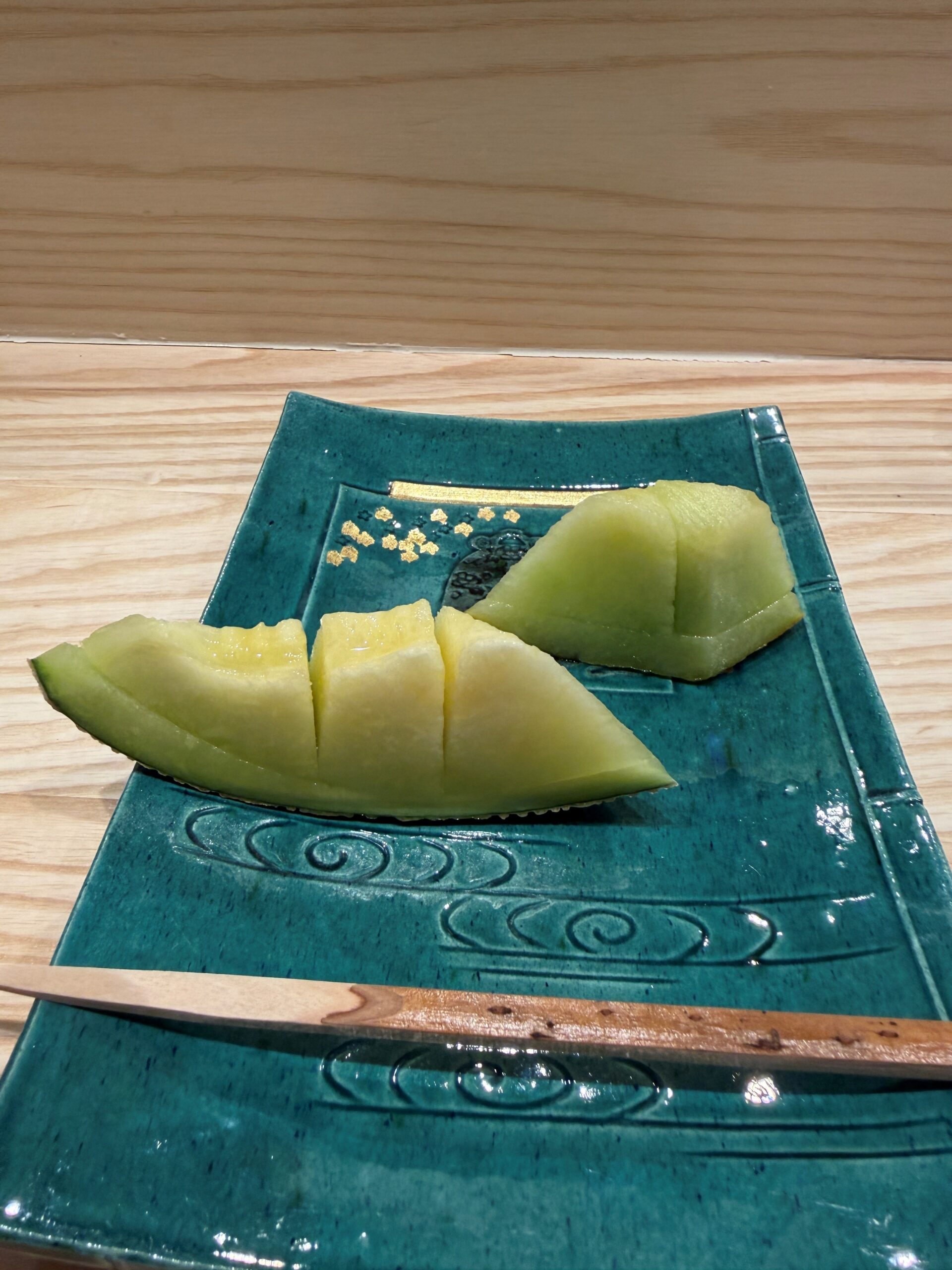
20: Local and japanese melons
Nishinokaze is also very proud of their ceramic collection, and for any cultured customers that care – I am not one – the below may catch your attention:
As a “living gallery,” we present ancient and contemporary ceramics in their most beautiful state: in use. Our unparalleled collection, which changes monthly, spans over 5,000 years of Japanese, Korean, Chinese, Vietnamese, Middle Eastern, and Western pottery. Via their website.
It’s not that I don’t give a shit about antiquities, or, for that matter the alcohol list, which is extensive (and apparently pricy). It’s that I drive these miles, I spend these dollars, and I type these words because I care about sushi. Nothing more, nothing less.
So does Gee, and it still shines through vividly.
Recommended.