IT’S 2:18AM EASTERN STANDARD TIME
My fingers type slowly.
They’ve seen better days.
Blame the 4,821 basketballs that folded my fingers like a Borsini. It’s all taken a toll.
10 years ago, I might have been standing in a 42 person line for the bathroom/coffin at L’Esquina, hopping from leg-to-leg to avoid a premature leak. But I’m older now. I have more important things to handle (and hopping no longer works).
New York’s newest, priciest and buzziest sushi import is also its most mysterious. There is just one review on Google, and it, uh, isn’t much.
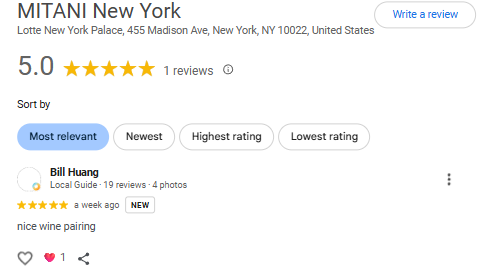
the only review of Sushi Mitani NYC – until now. Dun, dun, dun.
So the sushi signal went out. Sushi Batman was needed.

Yes, I did this on MS Paint. Yes, MS Paint still exists. No, I won’t use AI.
LONG-AWAITED SATELLITE OF MITANI JUST OPENED AT THE LOTTE PALACE
It’s ironic- shoutout Alanis, one of the great living Canadians – that the World Cup (TM, copyright, ESQ, DONT SUE ME FIFA) is also landing in New York at the same time.
Leveraging a renowned brand to milk their customers like a Holstein? All to suck whatever juice made the brand so special in the first place?
The parallels are striking.
At least FIFA brings its top talent.
LET’S TALK ABOUT THAT TOP TALENT
Yasuhiko Mitani runs his eponymous counter in Shinjuku. Mitani is not to be confused with Kioicho Mitani, the offshoot more accessible to plebs like yours truly. If someone claims they’ve been to Mitani, odds are it’s that one. Stolen valor.
Mitani is a sushiya with a purported four-year wait. My previews here cover what makes it special; spoiler: it’s a mixture of the sushi and the wine pairings. As Mitani-san described in Sushi Shokunin, wine-picking responsibilities lie with the sushi chef, not a sommelier.
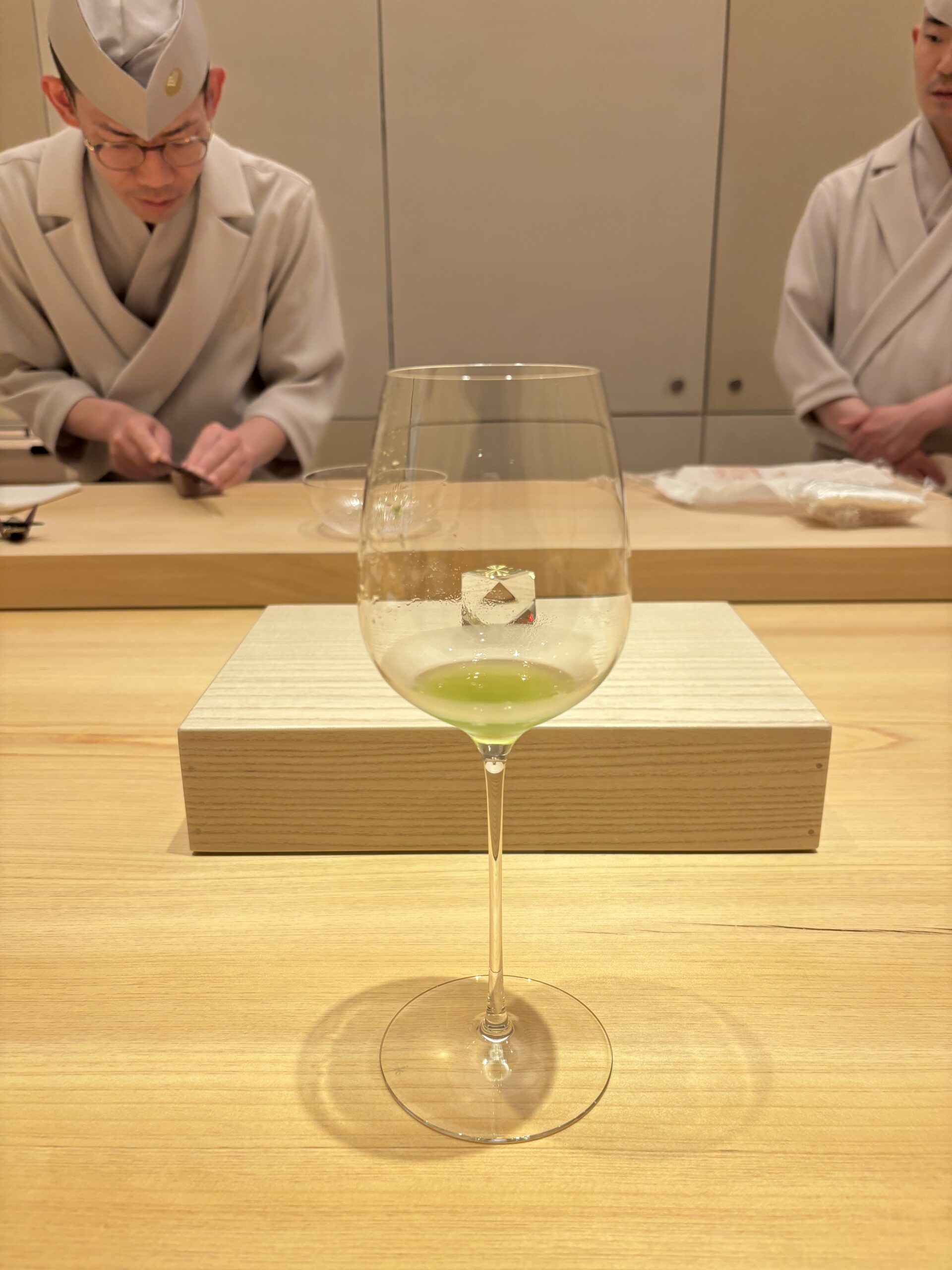
For those not into wine, Mitani offers a great tea pairing option
THREE MENUS ON OFFER
Hope you didn’t tie up all your money in monkey gifs.
- Sushi Mitani: $700 per guest – 12 courses of sushi plus 6-7 otsumami and four teas.
- Sushi Mitani Mariage: $1500 per guest – the sushi plus standard alcohol pairings.
- Premium Mitani Mariage: From $2,000 per guest, the sushi plus elevated alcohol pairings..
Mitani-san is a venerable sushi legend, and the pricing reflects that.
ONE SMALL PROBLEM
Mitani isn’t here. His apprentices from Kioicho Mitani are. And yet, on sticker price alone, Mitani is 30% more expensive than Sushi Sho, whose legend is actually in New York.
The team says that Mitani-san will come a few times a year for special nights to serve VIPs of the Lotte Palace, which is sort of like being in the chairman’s club on Allegiant.
Charging ultra-premium prices for apprentices from the B team – good as they may be – is nasty work.
No surprise that I was the only person at the counter.
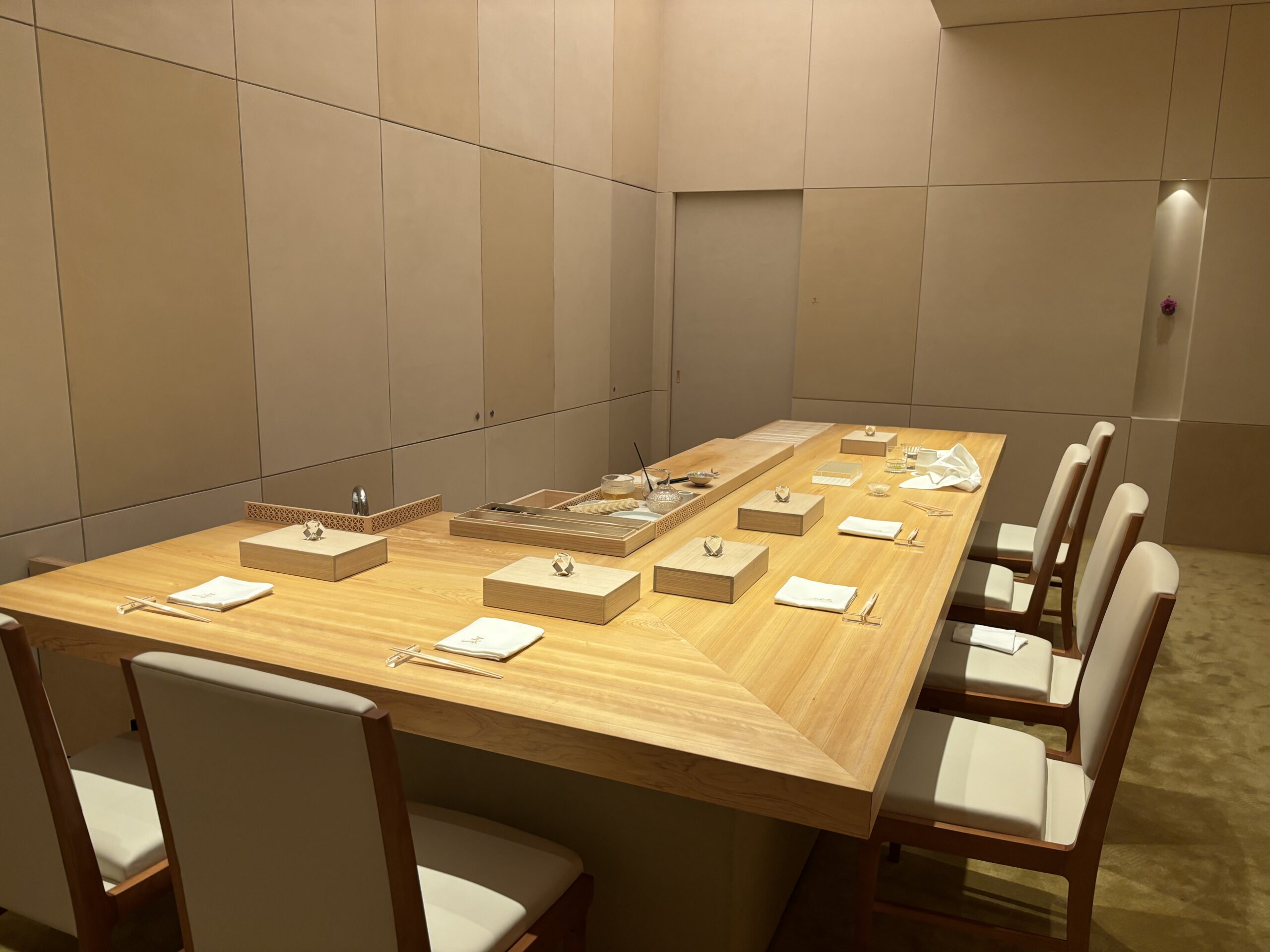
Dining solo
A QUICK RANT ON THE FUTURE OF NEW YORK CITY SUSHI
This probably deserves its own post, but while the technique and ingredients are certainly there – as I outline later in this review – the sushiya’s current existence exemplifies a miss that some Japanese-imported sushiya have for our market.
New York is a headliner town (I mean this is in the best possible way). There’s just too much happening – too many events, too many restaurants, too many sights, too many sounds. Charging inflated prices for an imported tribute brand doesn’t work here (“tribute brand” is some of my finest work).
It’s partly (wholly?) why Sushi Mekumi closed within 6 months, and why Sushi Sho has been so successful. Bring the stars or lower the prices.
I fear all the wrong messaging about the New York – and American? – sushi boom is making its way across the pacific. And yes, landlords in New York eager to fill space for their latest restaurant concept deserve some (most?) blame. Theoretically, they should know better, though leopards can’t change their spots I suppose.
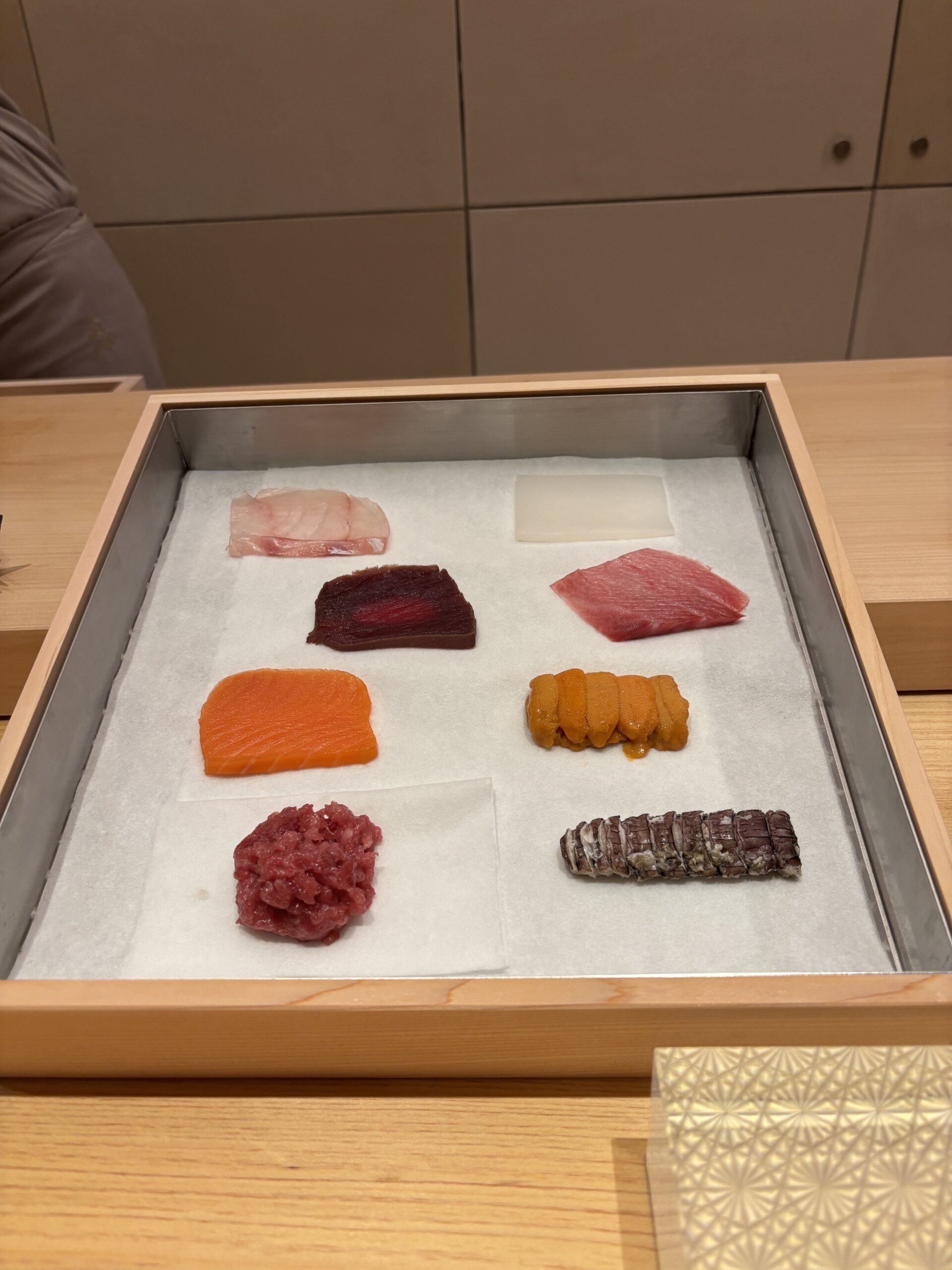
Mitani prepped their neta for the 1 person at the counter that night
AN AREA I ABHOR
Mitani is located in the Lotte Palace, and so you might figure it’s easy to find. You’d figure wrong. Google Maps will direct you to an door on 51st that’s closed nights and weekends. That’s a problem for a restaurant mostly open on nights and weekends.
So instead, enter on Madison, pass the two security guards, walk down the opulent staircase, and make a left. Look for this small marquee.
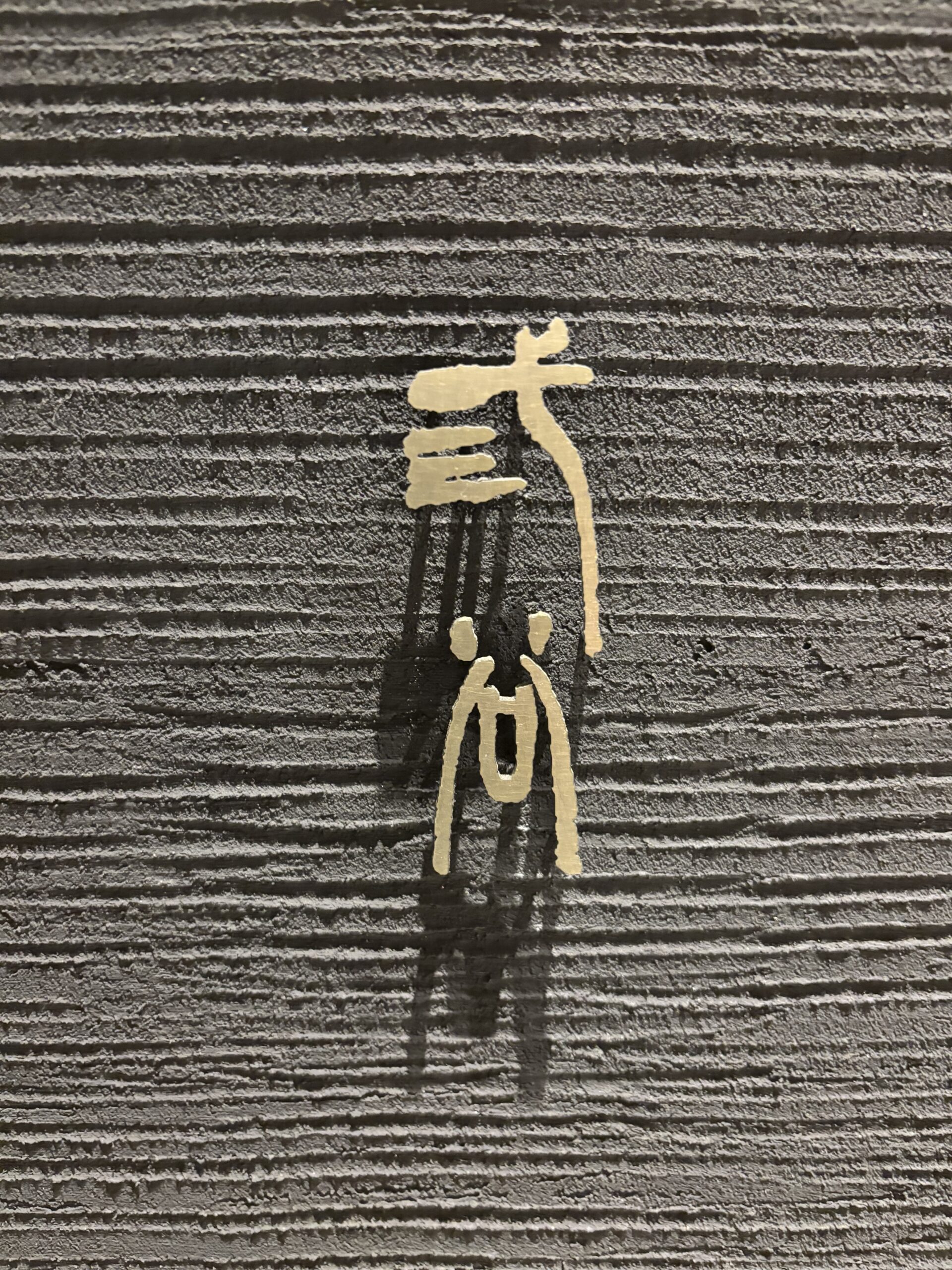
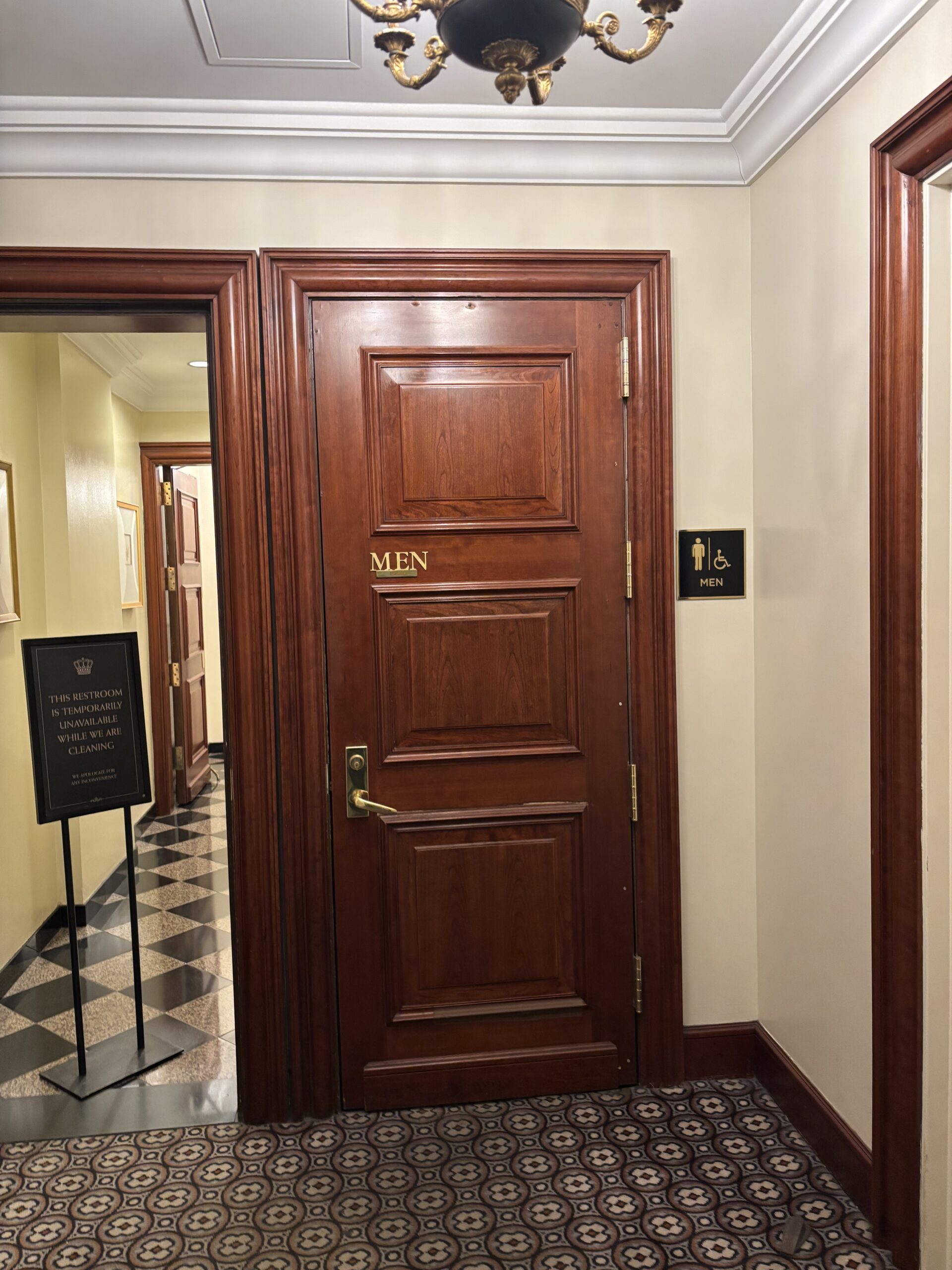
MAKE SURE YOU GO TO THE BATHROOM FIRST
I briefly worried that my preview articles were too mean to the Lotte Palace. I called it the hotel lobby for cruise ship afficianados. After visiting, I now realize I wasn’t mean enough. The exterior is beautiful; the interior is more tired than me.
I know this because I traversed the entire hotel to find the nearest bathroom. The Oregon Trail was shorter. Given the boozy push, I’m legitimately curious how the omakase can stay on schedule if customers spend half the meal walking back and forth from the loo?
MITANI IS ALSO KNOWN FOR ITS OTSUMAMI
We start with Uni in a Konbu “Jelly”. This is a dish that has started meals at the honten. It’s undoubtedly a crowd pleaser, but the temperature – warm, bordering on hot – makes it difficult to enjoy the texture and creamy taste of Uni that I usually enjoy so much.
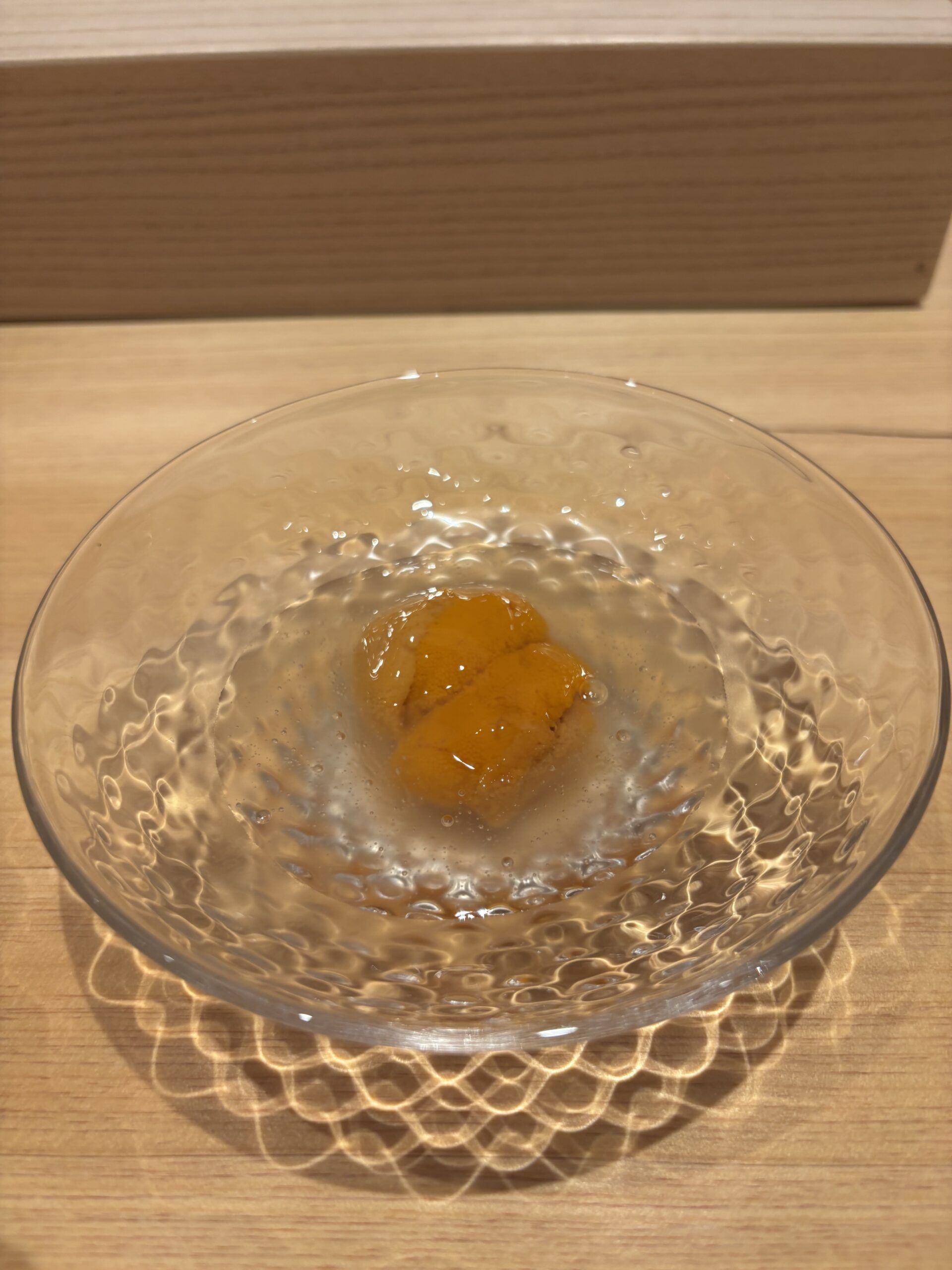
1: Bafun Uni in Konbu Jelly
THE TEMPURA
One of you legends had given me advance warning, but still; 50% of the otsumami are fried. Apparently, the Mitani crew believes – for some strange, misguided reason – that this is what people here want.
I’m no expert, but I’d suggest that any sushi addicts willing to spend $700++ for a tribute band aren’t jumping for joy at popcorn shrimp.
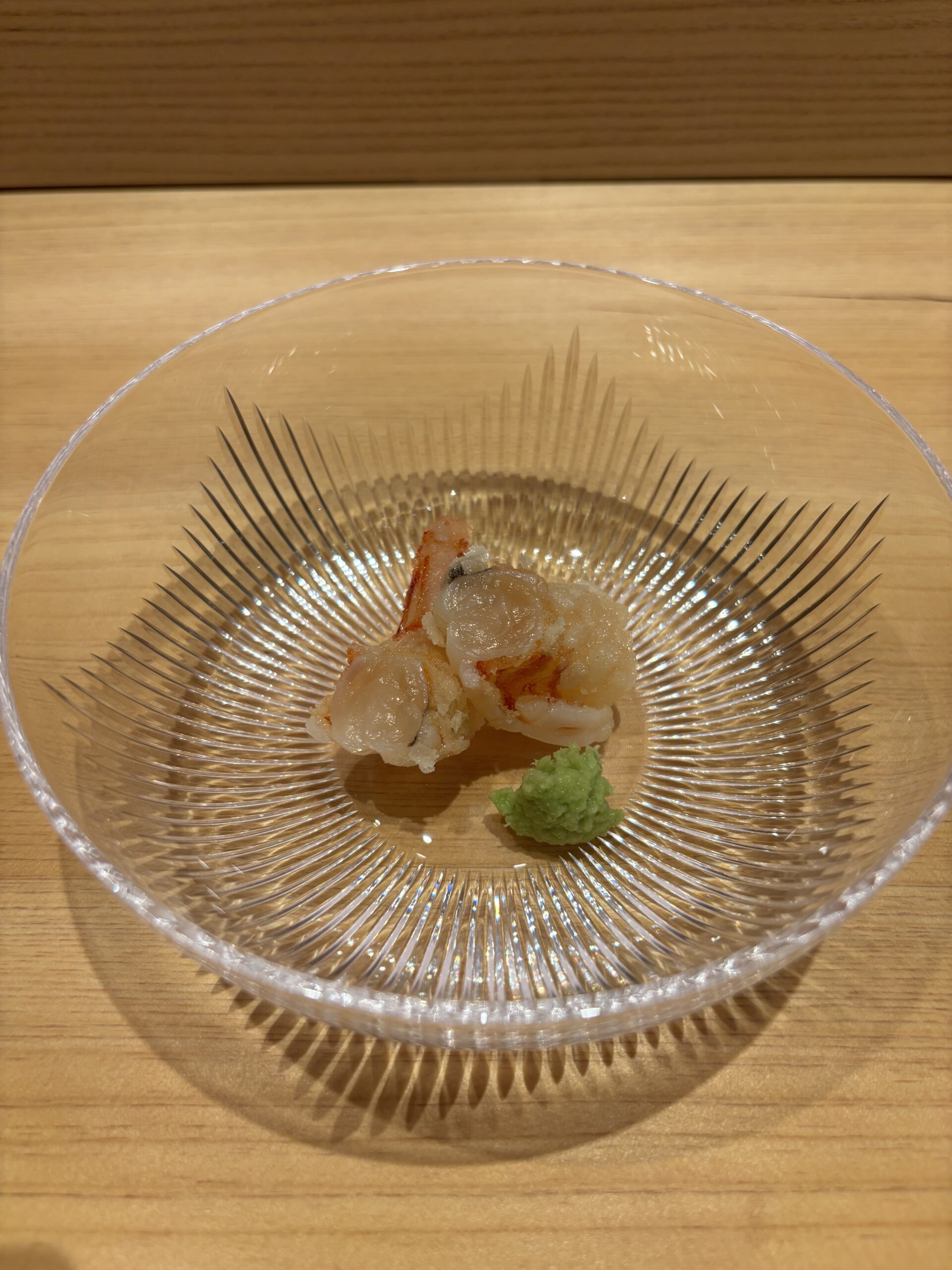
2: Tempura Kuruma Ebi
BUT THEN THERE WAS THE ANAGO…
The meal really perked up with Anago (conger eel), a summer delicacy that makes the first of its two appearances in course number 3.
What made it special?
Let’s start with the sourcing. Mitani gets their anago from Tsushima, an island between Kyushu and South Korea. I believe – so no angry emails if I’m wrong – that the supplier is Tsushima Suisan, renowned for its so-called “Golden Anago” and for using ikejime, a method that preserves the catch without killing it, ostensibly in a humane manner.
While typically served with nitsume (the thick, traditional sauce), some Itamae will serve Anago naked – save for some salt – during June, the rainy, peak season. So it was here, kept perfectly warm to retain the flavour.
This was one of my favourite non-sushi dishes I can recall from a New York sushiya.
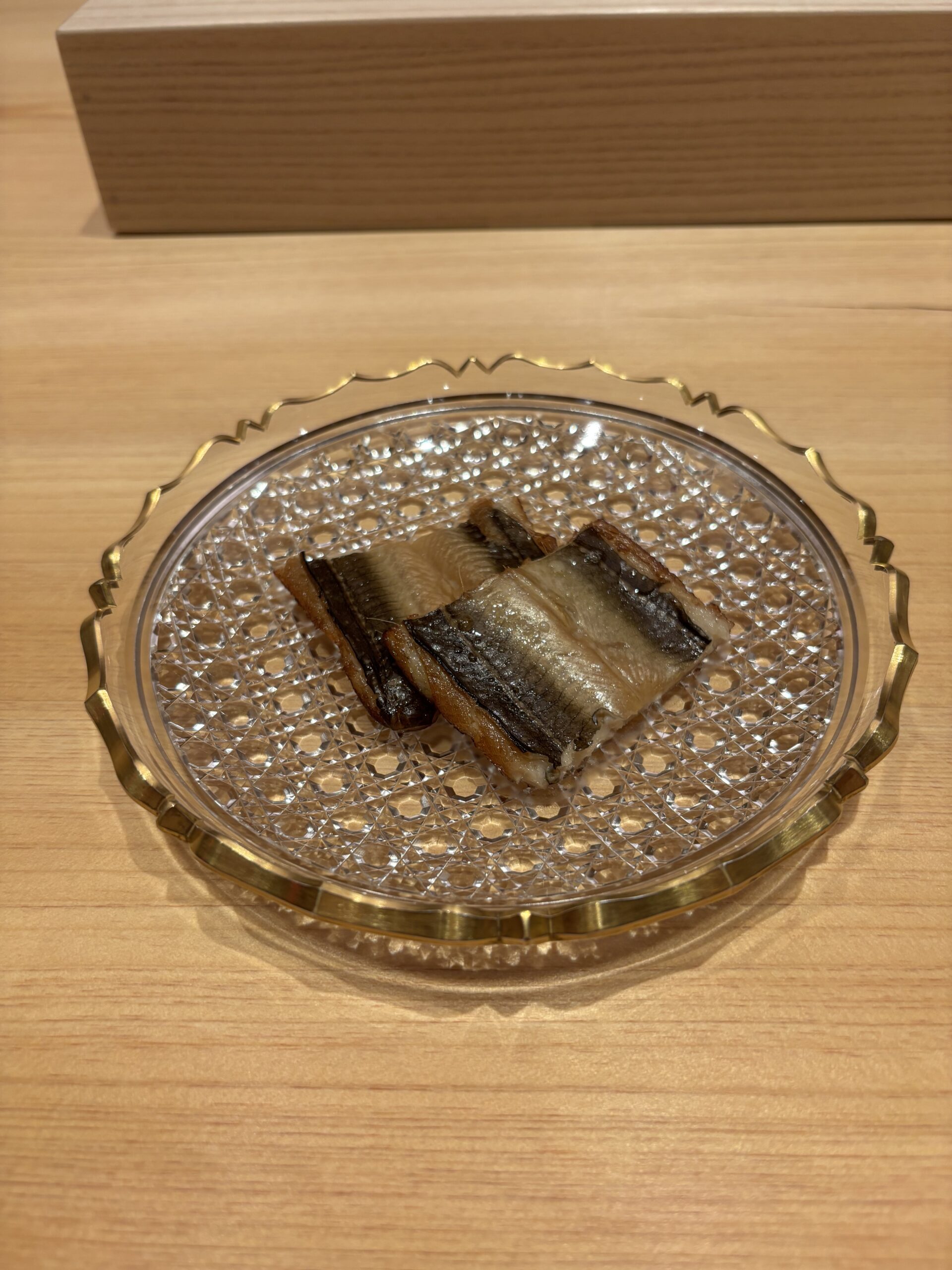
3: Anago
The tempura returns for course 4. This Kinmedai was deliciously raw, and the plate is undoubtedly beautiful, but it was yet another fried course. Who is this for? Surely not sushi addicts spending four figures looking for sushi?
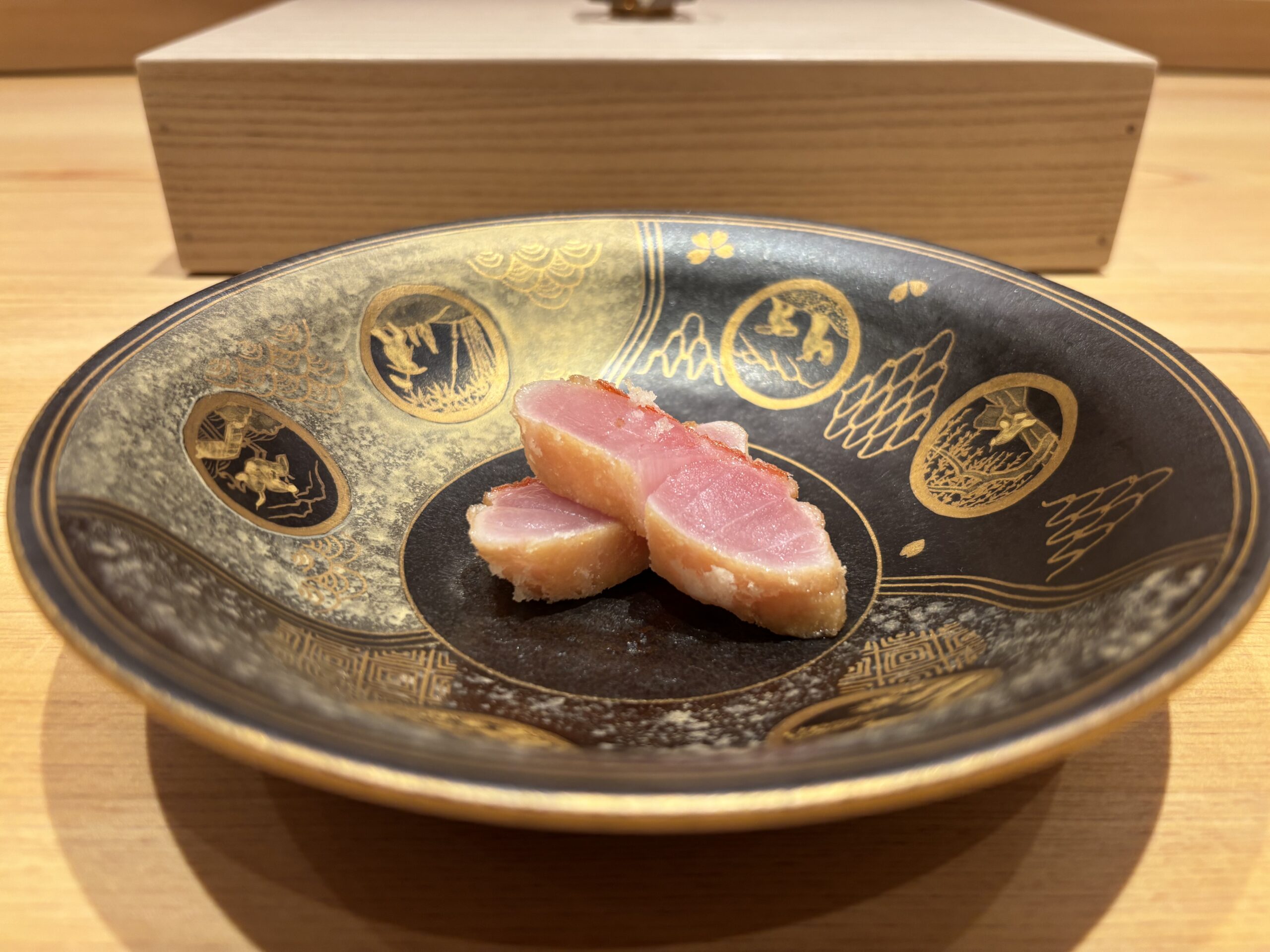
4: Kinmedai Tempura
I also did not care for course 5, another that is served at the honten – perhaps without the Uni – and considered a signature. It’s Kegani in an “Uni sauce” – prepared Ankake style I believe – too warm to do the Uni justice, too Uni-filled to taste the Kegani.
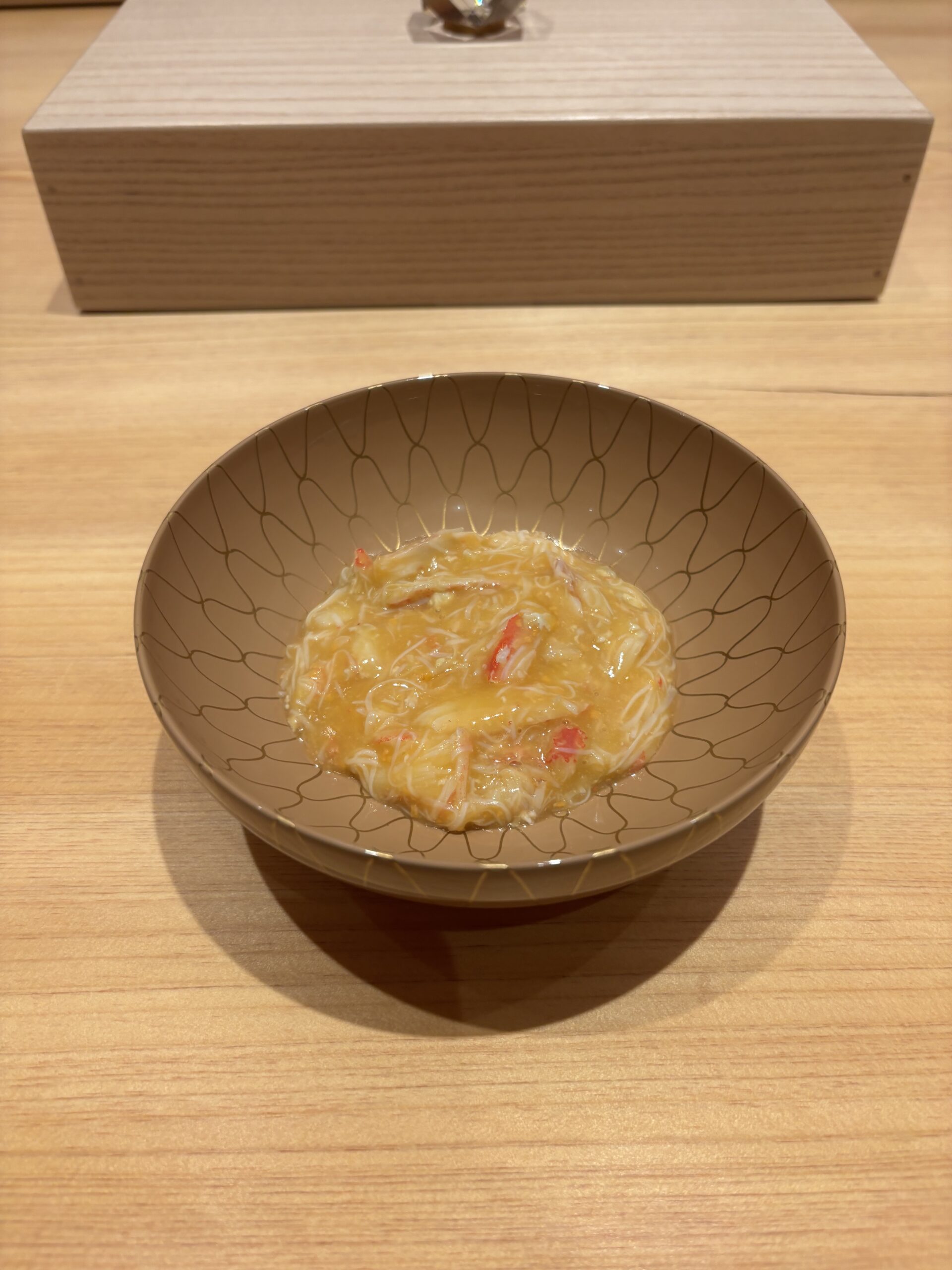
5: Kegani in “Uni Sauce” – sort of an Ankake, a method of pouring a thickened sauce over a dish.
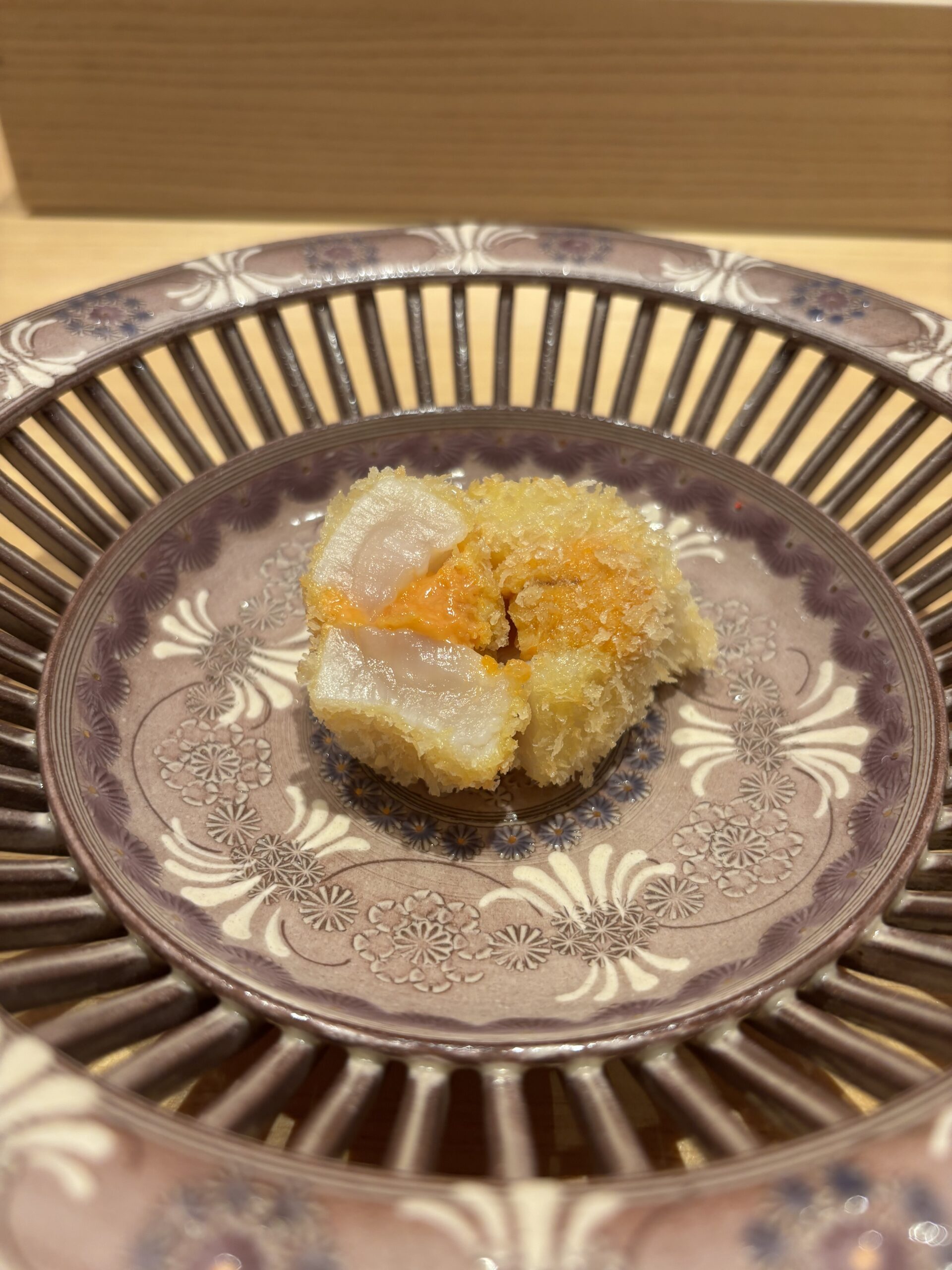
6: Uni and Hotategai tempura
THE MEAL REALLY TURNS ON SUSHI
Full disclosure, at this point I was already writing the snarky jokes of a wasted meal in my head. Those bangers are now lost to the sands of time/a quickly evaporating short-term memory, because the sushi here is legitimately very good.
We started with what’s presented as Yari-ika (Spear Squid), typically a spring neta. It’s best served aged, when it morphs from translucent to white.
Prepared well, but what you (should) immediately notice if you visit Mitani NYC is the shari (sushi rice).
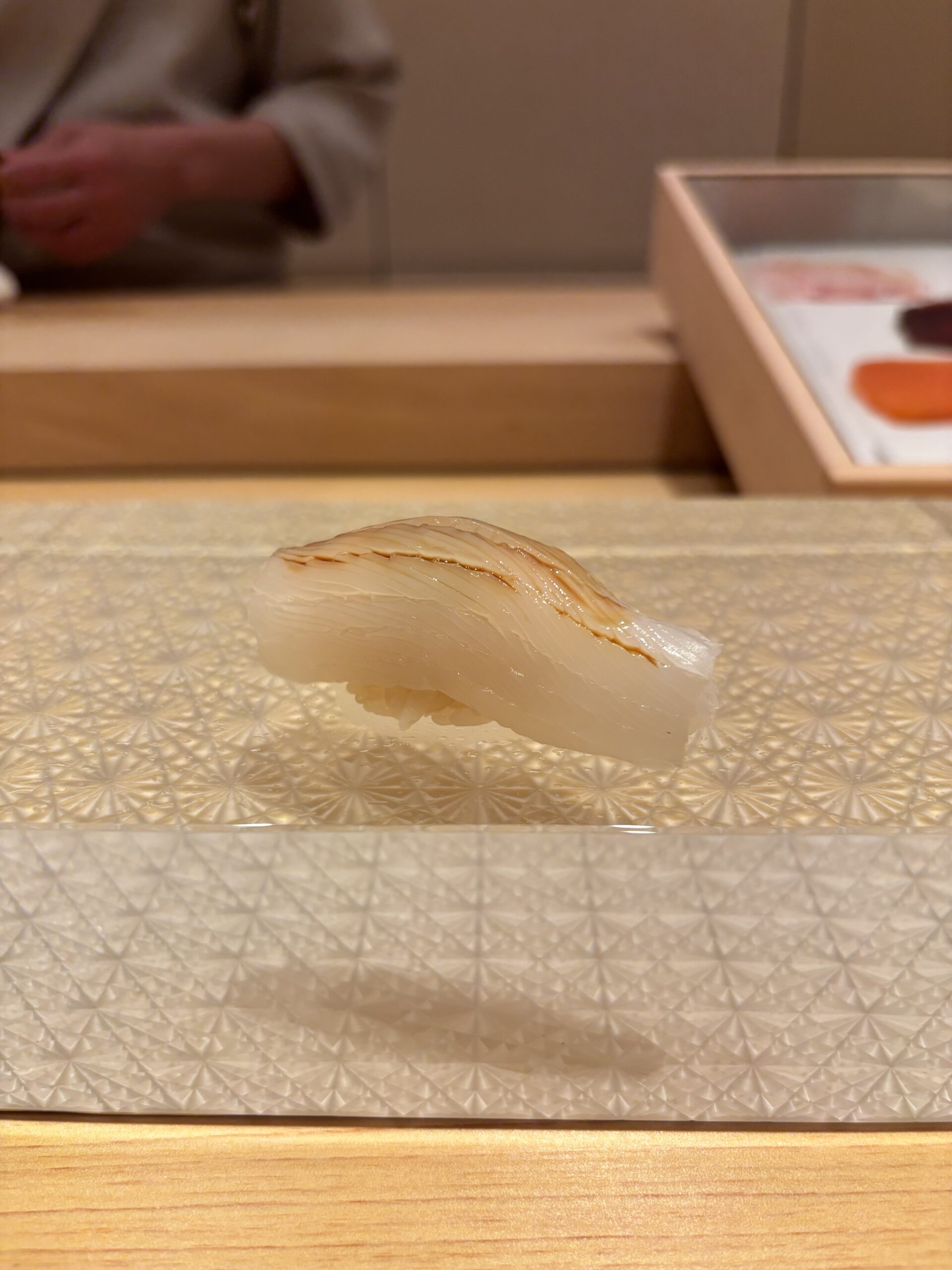
7: Yari-ika
This was among the best I’ve had in New York
Seeing my reaction, the apprentice legend behind the counter proudly explains the strain is the same as the main shop’s (Emi No Kizuna? I probably should have asked a follow-up. There goes my James Beard).
So to is the seasoning; four kinds of rice vinegar, some akazu (red sushi vinegar), some kurozu (black rice vinegar).
But you could give most people that rice, those ingredients, a magic wand and Harry Potter himself, and they wouldn’t come close. The apprentices clearly learned something. Is it good as Mitani? No fucking clue, and while it matters a little – don’t put the Mitani name on the door if you don’t want that as the bar – it doesn’t matter a lot.
I loved it.
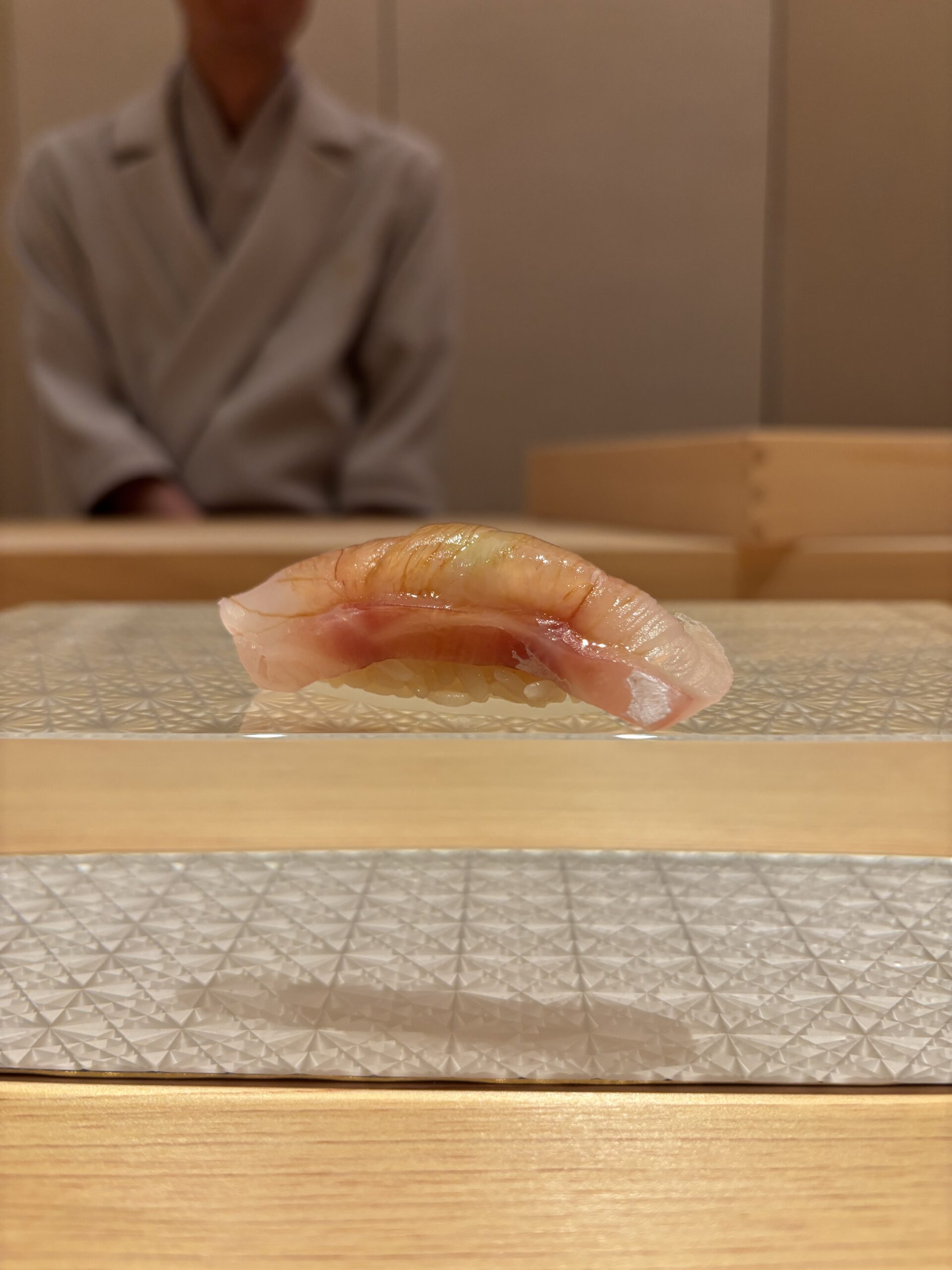
8: This was presented as grouper kobujime (a preparation method to surface more flavour from shiromi -white-fleshed fish). Perhaps akahata or omonhata.
Still though, the selection of Neta is curious. Masu makes an appearance next, probably for similar, supposedly crowd-pleasing reasons to the proliferation of Tempura and diminution of hikarimono. On the latter, yes, it’s summer, but there are still hikarimono in season and I always get a little concerned on a sushiya’s ethos and skill when there’s none served. That said, I’m also the person that dropped their car keys down a grate, so take my opinion with a grain of rice.
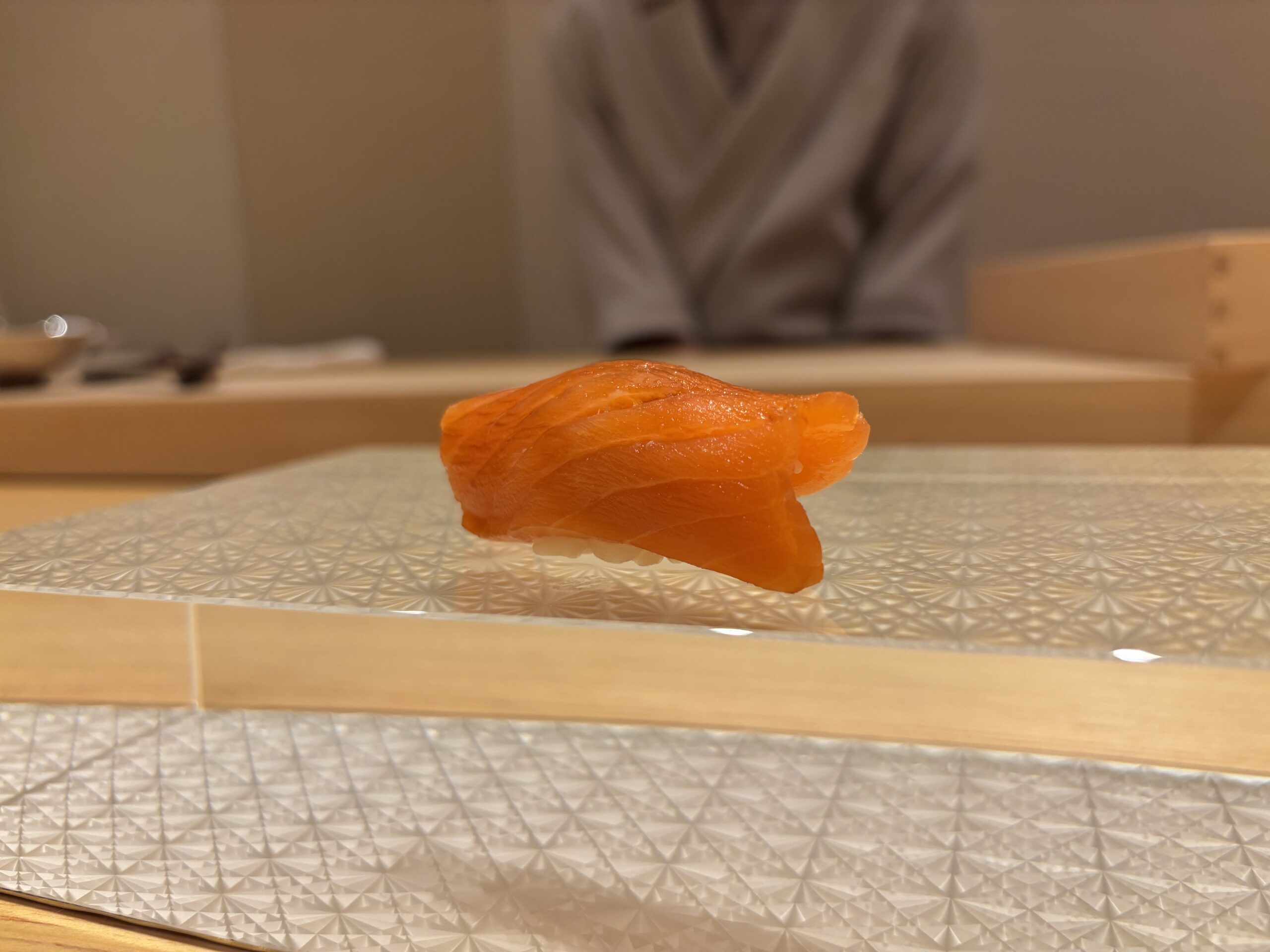
9: Masu (trout)
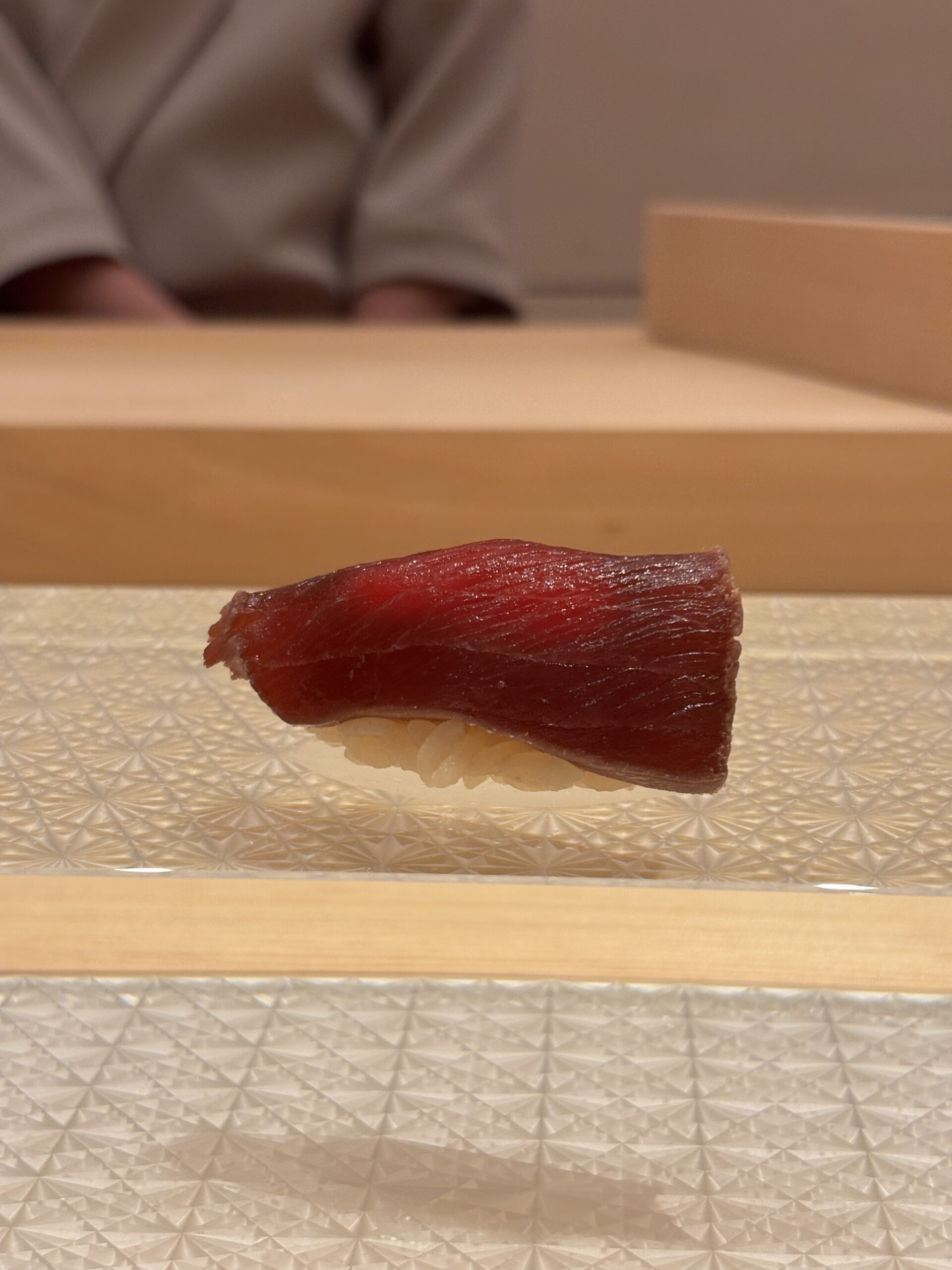
10: Zuke (marinated tuna, 10 minutes)
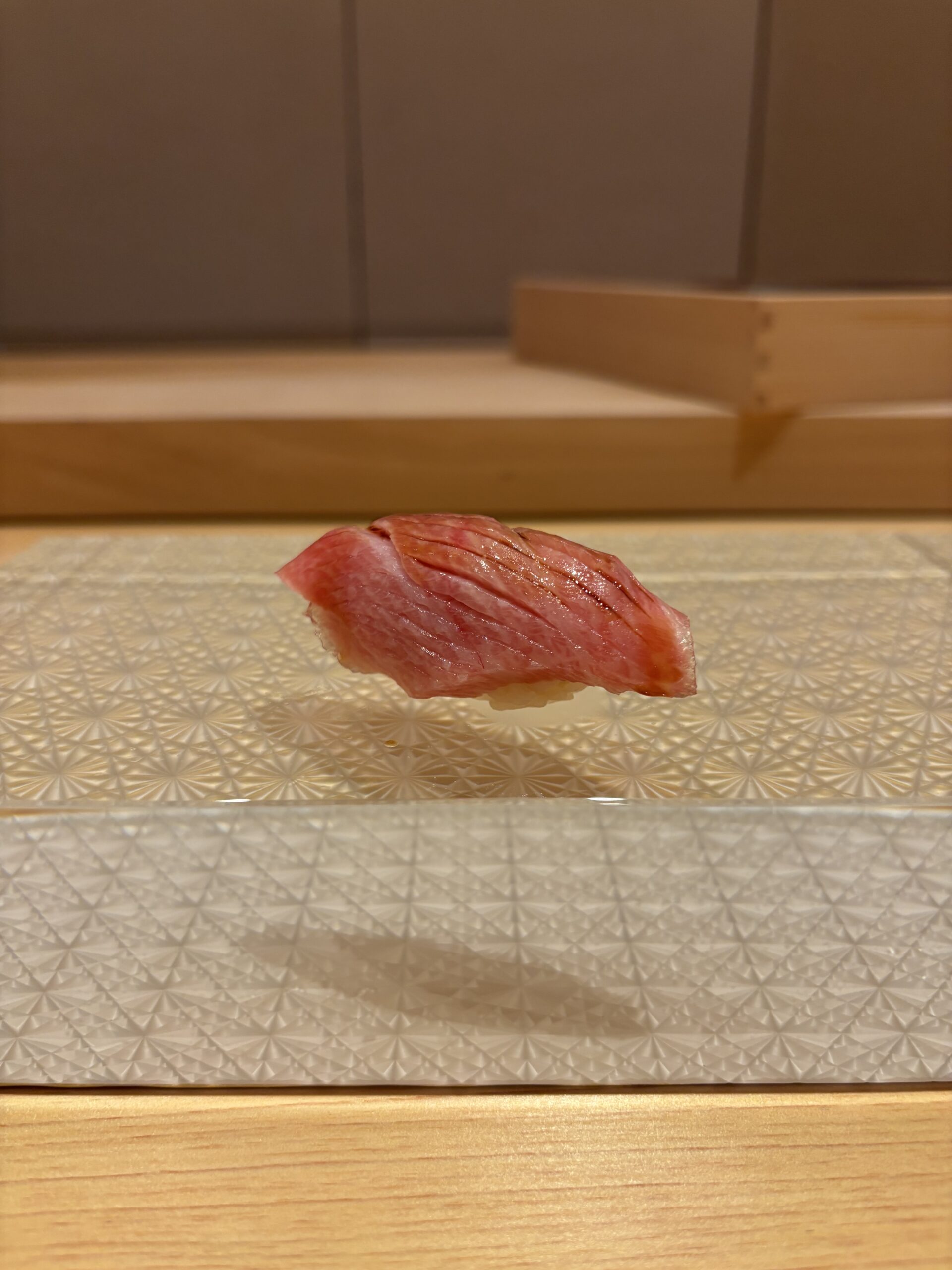
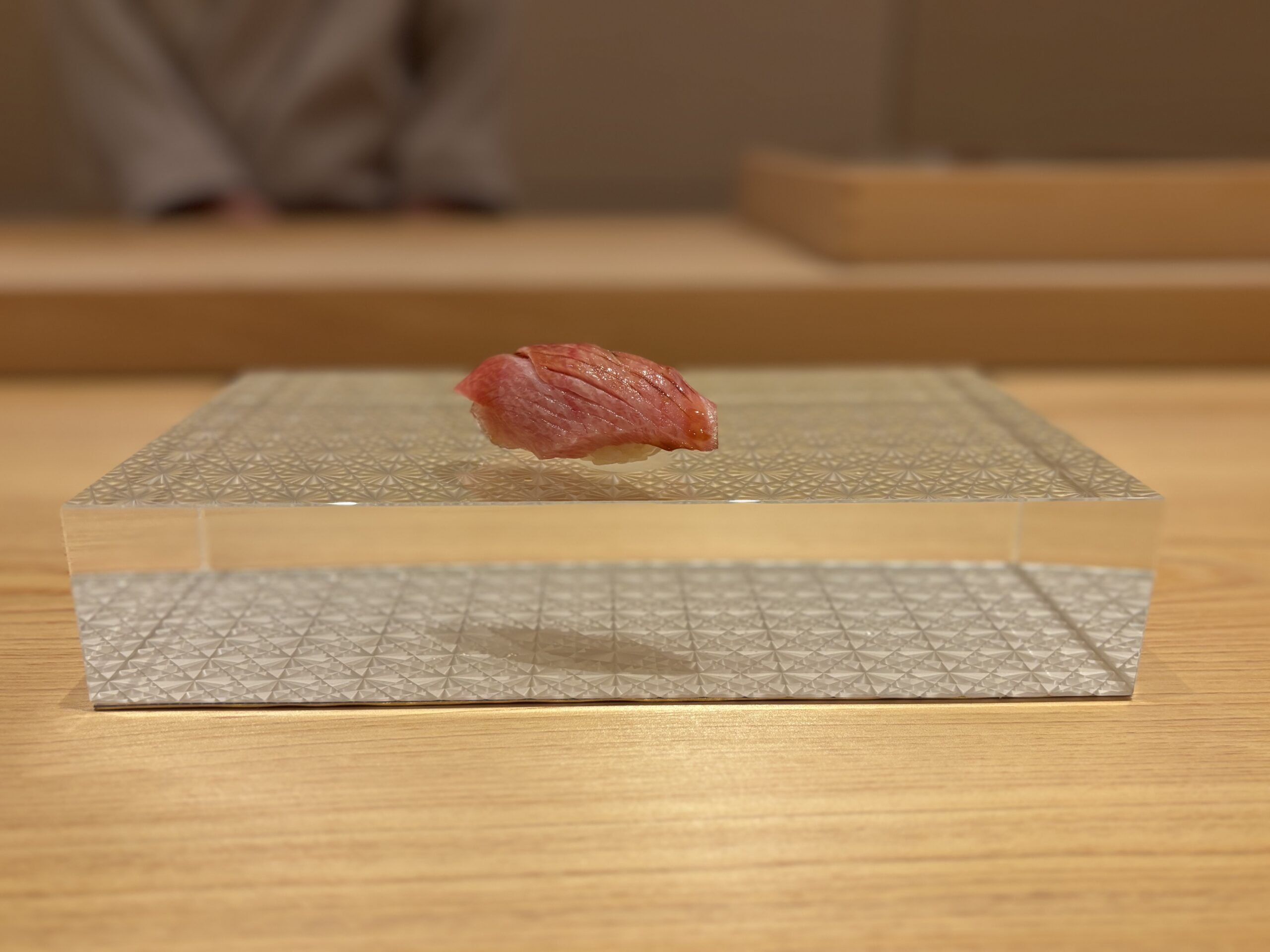
11: O Toro
WORD OF WARNING ON THE MAKI
For those that eat with their eyes, you might have been hoping for the thick cuts of honmaguro in the makizushi, just like the honten (see below). My evening, Nakaochi – scraped tuna from the rib bone, delicious, but no shape – was used. You can see the difference below.
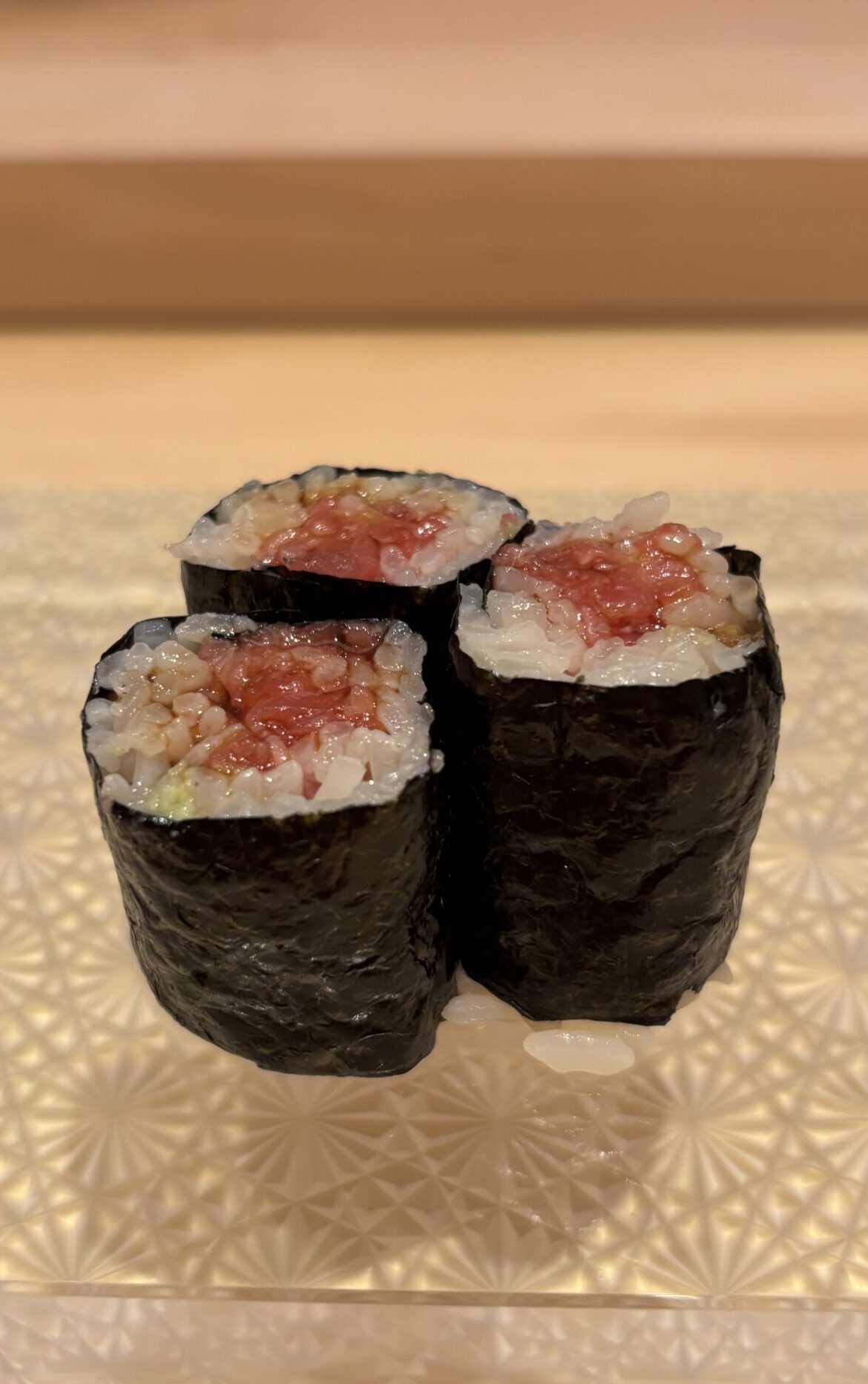
12: Nakaochi
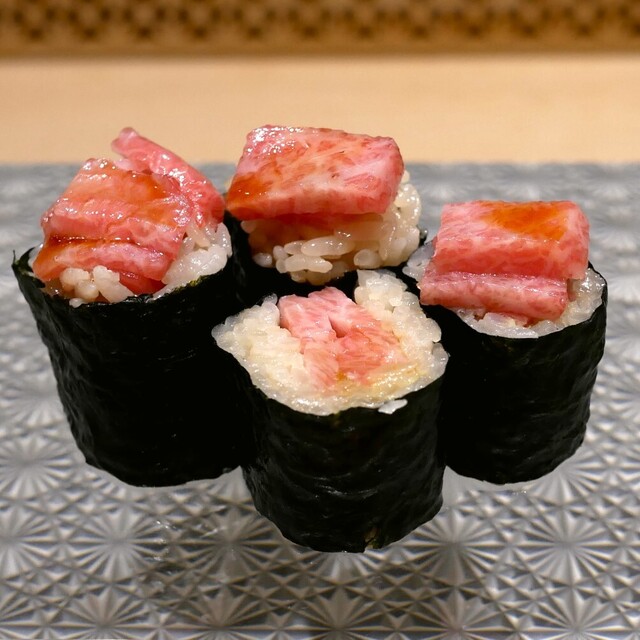
I had hoped we’d get this. Nowhere to be found
A WORD IF I MAY ON SHAKO
Despite my qualms about hikarimono, Mitani is still very focused on seasonality. Shako (mantis shrimp) is a great example. June is the tail-end (pun very much intended) of its first season, when it spawns and the female tail teems with roe.
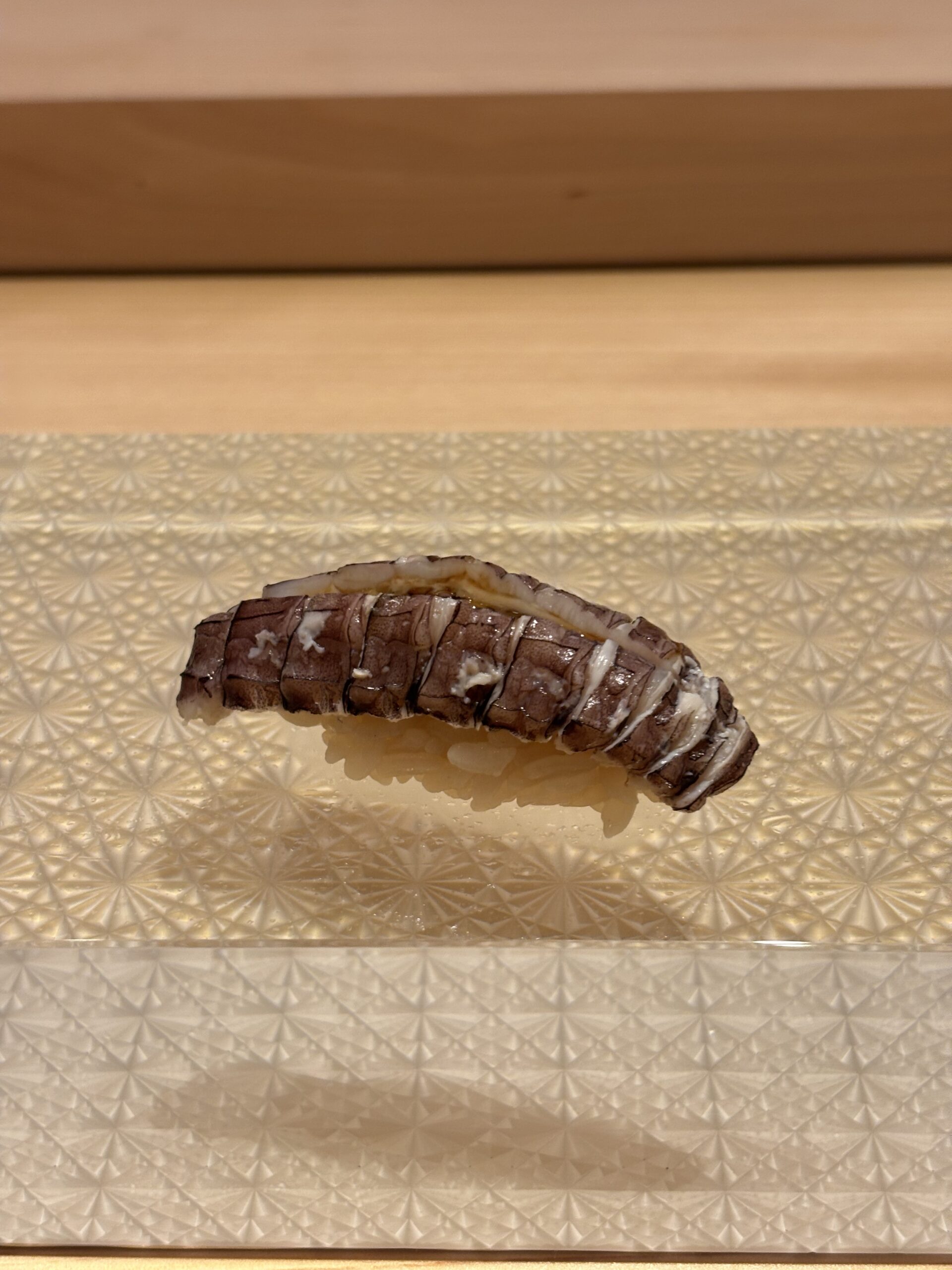
13: Shako
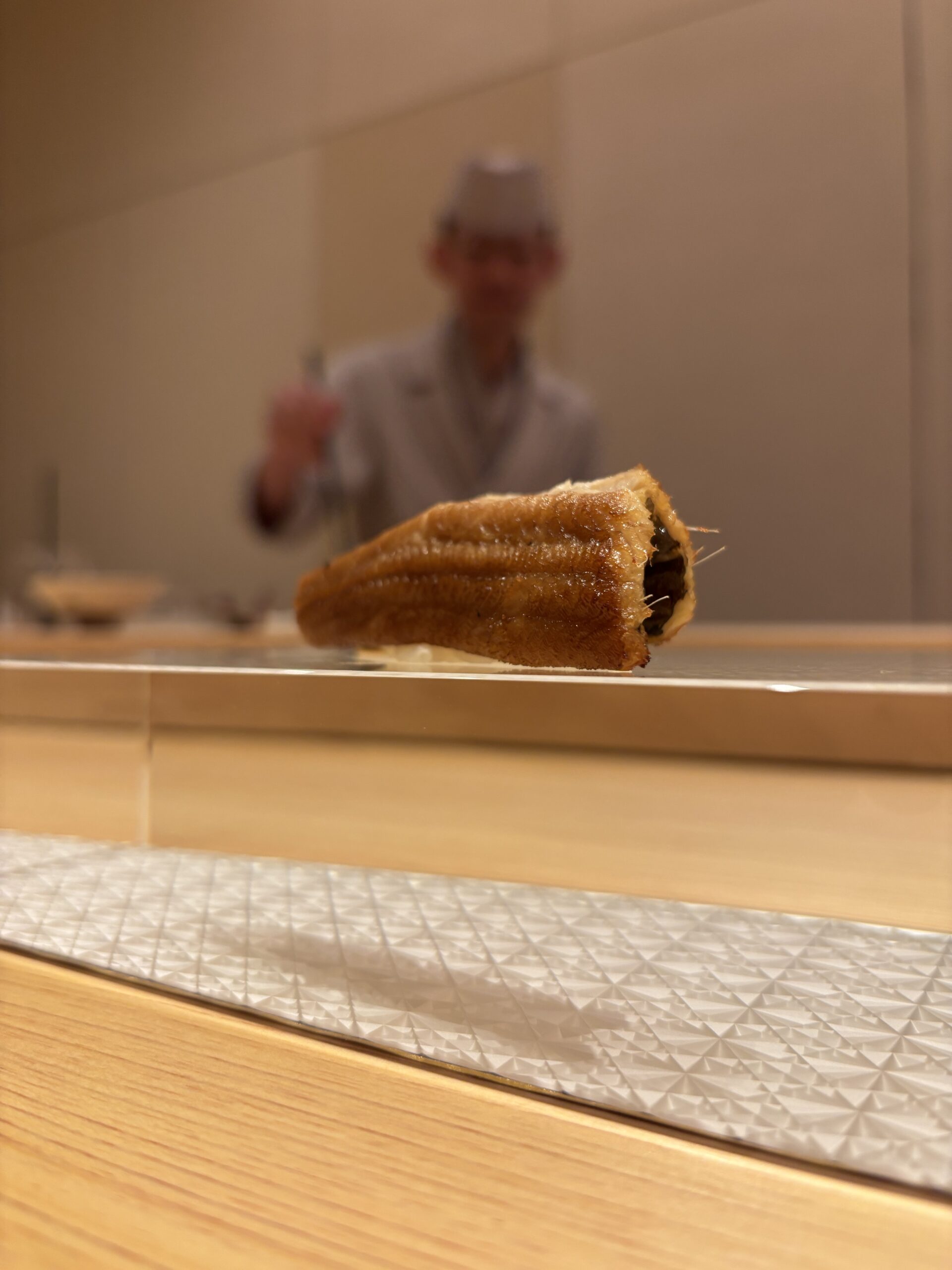
14: Anago round 2
I ALSO CAN’T STOP THINKING ABOUT THE “KANPYOMAKI INARIZUSHI”
For a sushiya to be truly memorable, I need something new. New doesn’t mean untraditional; for instance, last year a sushiya served me salmon with melted mozzarella. Grazie mille for the mozz, but I buried the review, called an exorcist and haven’t spoken about it since.
This kanpyomaki inarizushi though…
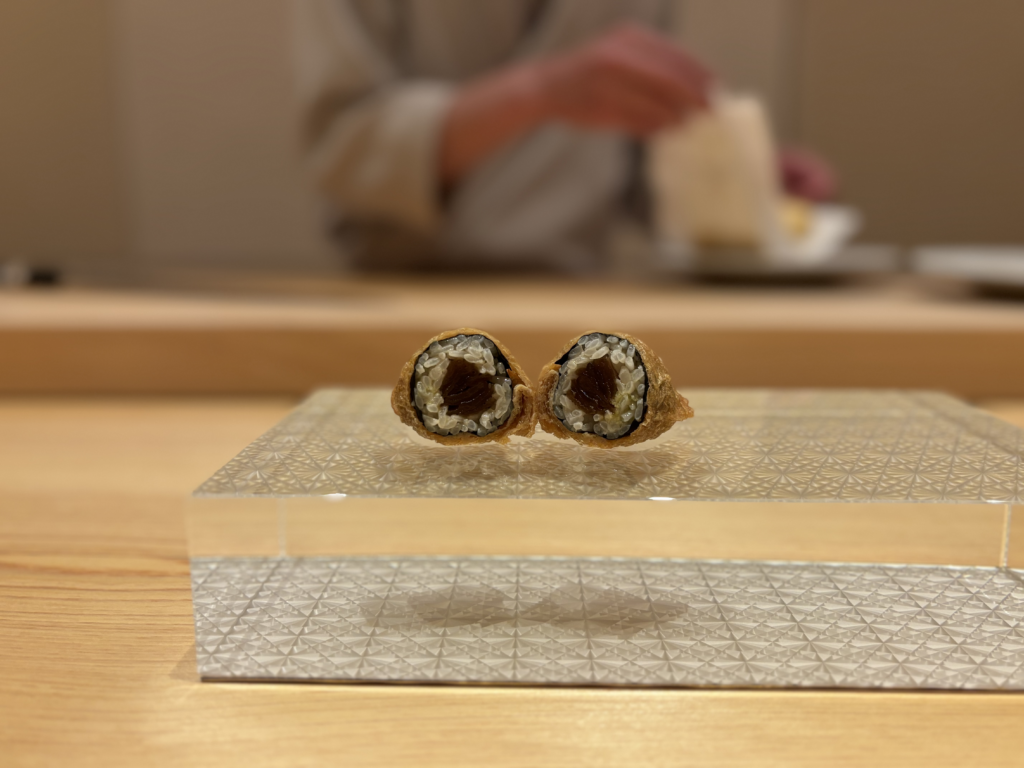
The tradition, preparation and craft required for Kanpyomaki defines Edomae sushi. But inarizushi is a period delicacy as well. It’s a tofu pocket wrapped around rice, like a treasure inside a pouch. While bits of Kanpyo are sometimes included, the full maki usually isn’t. Mitani serves them together here and in Japan, a jointly delicious reminder that sushi isn’t just fish.
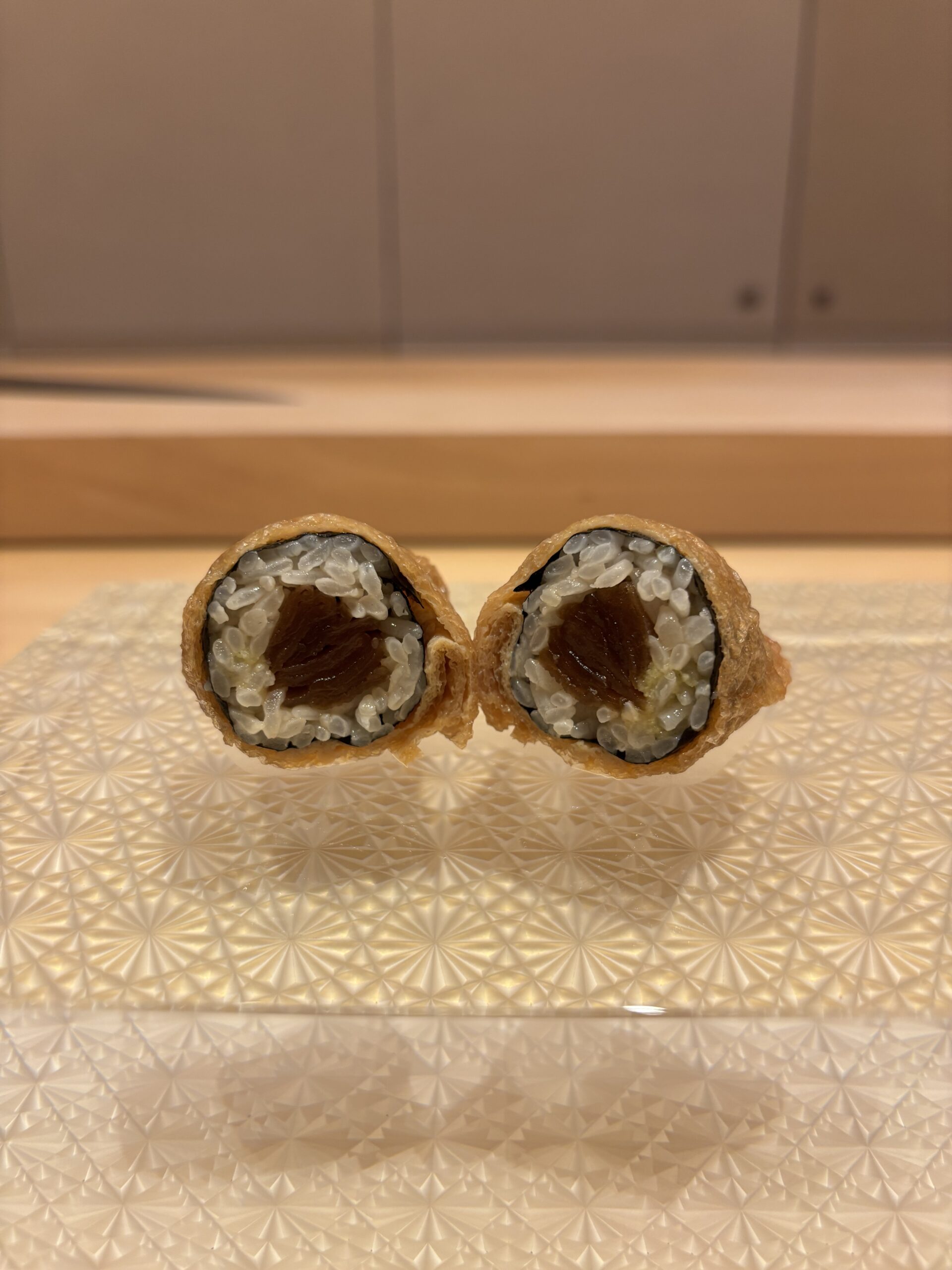
15: “Kanpyomaki Inarizushi”
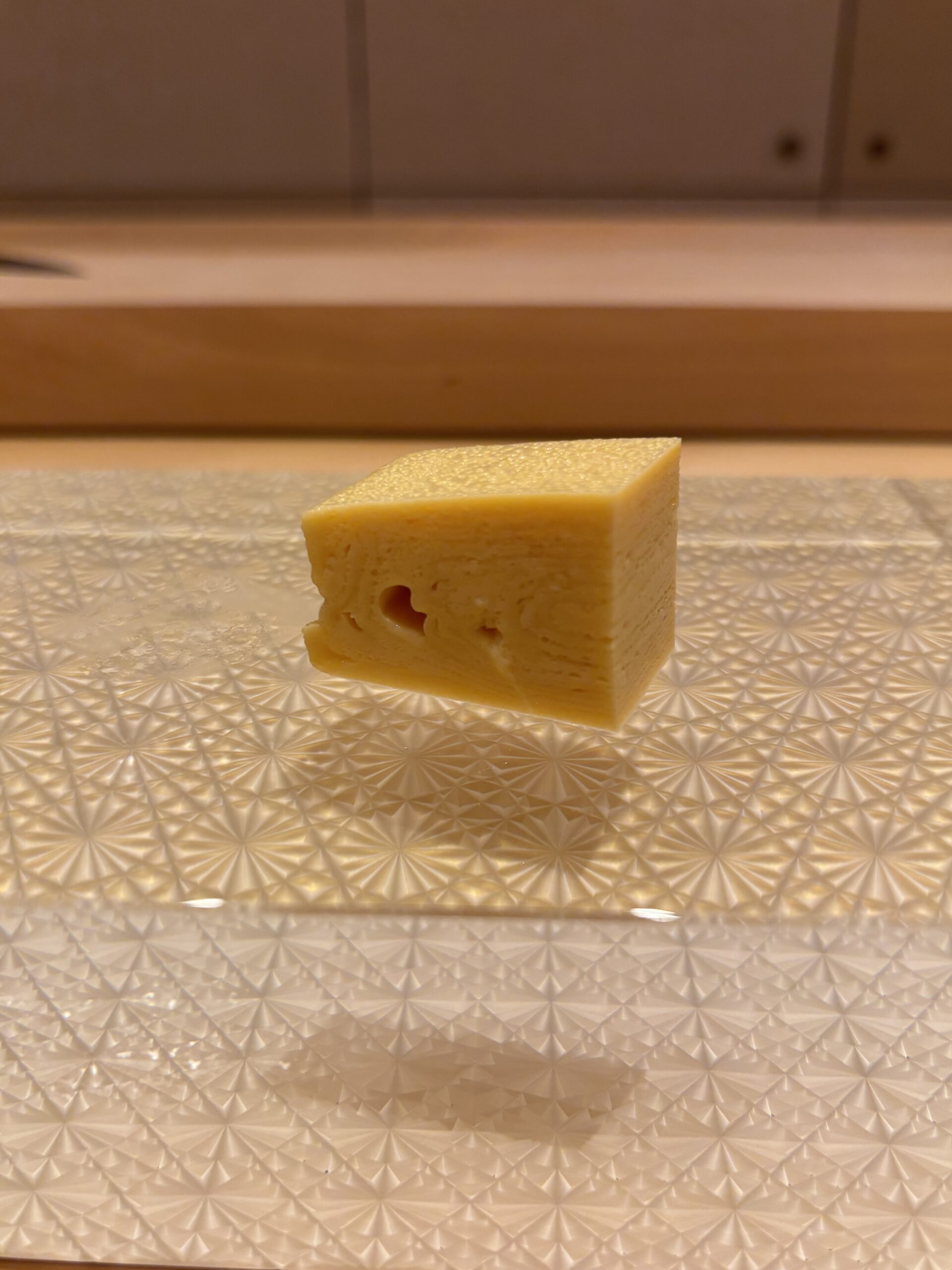
16: Tamago
(There was also a temaki and dessert, not pictured).
THE VERDICT
Let’s go back to my analogy about the World Cup, because a funny thing is happening.
Once it started, I cared less about the pricing, the location, the blatant consumerism of it all. I’m glued to every game.
I watched thousands of Chattanoogites – or perhaps Chattanoogians – welcome the Spanish National Team to the Aman Chattanooga, aka the Embassy Suites.
I found 31 different angles of a dutch orange mass shuffle left and right in perfect unison.
And yes I’m currently planning a vacation to Cape Verde.
It is, after all, still the fucking World Cup.
And Mitani, after all, a special meal, right on the cusp of my Sushi Seven.
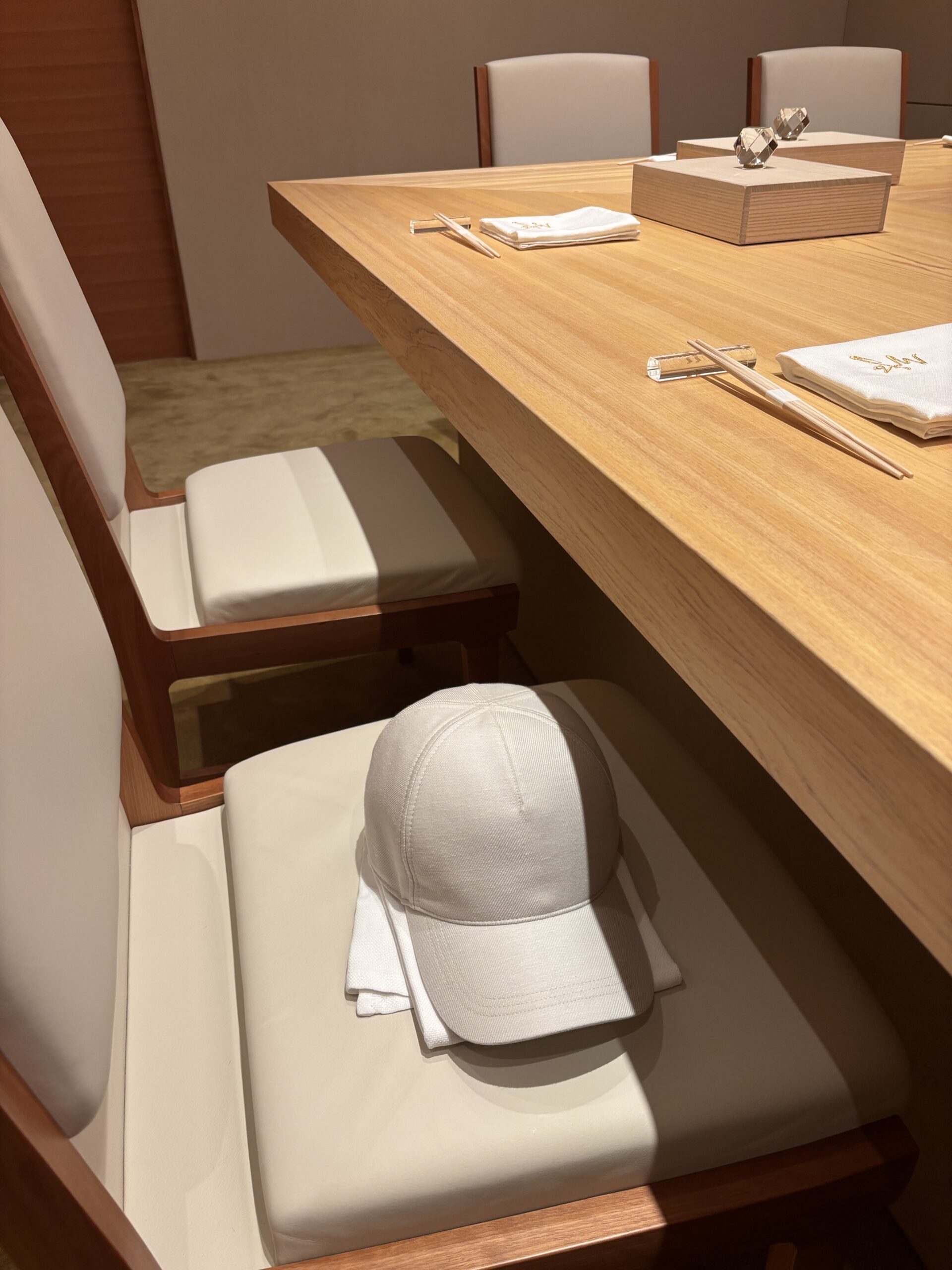
Beautiful cap for a beautiful sushiya. Coming this September at LHW.
SO WHY DOESN’T IT GET THERE? A PLEA FOR MITANI NYC
Let’s get smarter. You’re the second most expensive sushiya in New York, twice the price of any non-legended sushiya. That doesn’t include wine pairings, which you encourage, despite the bathroom expeditions and operational slowdowns it will inevitably cause.
The only people coming to your sushiya are sushi addicts and narcissistic bloggers. Despite that, your tempura-heavy otsumami and common neta are tailored to neophytes. It makes no sense.
And yet.
The sushi you serve is fantastic. Truly fantastic. That anago. That Inarizushi!
That shari.
They’re all worth a visit.
So please, change the otsumami back to what you’re know for. Bring the prices down. Especially at lunch, but especially at dinner. If you’re worried people will get confused, (a) it’s still early and (b) not enough people are coming to notice.
Recommended.
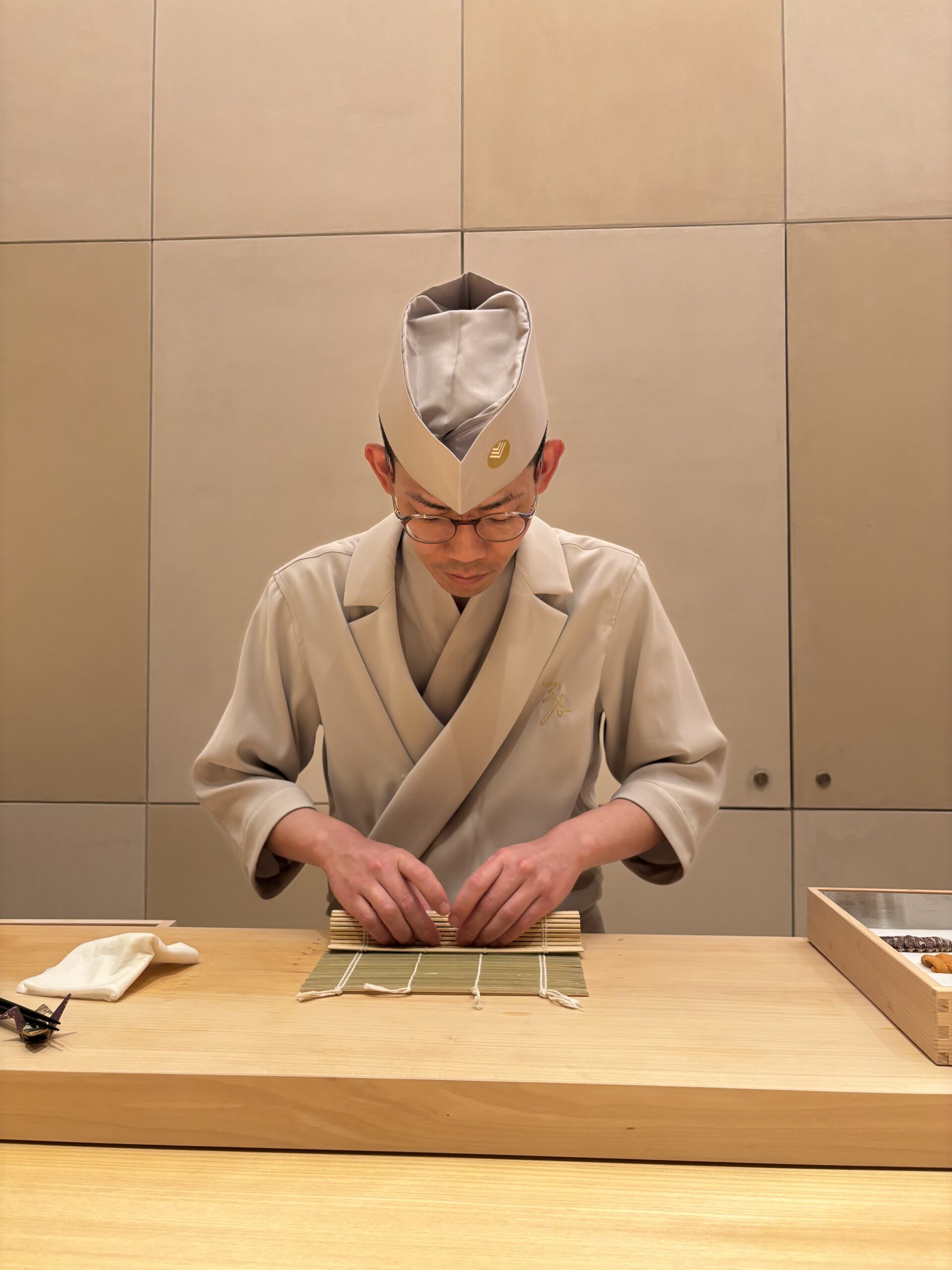
This apprentice legend was wonderful