 THERE’S A DEVELOPMENT AFOOT IN NEW YORK CITY SUSHI
At the top end of the food chain, prices are coming down – sort of.
Take Noz 17, the Ant Man of the Noz Cinematic Universe. After a brief trial with an apprentice-led side room (reviewed here), they revamped their main room entirely. Out was the $425, 30 course, otsumami-heavy omakase. In was a $195 nigiri-led menu.
Joji ($450) has introduced a lunch menu ($325).
And just two weeks ago, Icca ($450) debuted its Friday/Saturday lunch for $150.
The catch?
It’s with an apprentice.
I FIRST VISITED ICCA FOUR YEARS AGO
I wrote about my experience here; you should read it, especially since writing and road hockey are my only skills (“skills”. I have two ejections from Zog Sports floor hockey, a record unlikely to be broken).
The headline back then was that Icca is a fantastic sushiya. Google originally didn’t agree. A 3.9 rating was insane, and foreshadowed the garbage that Google Reviews eventually became.
Oh, you didn’t get an extra puff pastry for your birthday? Try Magnolia.
What makes Icca special is what you might expect – the itamae (Kazushige Suzuki), the ingredients, the technique – but also what you might not. Icca has the sushi throuple; modernity-traditionality-originality (this word salad will make sense when you go).
THAT DOESN’T MEAN SUZUKI-SAN ISN’T THERE
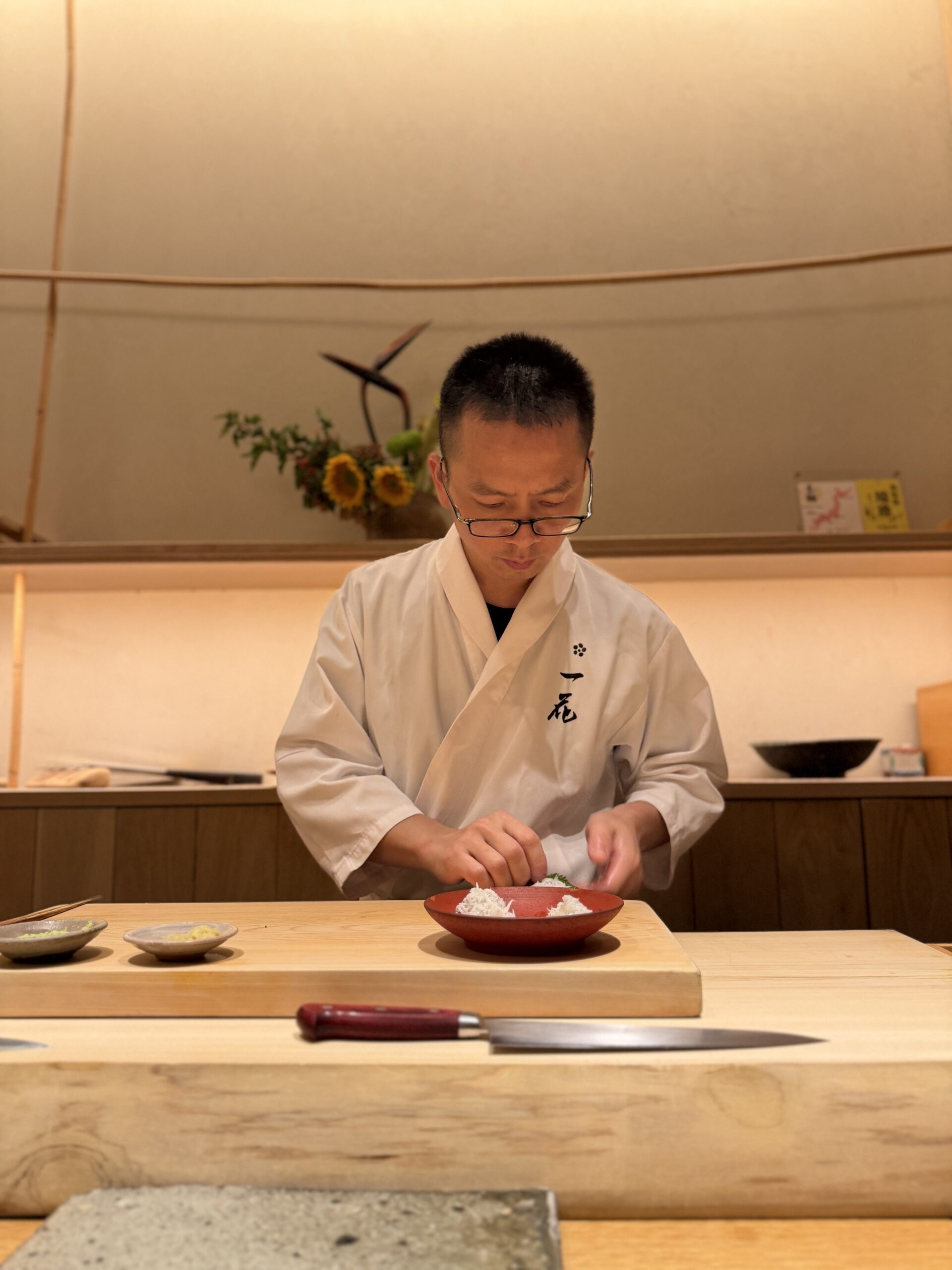
His physical presence hangs over the entire affair. He prepares the Kuruma-ebi, schmoozes with patrons, and is quick to offer a word of encouragement – and correction – to Sou as necessary. The real nerds may enjoy this aspect of the meal in particular.
NOT THAT I MINDED
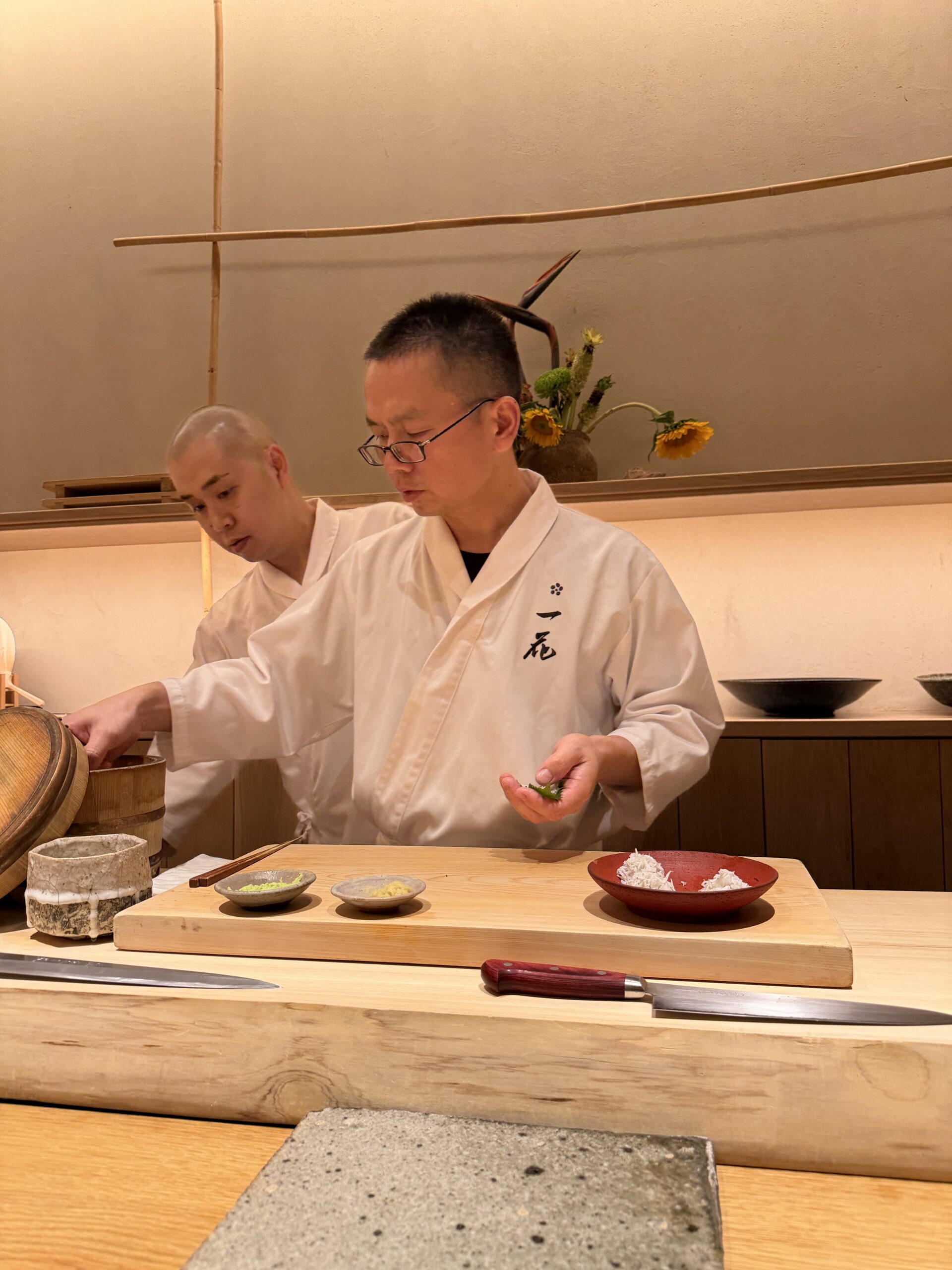
With only four seats available, no music, and an – I don’t use this word lightly (or properly) – evocative atmosphere, Icca is still an oasis. If you, like me, rely on Ben Bohmer’s Beyond Beliefs to relax after a stressful week, might I suggest the Friday 12:30 seating at Icca instead?
THE LUNCHTIME OMAKASE IS HEAVY ON THE NIGIRI
No otsumami beyond a delicious, in-season, kuro-awabi chawanmushi. Not only that is more appropriate for a lunch, I know many of you have complained that your dinners in New York don’t have enough nigiri. Enjoy.
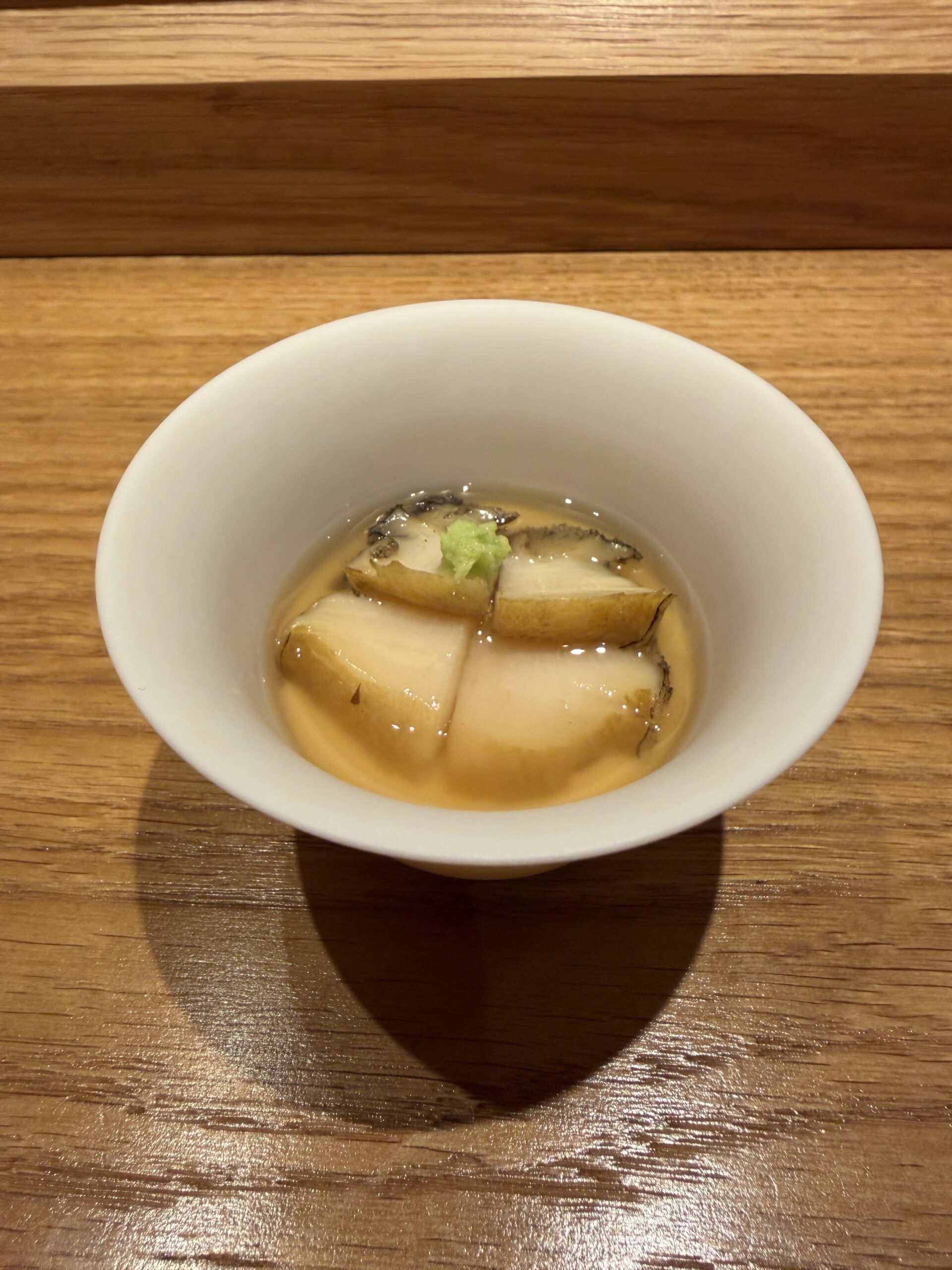
1: Chawanmushi with Kuro Awabi (abalone)
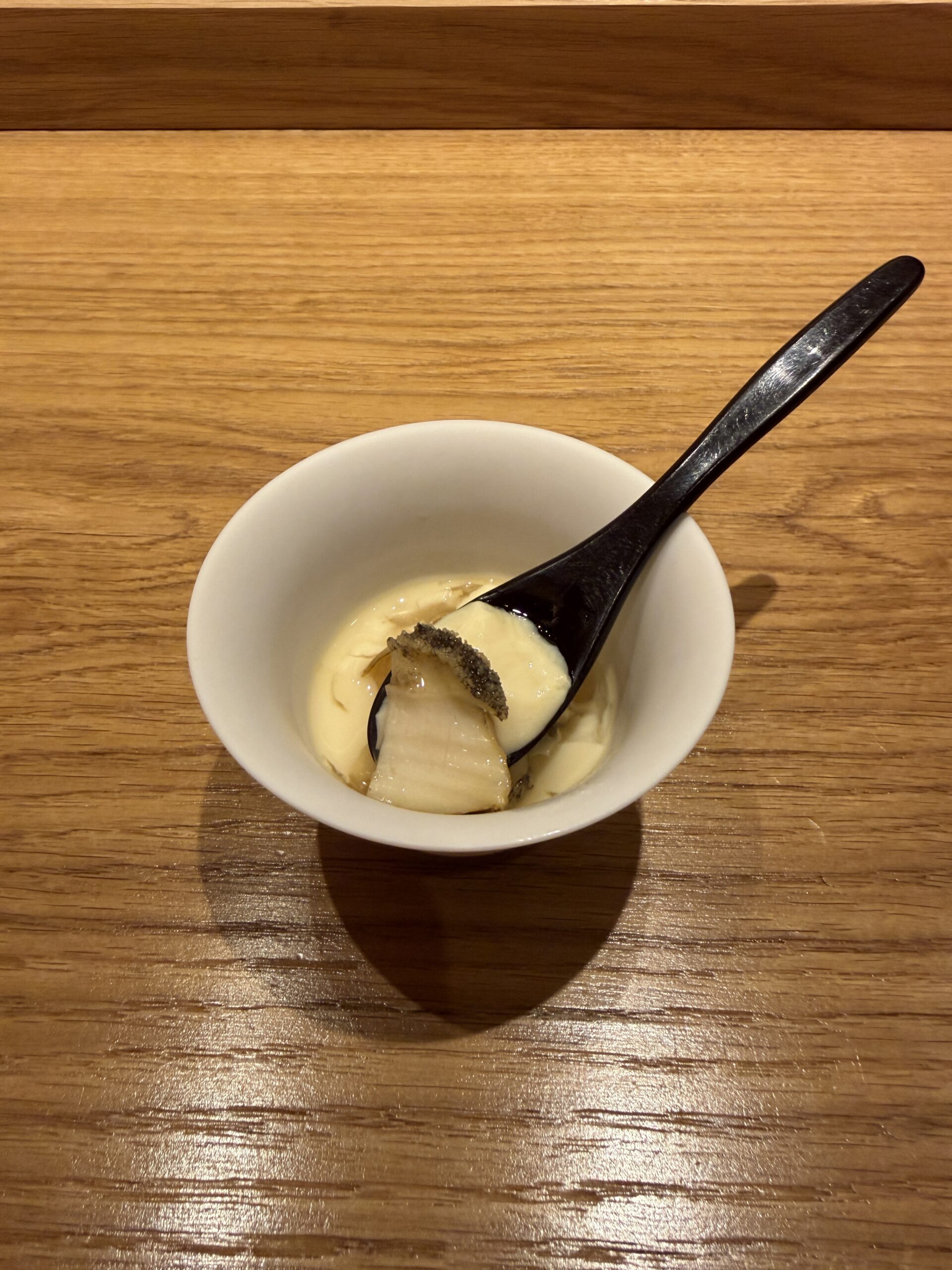
Summer is Kuro Awabi season. This was excellent.
CUTTING THE SHIMA AJI AND……YA, THAT’S AN APPRENTICE
Sou prepares most neta on the spot. Another apprentice-heavy sushiya, Mitani (reviewed here), pre-slices their neta. If you’ve ever wondered which option is better, it’s, uh, complicated. While everyone agrees that neta need time to reach their optimal temperature, some say pre-slicing makes that more effective. Others say pre-slicing is just an operational move.
I’m not sure I care as long as we avoid issues like this:
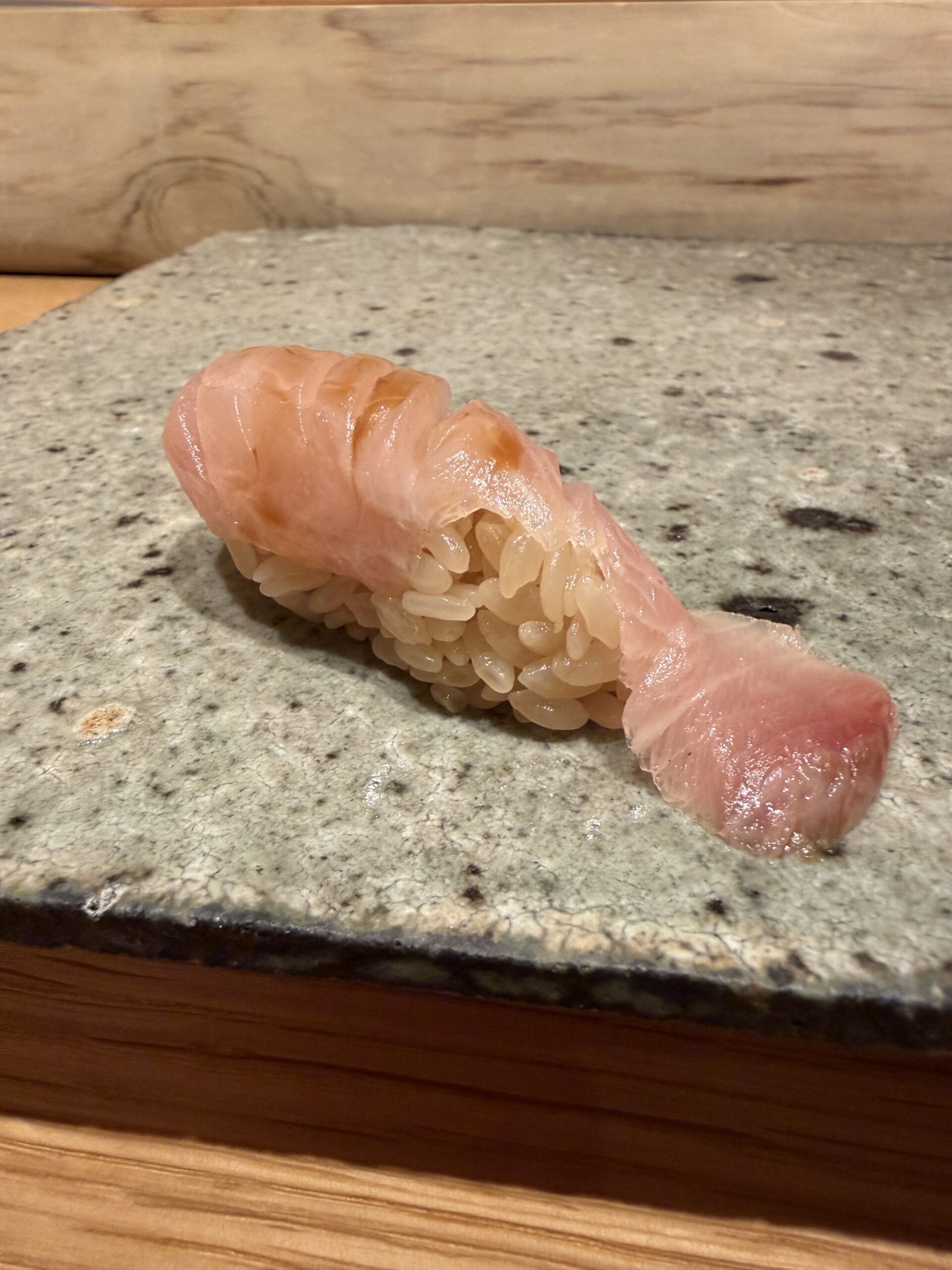
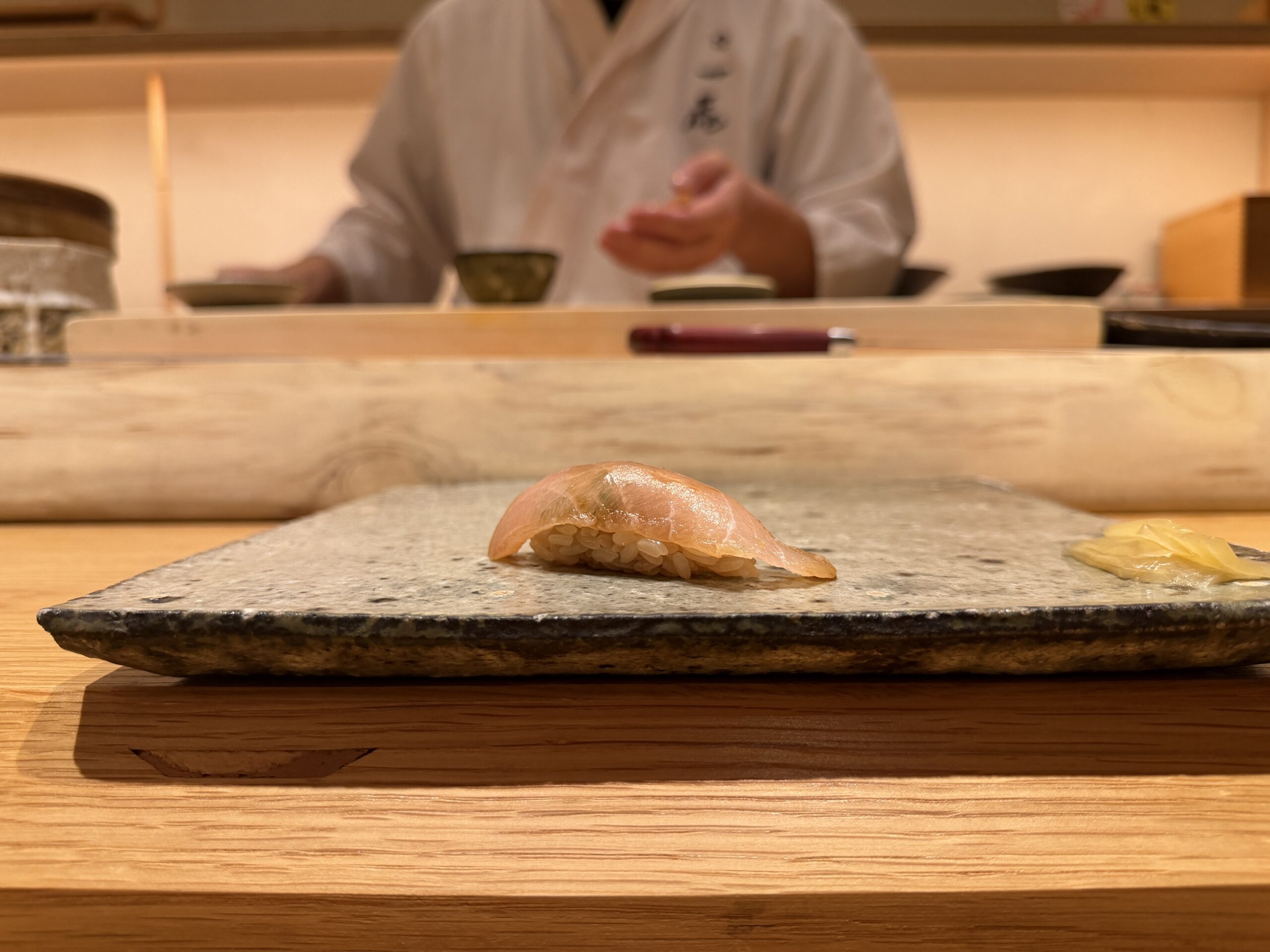
2: Shima Aji (Striped Jack)
“He’s just an apprentice” I silently whispered to myself over and over.
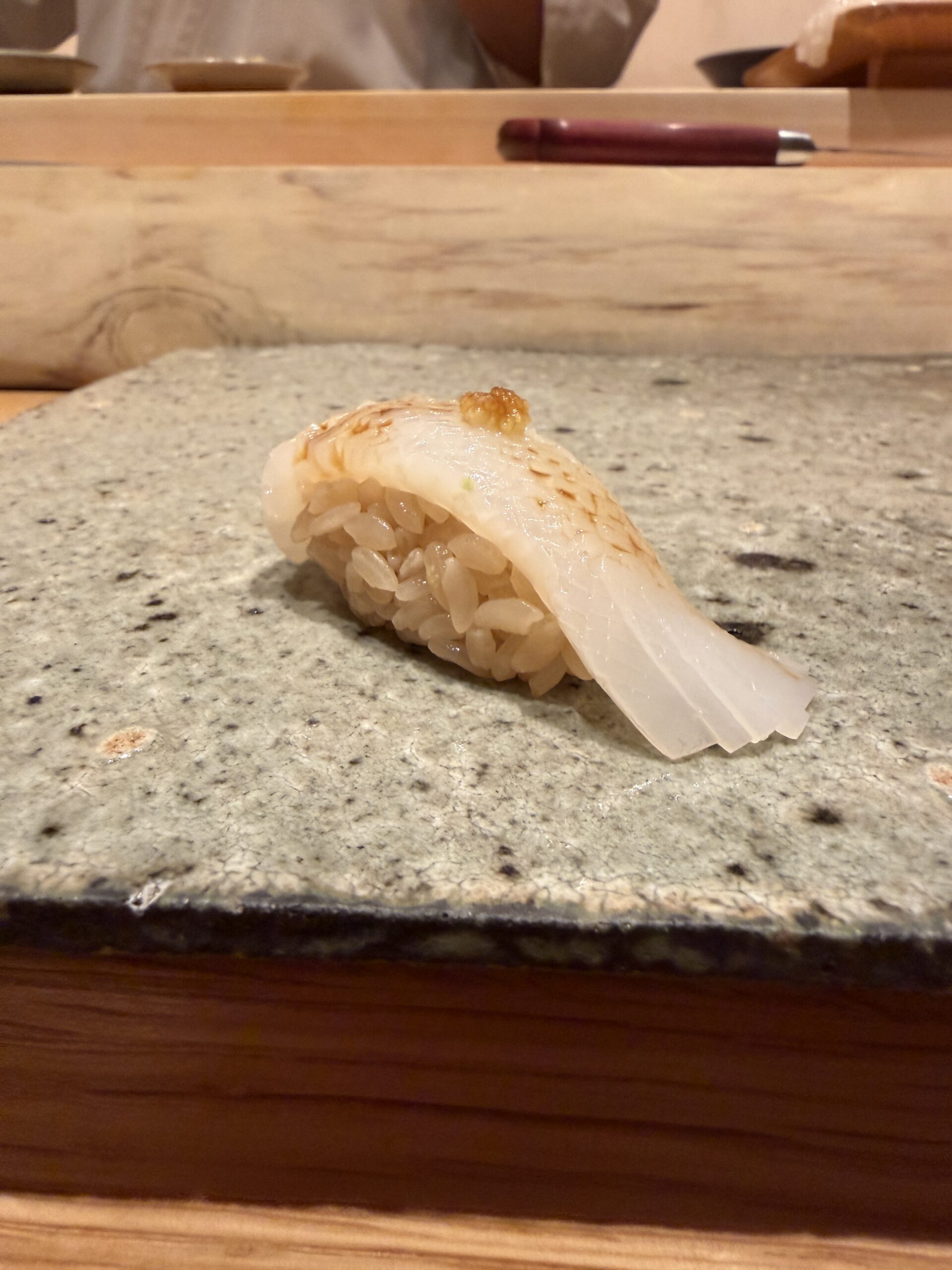
3: Yari-ika
COURSE FOUR EPITOMIZES EVERYTHING I LOVE ABOUT ICCA
Remember that throuple I mentioned earlier? Mekajiki (swordfish) is a fatty summer neta, traditional yet absent from NYC sushiya menus. Reasons vary, but they’re apparently hard to catch and dangerous because of parasites? Good. Consider me Odysseus. If I go out, I died doing what I loved (eating expensive sushi alone).
By the way, I originally wrote down makajiki (marlin). Similar names, sometimes confused for each other, but the colour – mekajiki is lighter – should have been a giveaway.
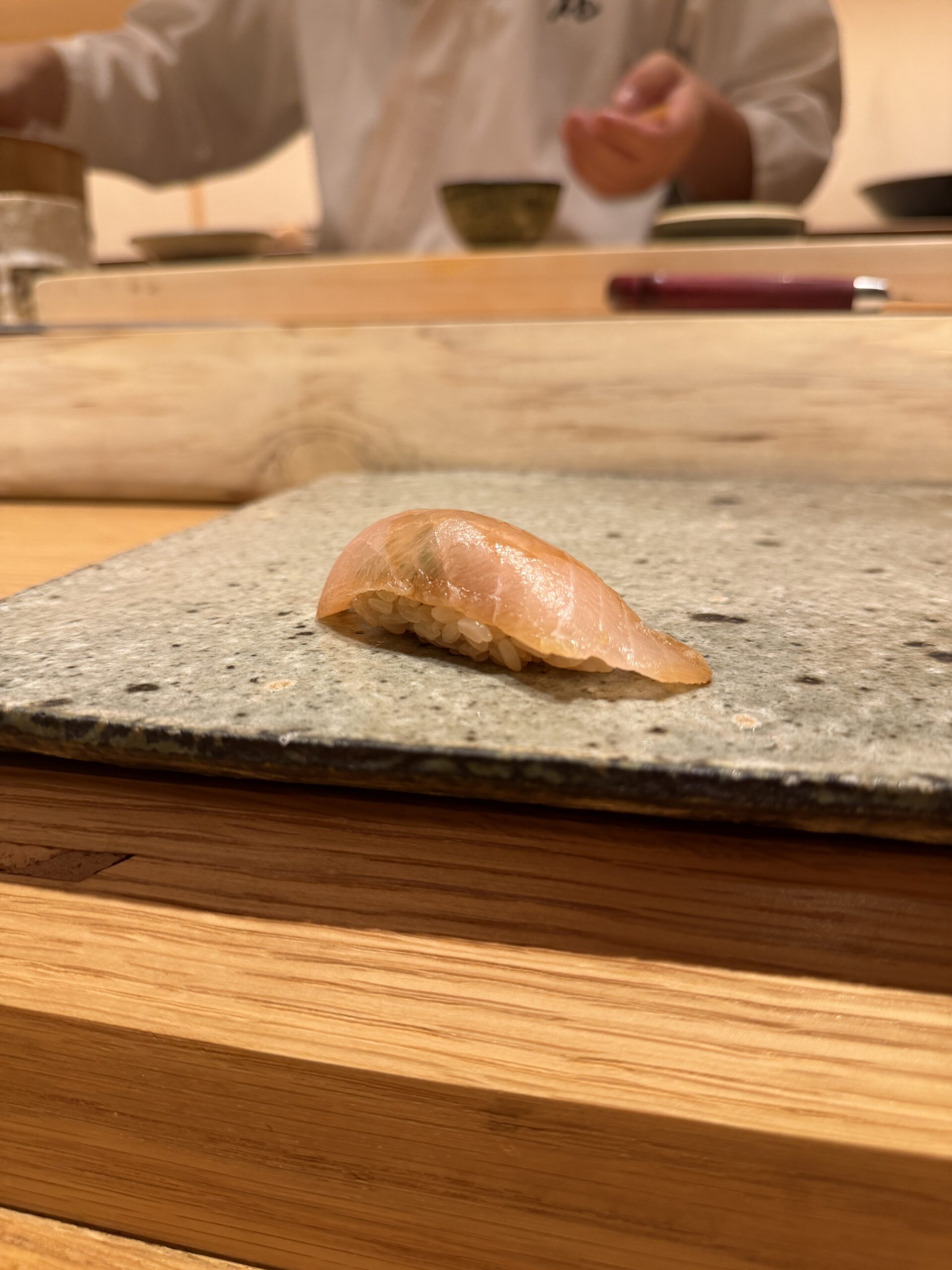
4: Mekajiki (swordfish)
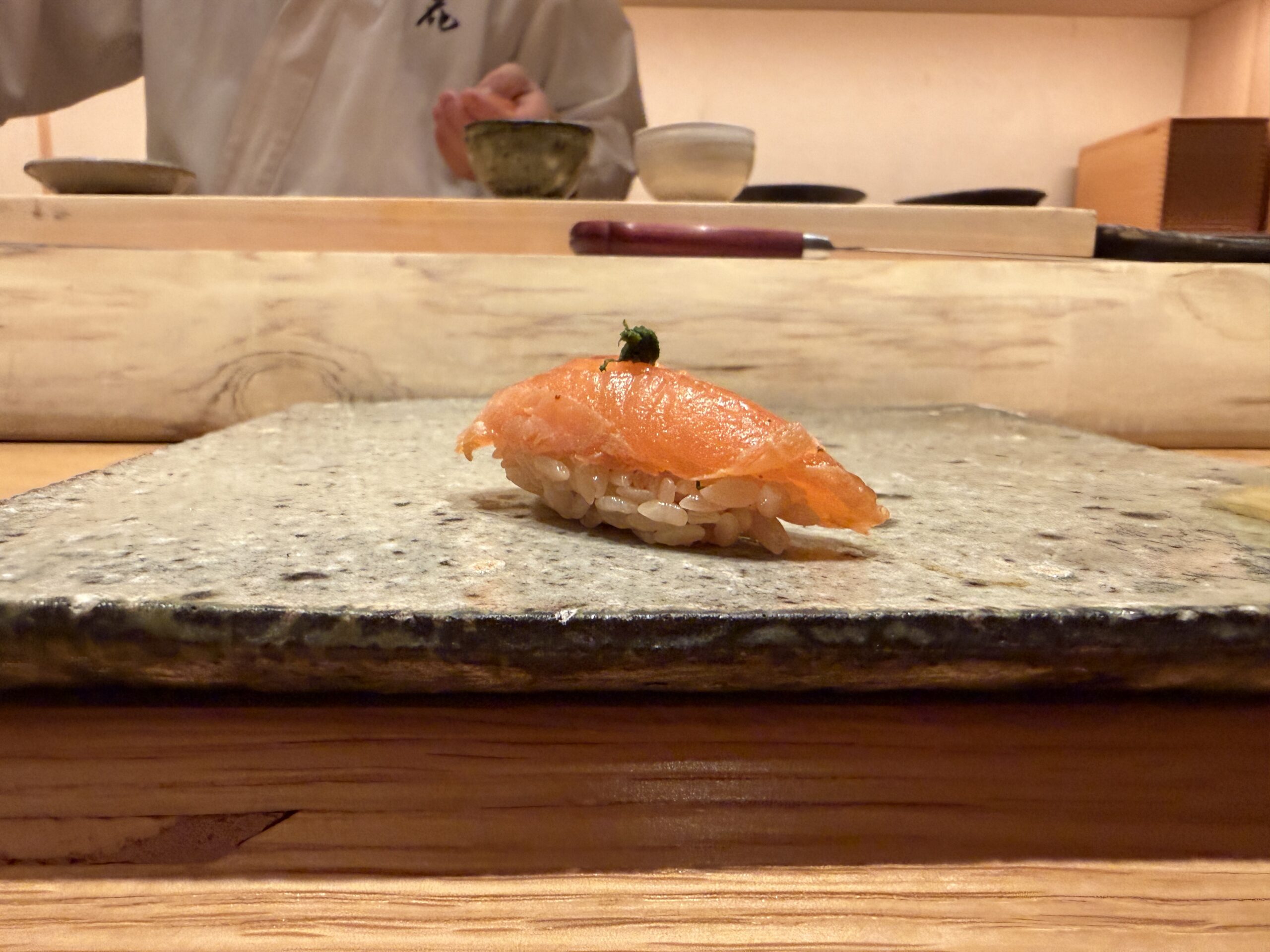
5: Tokishirazu (chum salmon)
SWEET BEAUTIFUL SHIRAUO
Shirauo (icefish) is also rarely on menus here. Sure, we’re way beyond its typical season, and sure I couldn’t taste the shiso it was prepared in, but let’s ignore all that and focus on the eyes. I would have ordered this again, but unclear if there was an “okonomi” portion post-meal.
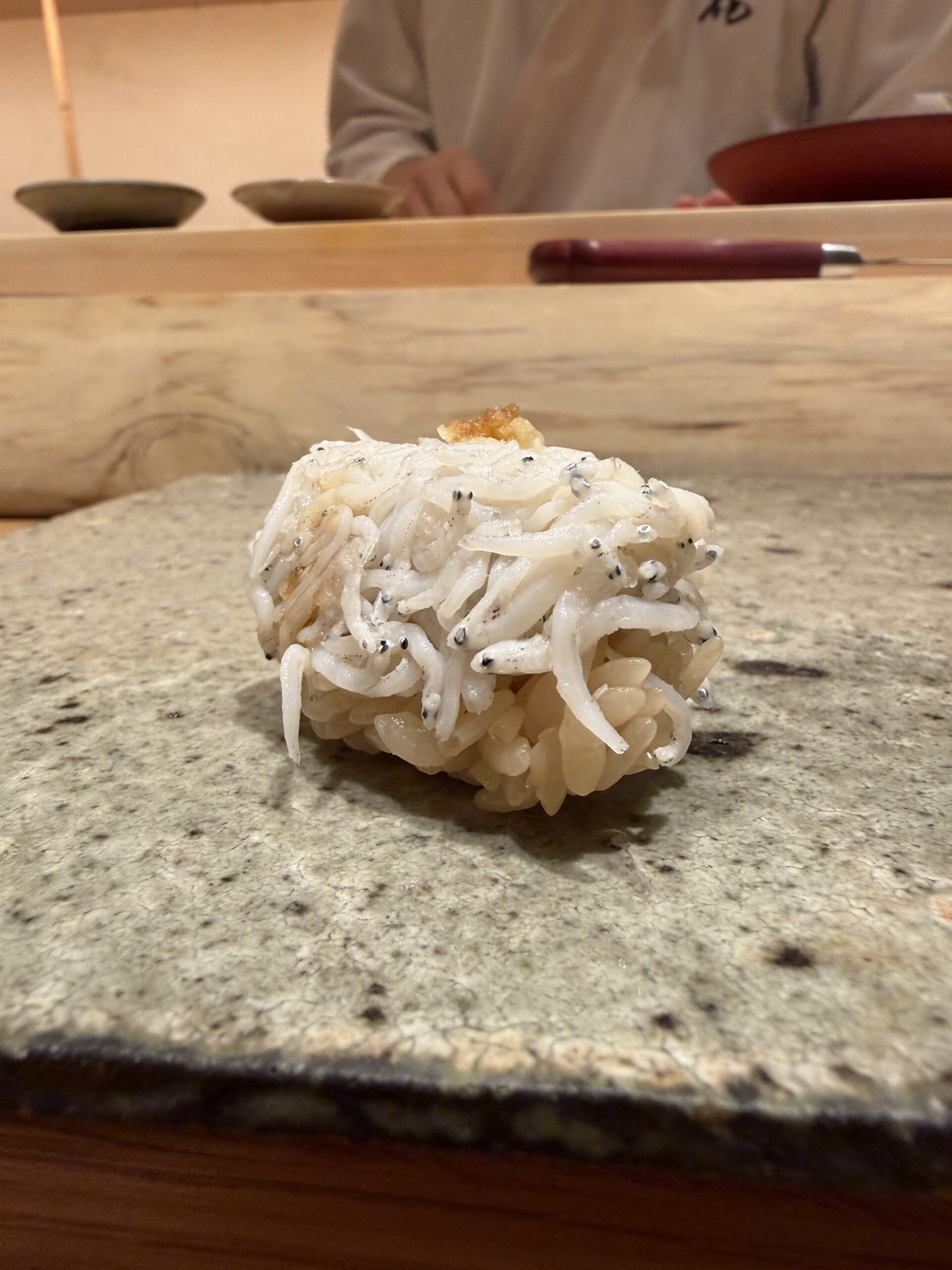
6: Shirauo (icefish)
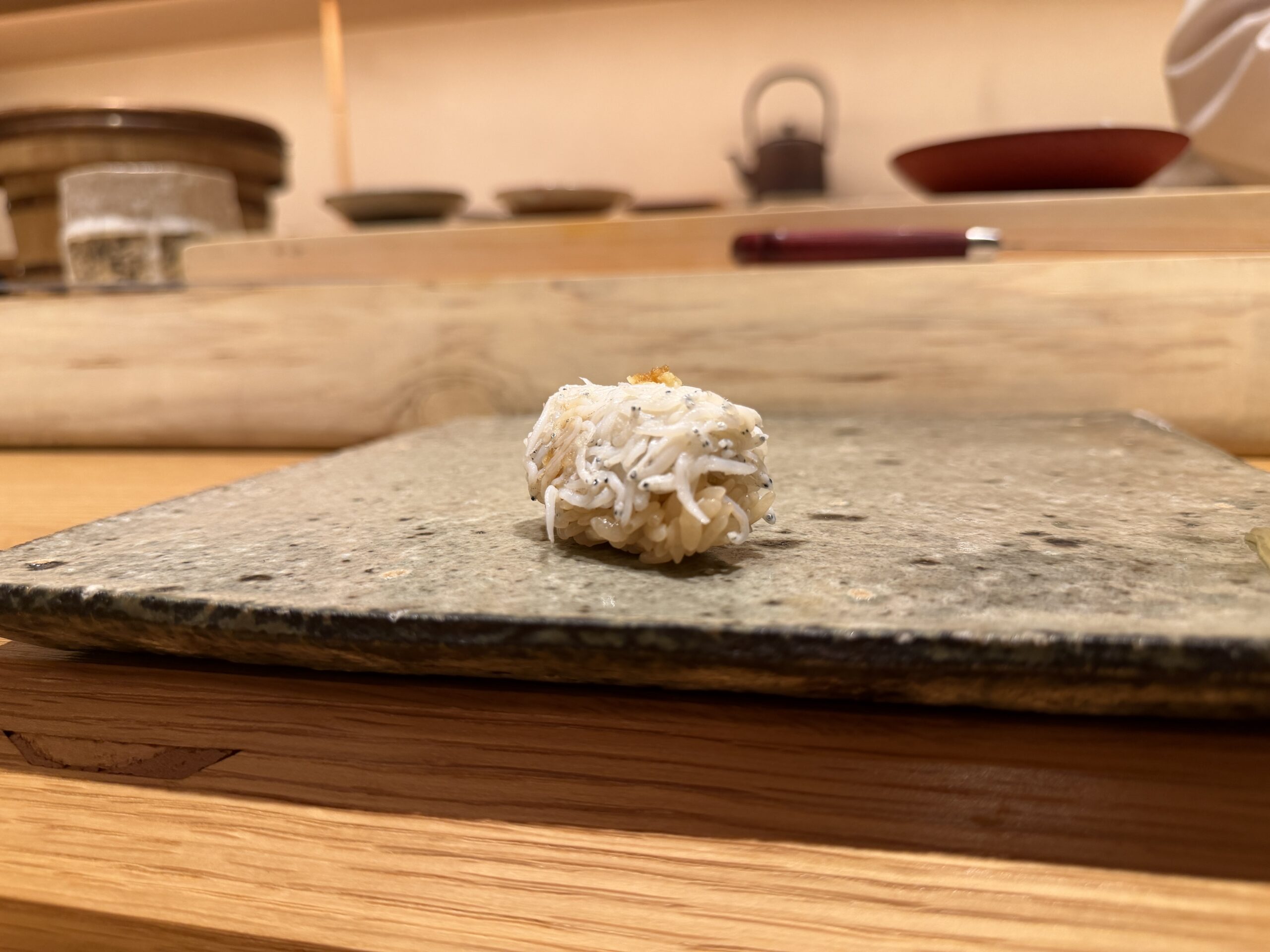
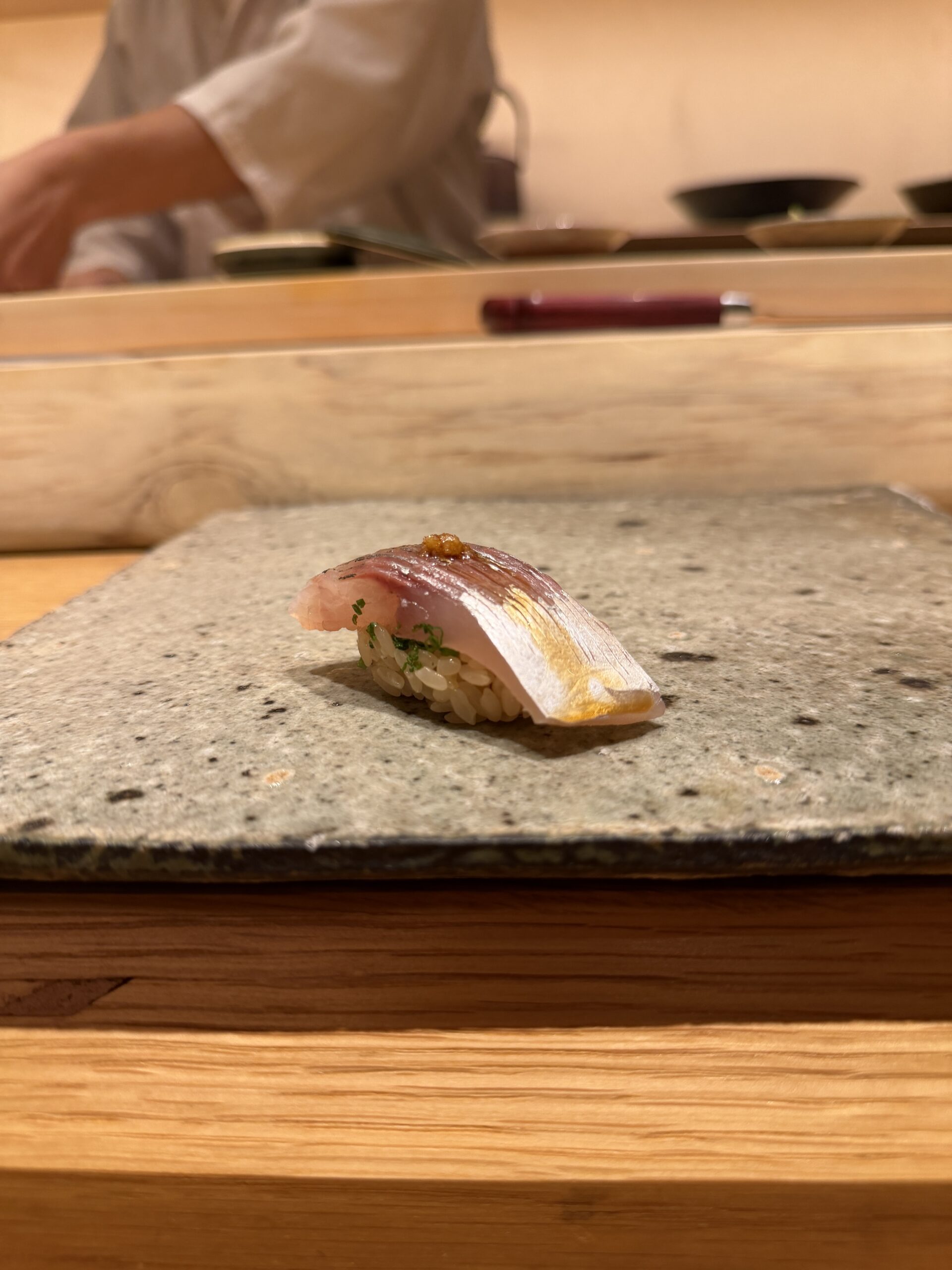
7: Aji
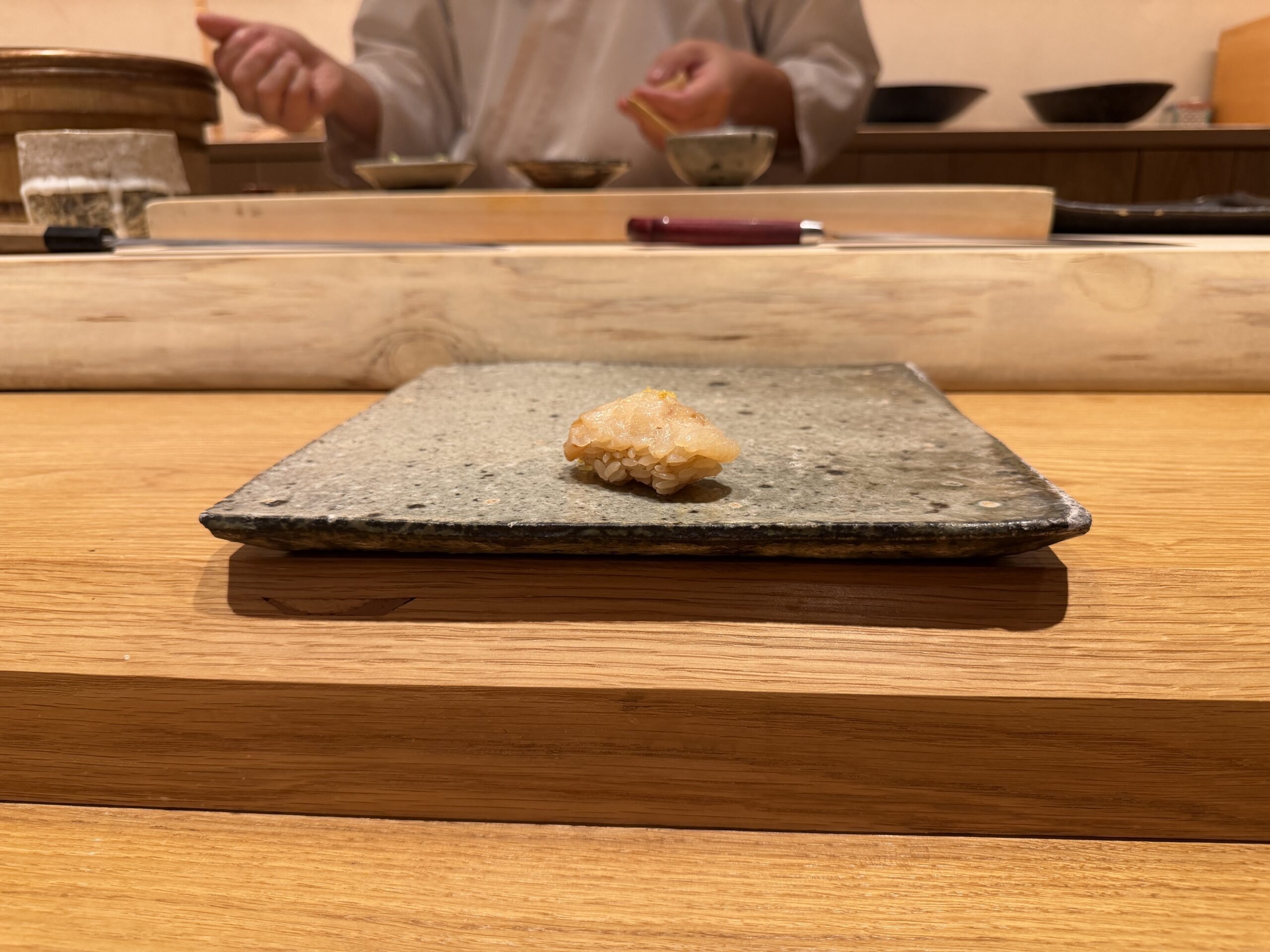
8: Ni-hotate
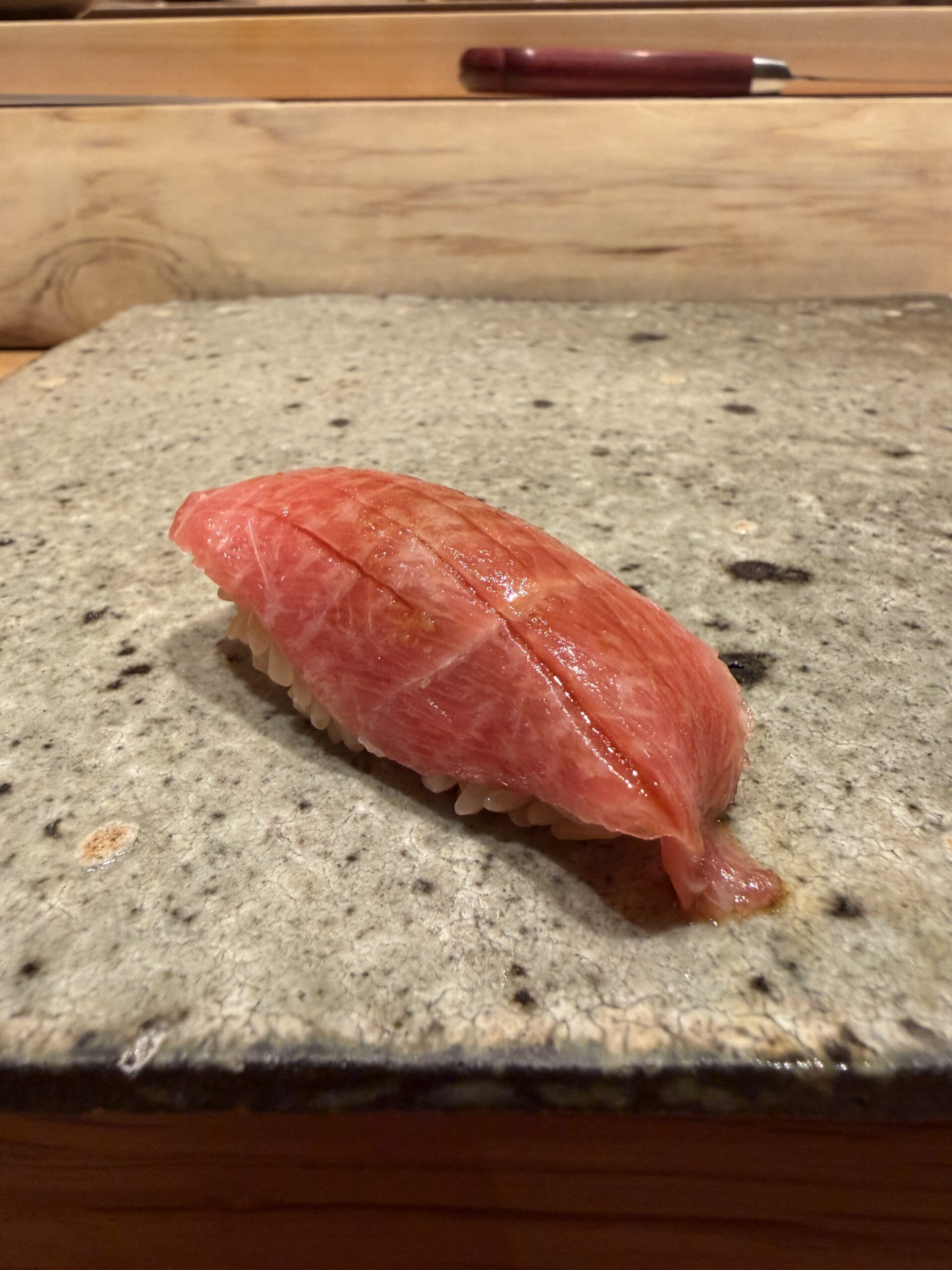
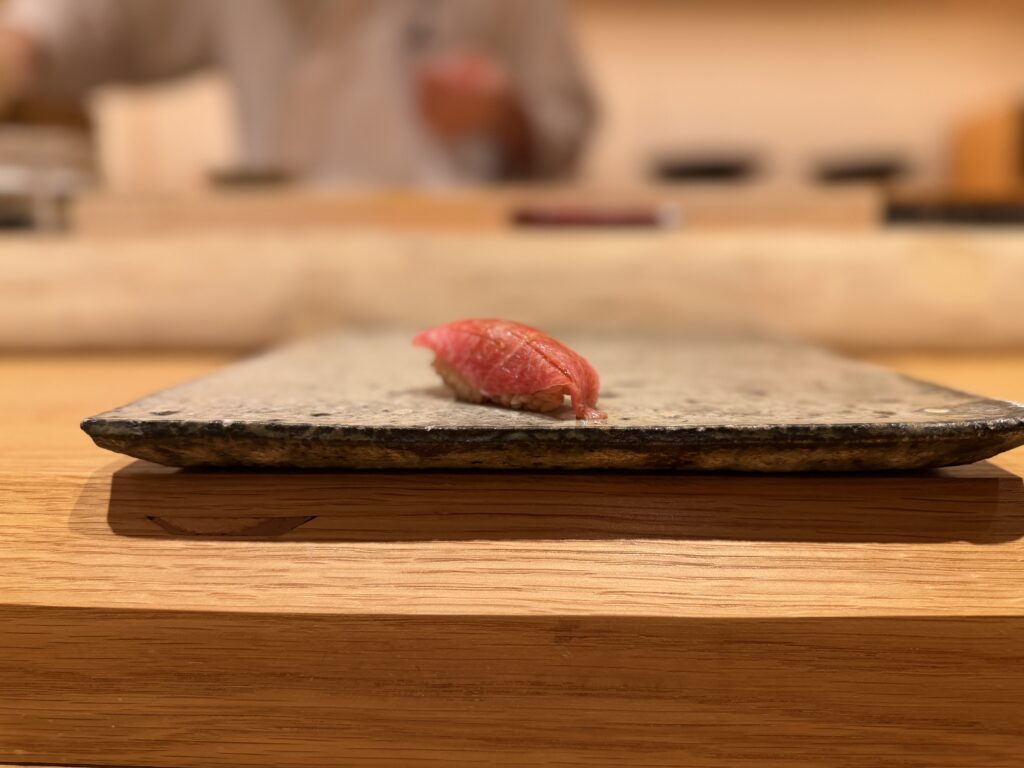
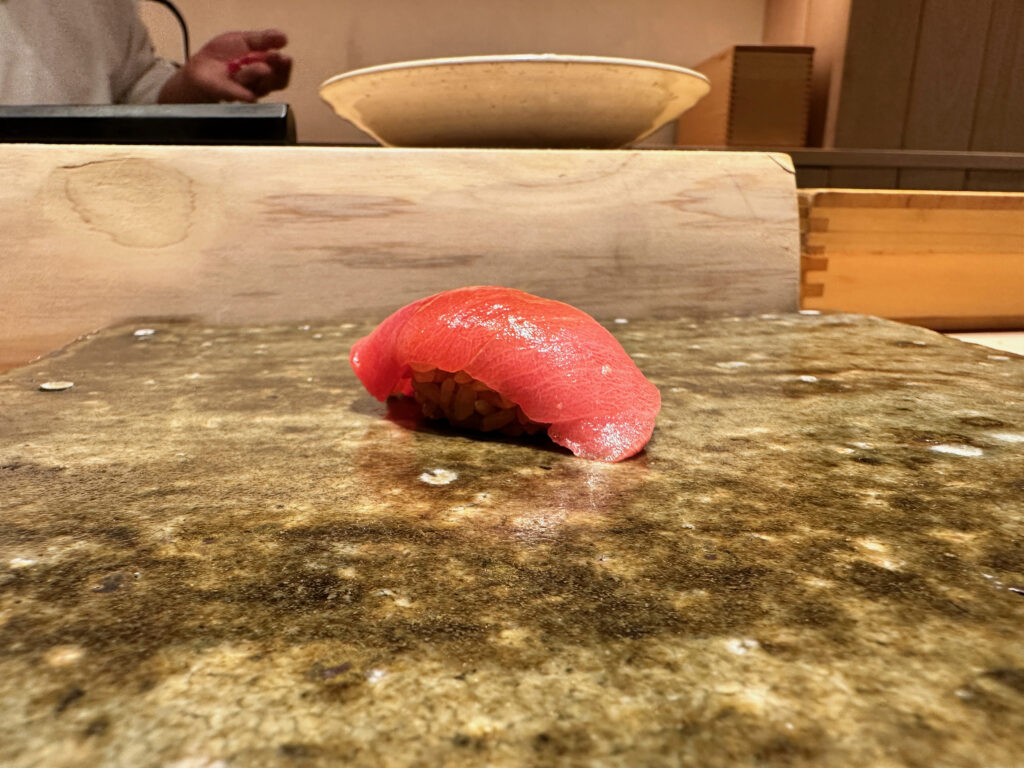
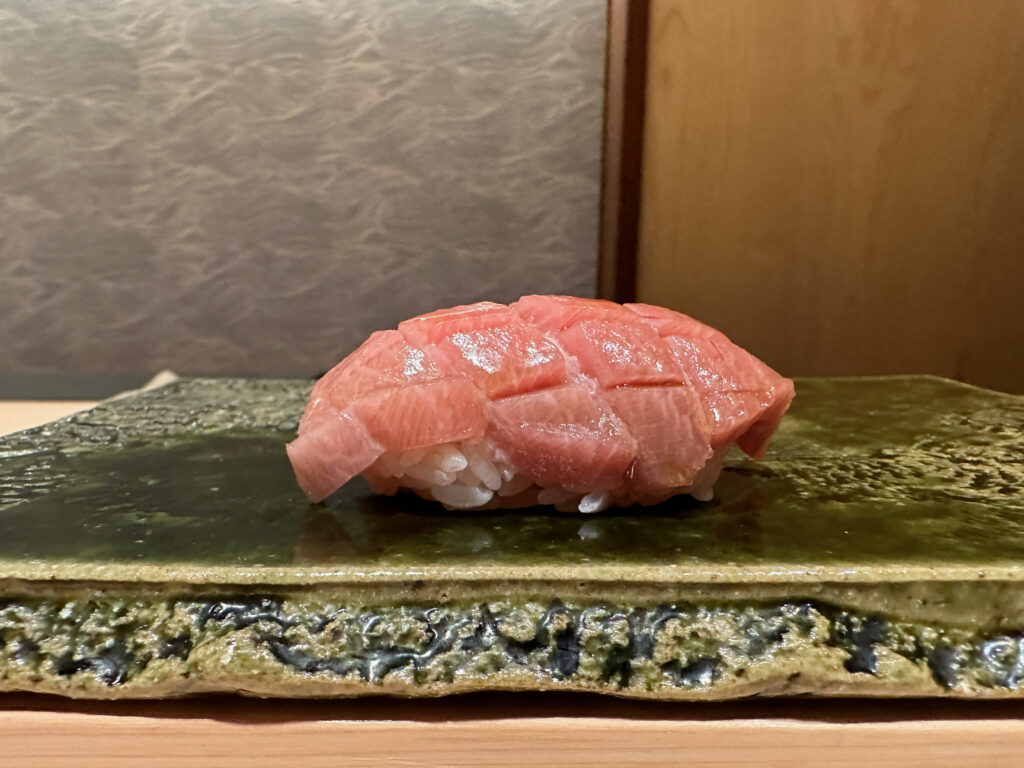
9: Chu Toro
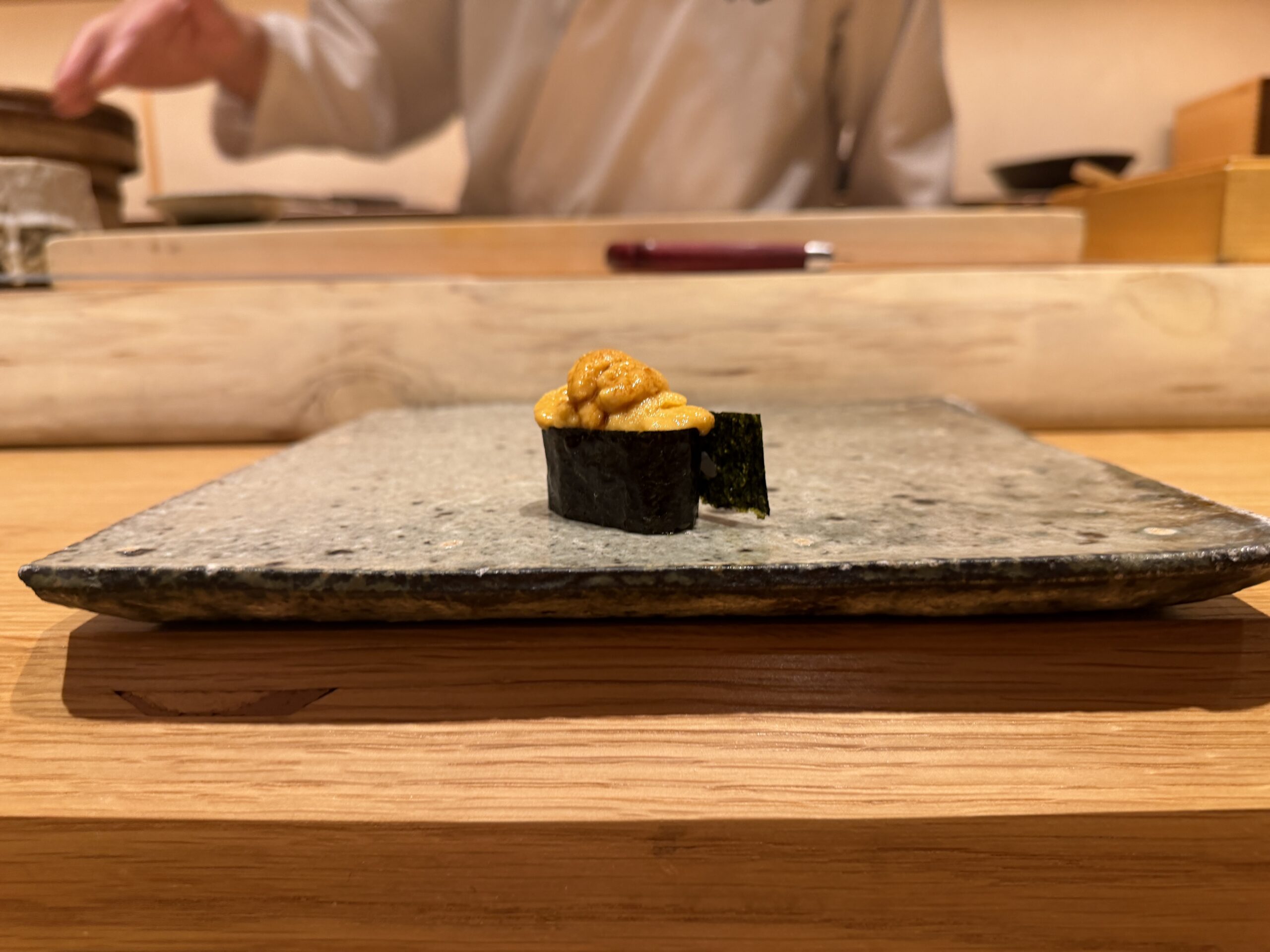
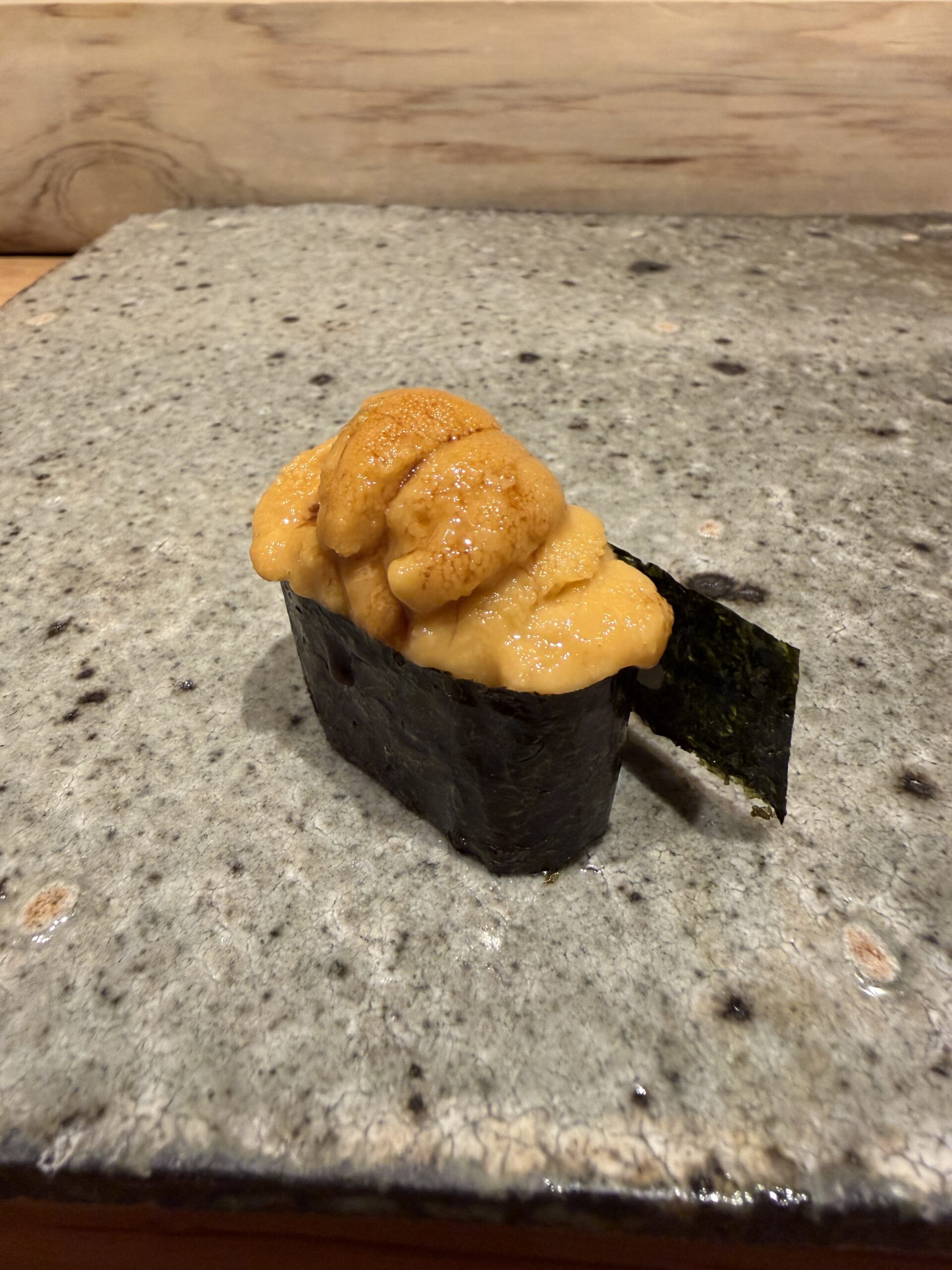
10: Murasaki Uni
I recently watched a video on the economics of modern omakase. They apparently scraped 400,000 sushi restaurants in 6 cities to build the “first accurate snapshot” of the American sushi scene. Now, a skeptic might note that the US in total has ~17,000 sushiya. Perhaps hundreds of thousands of sushiya have closed since AOL shipped their first floppy disk.
Or maybe web scraping is bullshit. Who knows, I’m not Boris Grishenko.
In any event, part of their thesis was that a smaller space and a set menu keep costs down. Uh, no shit.
But there’s also another lever sushiya like Icca can pull to drive new revenue: lunch service. It reduces downtime and provides a vessel for the previous night’s ingredients. Case in point, Sou scraping – 🙂 – the last vestiges of this uni.
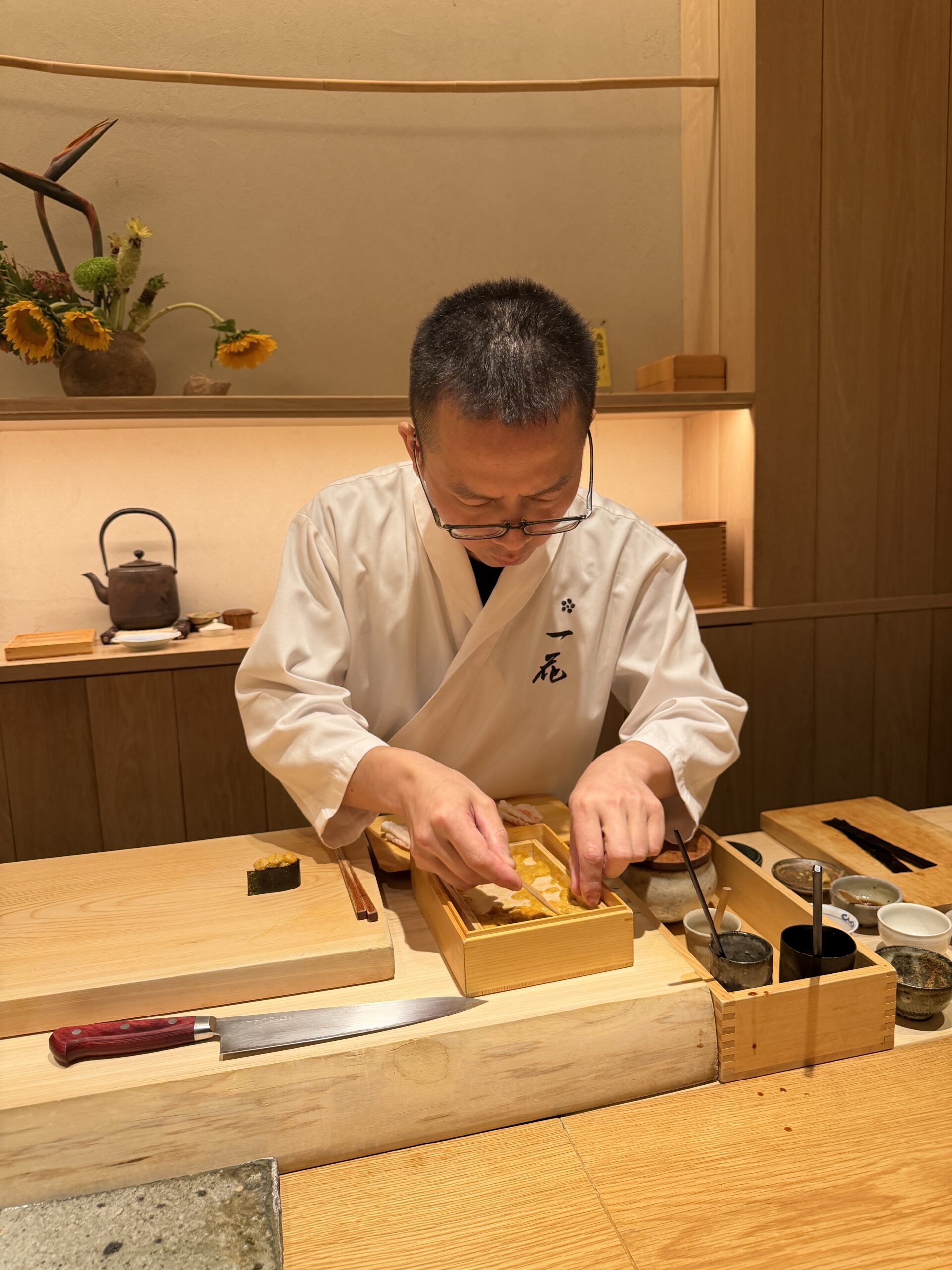
Scraping the remaining Uni
I think this is a trend you’ll start to see emerge more.
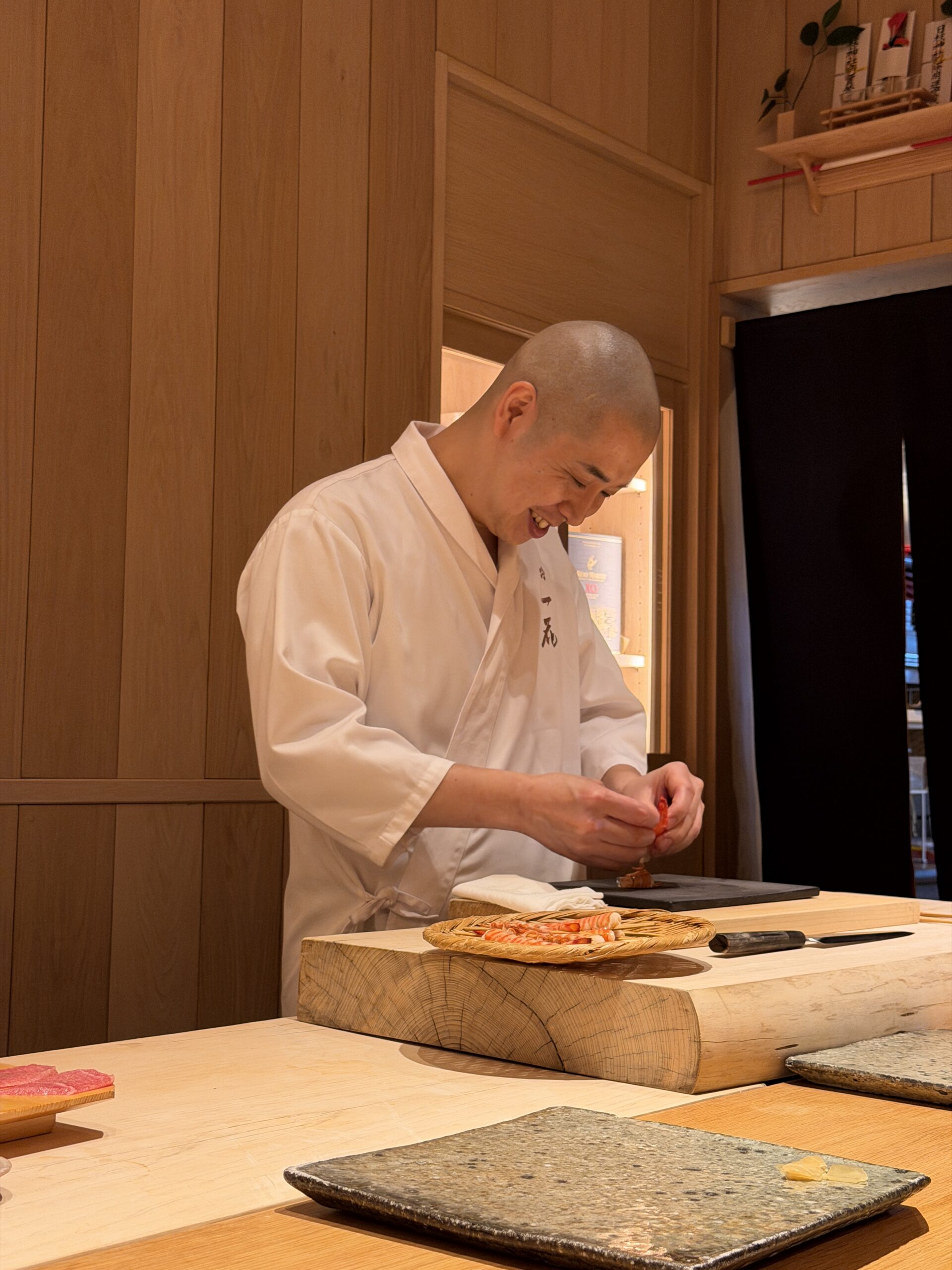
Suzuki-san leads the line on preparing the Kuruma-Ebi. Some stuff you just have to do yourself.
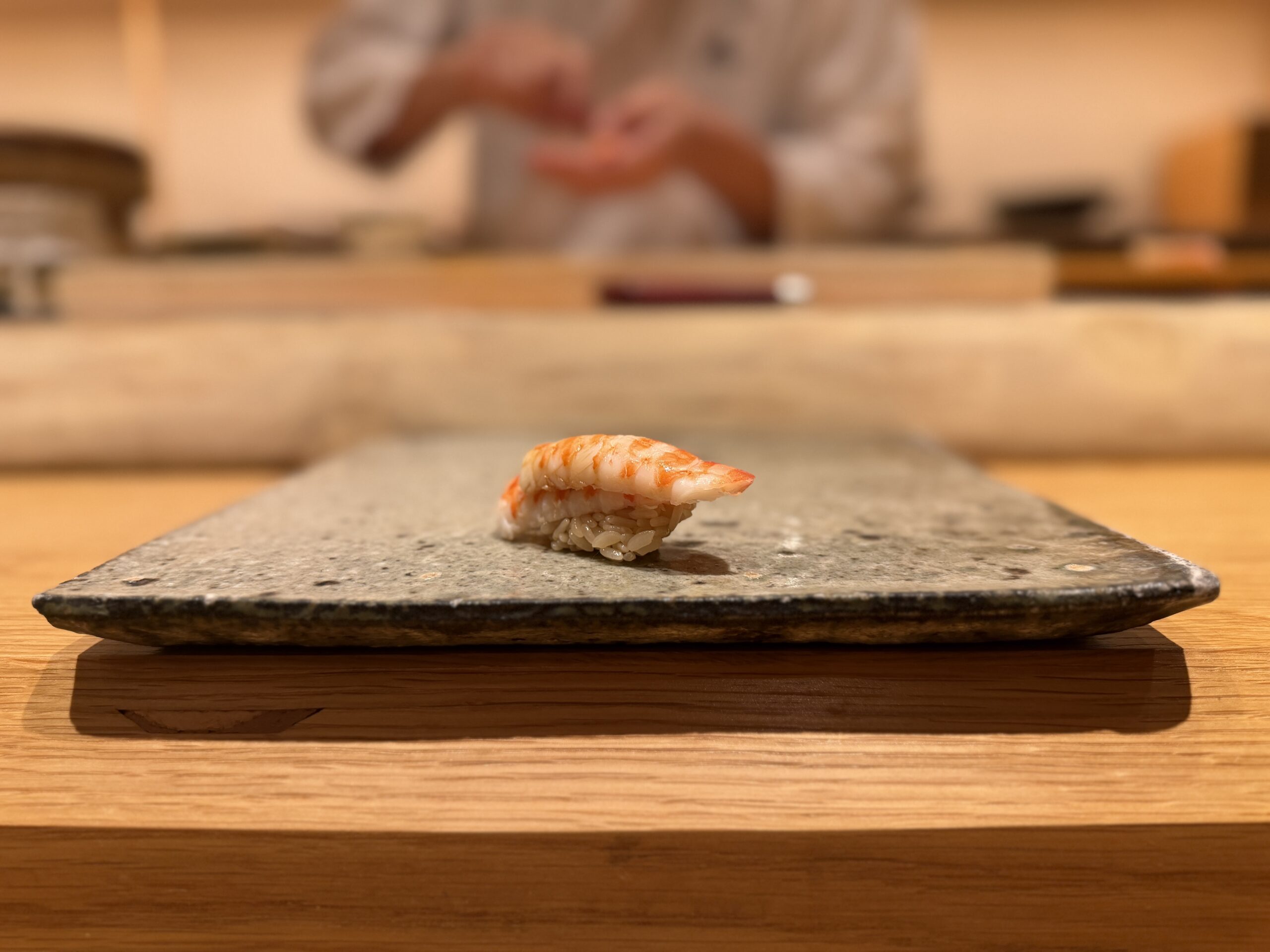
11: Double-stacked Kuruma Ebi (perhaps my favourite picture of the year)
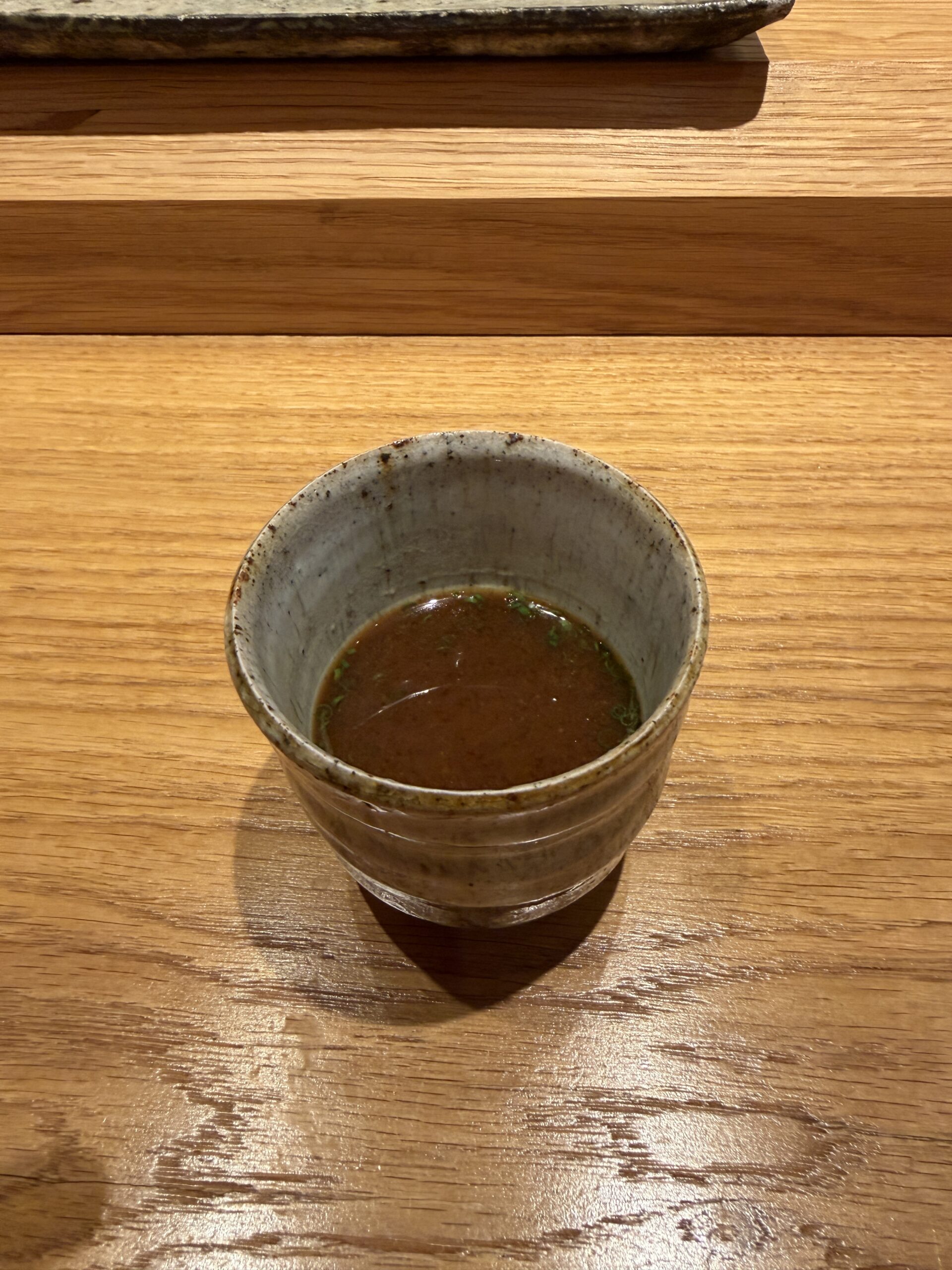
12: Miso
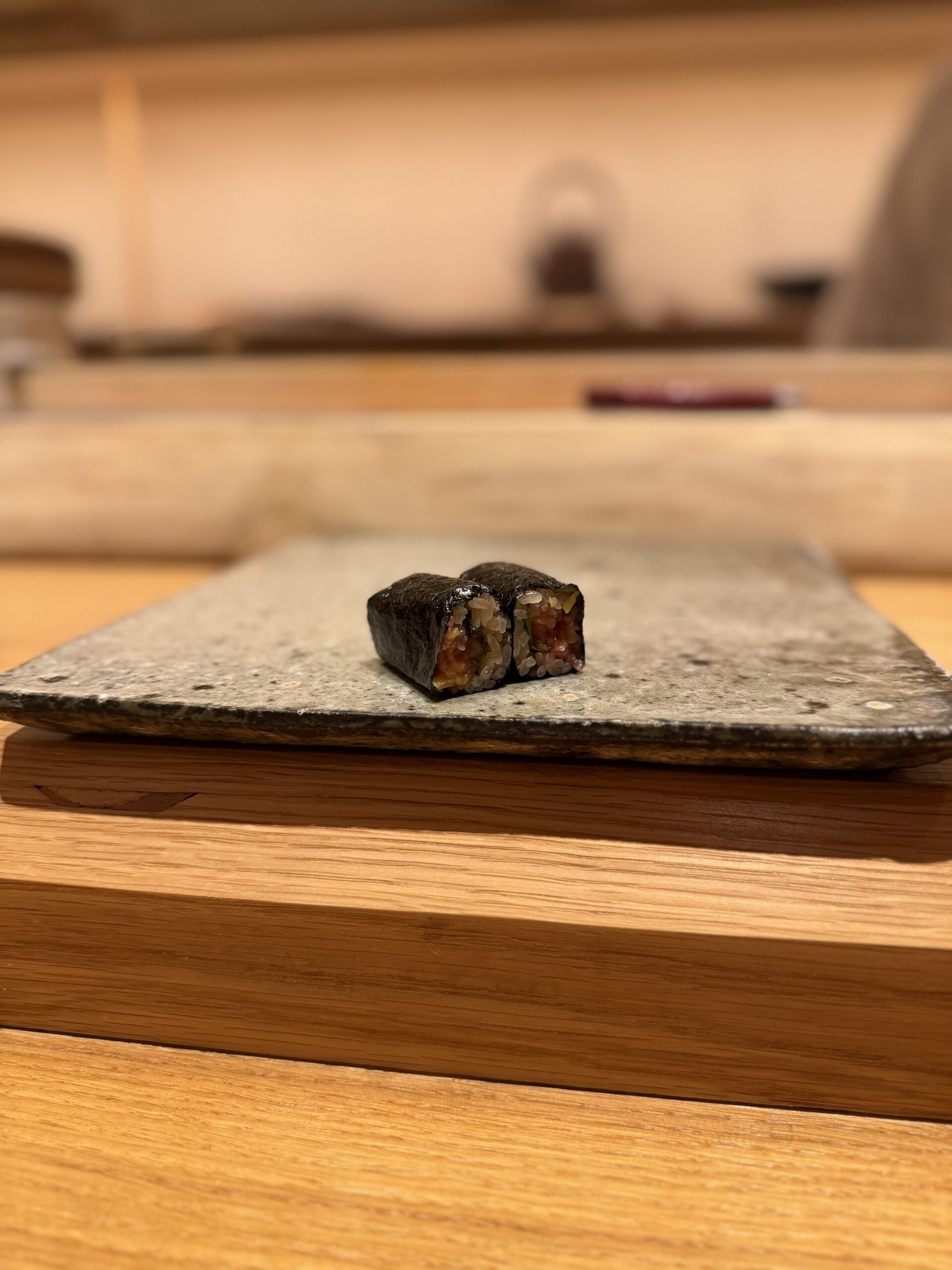
13: Torotaku
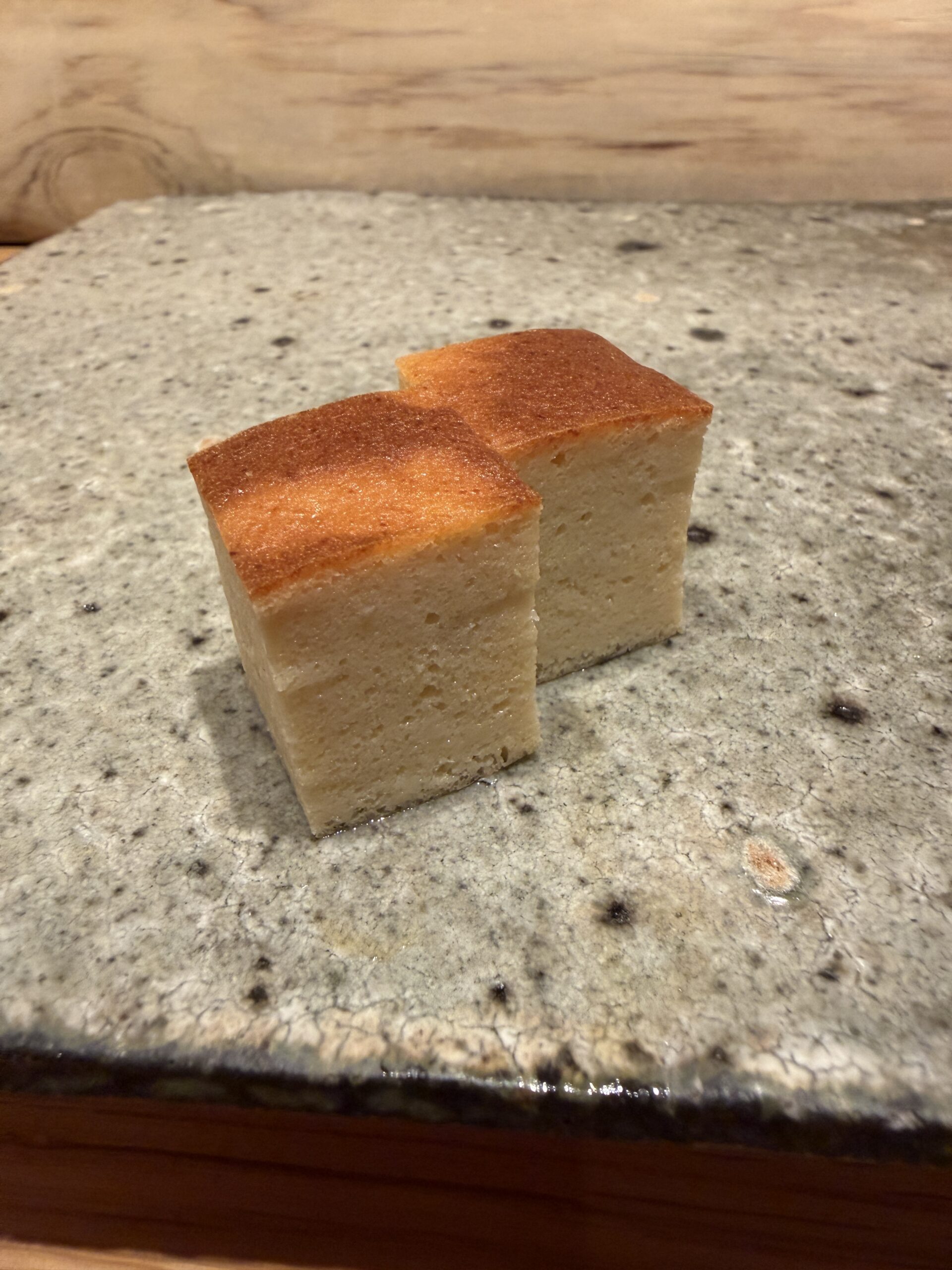
14: Tamago
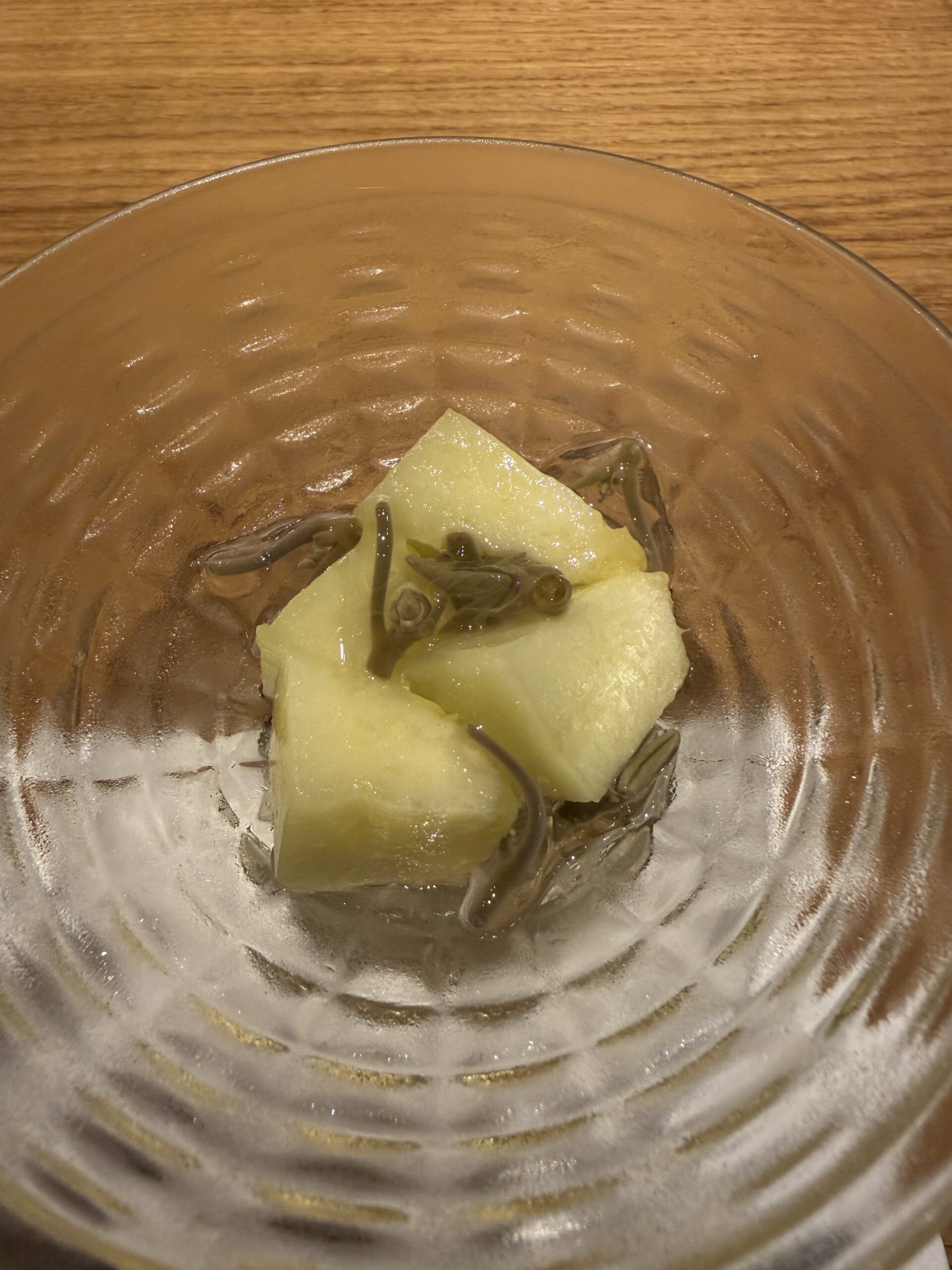
15: Seasonal Melon
TEMPER THE EXPECTATIONS
The shari is uneven, especially at the start, and, though it was delicious, the Torotaku was cut using the “hungover frat boy sawing a bagel” method.
Watching Suzuki-san delicately prepare the Kuruma Ebi was a siren’s scream reminder that there are levels here.
But this offering at that price point? It’s absolutely worth a visit.
And yes, an apprentice won’t quench some people’s never-ending thirst for a tall glass of superstar chef. But consider this a chance to see the next generation before some finance bro offers him $300k and 10% to open Omakase By Sou in Murray Hill.
Recommended.