 A THIRD DANCE WITH A ST MARKS SUPERSTAR
Editor’s note: first Mumi review is here. I thought I wrote about my second visit to Mumi, but evidently it’s lost to the sands of time.
It’s been three years since I’ve been to the East Village’s Sushi Mumi, and shame on me for that. It flies under the radar, though certainly not on this website. Mumi is a member of The Sushi Legend 13, my futile attempt to steal Michelin’s sushi thunder.
To find Mumi, walk straight down St. Marks, don’t stop for ink, don’t stop for comics, don’t pass go, don’t collect $200. It’s basically at Tompkins Square Park.
If you’re unfamiliar, it occupies the same real estate as Kura, an iconic sushiya in New York’s sushi history. I loved – no, no, I fucking loved that sushiya (I have a toddler at home and need to get my cursing addiction satisfied somewhere, thank you). This video from filmmaker Stephanie Cheng on its itamae Norihiro Ishizuka is worth a watch.
Mumi is completely different in style, but beloved by yours truly just the same. I like to think that the soul remained. Unlike New Yankee Stadium, built across the street from Old Yankee Stadium. That soul didn’t transfer. I’d rather see a baseball game at the Battery Park City Soccer Fields.
When I did my review of Sushi Sho recently, I wrote that ingredients are secondary to technique. Excellent point (thank you, me), but at Mumi, the ingredients do matter, because there isn’t a single sushiya at this price point in New York serving such a variety.
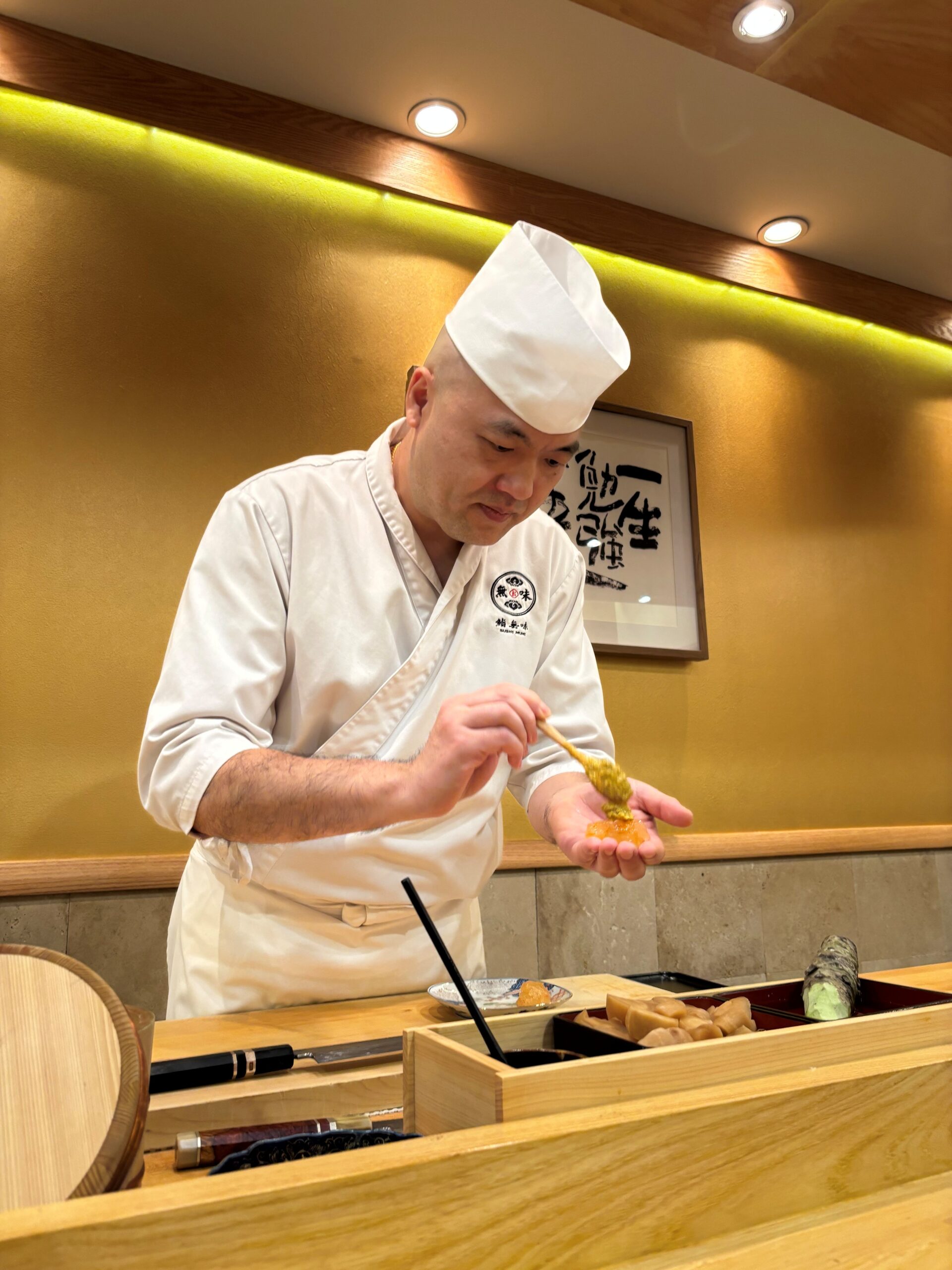
Marco Lin, ex of Onodera, prepares the Ise Ebi
ITAMAE DESERVES ACCLAIM
Part of it’s the chef. Marco Lin was at Sushi Ginza Onodera. He’s got the chops, but he also gives a shit. He told me – and if you go, you too will find him very willing to engage – he spent considerable time recently refining his Shari (sushi rice). My taste buds are admittedly shitty, but some of you truly discerning tasters (sounds like a standup special) will notice the difference.
ONE MORE WORD ON ENGAGEMENT
Some sushiya are notorious for Itamae that are silent assassins. Others for being more engaging. I have no preference, but for those that prefer Pop-Up Video (if you’re under 30, google this), my guess is that Sushi Mumi is for you. Marco happily explains everything he serves.
AND WHAT DOES HE SERVE?
Early winter is my favourite season for sushi. Just like a bear, fish will typically fatten themselves up for the colder waters. Fatty doesn’t always mean delicious, but let’s also not overthink this. Usually it means more flavour.
At Mumi, the $250 omakase starts with a variety of otsumami. As they should, these dishes are not full appetizers (or even entrees). They don’t take 90 minutes to serve, like fellow east village sushiya Kanoyama.
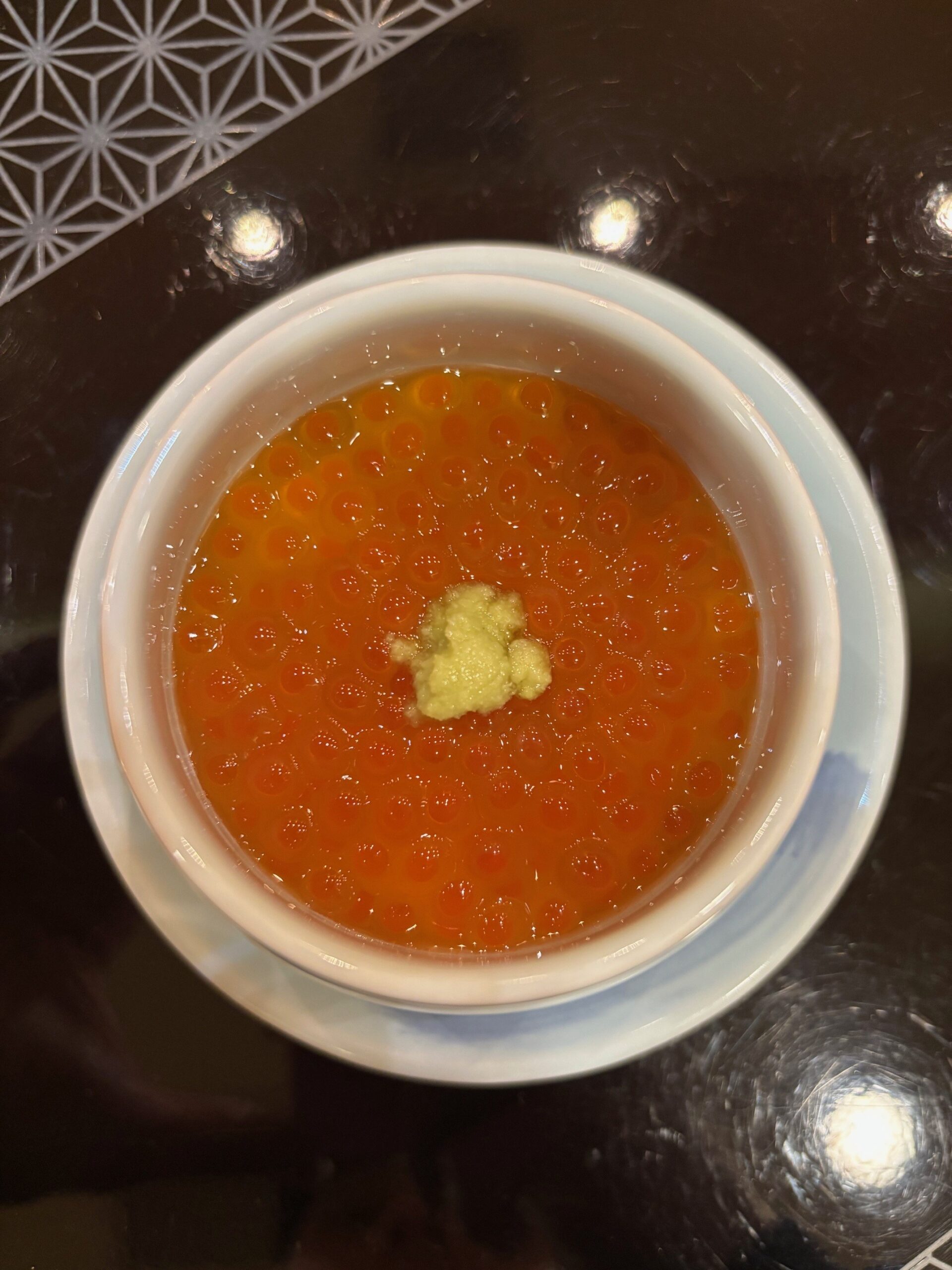
1: Chawanmushi with Ikura
Pairing ikura with chawanmushi is smart. I hope you’re sitting down, because I’m about to blow your mind. Chawanmushi is hot. It will cook whatever raw delicacies you put inside. That’s why you don’t – or you shouldn’t – see pieces of raw salmon or tuna. Those fishies taste far better raw.
Ikura, though, tastes plenty fine when slightly cooked. In fact, Hanjuku Ikura – meaning half-cooked ikura – is a delicacy. It’s prepped quickly in a hot brine before being marinated in shoyu, sake and mirin.
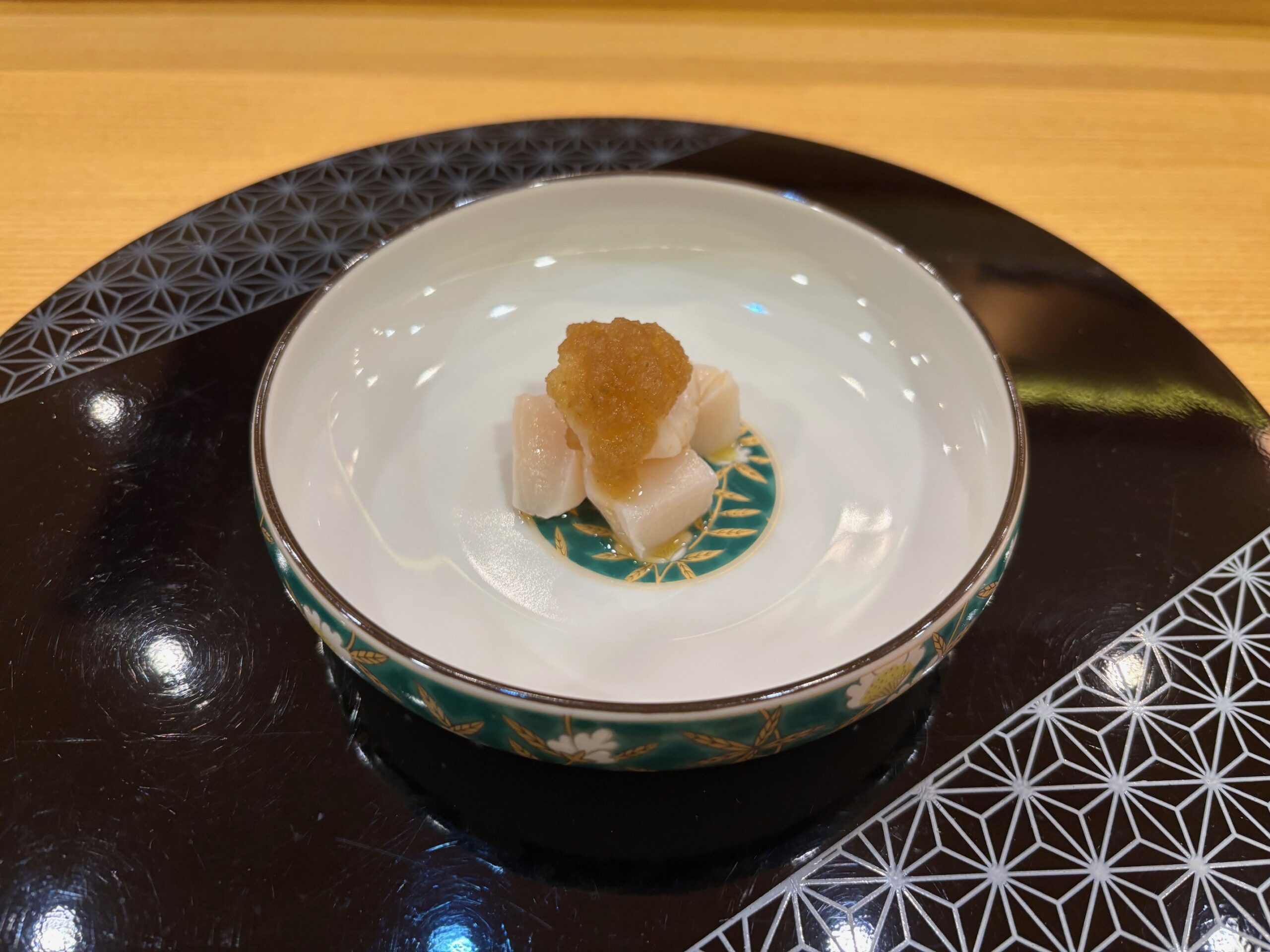
2: Hotategai
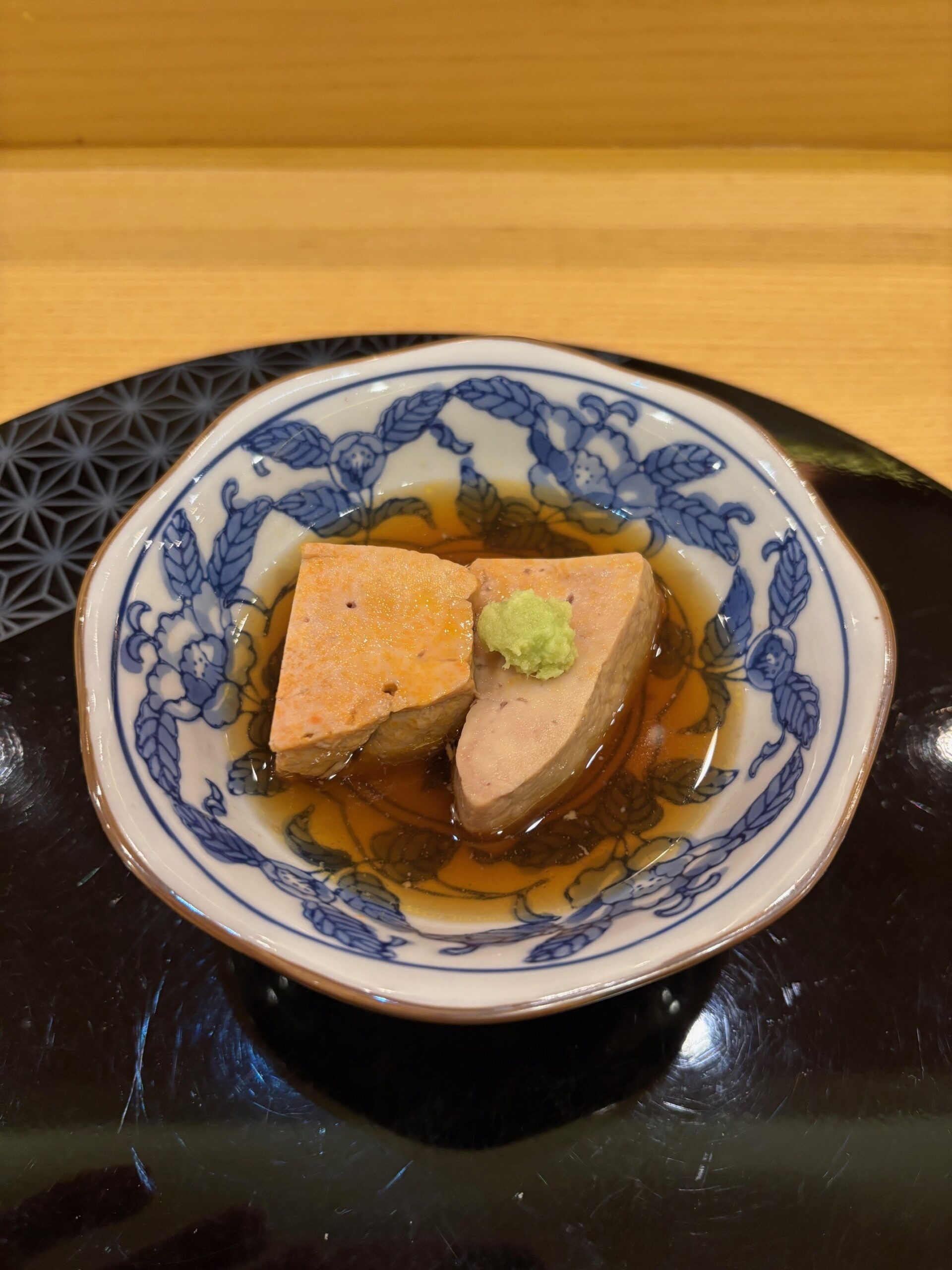
3: Ankimo
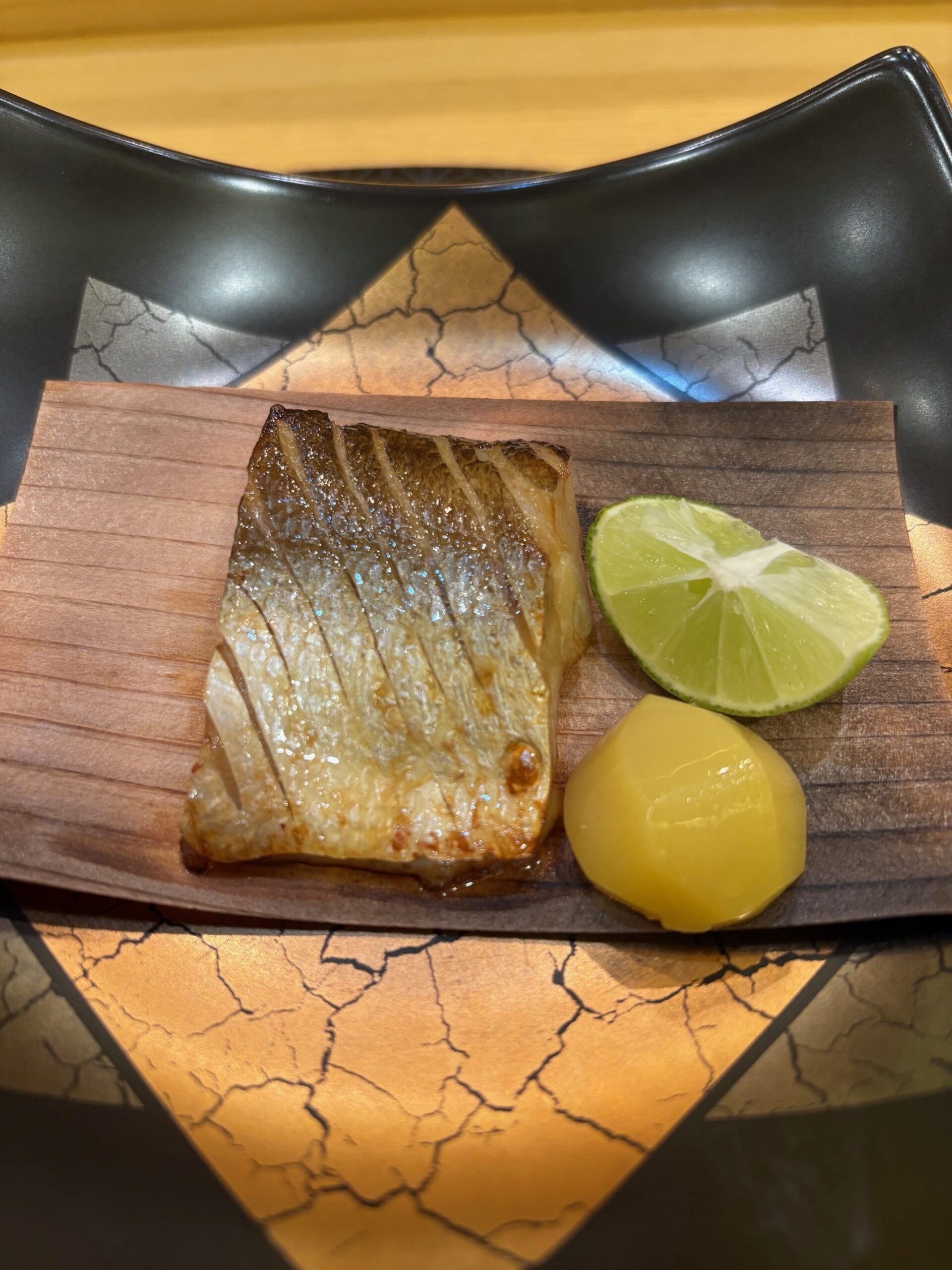
4: Kamasu
THE PINECONE
The fifth course was Shiro Amadai (white tilefish); in case you’re curious about the crispy scales, that comes from a technique called matsukasayaki. Hot oil is poured over the skin, which crispens it to resembling a golden pinecone (matsukasa). Hence the name.
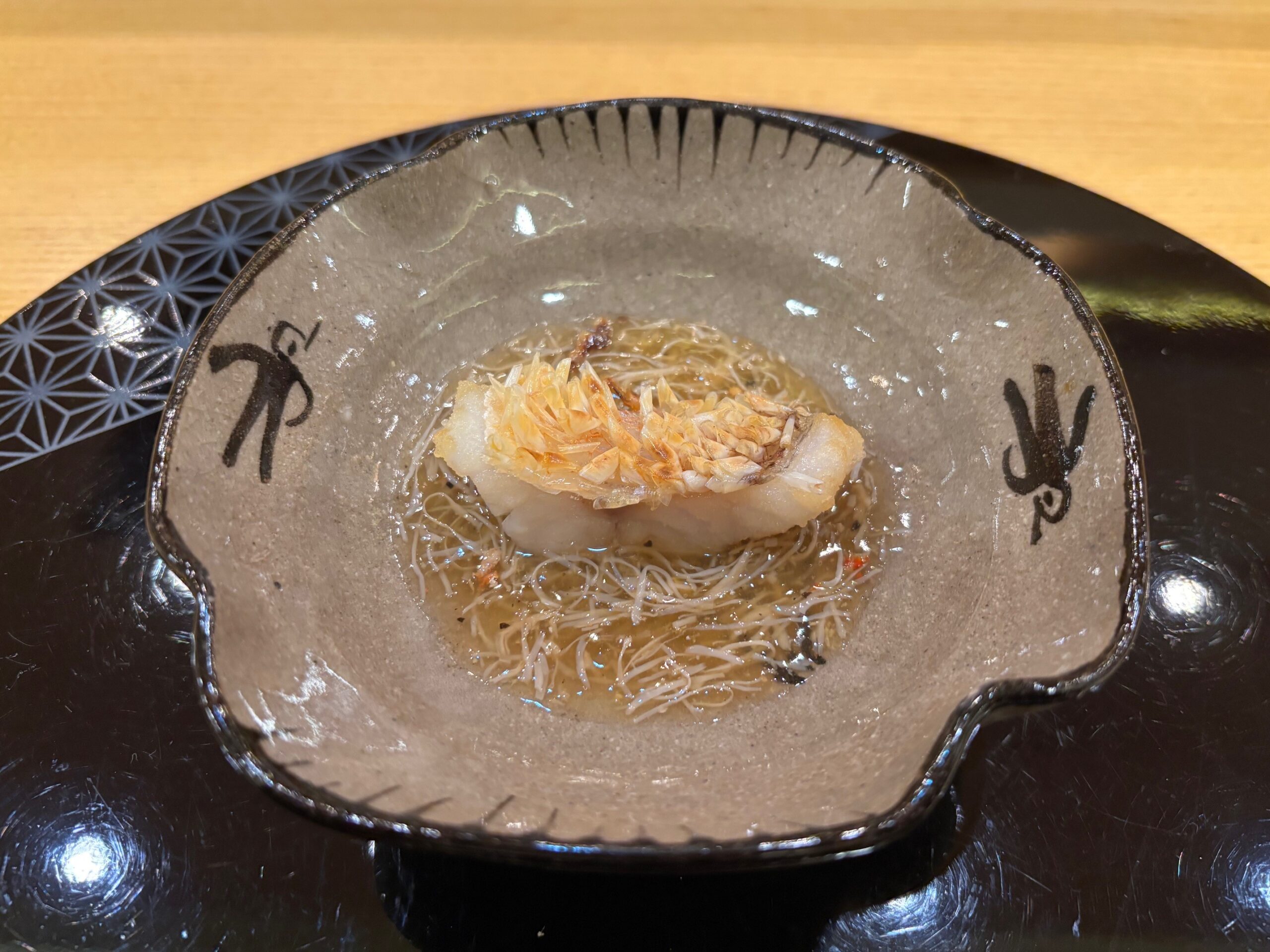
5: Amadai (Tilefish)
THE SUSHI
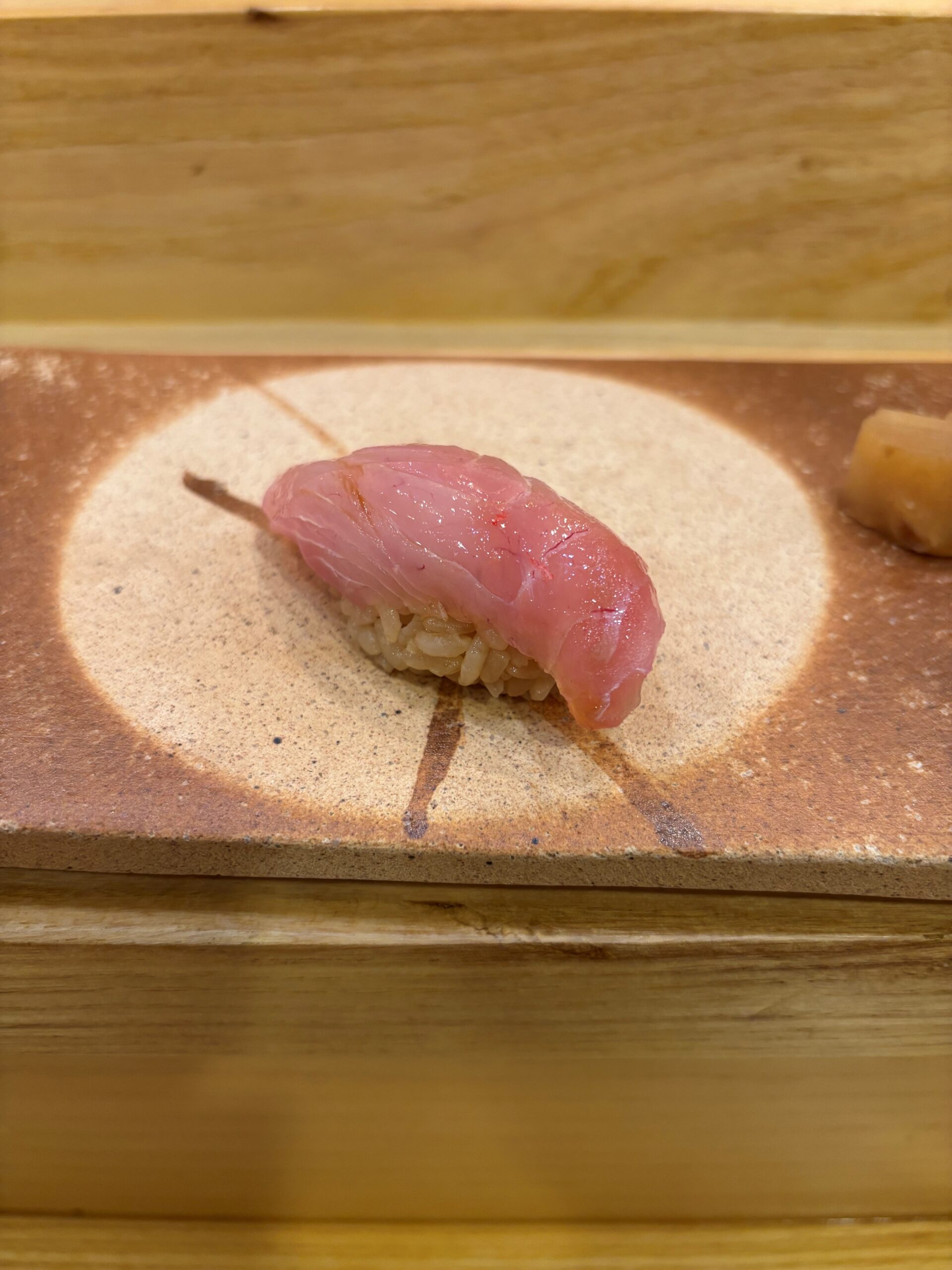
6: Kinmedai (Goldeneye snapper) from Chiba
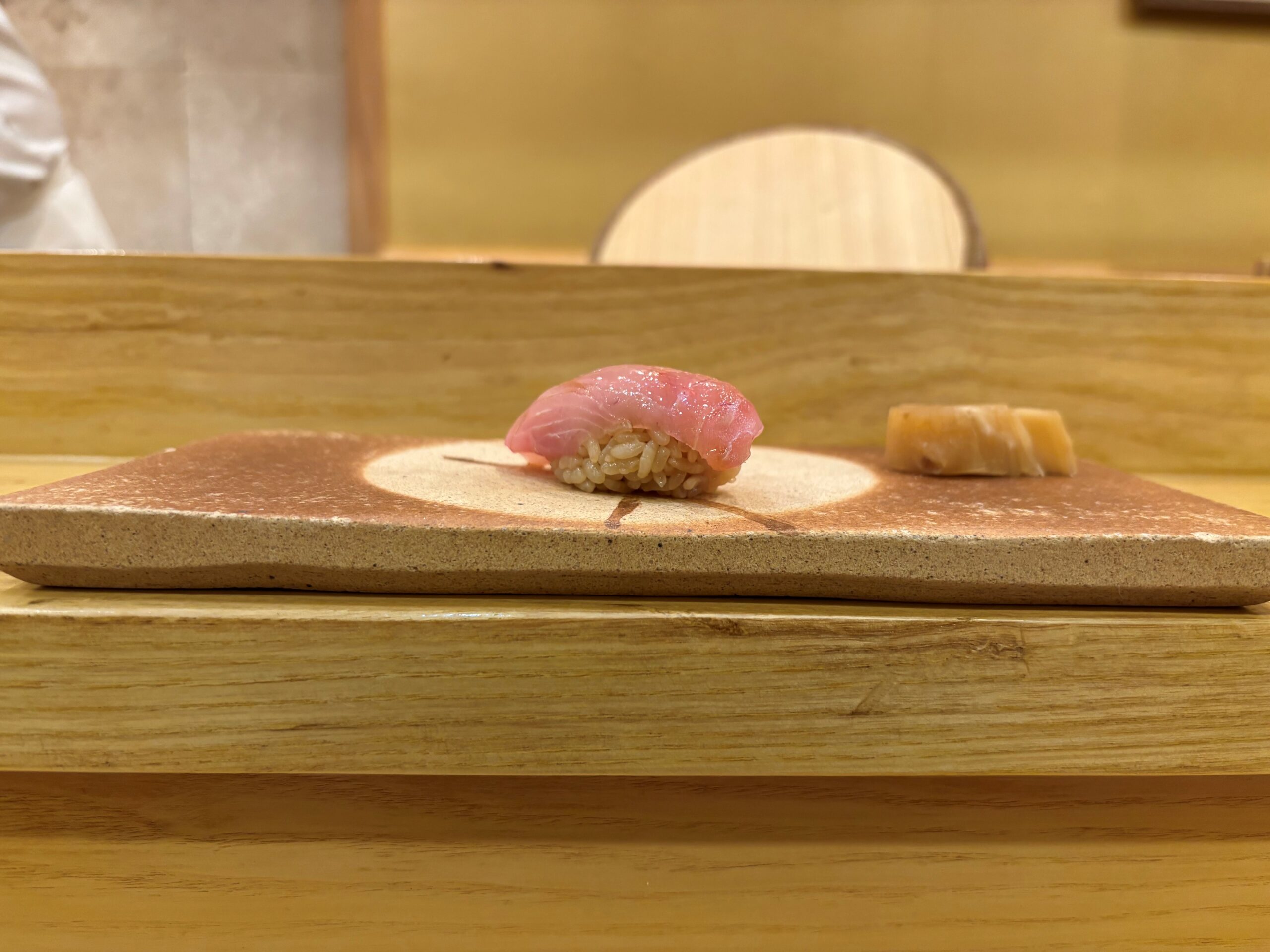
Another angle of the Kinmedai
Shirakawa (white tilfefish) is a neta you won’t typically see on menus here. It is considered the rarest – and most expensive – of the Amadai types used for sushi. This came from Wakamaya bay.
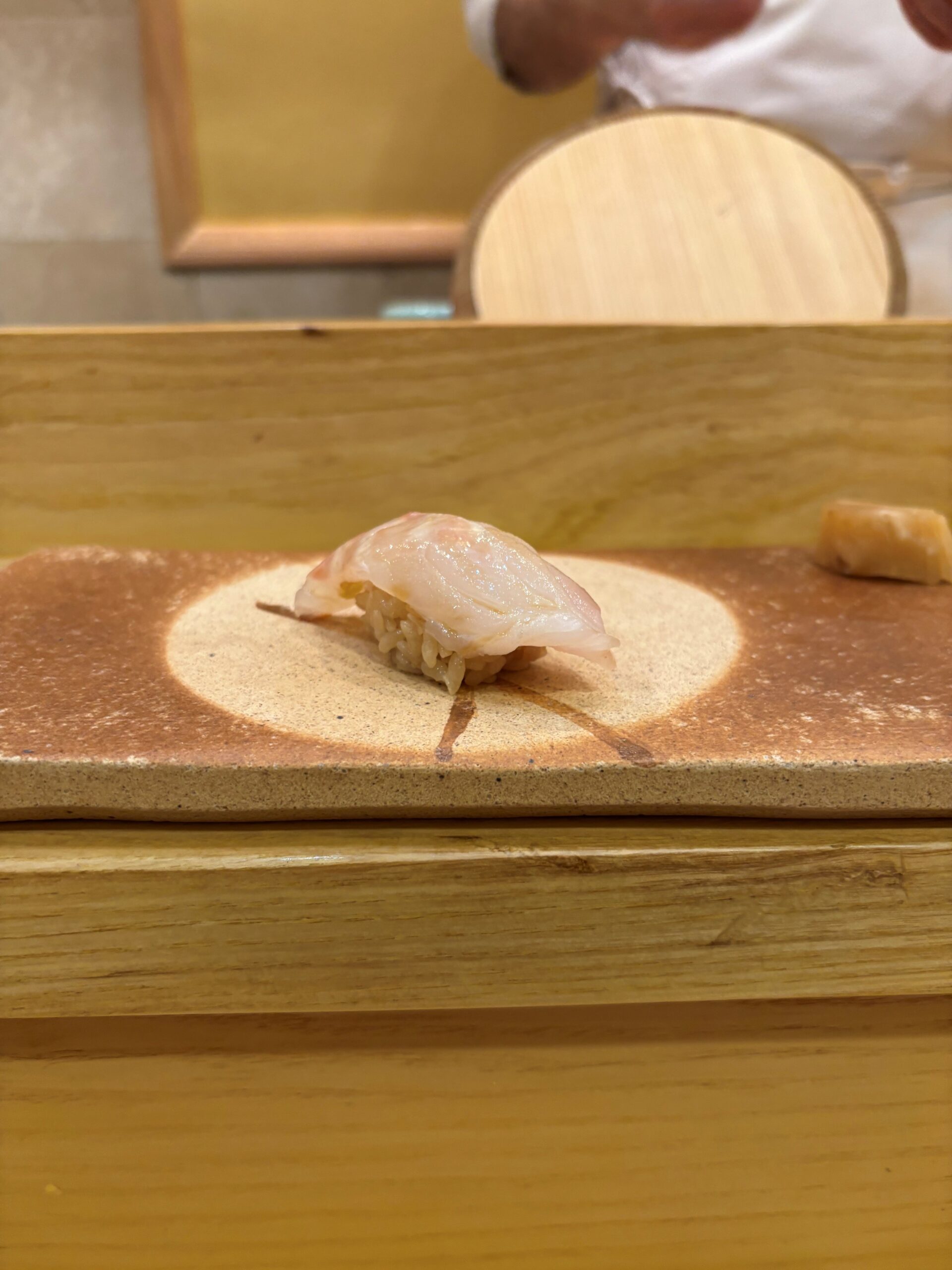
7: Shirakawa (white tilefish)
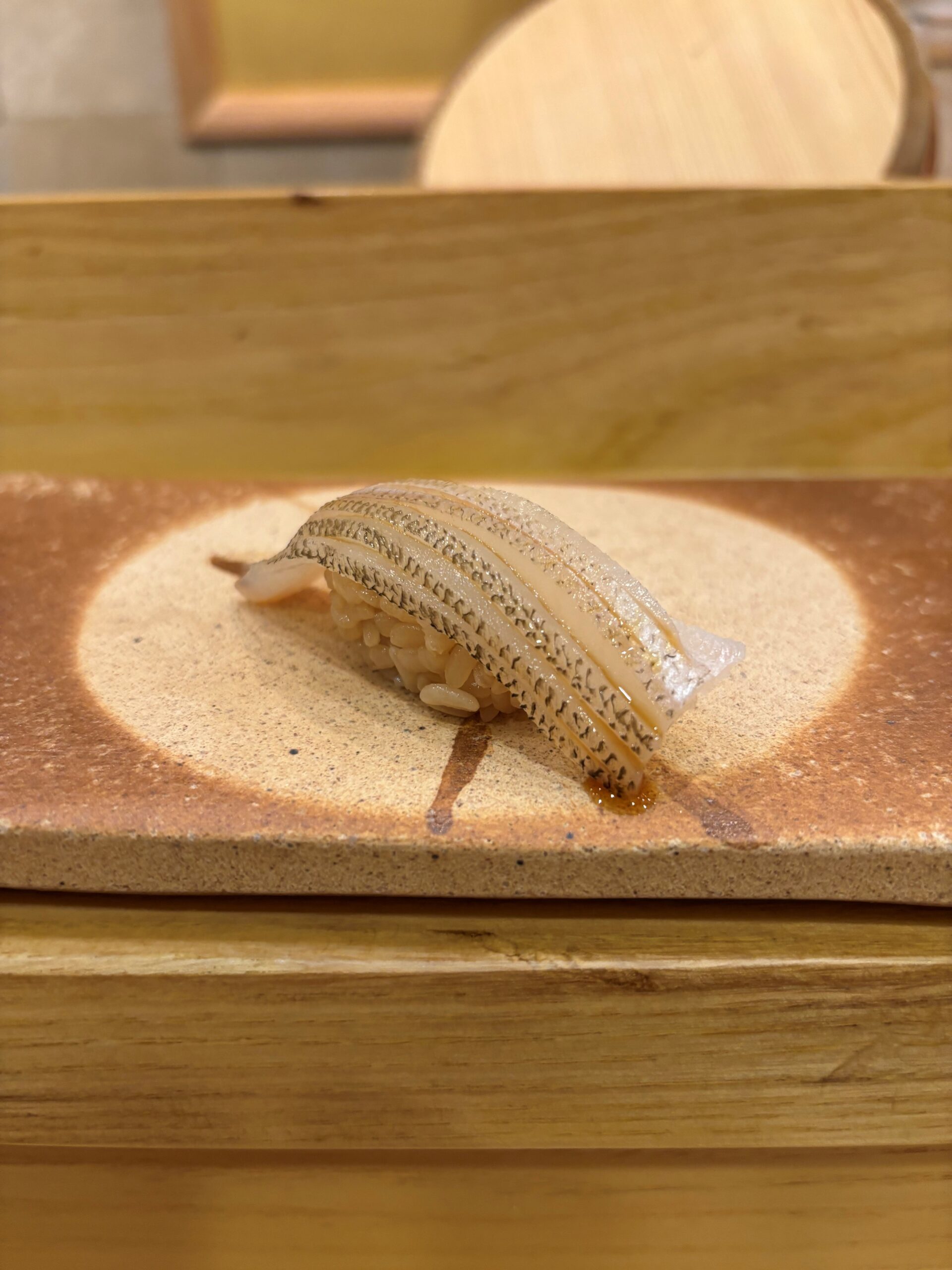
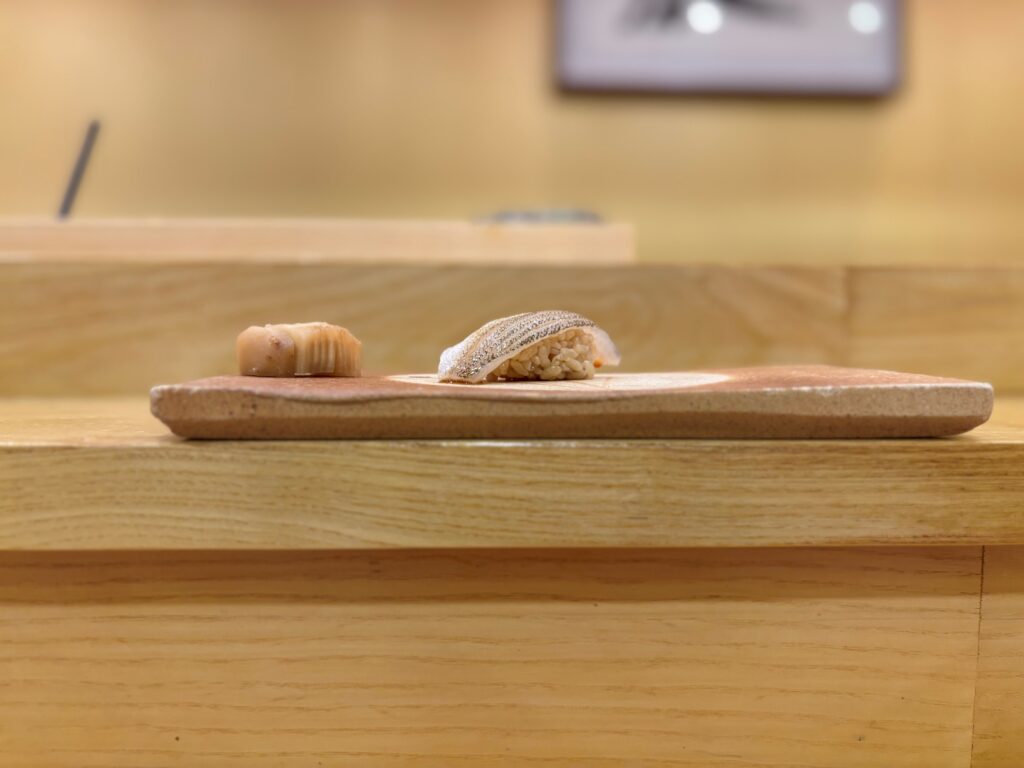
8: Kisu (whiting) from Chiba
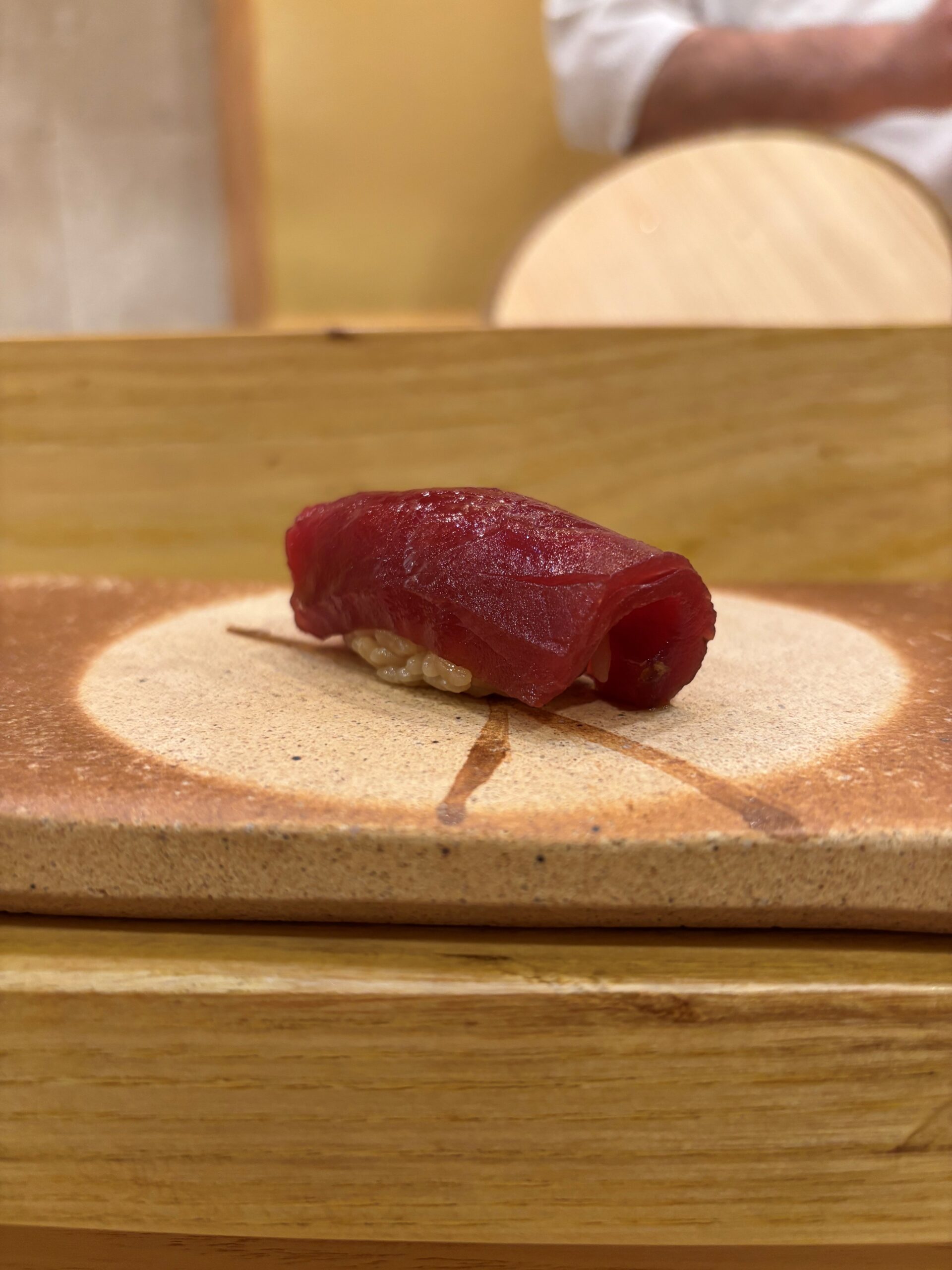
9: Akami (Lean Tuna) from Miyaki
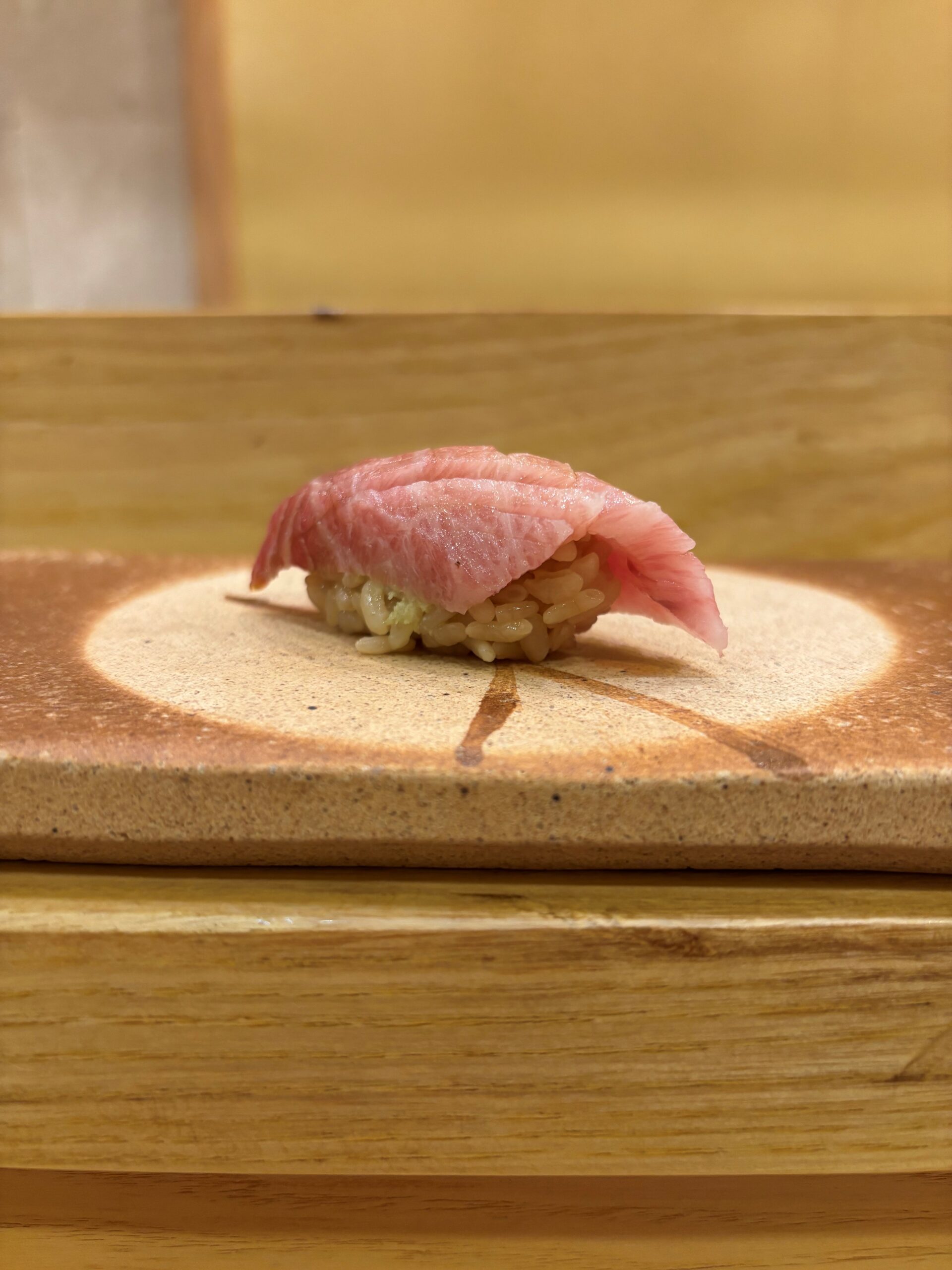
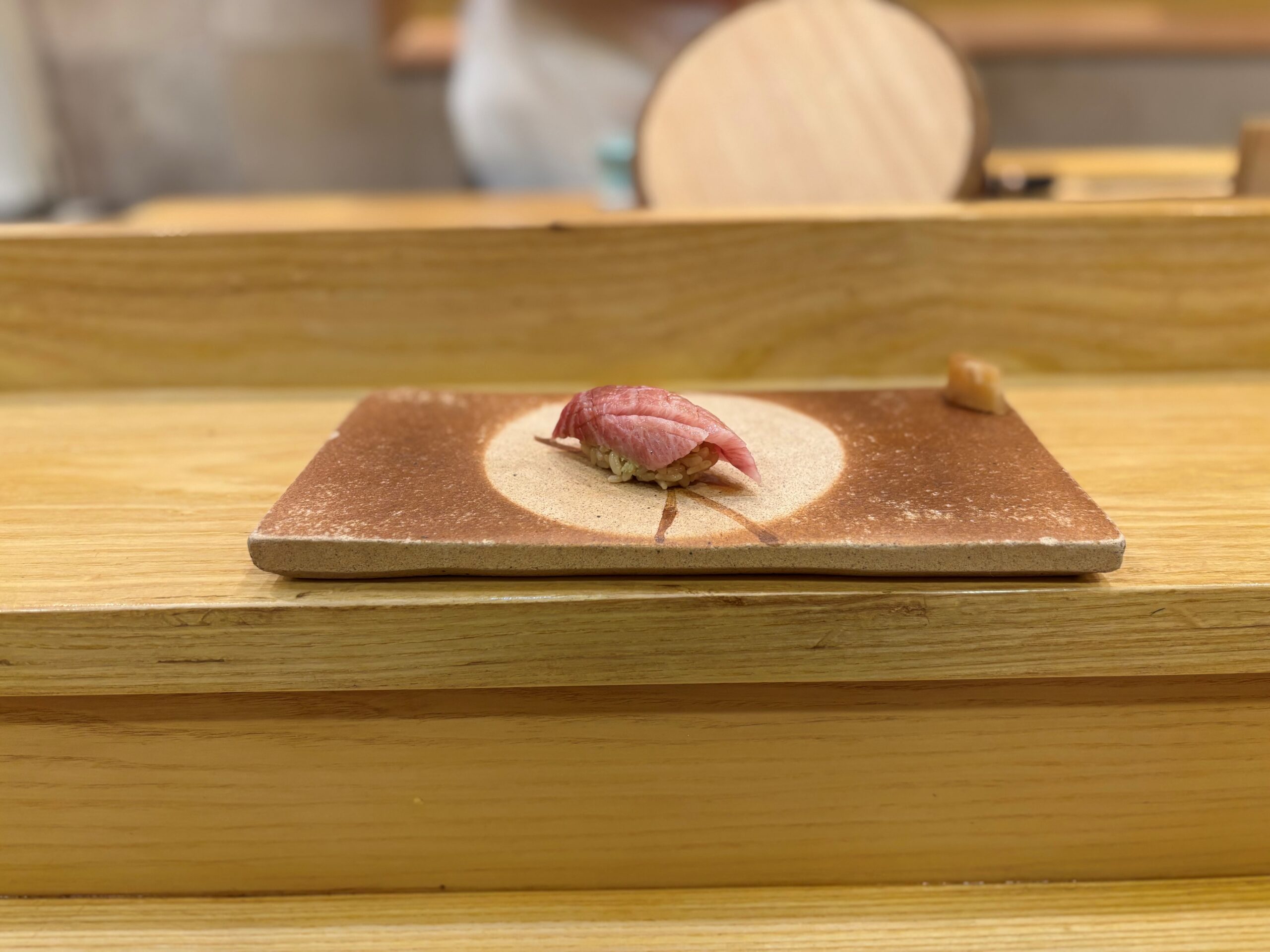
10: O Toro (strong tuna belly) from Miyaki
Another angle
I was very glad to see Nishin on this menu. Hikarimono (silverskinned fish) are left off sushi menus because they are difficult to prepare and taste “too fishy” (I am assuming this made up quote has been said 10000000 times). If Hikarimono are too fishy, Nishin is Moby Dick*. It’s an acquired taste, but also a winter staple. And this is why you go to Mumi. Trying neta you wouldn’t see elsewhere.
(my editor – that’s me – has informed me that whales are mammals, so theoretically Moby Dick can’t be “too fishy”. My editor has also informed me that Moby Dick was the guy, not the whale. So none of this makes any sense).
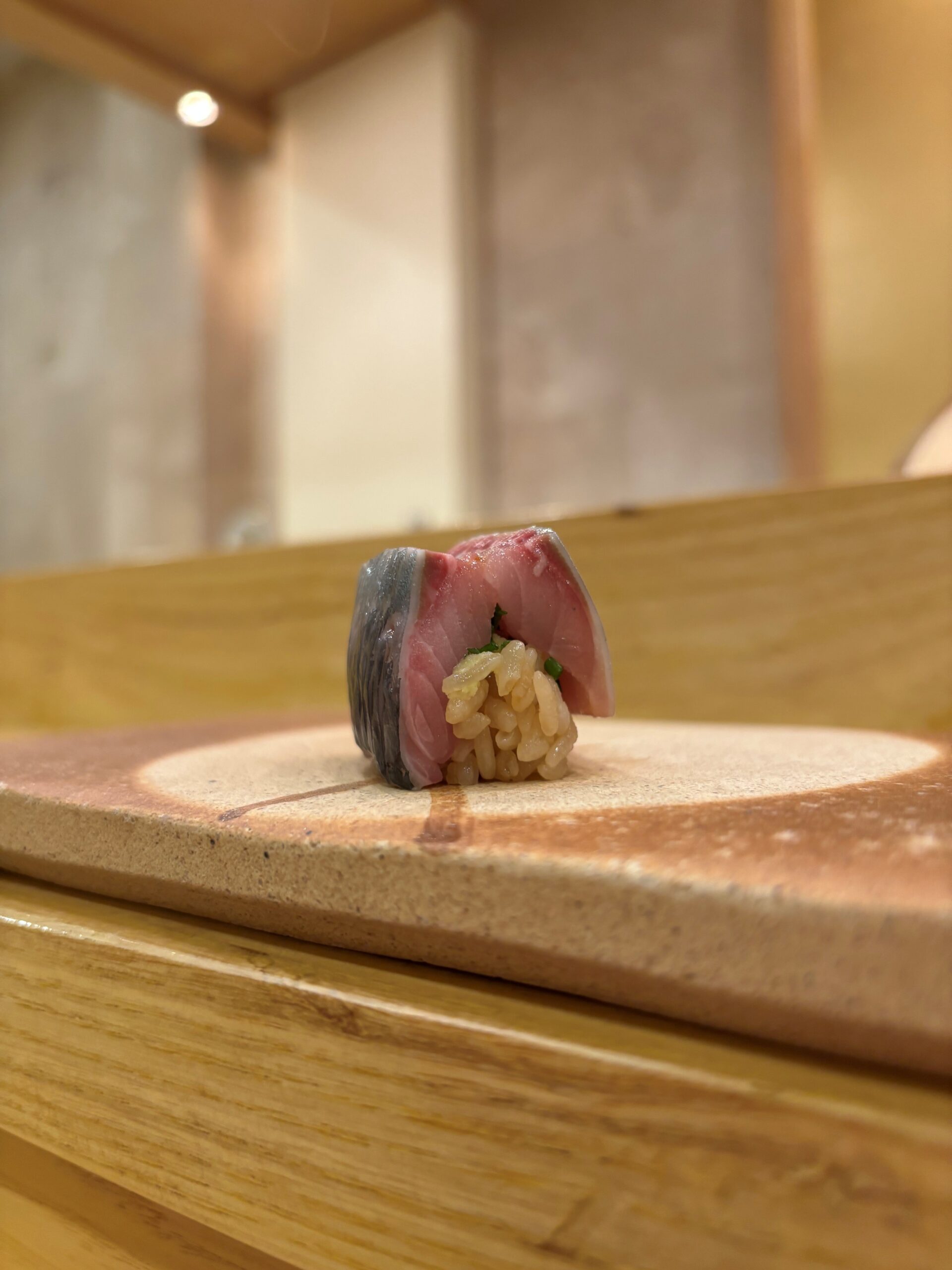
11: Nishin (herring)
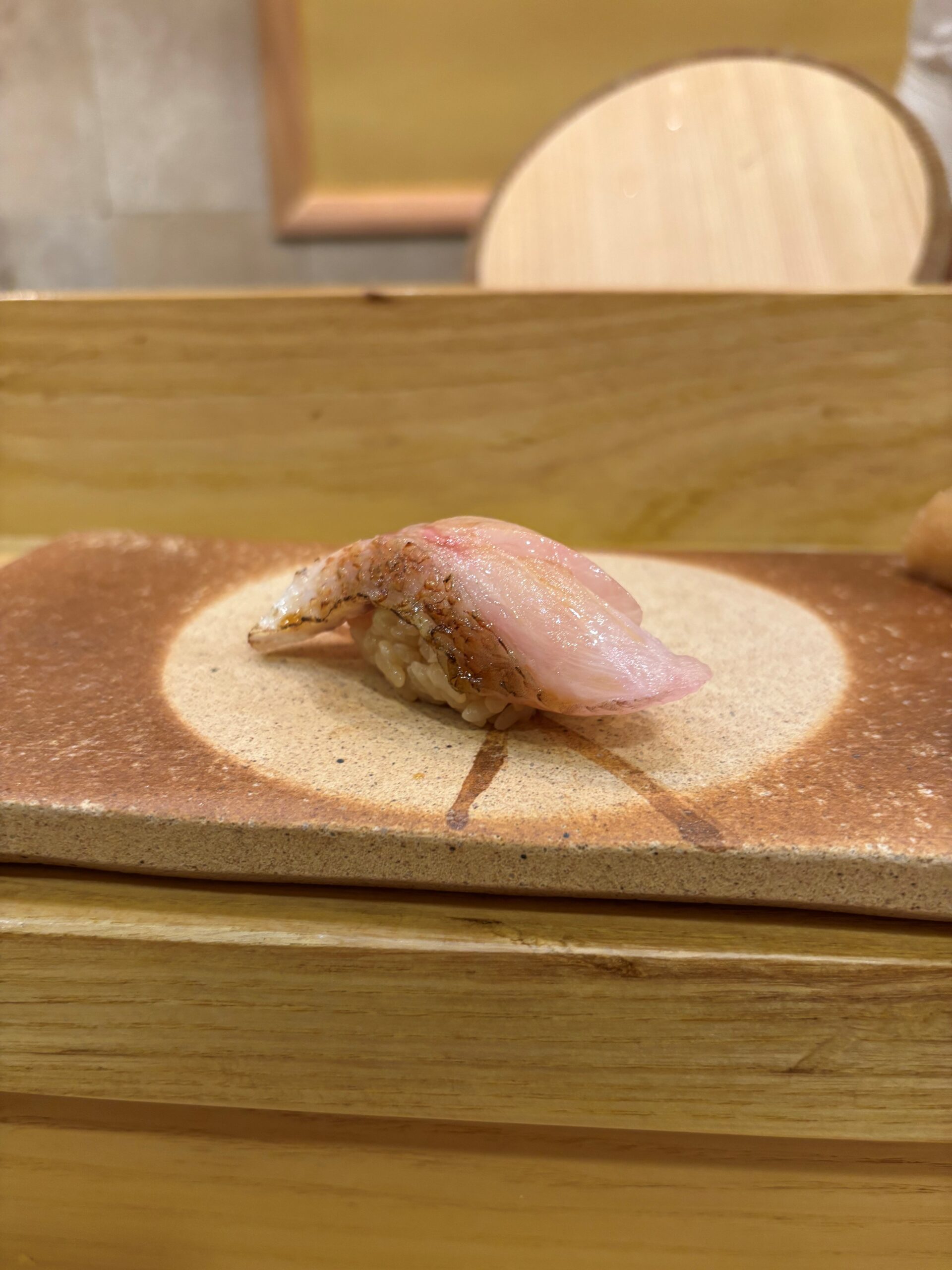
12: Kyo Nodoguro (black throat sea perch) from Kyoto, hence the “kyo”
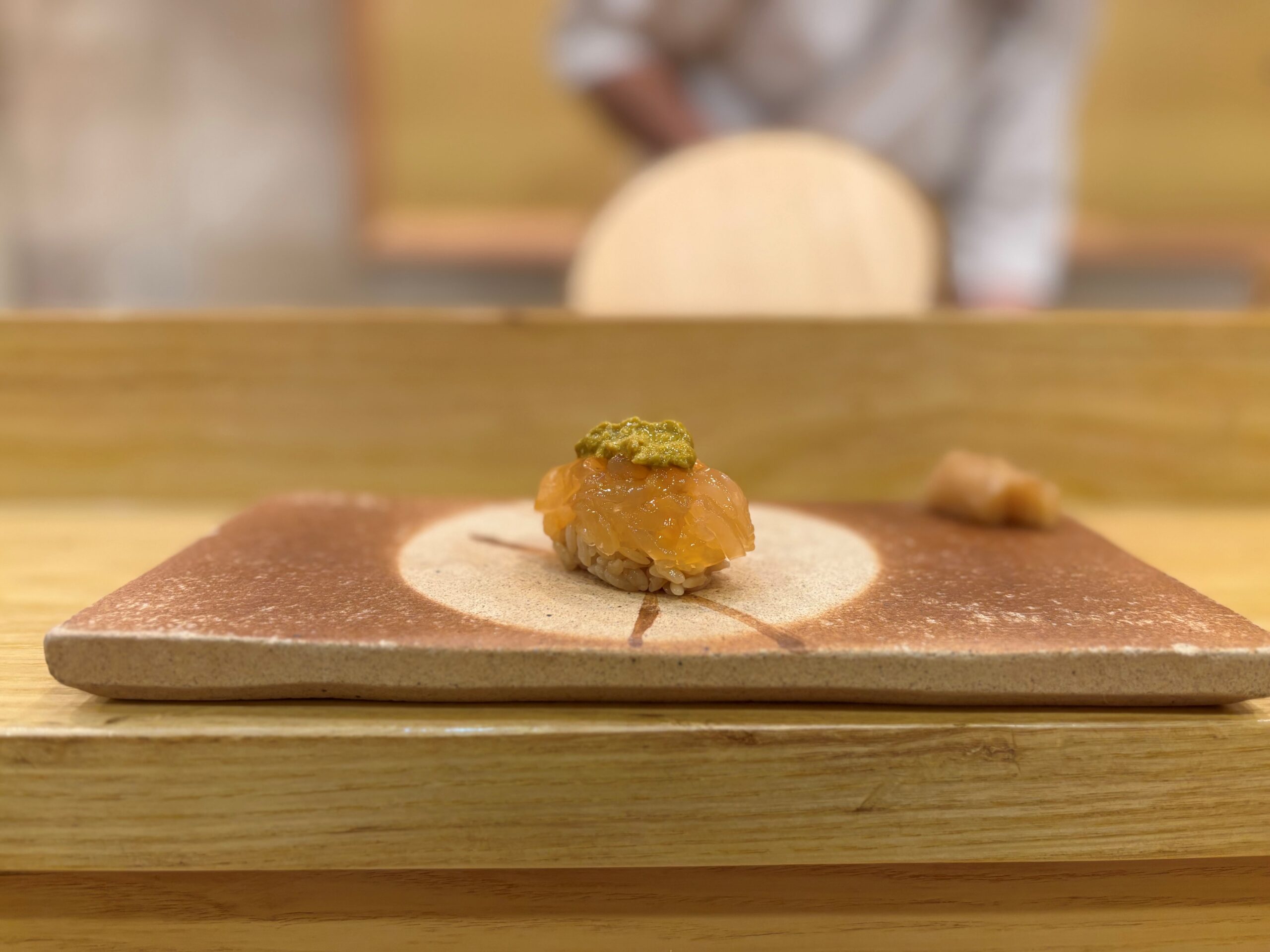
13: Ise Ebi with “kanimiso” on top
Ise Ebi is also not a typical neta. Spiny Lobster is found along the south pacific coast of Japan. When we went to Mie prefecture on the south coast of Japan, in season Ise Ebi – cooked over an open flame, called sumibiyaki – was a key part of what we ate (read about our trip here). This was raw, and delicious, served with its tomalley – made by boiling its liver and pancreas – on top (called kanimiso for crab).
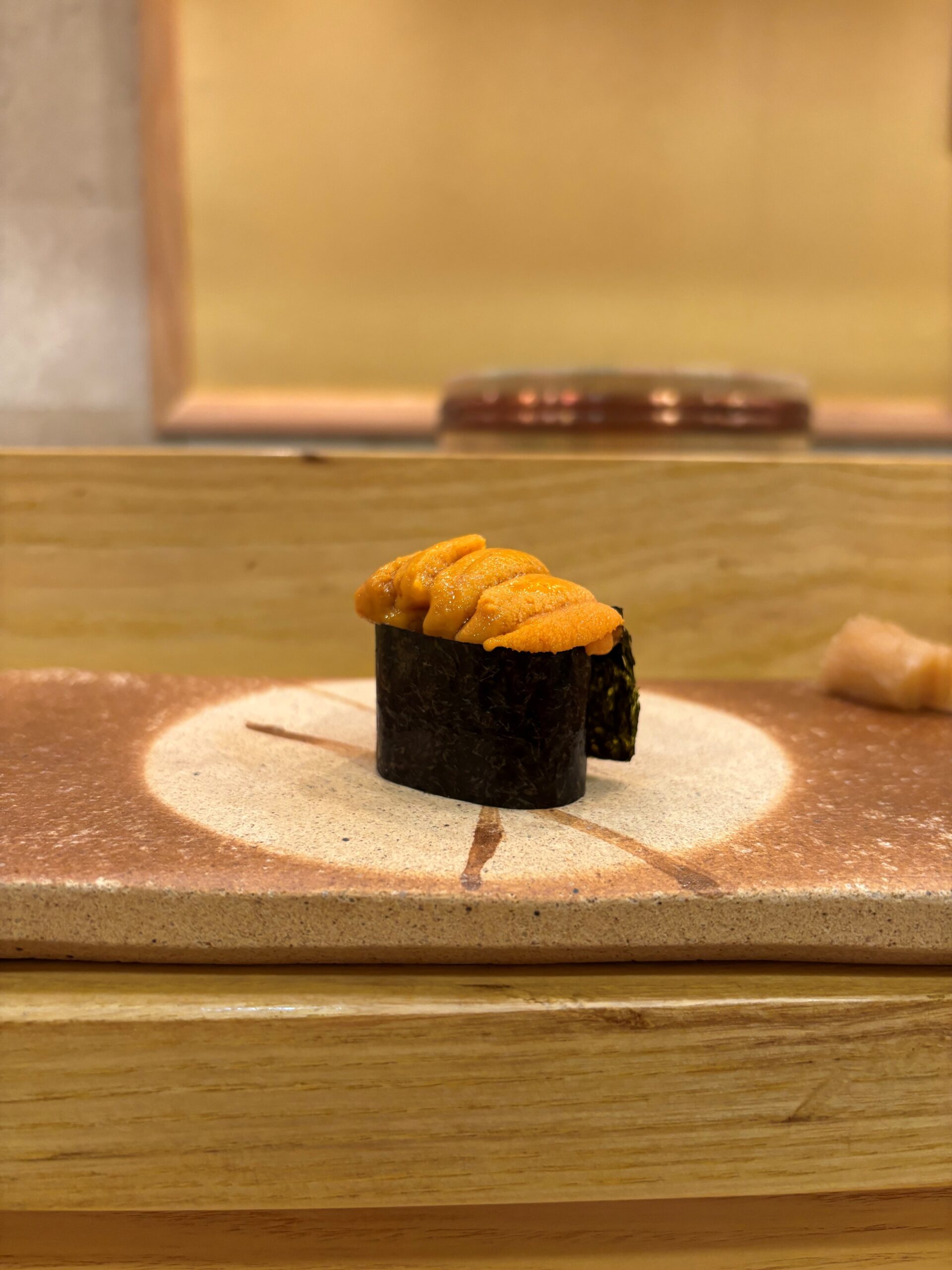
14: Uni
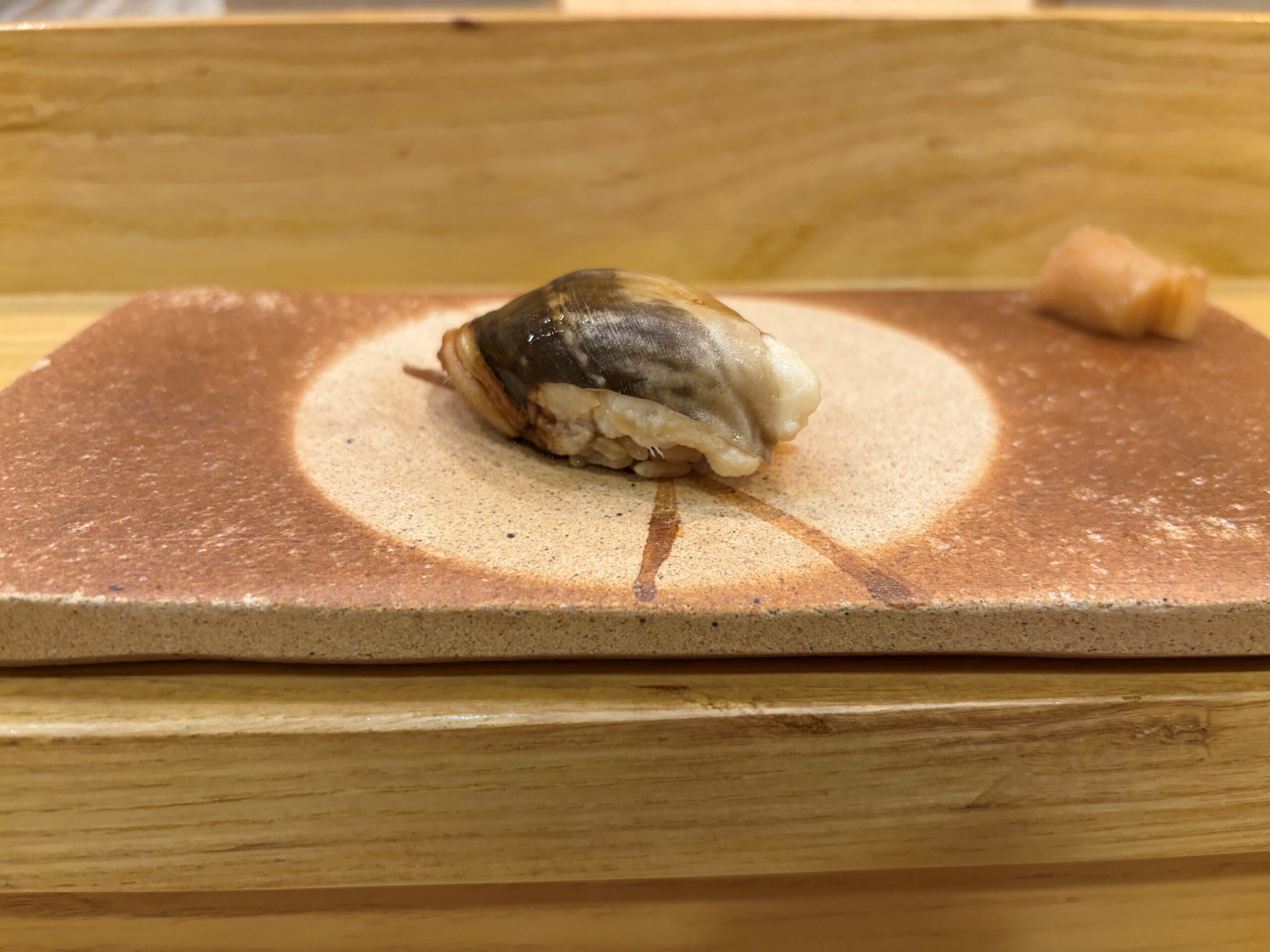
15: Anago
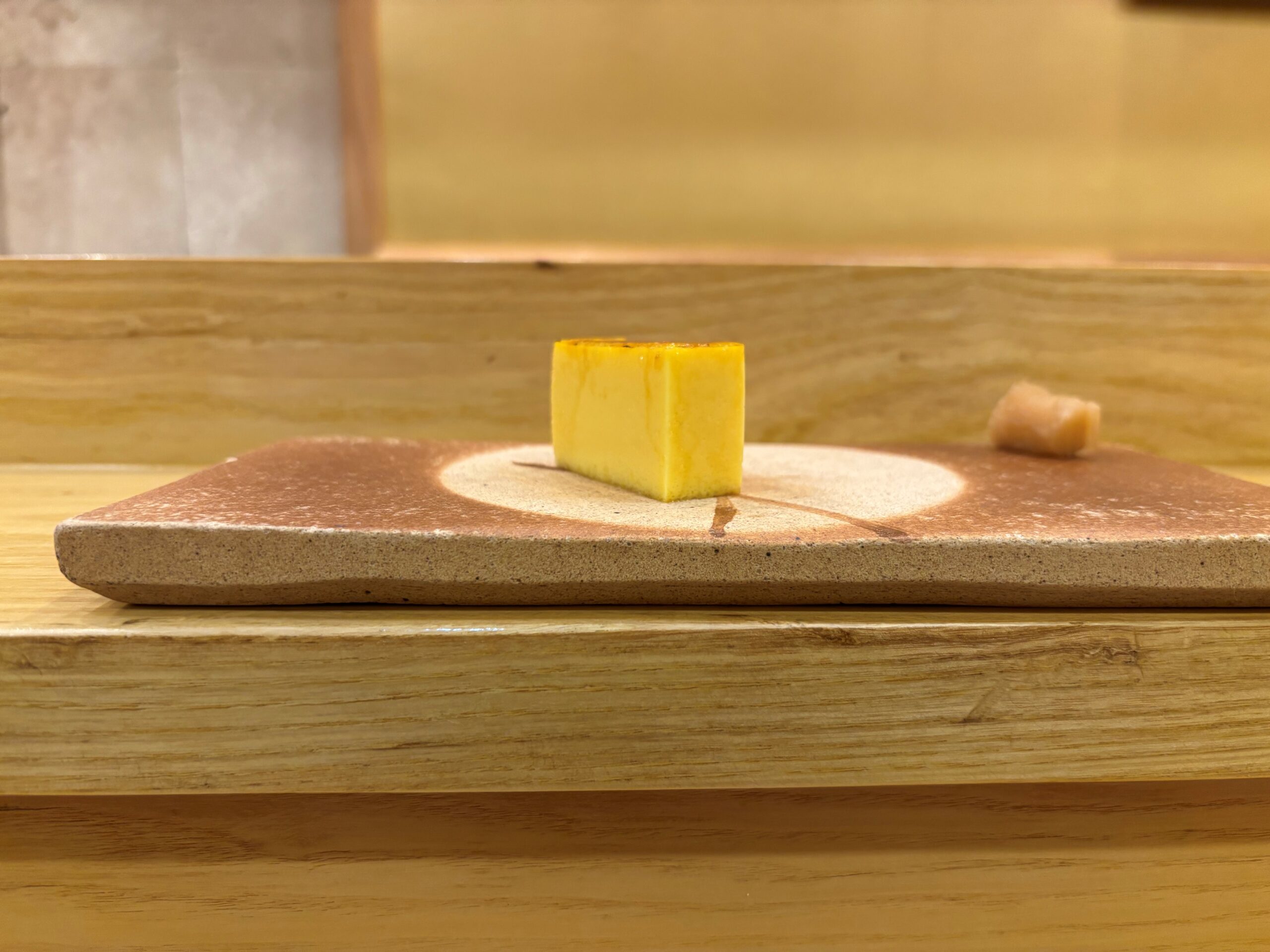
16: Tamago
MY ONLY “CRITIQUE”
The otsumami are fantastic, but to me, it’s the nigiri – and it’s variety – that shine. Ever since the closure of The Den at Sushi Azabu, New York City – in all the glory of its 200+ omakase-focused sushiya – has been missing a traditional nigiri-only omakase. If I was running Mumi, I would lean in here, because their approach to sushi is needed, especially in that price range.
ONE LAST THING
There’s a picture of the Kisu I absolutely adore. As in I want to frame and send to the pulitzer committee.
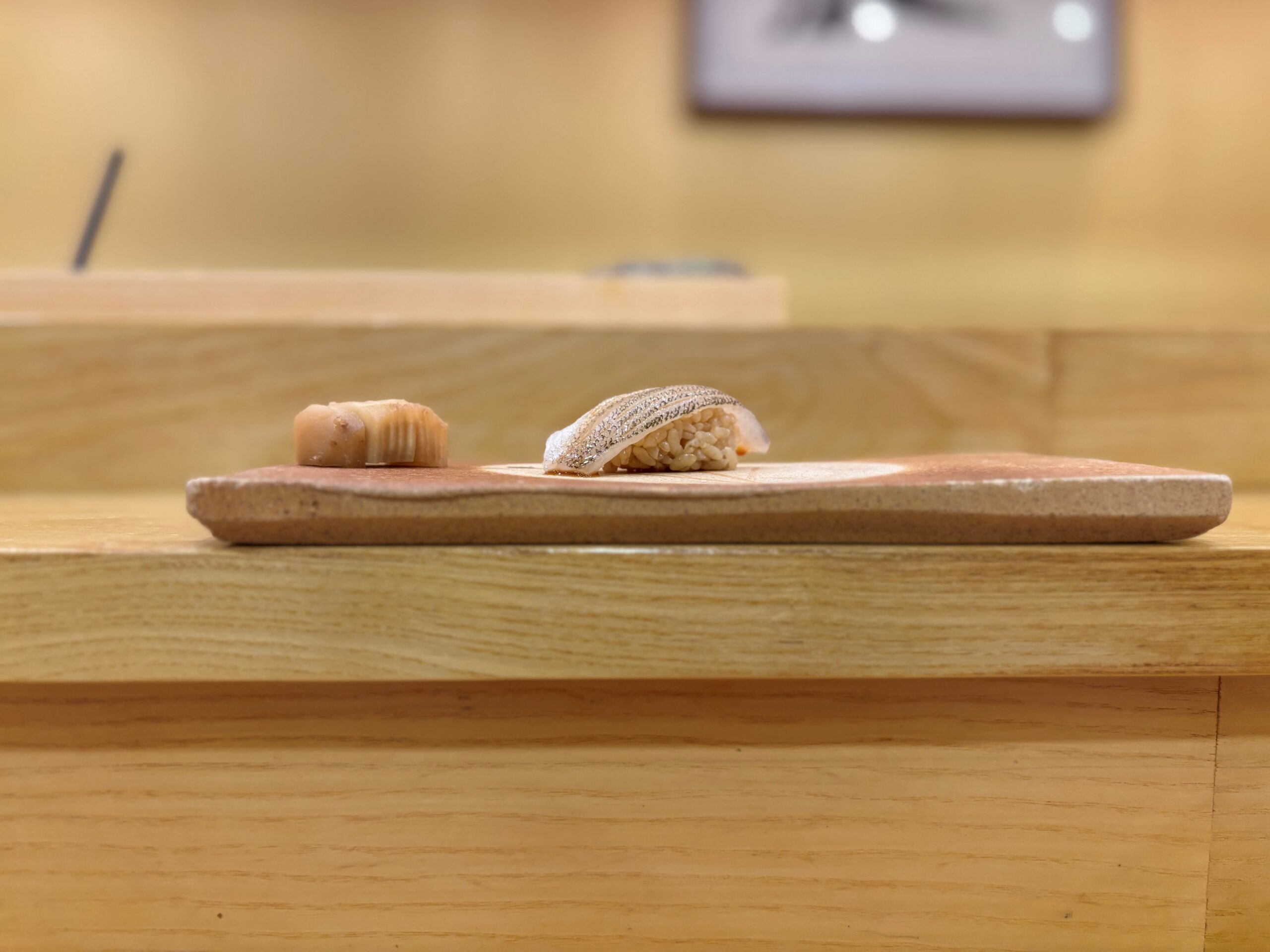
rijksmuseum please
Recommended.