 I don’t venture to Brooklyn very often.
Such are the inevitable outcomes when the Leafs stop visiting the three-sided arena, and the good friends we used to visit rescue 43 cats.*
But I should visit more, if only for gems like Geido.
Geido is defined by word of mouth
It opened in 1985, making it New York’s fourth oldest sushiya. Being 41 means you can ignore modern trends like “omakase”, “google” and “reservations”.
That may be why if you search sushi in Park Slope, Geido gets hidden behind “Sushi Lin”, an omakase-sushiya 32 years its junior.
*Editor’s note: This blog is unabashedly and zealously team ‘adopt, don’t shop’. I will judge you for two things in this world: eating a “philly roll” and buying a doodle from a puppy mill. Unfortunately, I am hilariously allergic to cats aka the devil’s pet. Unless your cat is Mr. Bigglesworth, I’m not coming over. No hard feelings.
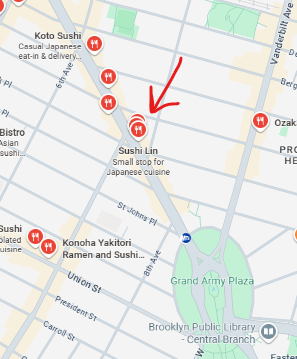
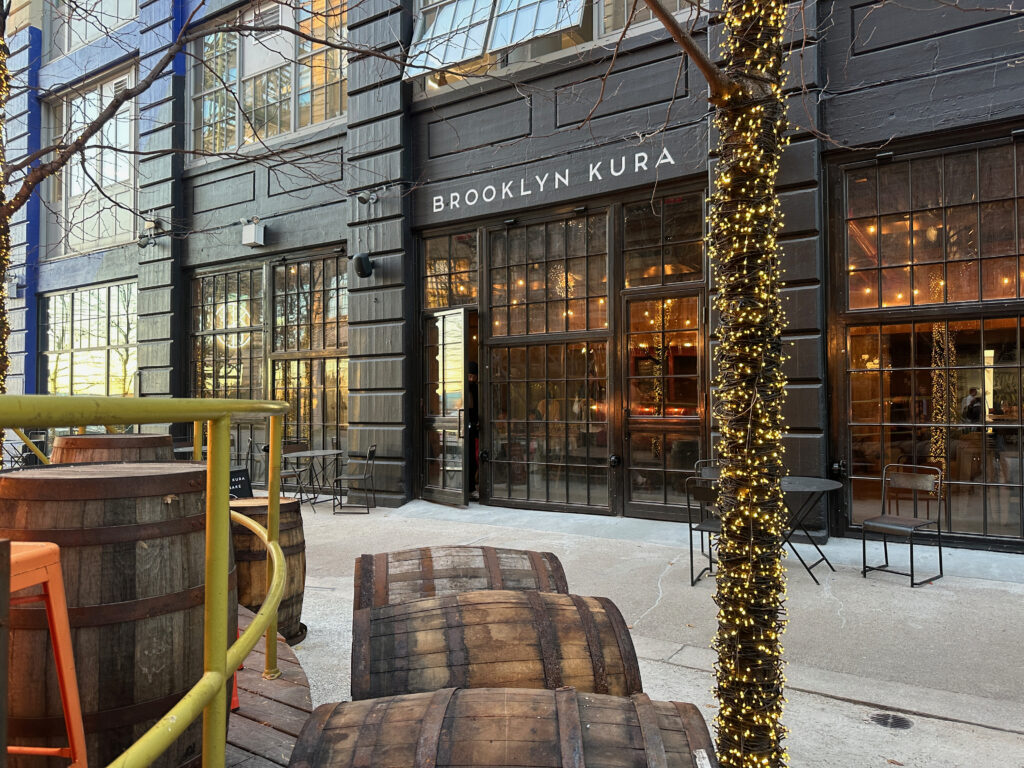
Geido is underneath Sushi Lin, like a russian nesting doll of sushiya
This is indeed a throwback sushiya
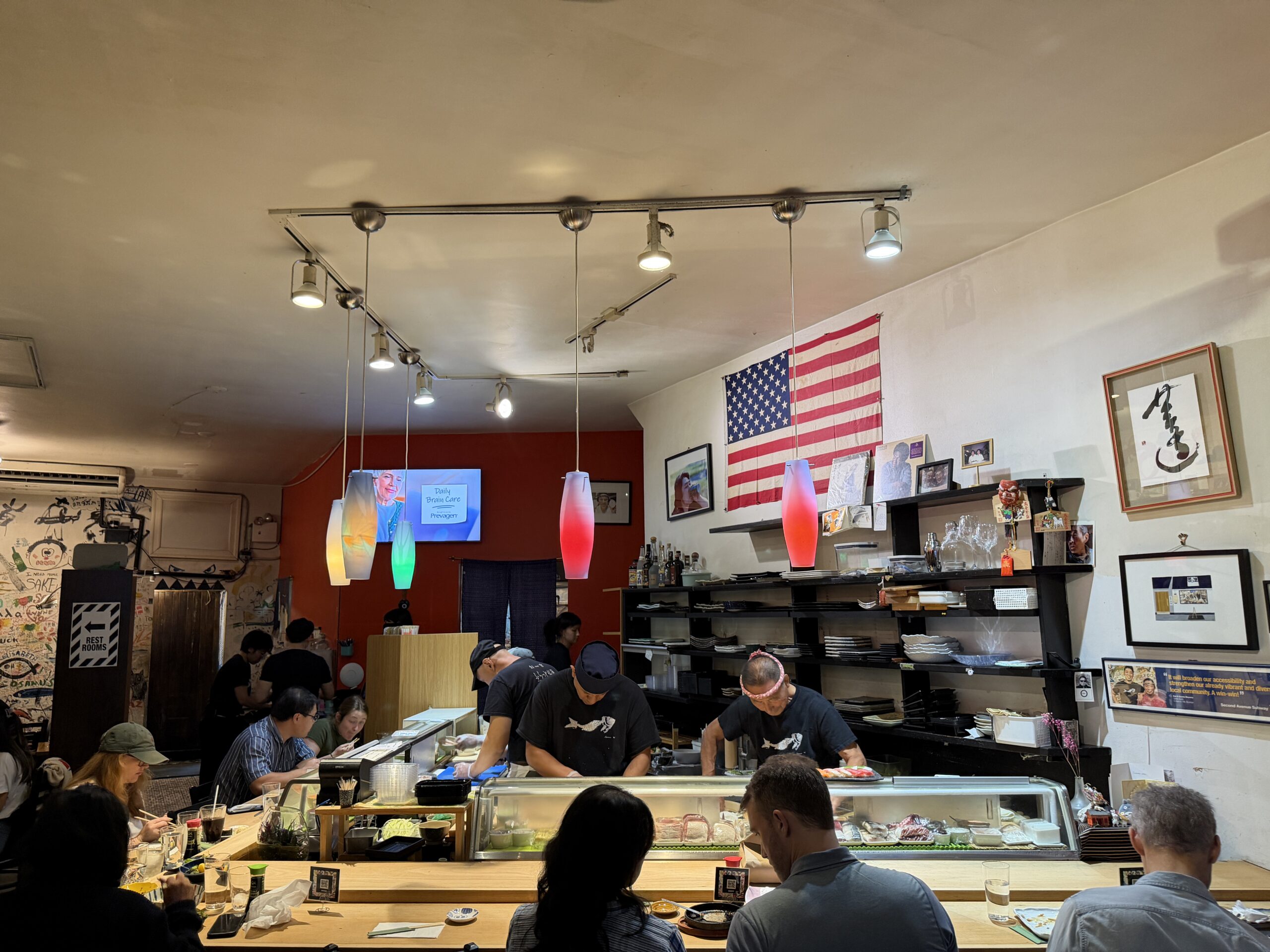
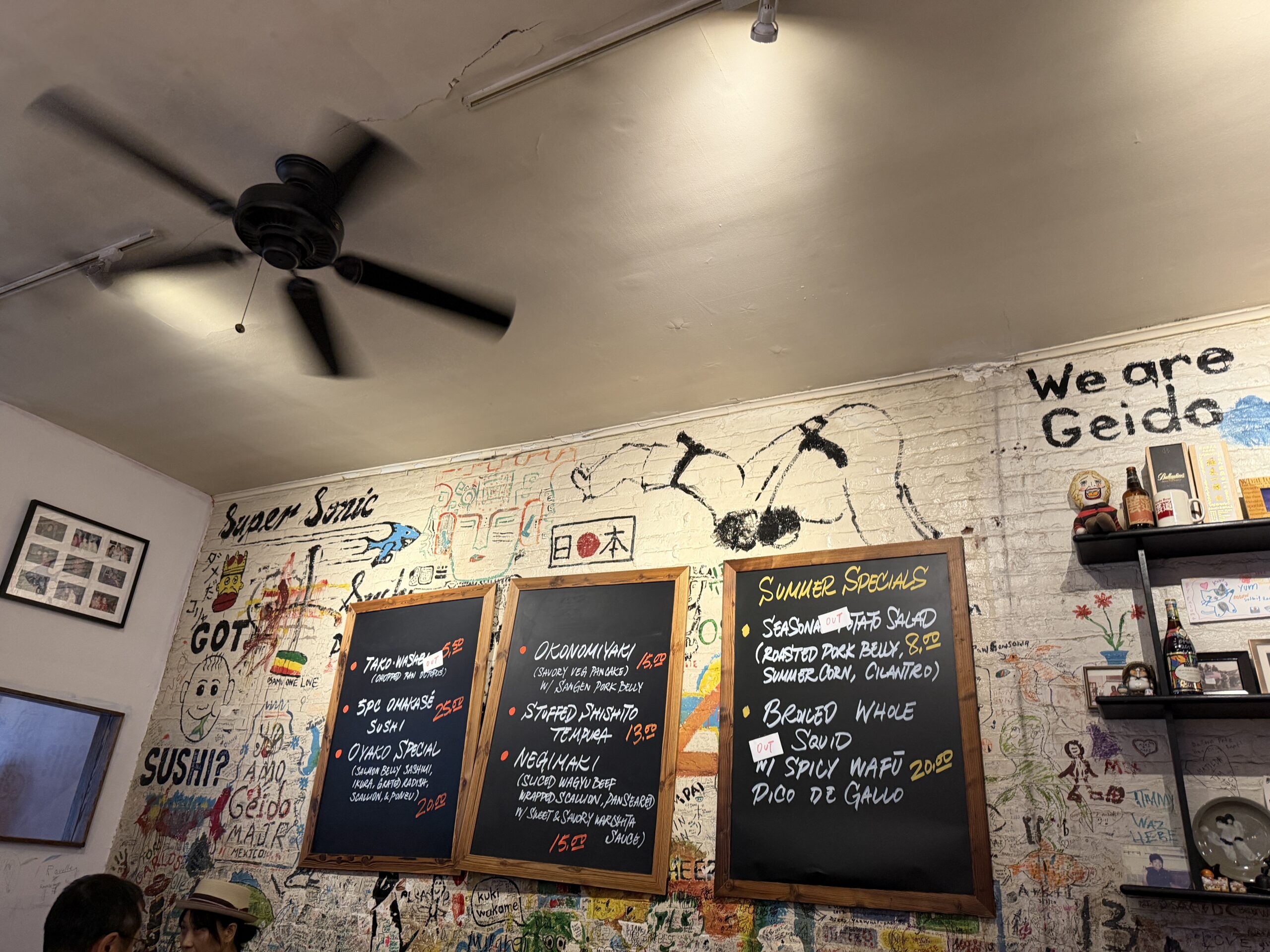
Geido is primarily okonomi (a la carte). More importantly in a city full of chalkboard omakase, it is the quintessential neighborhood sushiya. Televisions hang from the corners, strangers eavesdrop one another, bathroom sinks barely hold the wall..the works.
The walls are sushi’s version of a Pollack painting, save for the daily specials (minus the cross-offs, a pet peeve).
Like Turtle Bay’s Sushi You, Geido is a time capsule from a different era.
Sushiya reach this level through time, not social media. And credit starts with Osamu Koyama, the legend occupying the right far right side of the L-shaped counter in the picture below.
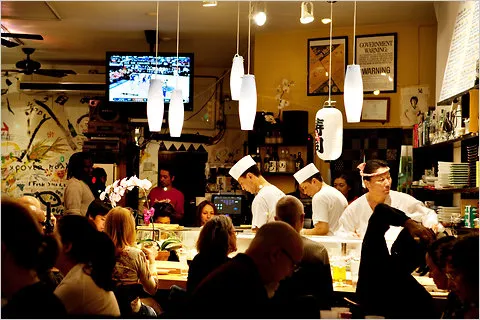
Interestingly enough, that picture was taken in 2011 when the New York Times profiled Geido. 15 years later, not much has changed.
They say, “grow or die”?
Geido still has lines out the door.
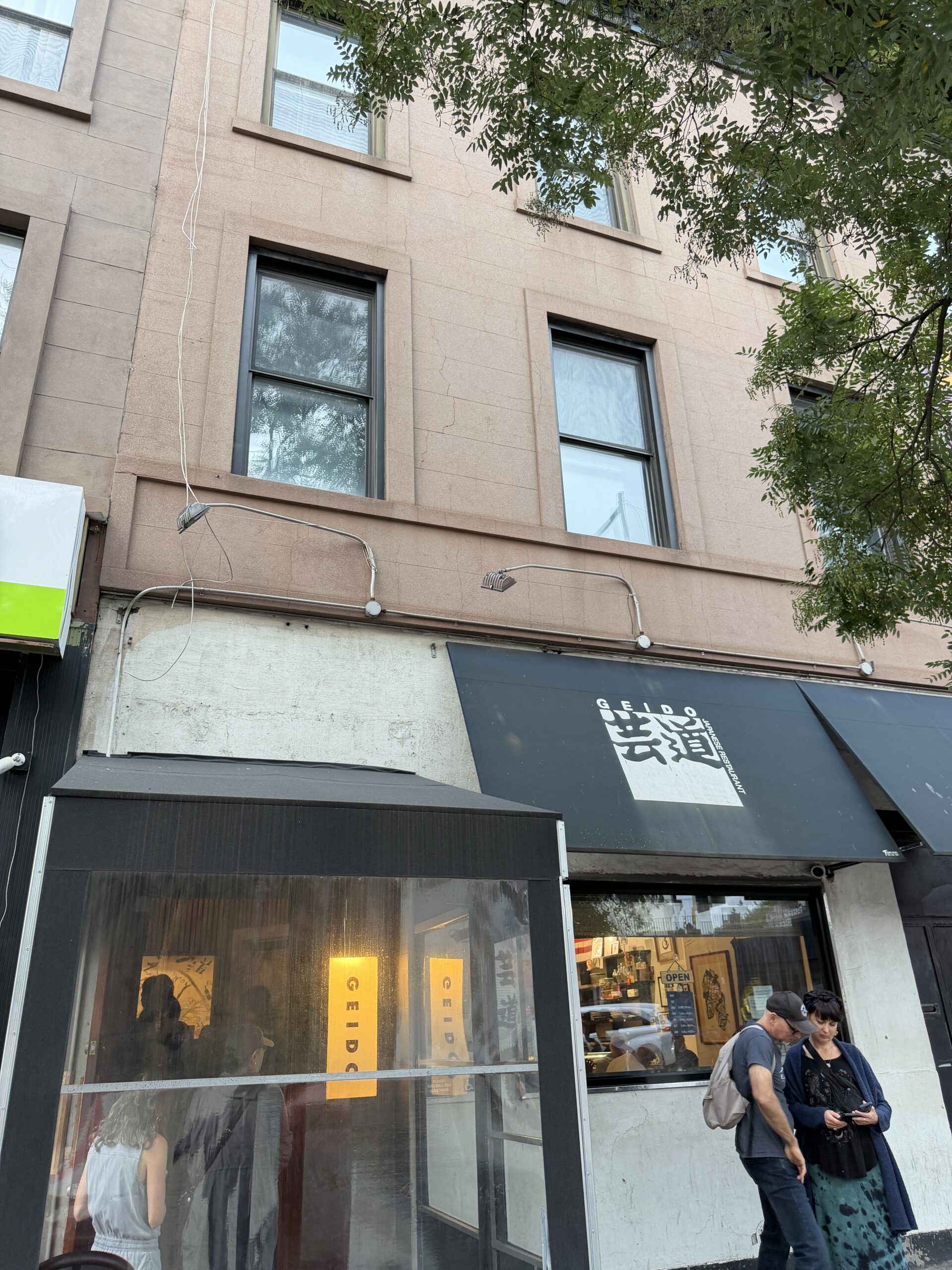
Geido is first-come first-served.
So go early
The sushiya opens at 5. I arrived on a Saturday at 5:15, and barely found a spot at the counter. By 5:30, wait times exceeded 30 minutes. Tables do turn quickly, mostly because Geido is a well-oiled machine. Servers are well-trained, hosts keep the line moving, and three other chefs line the counter next to Koyama-san.
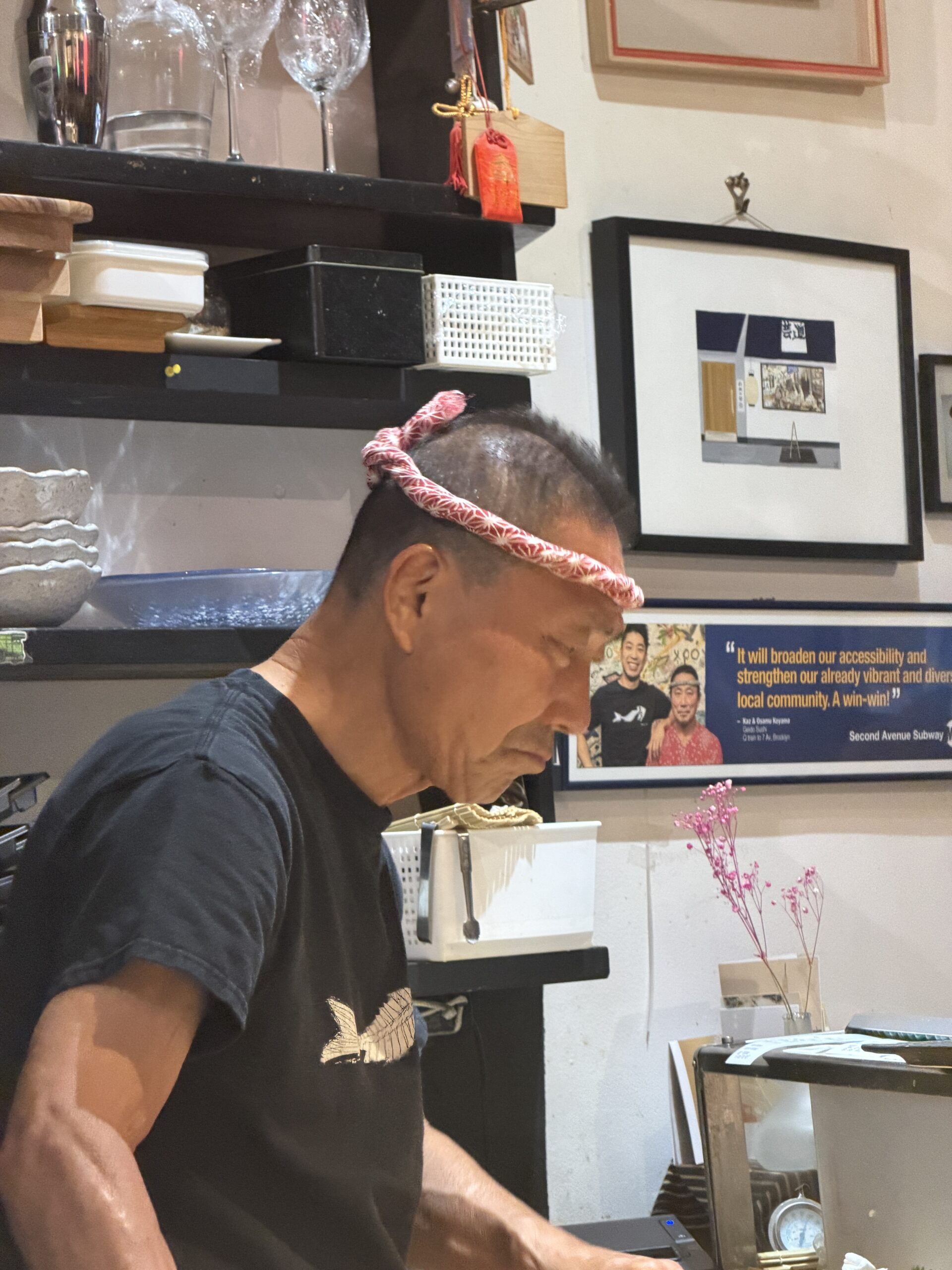
Osamu Koyama
Some tips on what to avoid
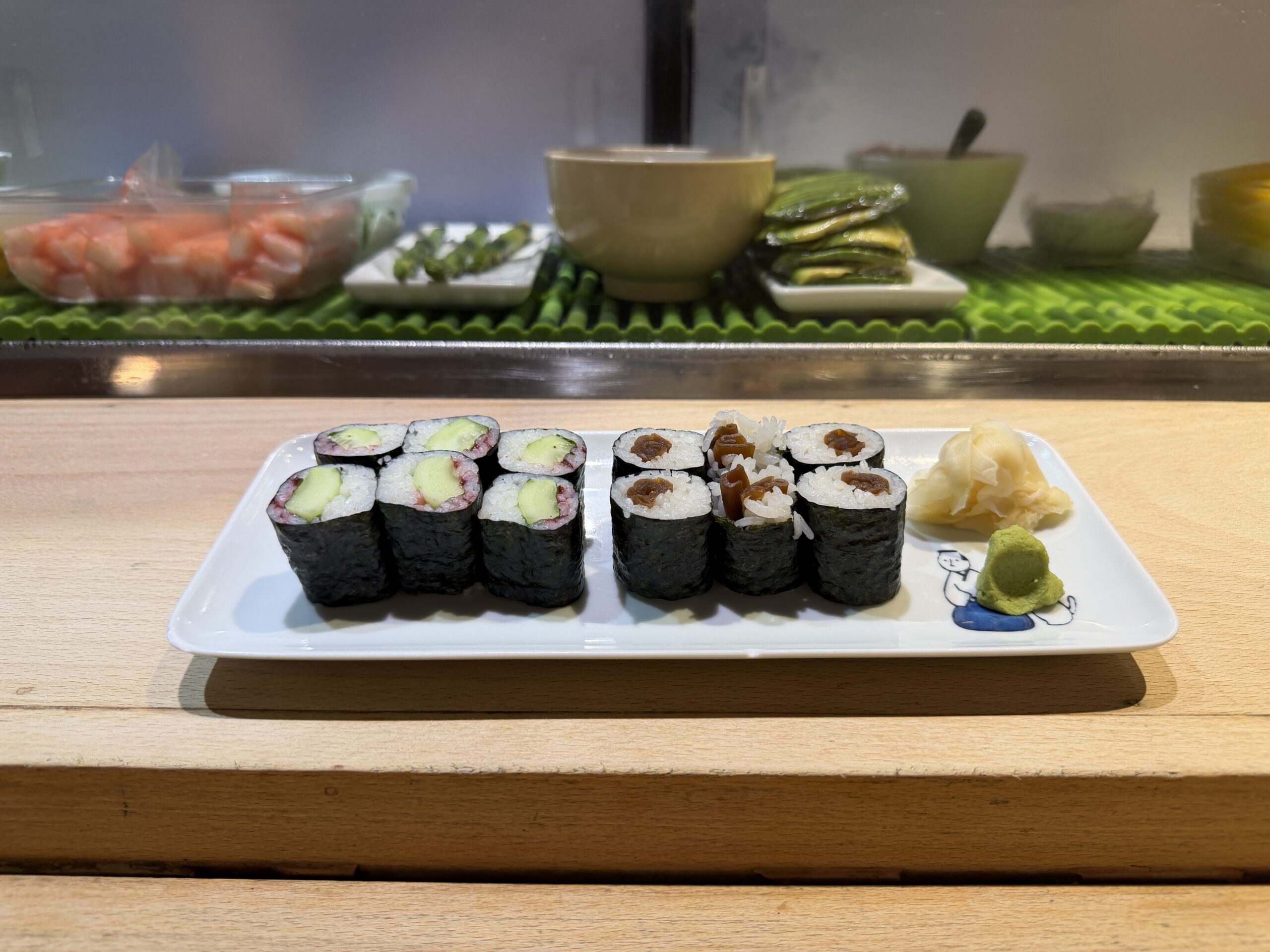
If you sit at the counter alone – and aren’t an asshole that watches movies on their phone at full volume – you learn some stuff. Like for instance, that not all rice and not all chefs at Geido are created equally.
For example, I started with two traditional makizushi: umeshiso ($6) and kanpyomaki ($6). The kanpyomaki was soft and sweet, but noticeablely uneven, uh, literally.
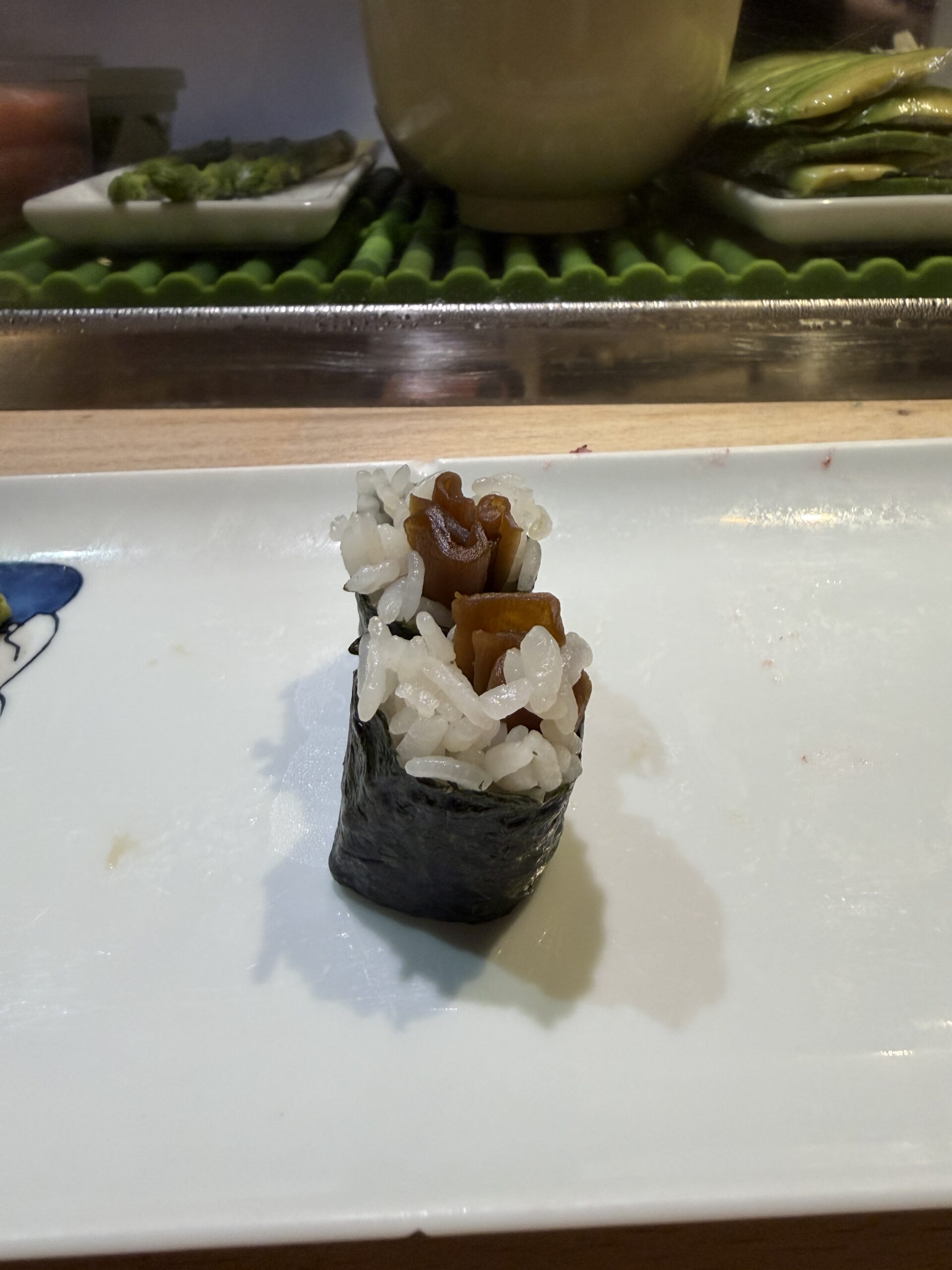
Not a fan
The Umeshiso had far too much cucumber. I’m not opposed to sushiya that use cucumber in their umeshiso – some do, some don’t – but this maki should be umeboshi (salted plum) and shiso first.
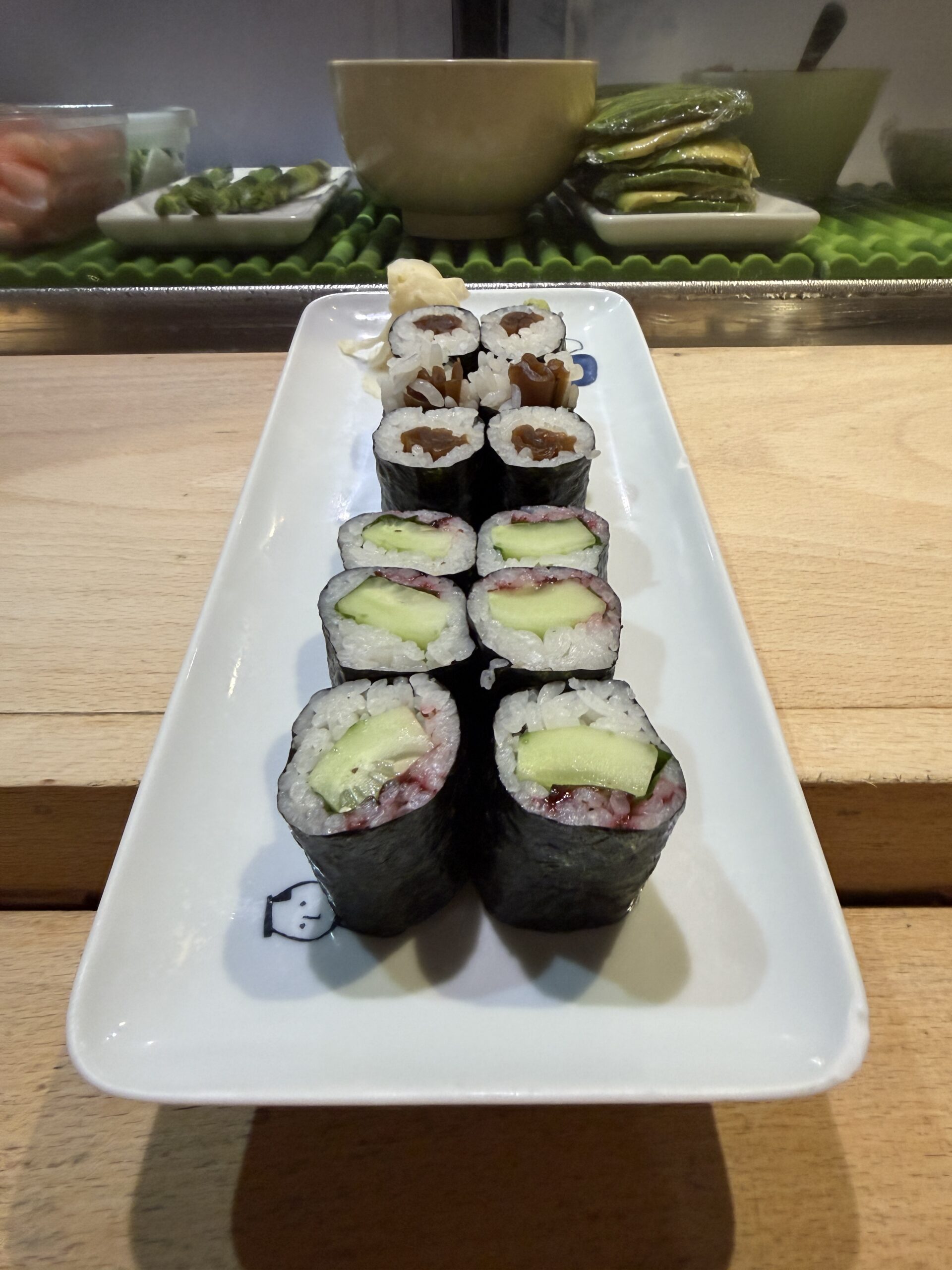
Let’s calm the cucumbers down please
Finally, the shari for just the maki, taken from the metal cooker opposite Koyama-san, was dry and tough. I’m no expert; I’ve just a read few books and spoken to a few people. That dryness sometimes happens when the rice sits. “No shit, dude”. Fair point.
In any event, not great given opening bell was 30 minutes before.
Fortunately things turned around
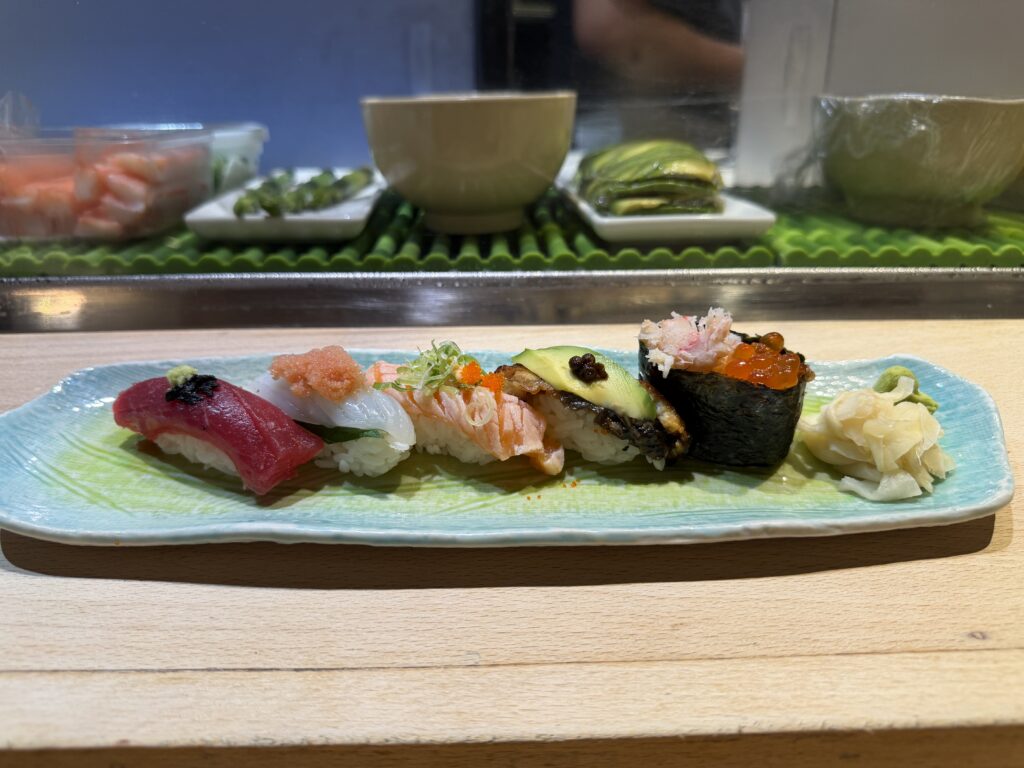
For the daily selection of five nigiri for $25 (called an omakase on the specials board), a different – and far better – batch of rice was used. Closer to Koyama-san. I’m not really sure what advice to give here, other than stick to the nigiri, but this was a noticeable improvement.
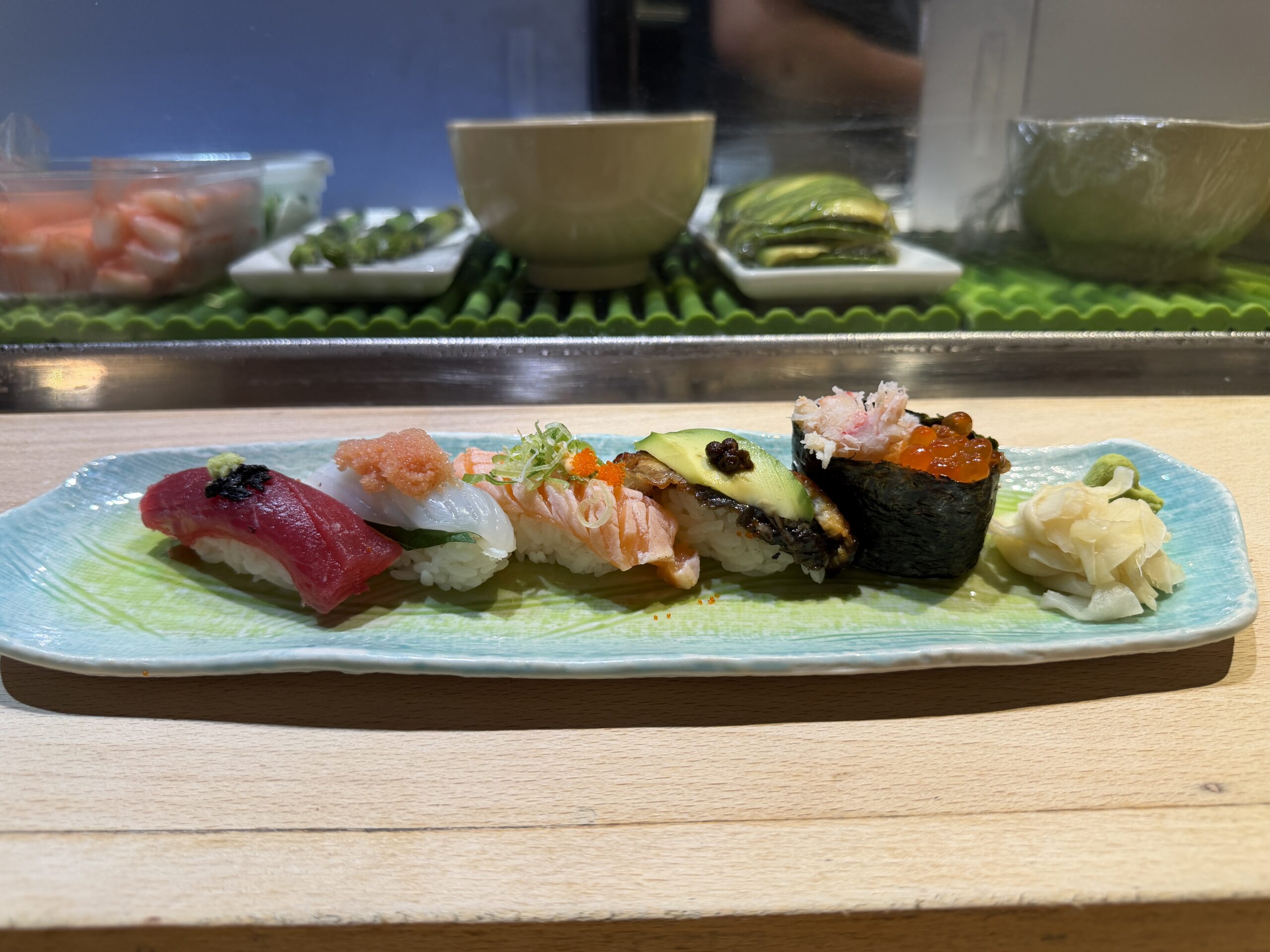
Left to right: Akami, Ika with mentaiko and shiso, king salmon aburi, unagi avocdao, zuwaigani (they said), ikura and uni ($25)
Of particular note was the the Ika nigiri (second from left), which had shiso underneath and mentaiko on top. Mentaiko is the roe of cod (or alaskan pollock). Tarako is also cod roe. The difference? Chili paste has been added to Mentaiko, giving it that reddish tint you see above, and a spicy taste I enjoy quite a bit. This is a popular combination, though rare on sushiya menus stateside. One of the best nigiri I’ve had this year. More of this please.
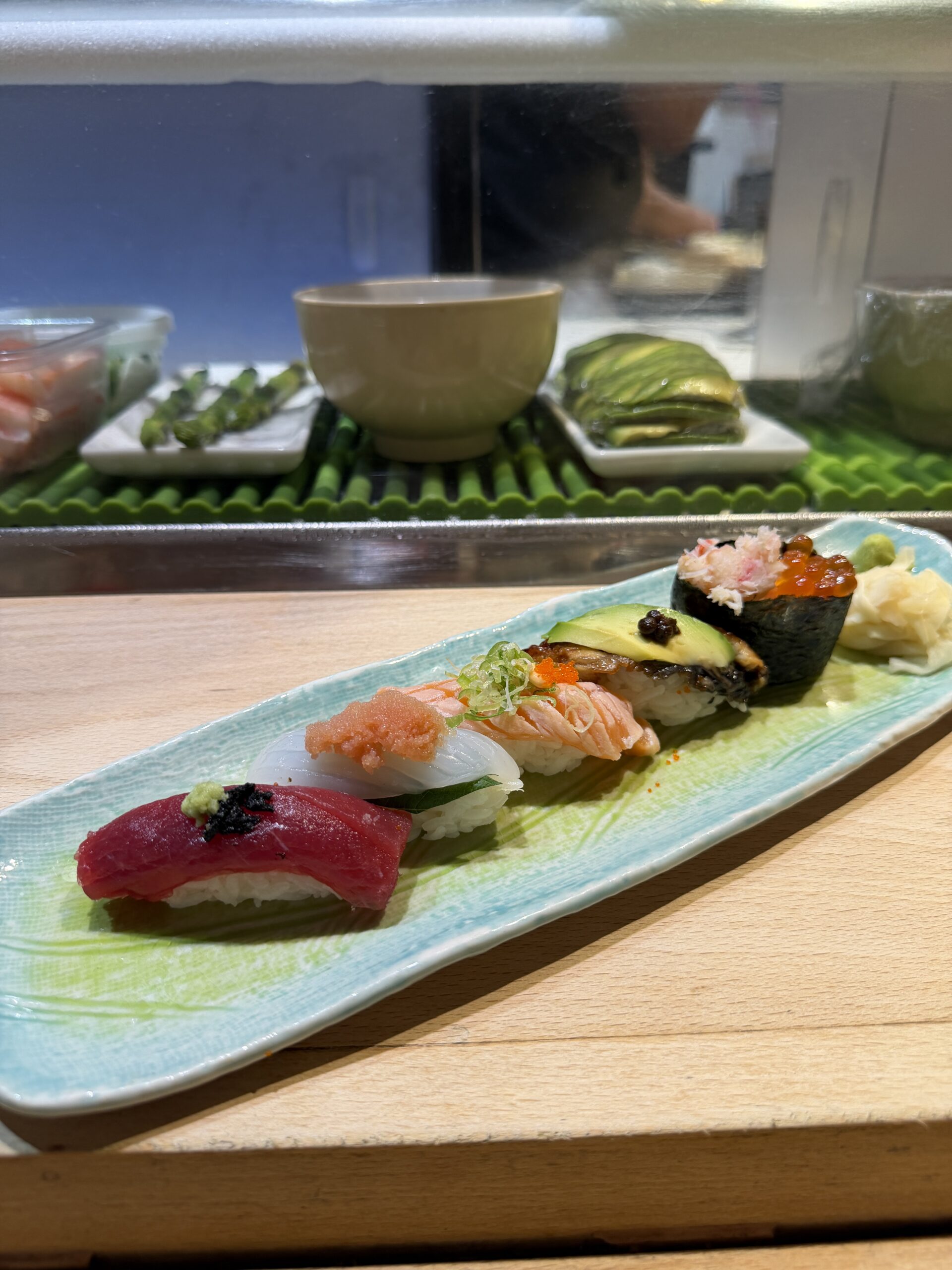
Another angle
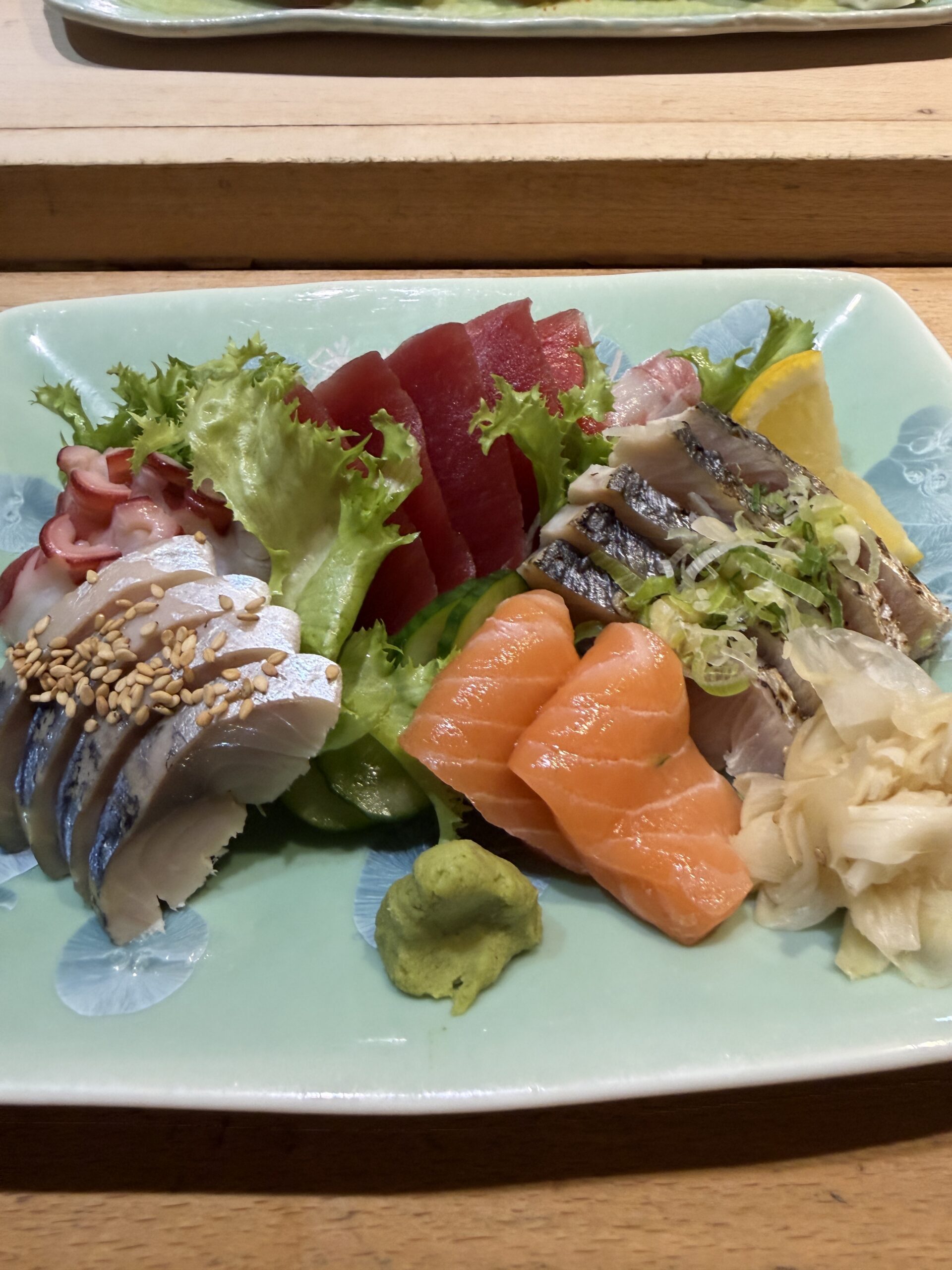
Sashimi moriawase ($30) – 23 slices of saba, tako, akami, “branzino”, sawara, hamachi and salmon.
The sashimi moriawase is wonderful value. $30 for 23 (mostly) thick cuts? In this economy?
Everything was excellent except for the Sawara, which is typically best in winter and was missing its touch of sweetness (“touch of sweetness” is a great band or horse name if anyone is looking. License free).
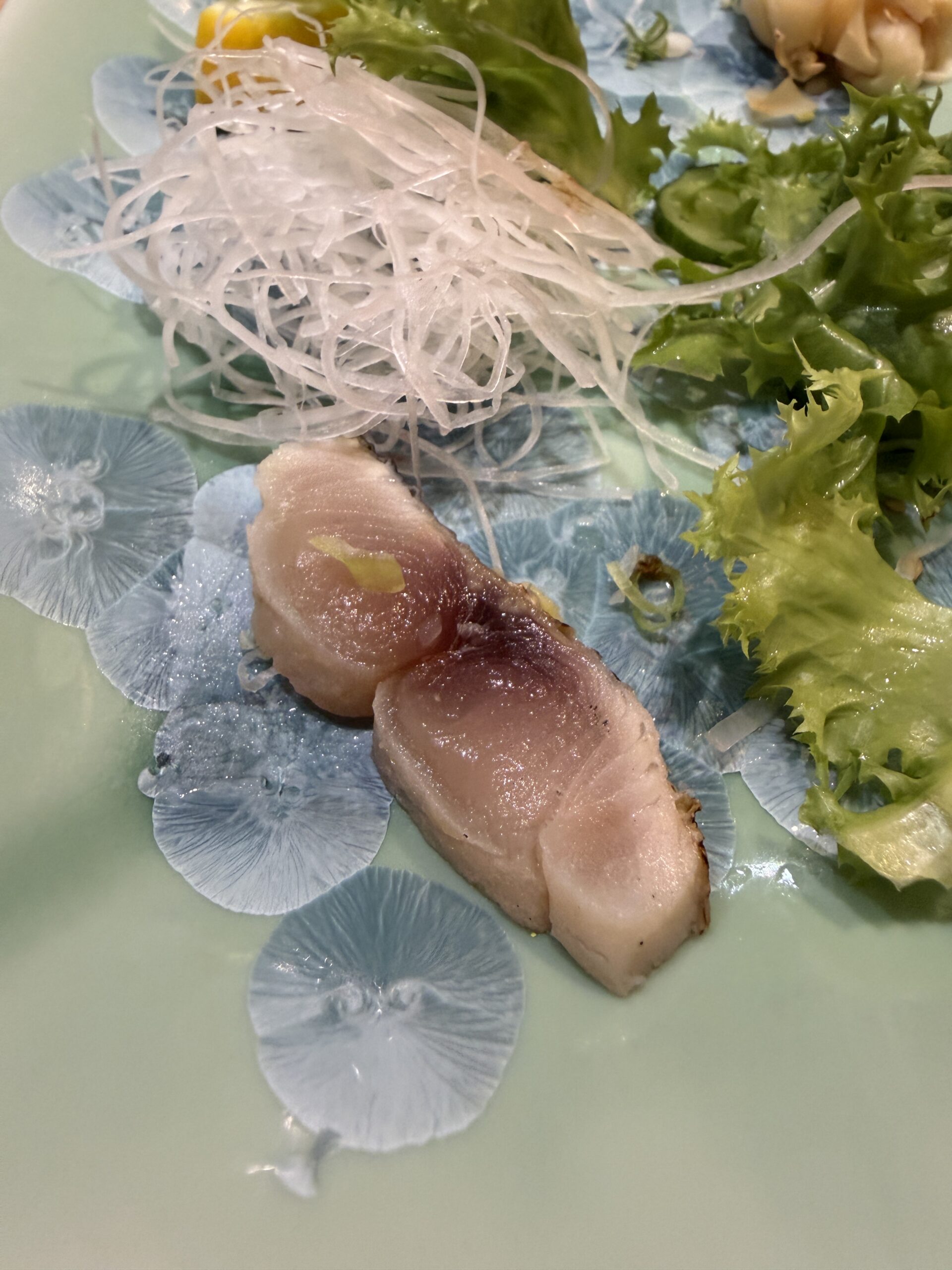
Not great.
Geido is the type of sushiya that dot Los Angeles but are increasingly rare in New York. I find that a problem, so yes, I’m aware that I’ll have more leeway for Geido’s below average makizushi than I typically would.
I’m also well aware that not everyone needs a sushi seven experience or modern tribute to Edomae for their sushi fix. That people, to quote the great thespian Matthew McConaughey, sometimes need to take a step back to move forward.
Depending on the day, that’s me as well.
Recommended.