“It was the best of times, it was the worst of times, it was the age of wisdom, it was the age of foolishness, it was the epoch of belief, it was the epoch of incredulity, it was the season of Light. The Americans won the Gold Medal. It was the season of Darkness, it was the spring of hope, it was the winter of despair. “
-Charles Dickens X The Sushi Legend
Opening a restaurant is hard. Opening a restaurant worth something is harder.
Let me explain it in language I understand.
My gym is small.
The leg area – which I go to once a week, never skipped, find a new slant – is isolated across a small bridge, or what Google tells me is an “interior overpass”. There’s usually a single file line to cross this “interior overpass”, which means I spend (a) 3 seconds wondering about its maximum load and (b) 11 seconds hoping the guys and gals in front of me aren’t going to the leg extension or reverse leg curl. 99% of the time they walk right past and settle at the hip adductor/abductor (none of you know the difference either).
Why?
Because most people take the easy route.
Ibushi, a 16-seat Markham counter that opened in 2025, doesn’t. Despite some hiccups, this is a sushiya that tries. Respect.
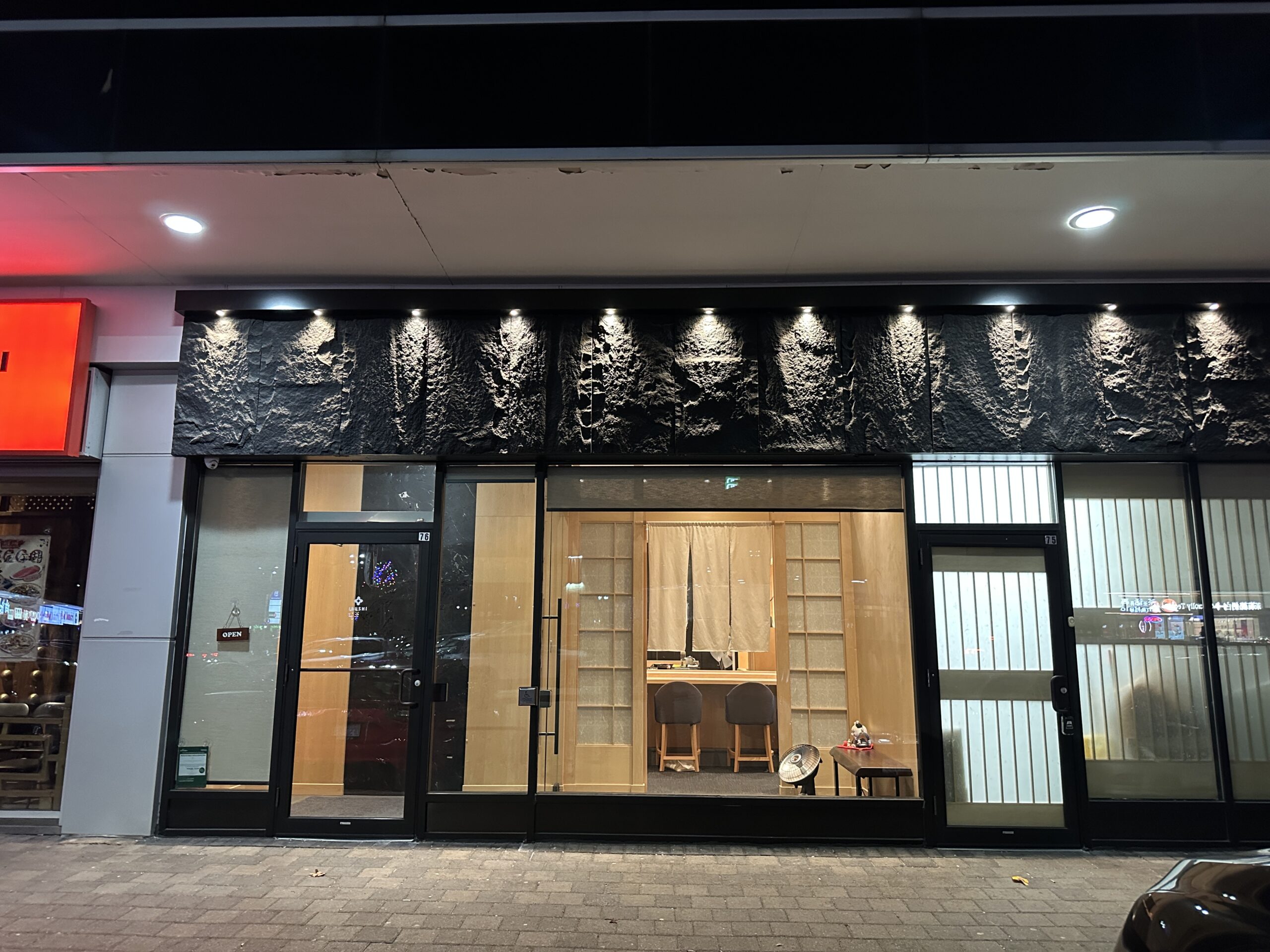
Outside Ibushi. Can we add some curtains for the windows.
This isn’t a typical chalkboard Omakase
I coined the phrase “Chalkboard Omakase” in a moment of irrepressible clarity. I would say it was my Lacrimosa, were I to have any understanding whatsoever of classical music.
Ibushi’s Omakase fortunately avoids many of the pitfalls in my pulitzer-eligible article. The menu changes with the seasons; quarterly, not monthly, but enough to honour the seasonal tenets of Edomae Sushi. And the night I went, there were plenty of delicacies available off-menu.
No surprise given who’s at the helm
The Itamae, the passionate Hiroki Takai, comes from a branch of the Mitsuhiro Kaji coaching tree. Sushi Kaji, which I recently reviewed here, is likely Toronto’s most iconic sushiya (and it’s possibly closing soon, so venture to Etobicoke if you haven’t yet).
Like Kaji, Ibushi is located in an unassuming strip mall
And like Kaji, Ibushi makes a point to focus on the opening acts in the $135 omakase. This is unfortunately where the Omakase struggles, though I enjoyed the leadoff hitter. Kaburamushi is a winter staple, featured – no duh – Kabu (Turnip), usually paired with some white fish in a dashi. Ibushi’s version included Shirako (cod sperm) and Madai (sea bream). I liked this – certainly more than the other appetizers – despite my preference for a heartier dashi (the clear colour is a giveaway). I’ve heard this is a dish specific to Kyoto; perhaps it’s a tribute to Kaji-san, who I believe comes from the area.
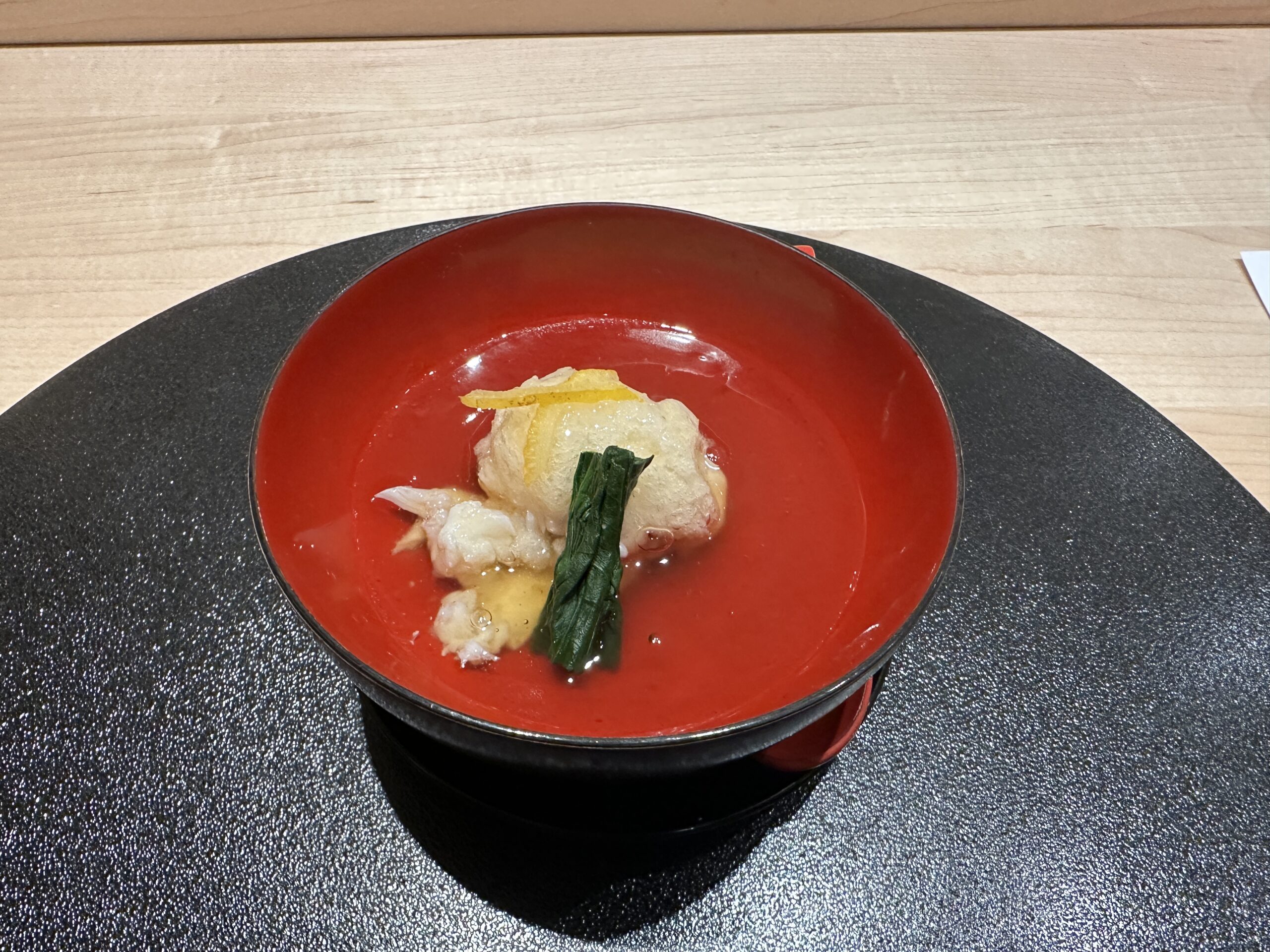
1: Kaburamushi (steamed turnip, shirako, madai)
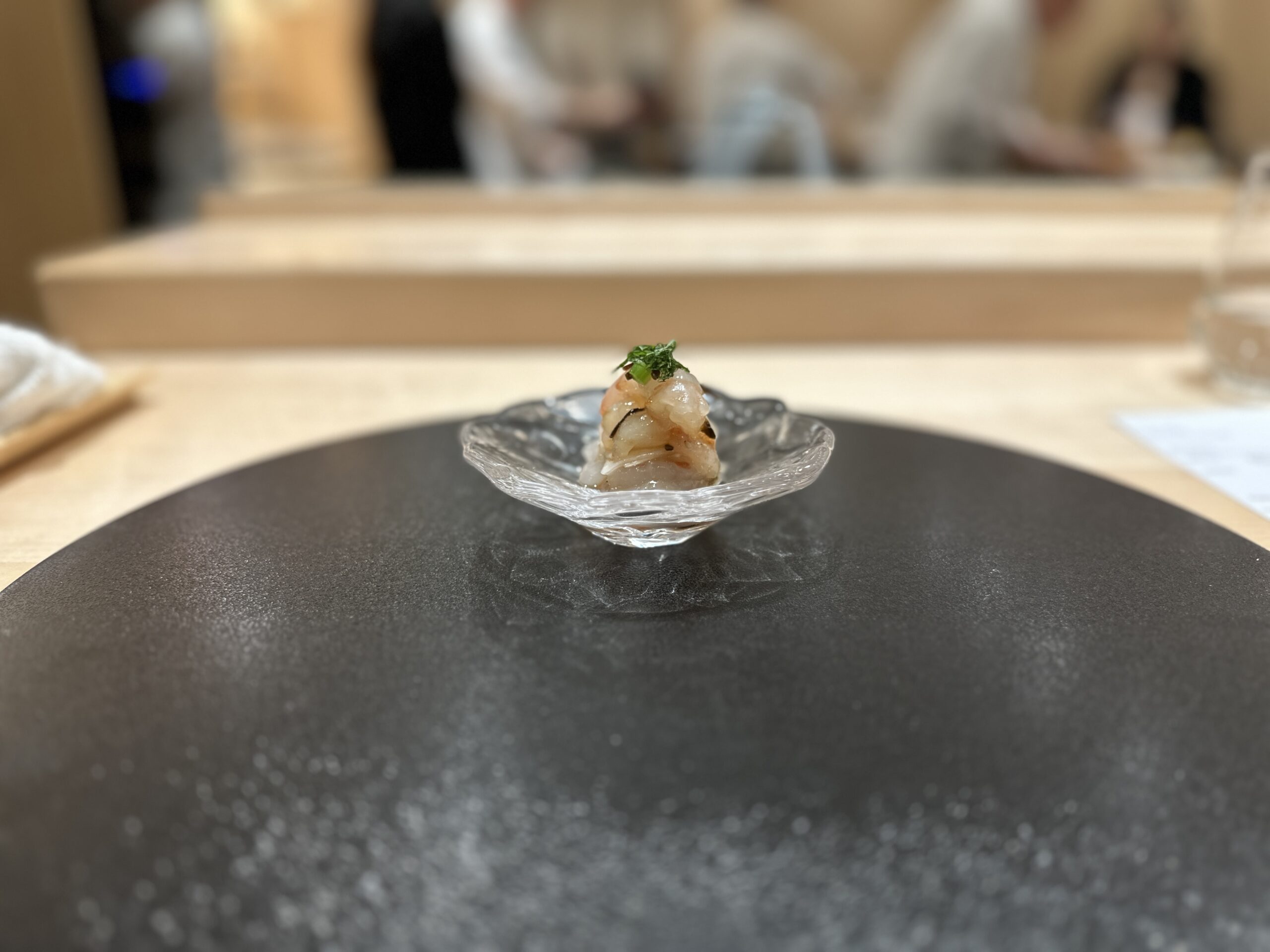
2: Botan Ebi (with shio-konbu)
I was less enthused about the third and fourth courses
Hay-smoked honmaguro. It might have been delicious, but a dollop of yam was slopped on top. My taste buds struggle enough normally – thank the 220 scalding hot Tim Horton’s Turkey And Wild Rice soups I had in high school – so smothering tuna in 40 CCs of Tororo isn’t a personal favourite.
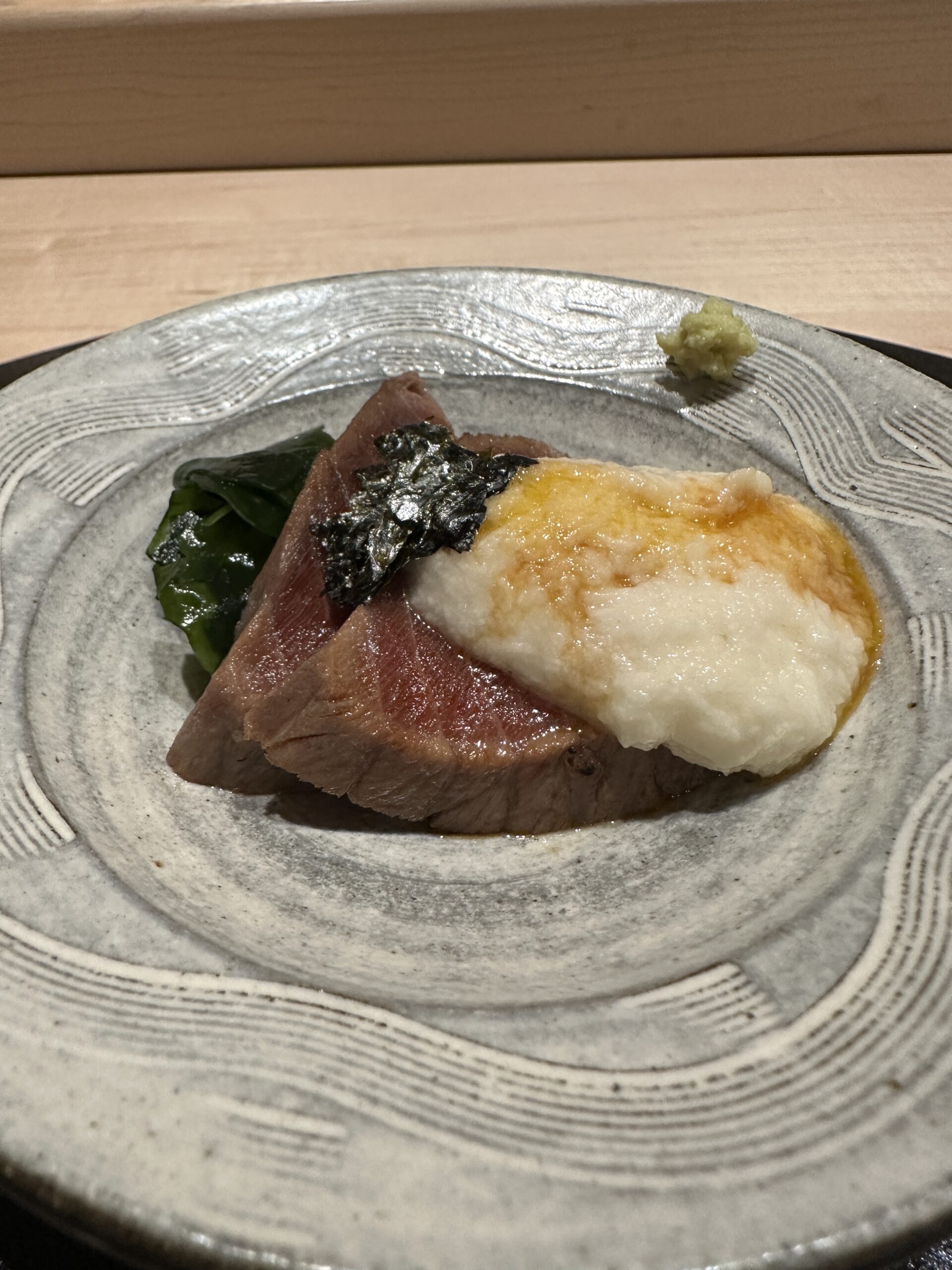
3: Honmaguro (hay smoked bluefin tuna with Tororo (japanese yam – nagaimo? – pureed)
And then there was the croquette
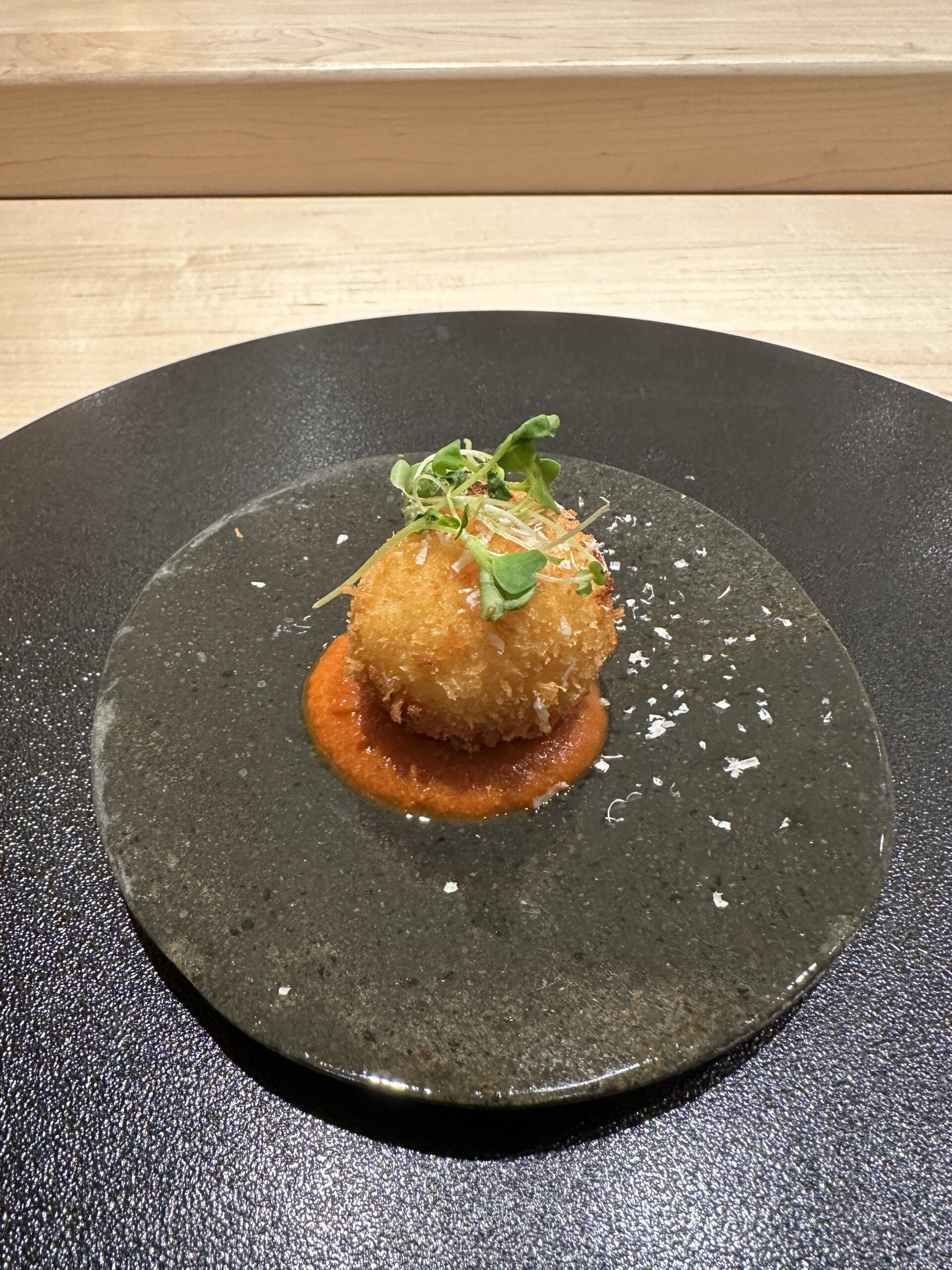
4: Crab cream croquette (with king crab and shrimp tomato sauce)
Look, sometimes you take wild swings. I’d know – I played baseball with a kid that hacked away with his eyes closed. 5% of the time it worked every time.
But a Crab Cream Croquette with Shrimp Tomato Sauce is one of the craziest things I’ve ever eaten at a sushiya. If the good people at Ibushi are reading this, let’s bin the cream cheese fritters next winter, mmk? Help me help you.
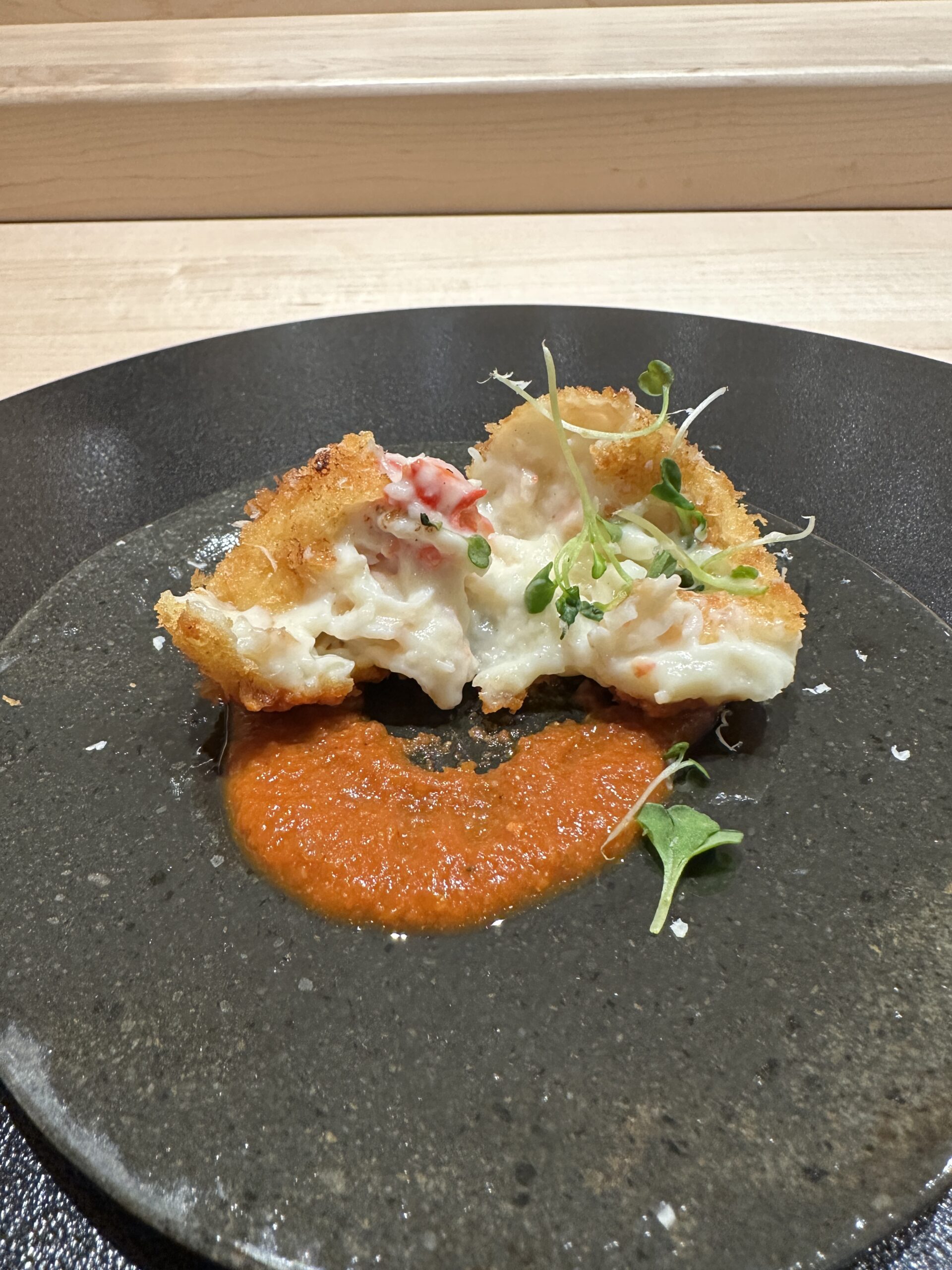
Not a fan
I’m not surprised the Uni is the first sushi course
People will tell you the powerful Uni is best left for the end. Those people haven’t needed a palette cleanser post-crab cream croquette.
Sumi-ika was more challenging
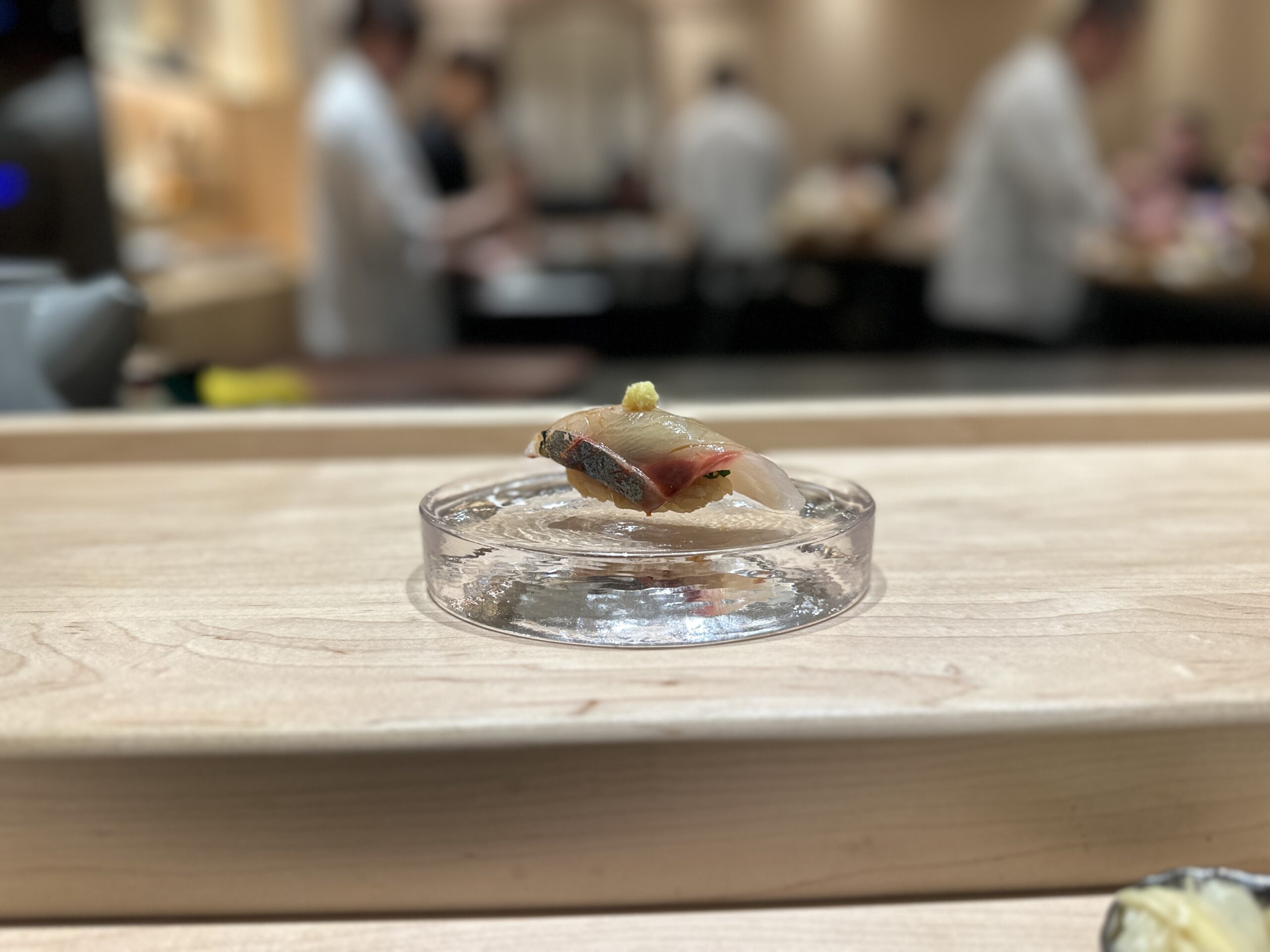
Doused in salt and packed with wasabi, this sumi-ika (golden cuttlefish) was overpowered. Sure was nice to look at though, which is a theme for the evening. Takai-san is very good at forming his nigiri. Instagrammers get excited.
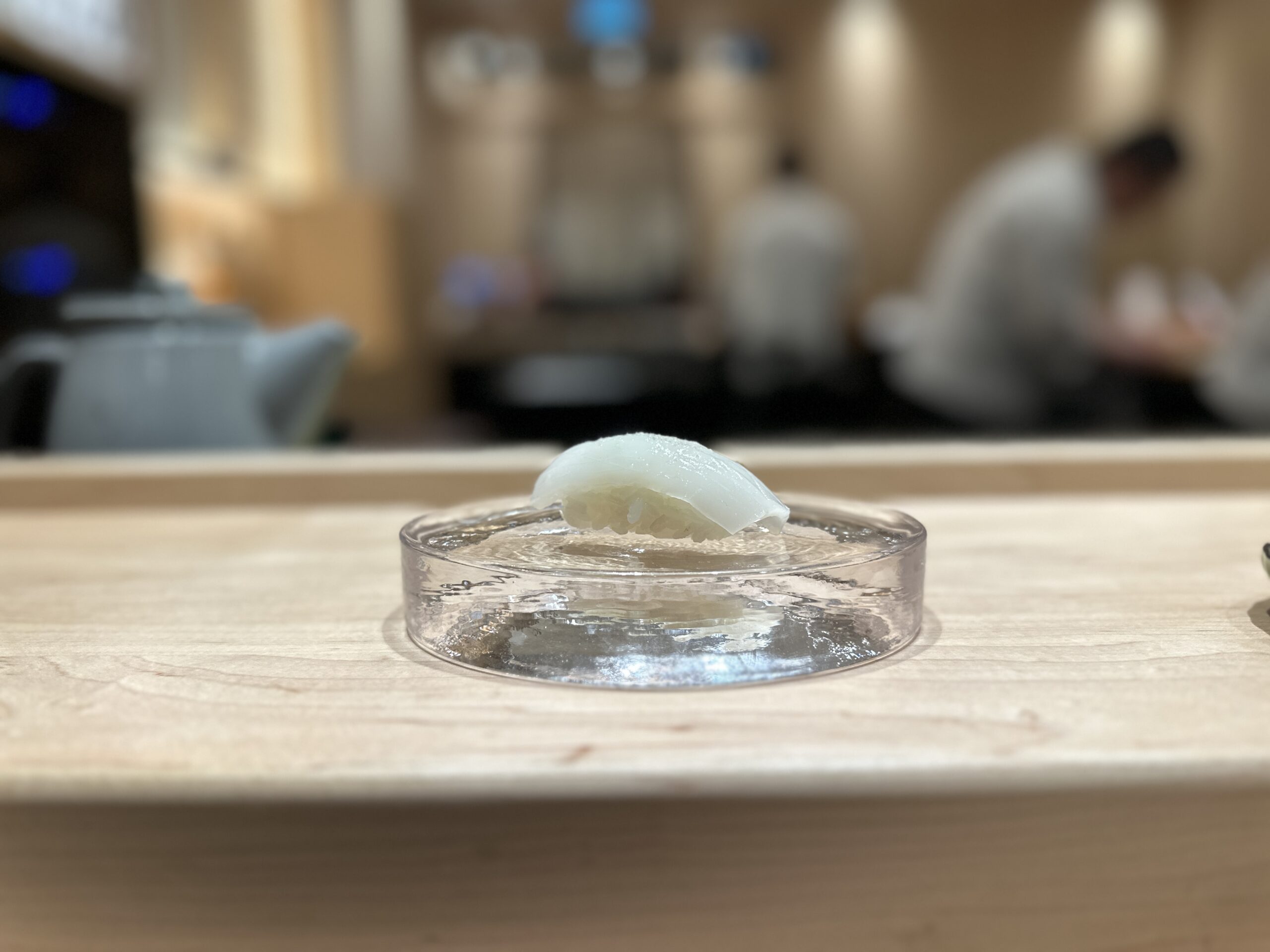
6: Sumi-ika (golden cuttlefish)
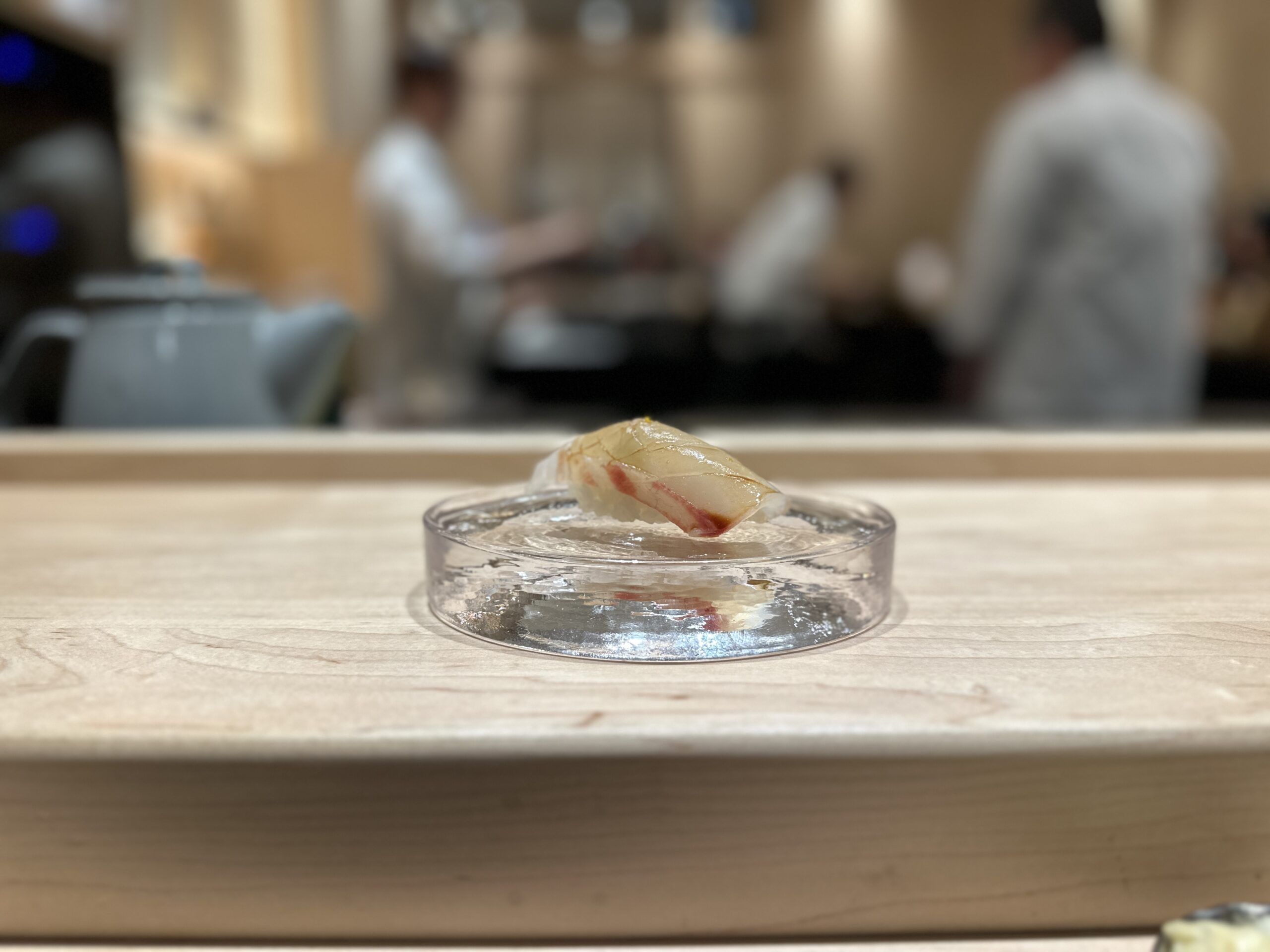
7: Madai
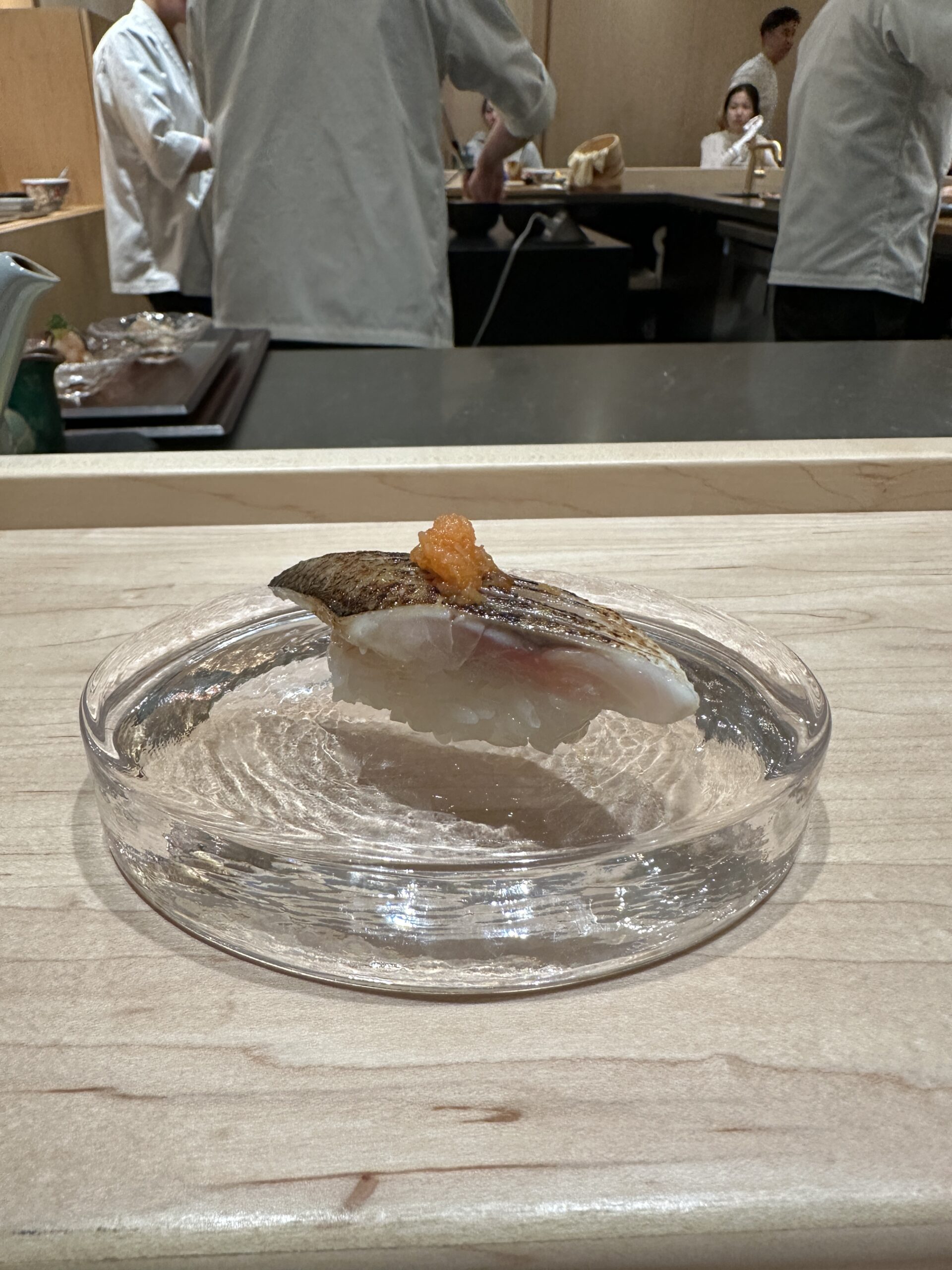
8: Kamasu
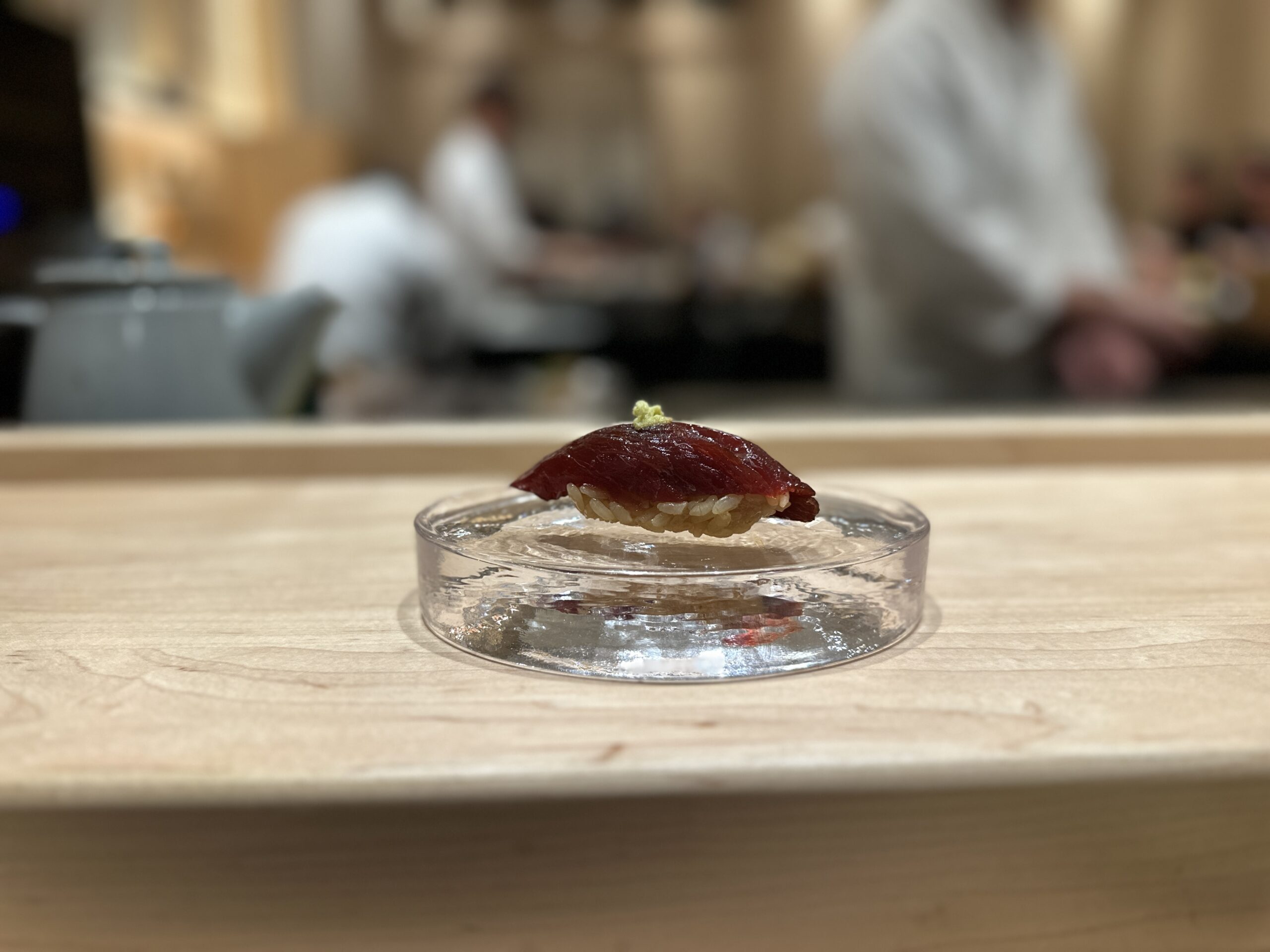
9: Zuke
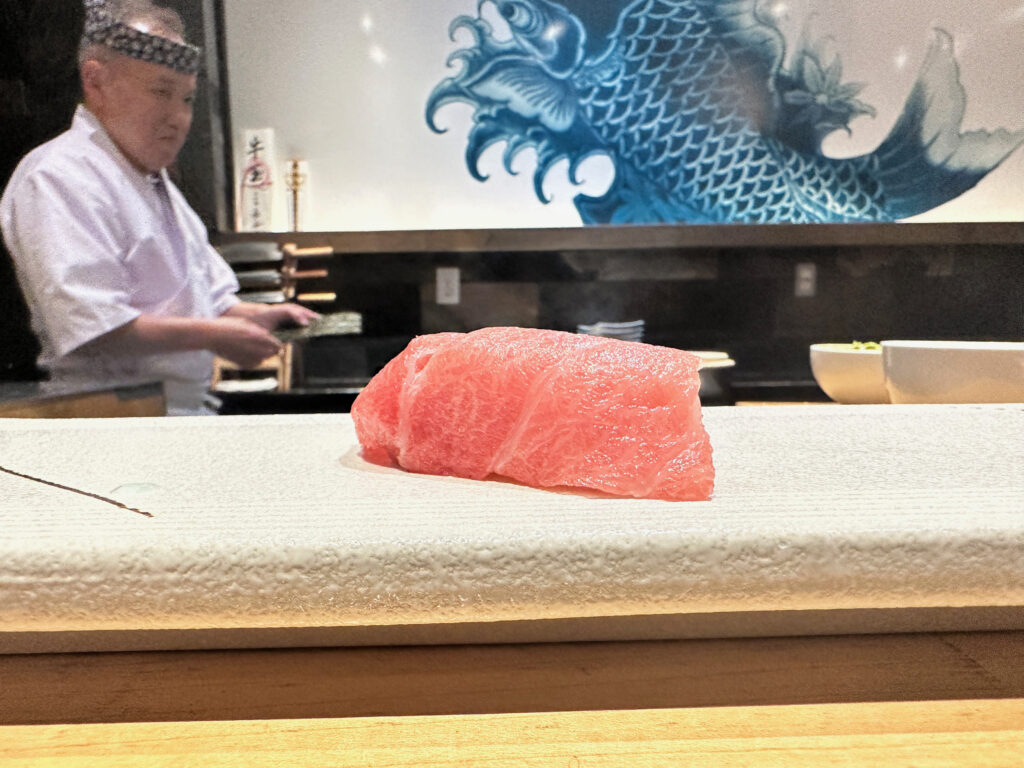
The O-Toro was listed as Toro on the menu, which should have been my first warning sign.
Tasting chewy tendon in a bite of O Toro isn’t uncommon. In fact, the fattiest areas of the tuna typically have more sinew. Clearly though, the piece (part?) of sinew I got in my O Toro – tough as a skirt steak – wasn’t ideal.
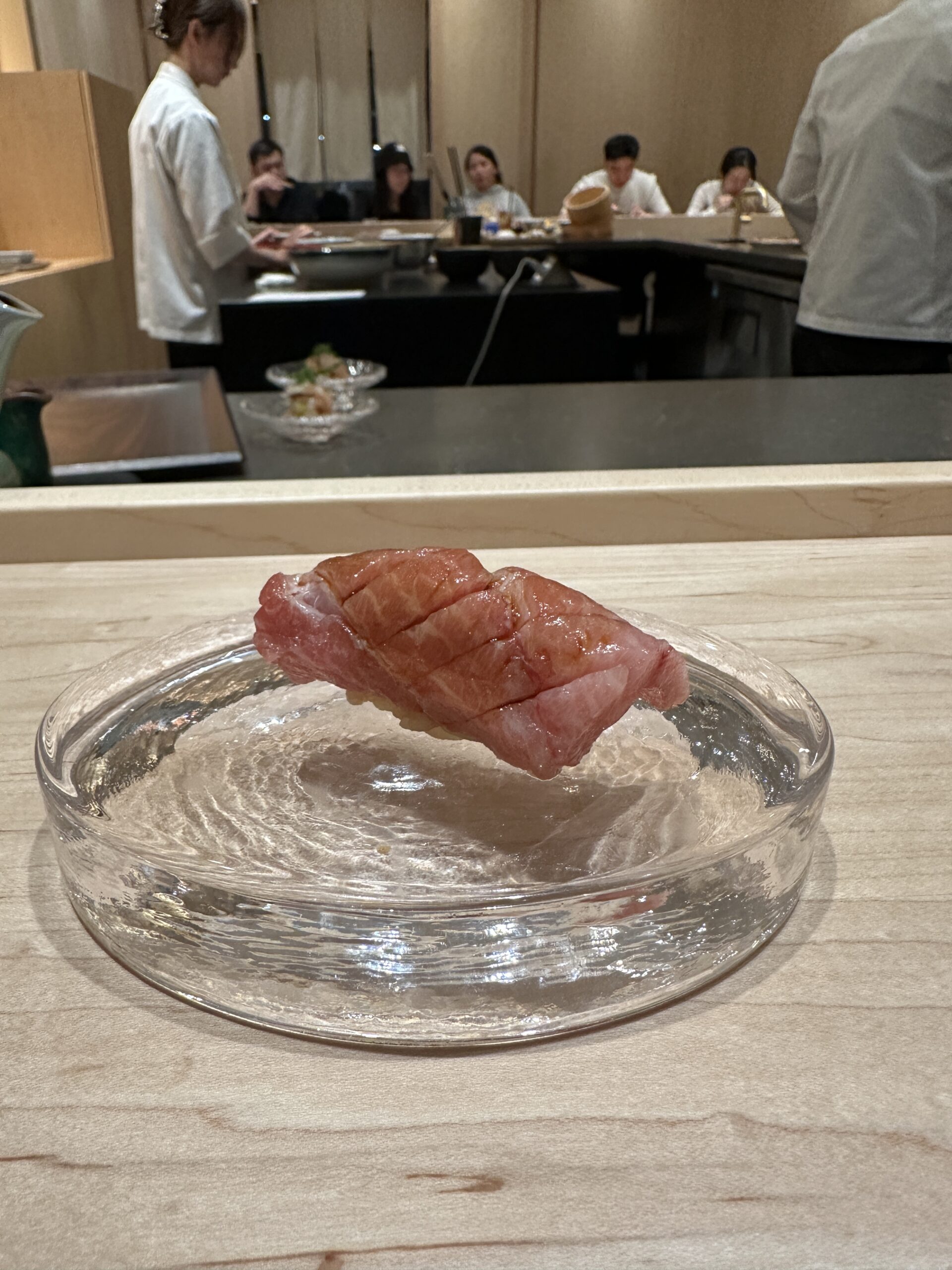
10: “Toro” – O Toro. Spot my issue…
Blame the sourcing, or blame the knife work, take your pick. Chefs usually cut around or aim for safer areas – but to quote the great Austin Powers, someone was living dangerously.

Appropos for the O Toro. Also, can we just get an Austin Powers 4 already. Mike Myers and Jay Roach, how much money do I need to raise. I will take this website to Substack so fast. Make us producers. Thank you.
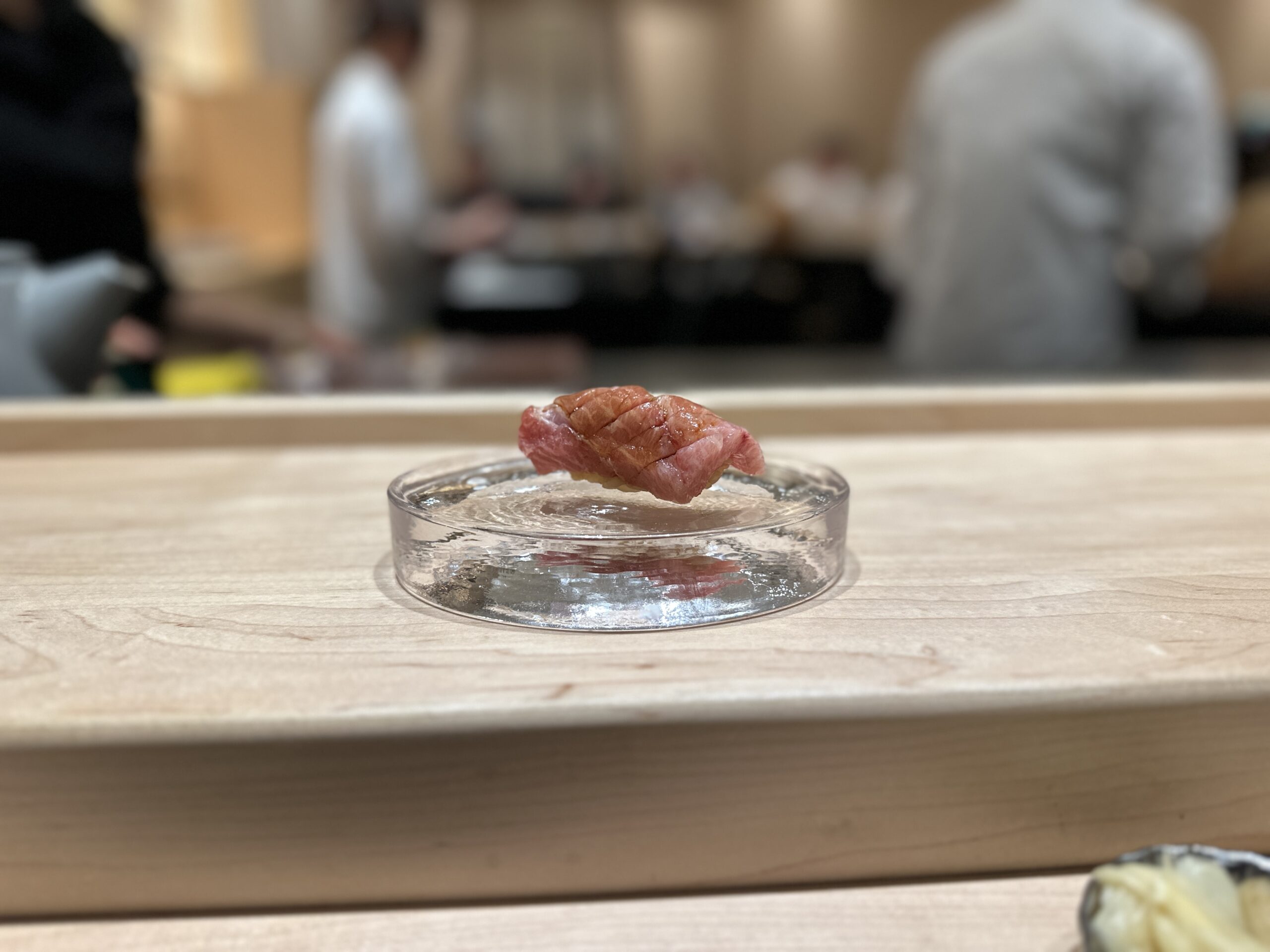
Another angle
11: Shima Aji (striped jack) – beautiful
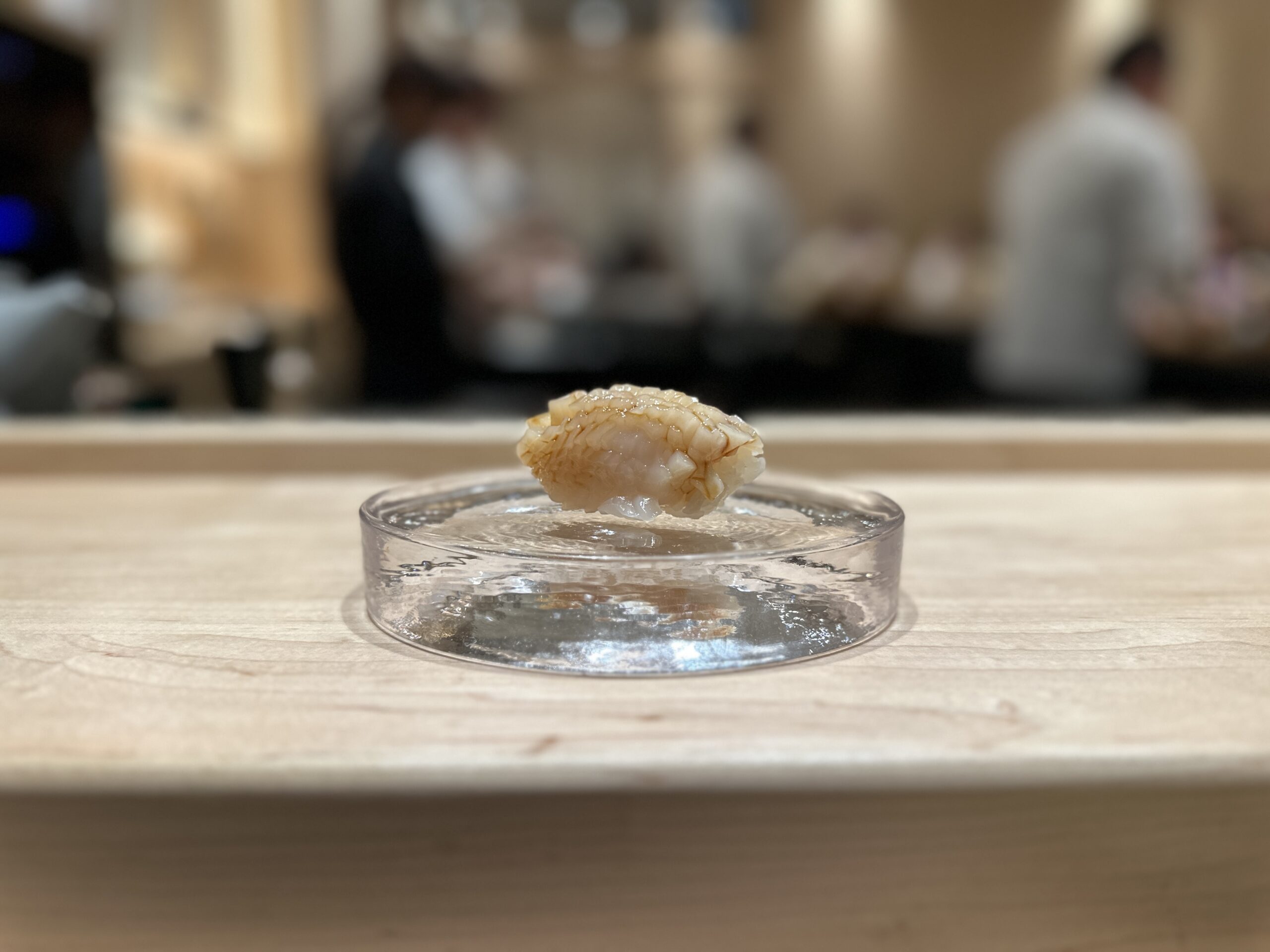
12: Hotategai
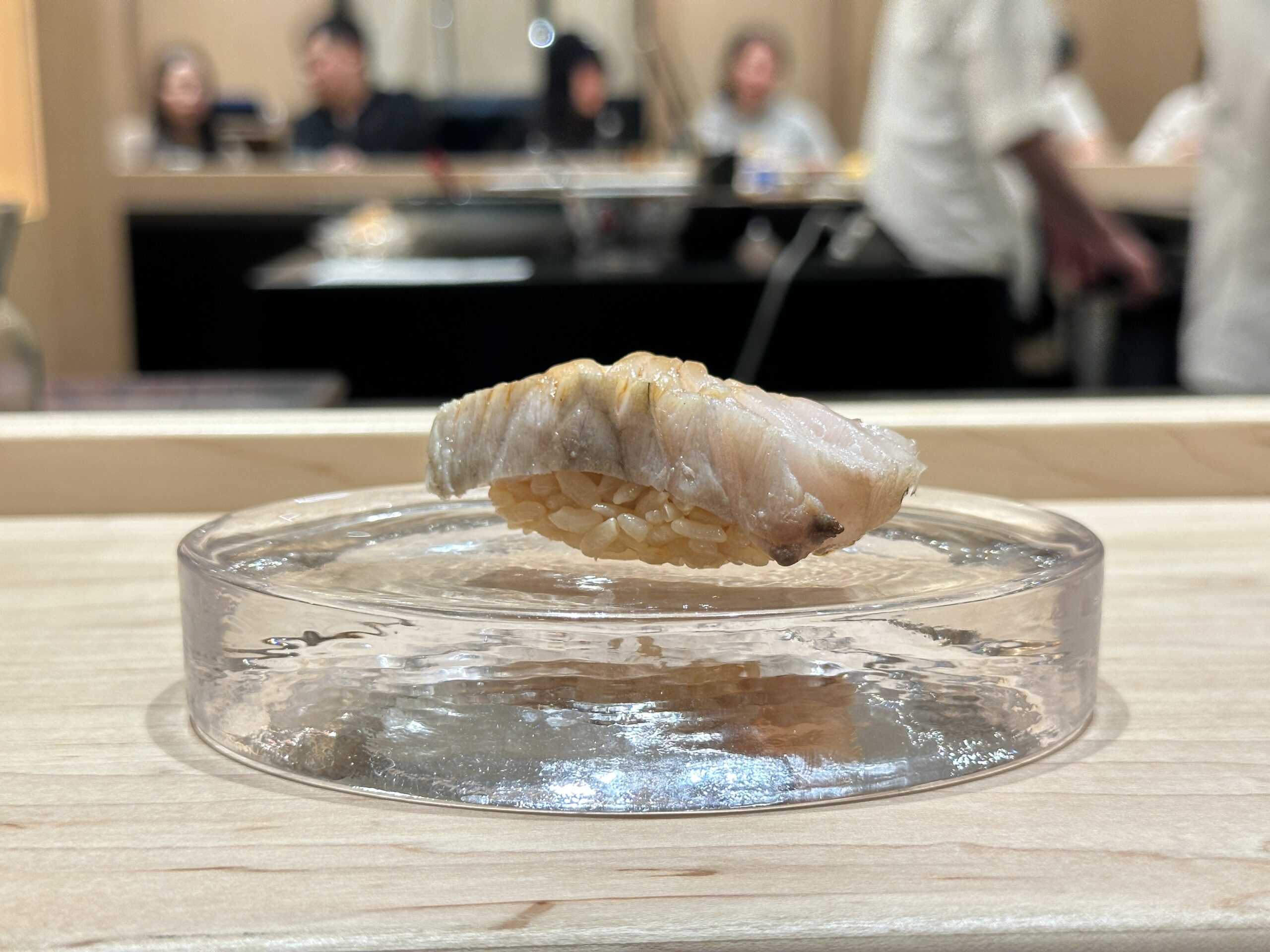
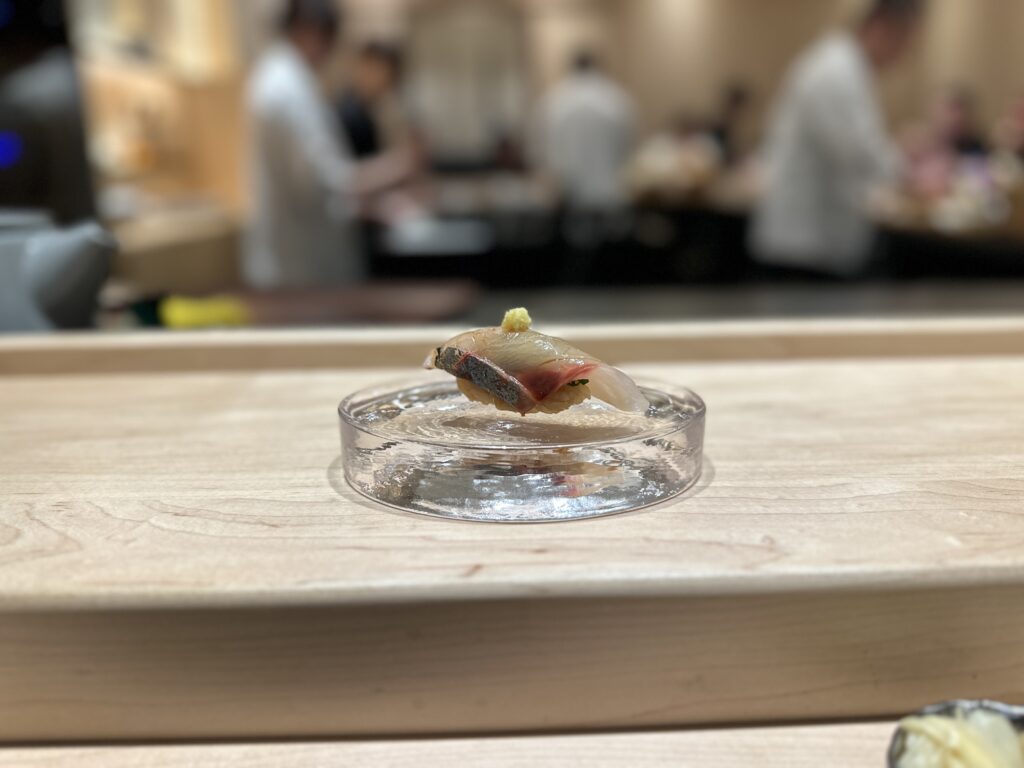
13: Sawara (spanish mackerel)
I loved this Kinmedai
Sakai-san serves it in what people ‘Sushi Zo’ style, though I’m sure there is a more formal name. Long tail. Kinmedai is such a fascinating neta to me. Never an Edomae staple, it’s now become popular in traditional and atraditional sushiya alike.
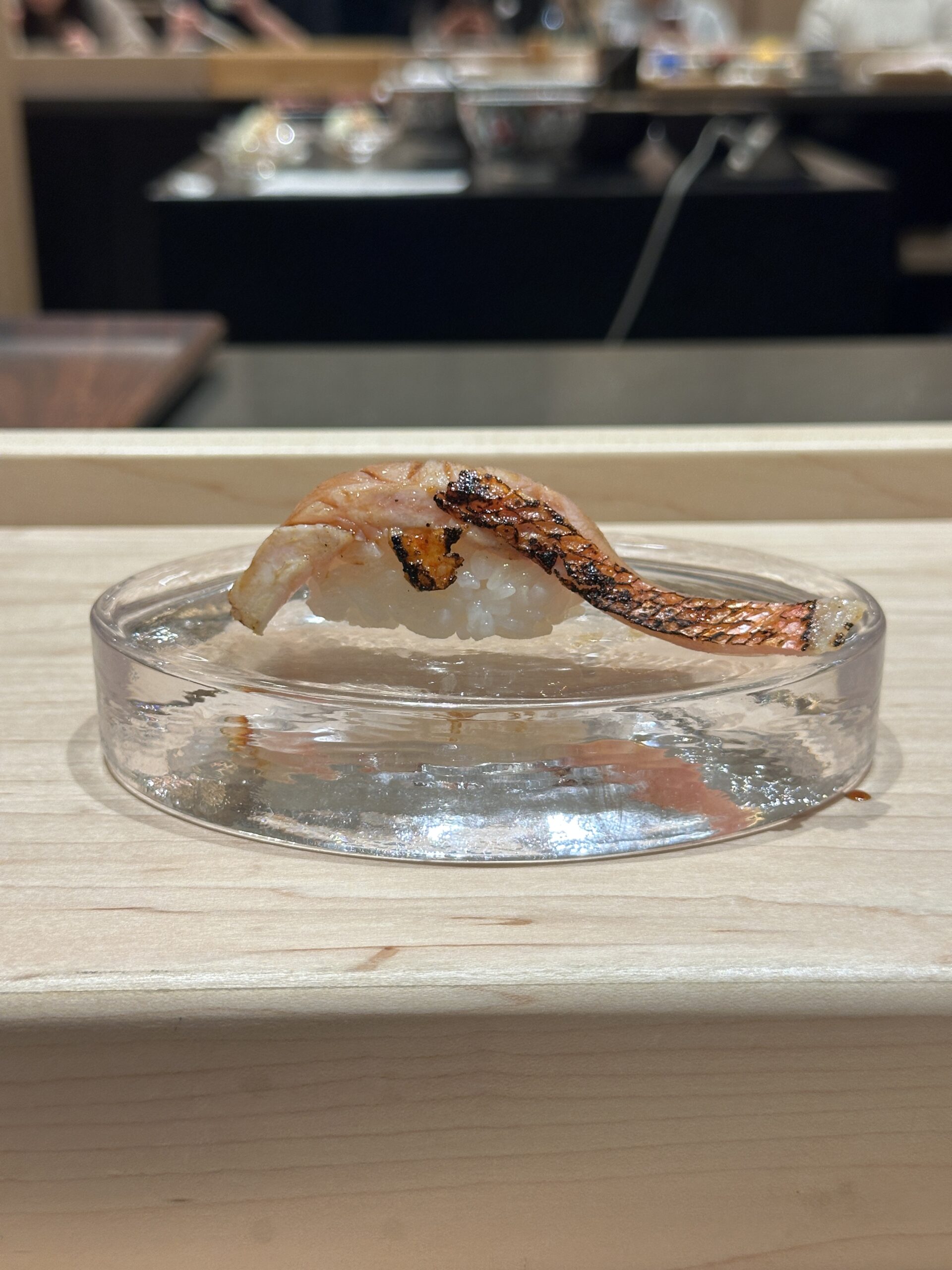
14: Kinmedai (ji-kinme)
Fun fact: there are actually two fish under this umbrella – oki-kinme and ji-kinme. The latter is smaller, better for sushi and served here. It’s also fattier, which is why I never think the torch is necessary. Lightly blanch or cured between kelp (kobujime). The book Sushi Secrets dives into this well. I’m giving away a copy thanks to the excellent publisher PIE International. Subscribe to my newsletter here to find out how to be entered into the draw.
After a toro-taku temaki, we had the opportunity to order more sushi before the final courses below.
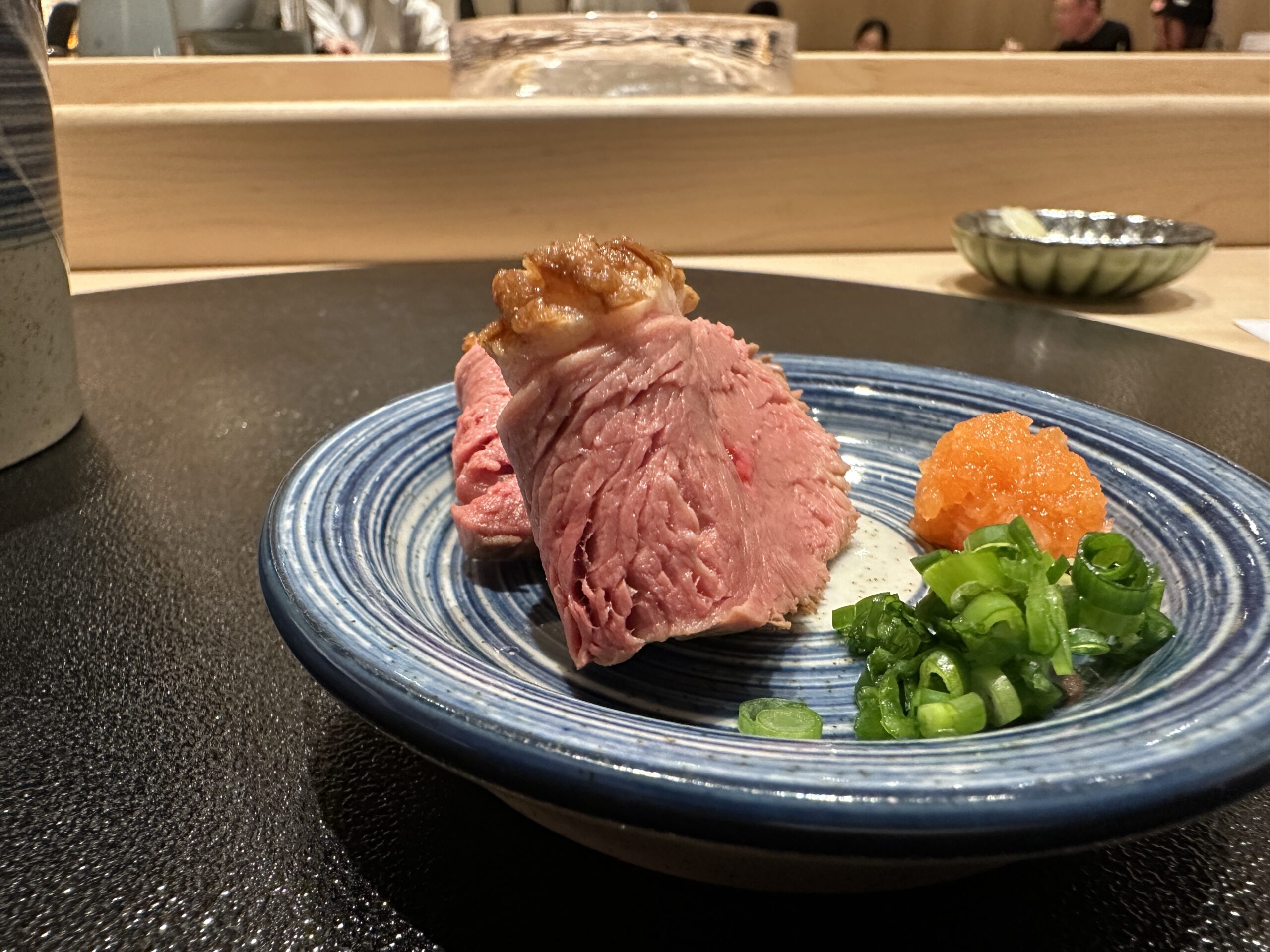
16: Kamo Nanban Soba – braised duck goes in the soba. Bonito broth.
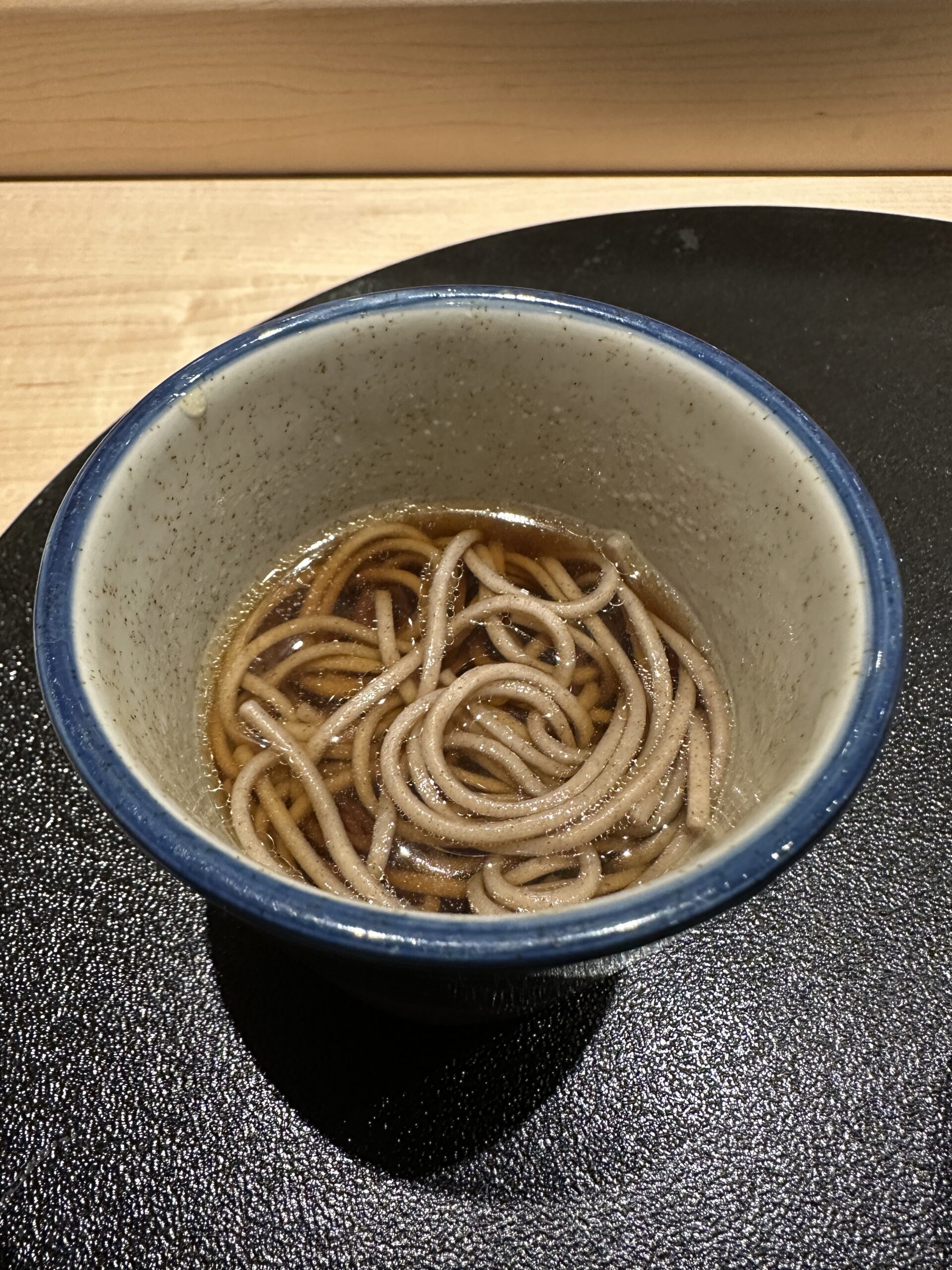
The duck goes in the soba
I have to mention the add-ons
This is one of the places Ibushi shines. On offer were:
- Akagai ($16) nigiri
- Aburi Kama Toro ($18) nigiri
- Uni Niku (Uni with Wagyu) nigiri ($18)
- Kegani ($108)
- Sekogani ($42)
- Wagyu suki-shabu ($25)
We ordered the in-season Akagai (ark shell) under my “if akagai is on the menu, order it” rule. If that rule isn’t your bag, that’s fine. Kindly exit the website now, no hard feelings.
Takai-san seemed genuinely happy to be preparing the delicacy. Or maybe it was the chance to throw the akagai onto his cutting board 3,000 times, a signature step which loosens the meat.
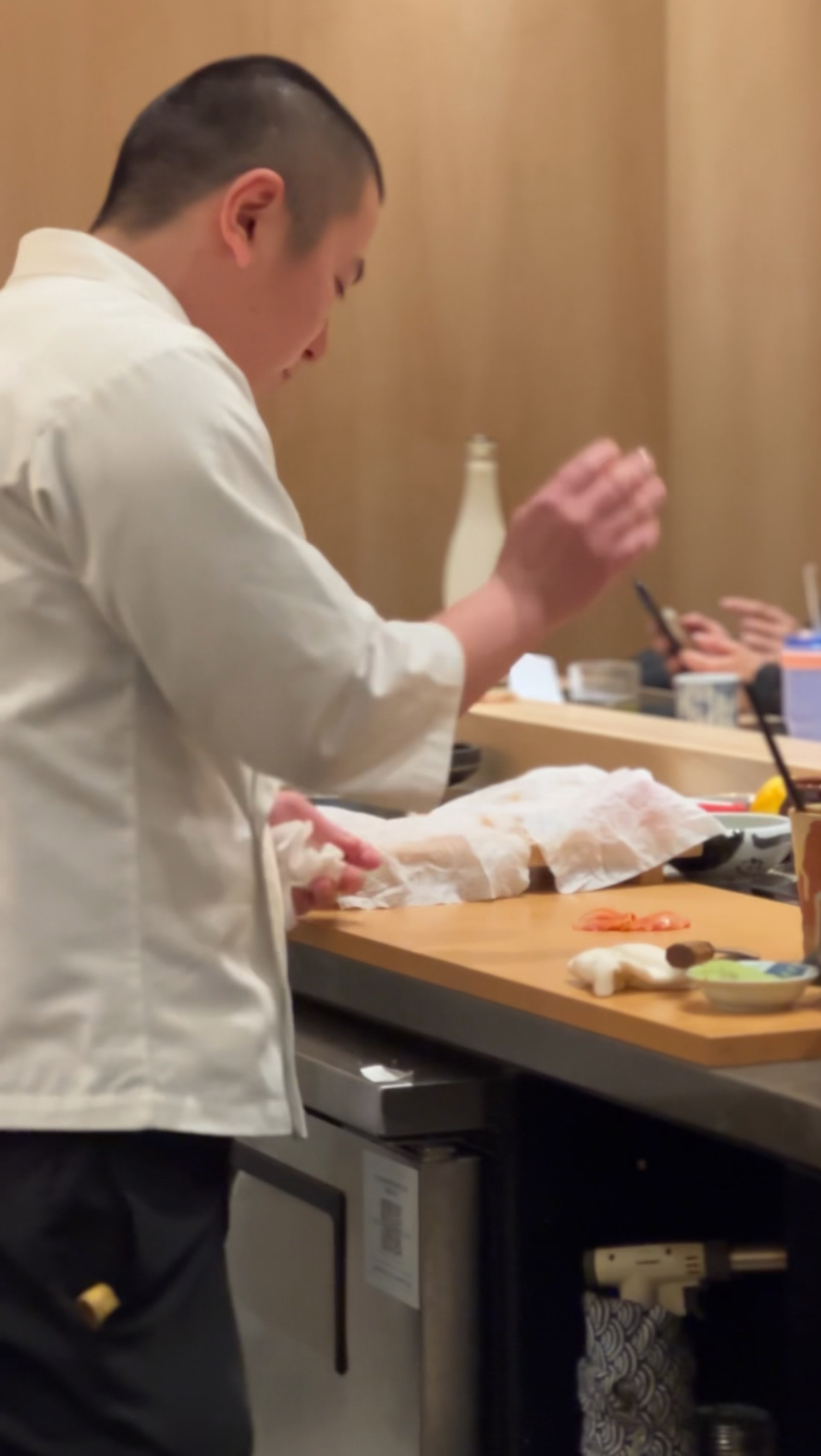
Pounding the akagai to loosen the meat
Either way, neophytes don’t typically follow my golden rule, which is a true shame, especially when Akagai is this good. Takai-san even served it in two parts; the first, the ‘tongue’ of the clam, is packed with meat. The second the mantle, the himo, is the outer edge of the clam.
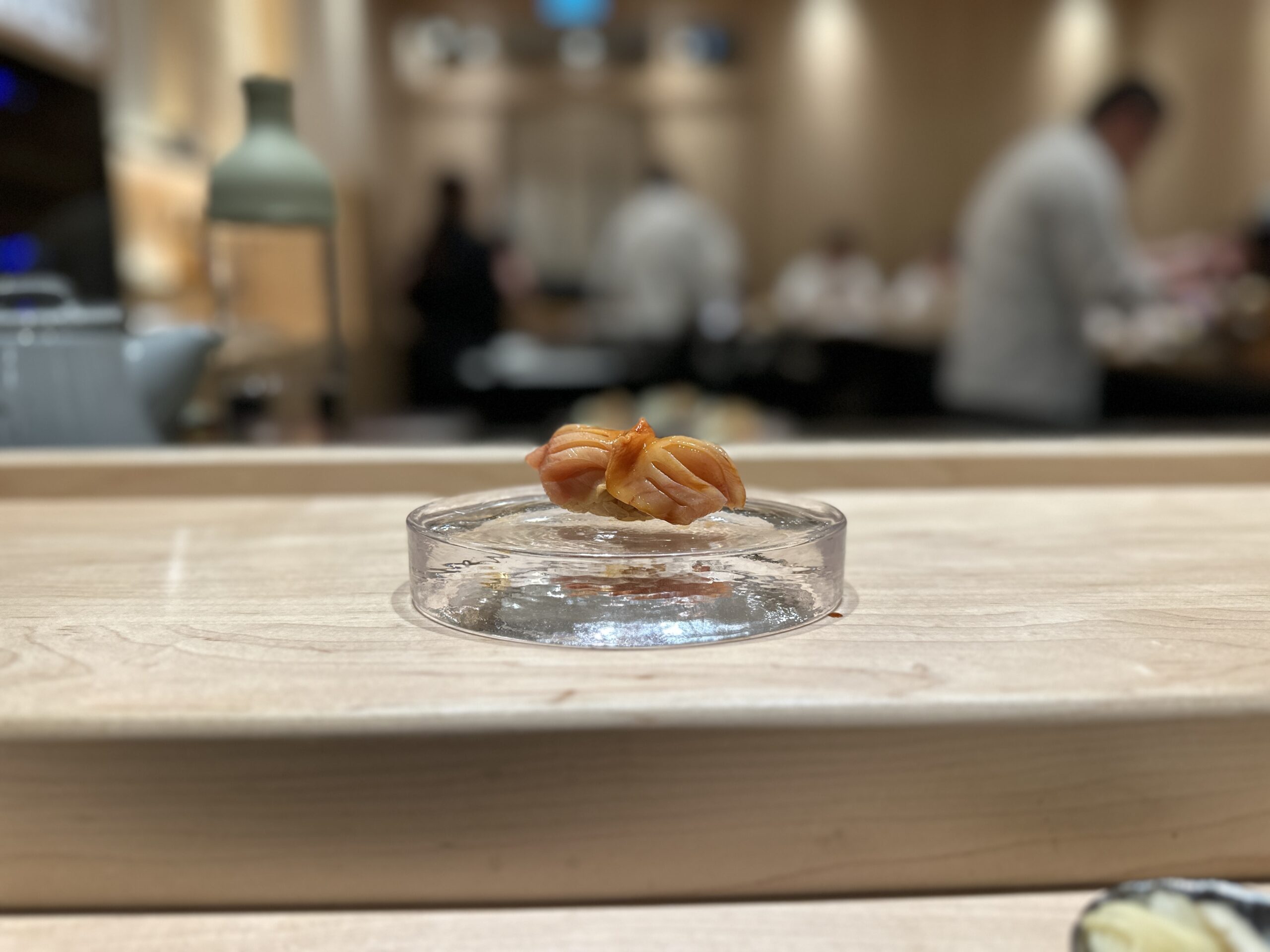
Extra 1a: Akagai
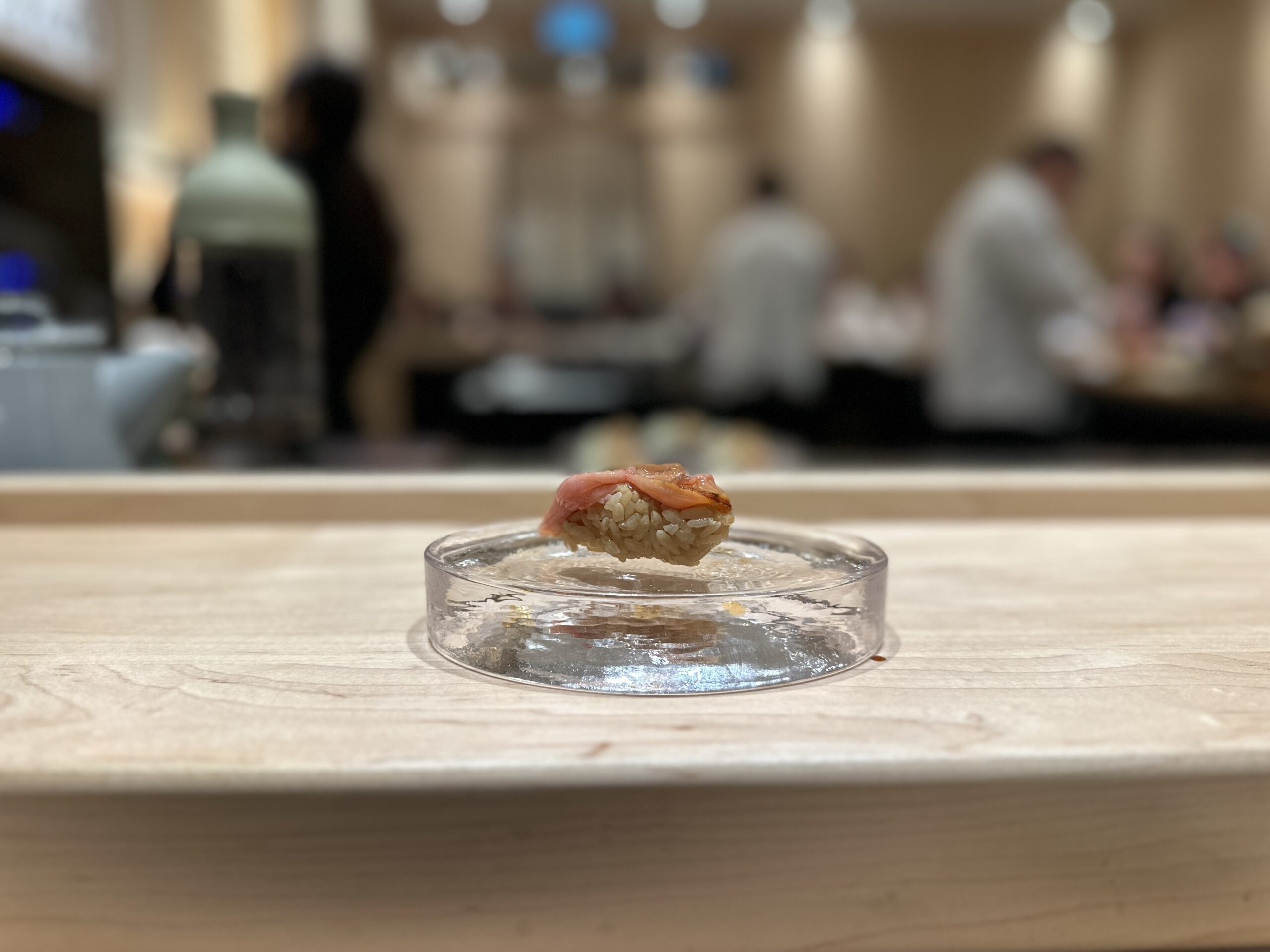
Extra 1b: Akagai (Himo)
And then there are the add-ons to the add-ons
The six courses I listed above were presented on a separate insert. But here’s a lesson, legends – always ask if there’s more. Because there was, Kawahagi. This was delicious, despite the lack of top hat (liver). Off-off-menu is Ibushi at its best. Lovely stuff.
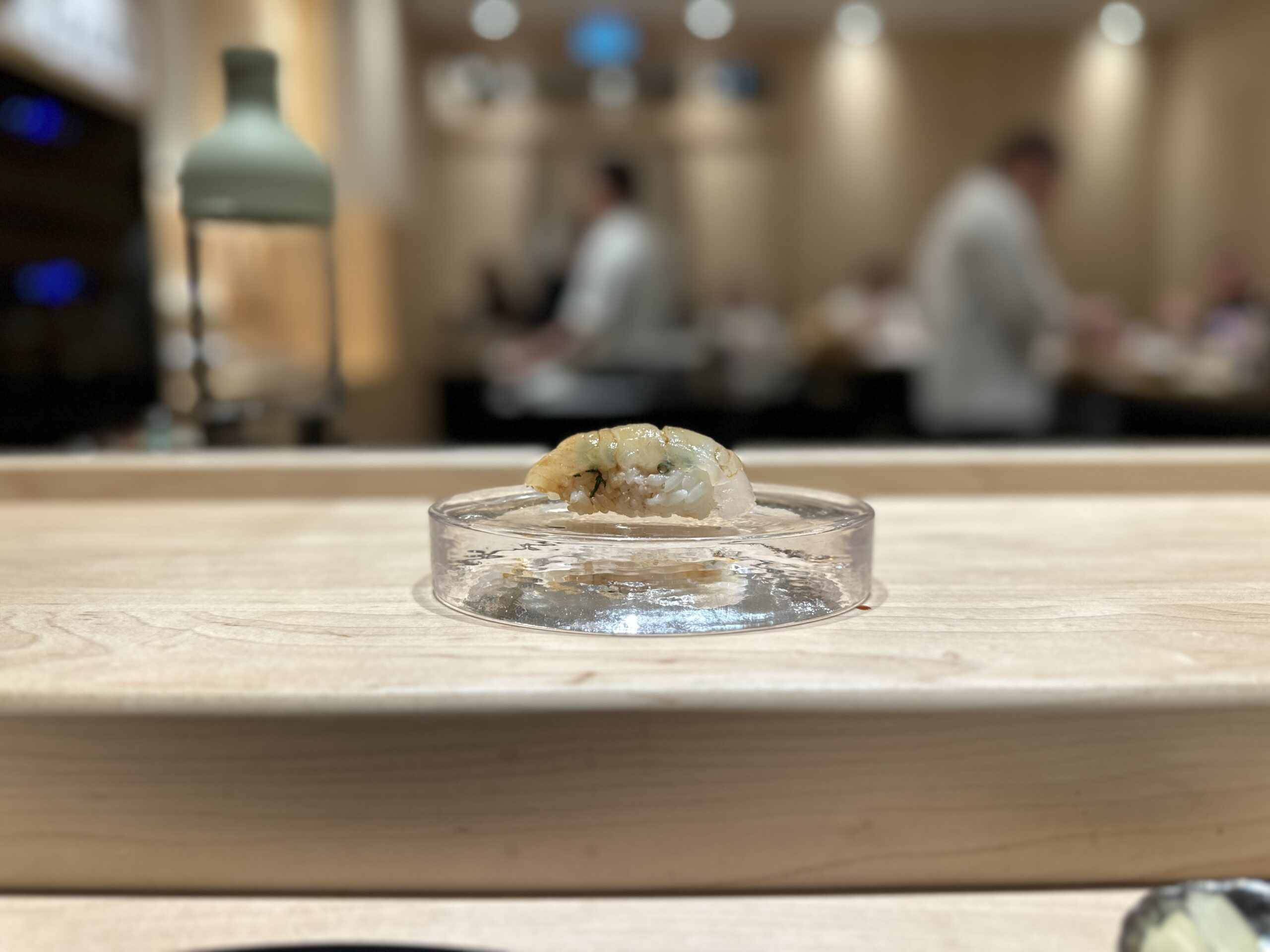
Extra 2: Kawahagi (no liver)
The interior “vibe”
I like sushiya that exude serenity. Transport me. Show me to a higher place. Take me to outer space. I want you to be my friend. We’ll make it – shit, sorry I ended up in a Dmitri Vegas and Like Mike track. That happens sometimes.
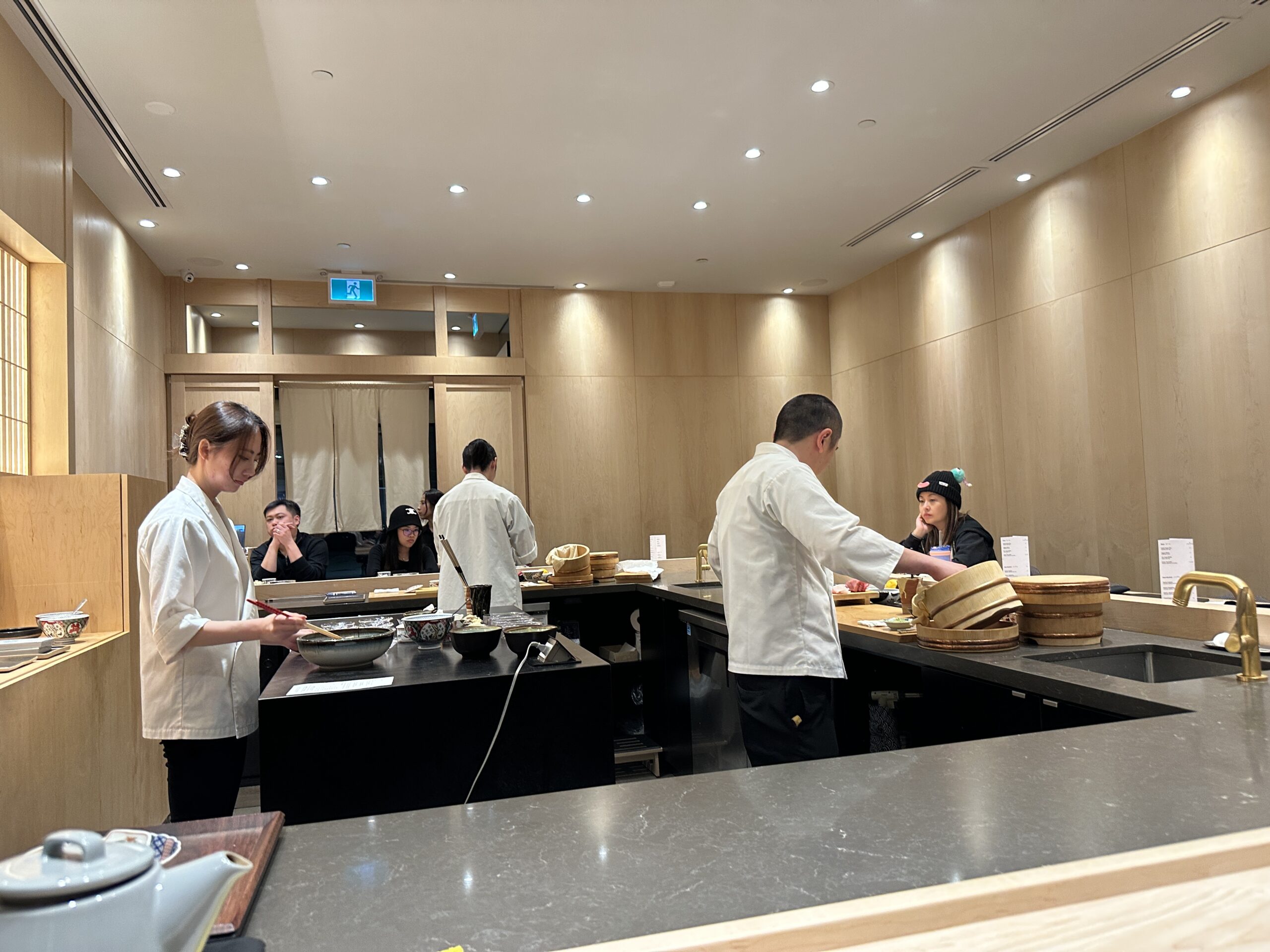
Ibushi needs to take out like 50% of the lights.
Ibushi is less sanctuary and more showroom. It was cozier than my dentist’s waiting area, but not by much. Everything is just so bright. So open. 16 seats doesn’t help, especially when 6 middle spots are being held for a birthday party with a later reservation. If you’ve been, you’ll know.
Final Verdict
And yet, I still enjoyed my meal. I have to remember that this sushiya is less than a year old – you should have seen what this blog looked like at that age. And truly, these are fixable problems, especially with a talented and passionate Itamae, and the distinct (for Toronto sushiya) ingredients. But this is not (yet) a perfect sushiya, and not (yet) among Toronto’s best.
Despite the hype.
Recommended.